


For many Haredi women, outward appearance is an important expression of religious identity, and maintaining that appearance can carry a steep price.
While ultra-Orthodox communities are often associated with modest and frugal lifestyles, families may spend significant sums on traditional clothing. Men’s fur hats and long formal coats can cost thousands of shekels, but one of the largest expenses is often the wig worn by married women to cover their natural hair.
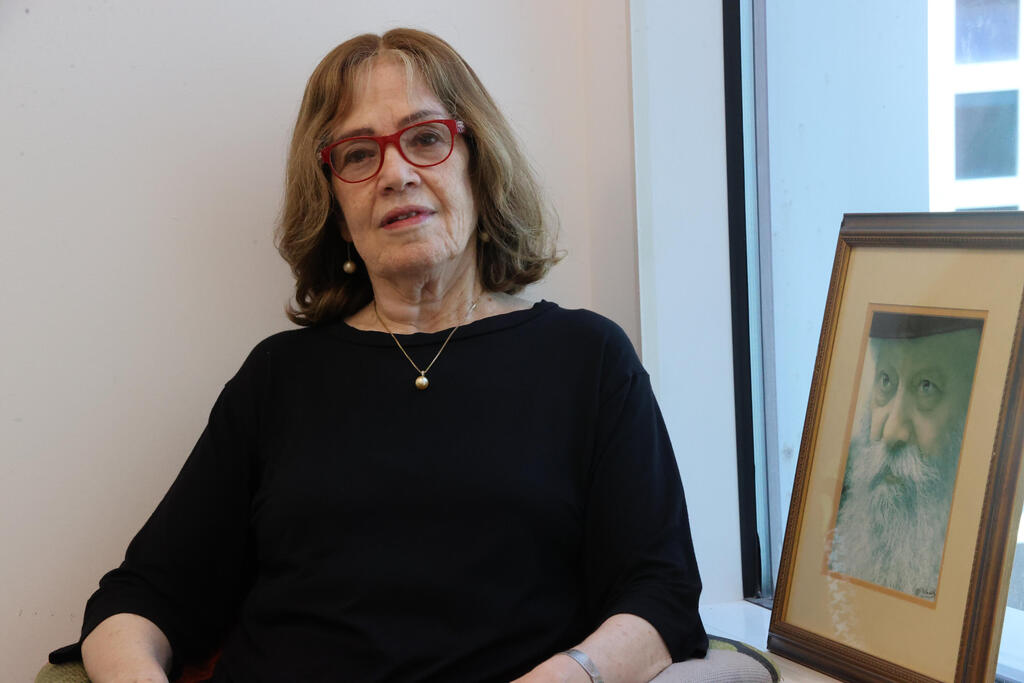
Attorney Nechama Tzivin of Kfar Chabad, a predominantly Chabad Hasidic community in central Israel, remembers buying wigs for only a few thousand shekels when she was younger. In recent years, however, she and her friends have paid tens of thousands of shekels for wigs designed to look like natural hair.
She believes the prices are unjustified and is now leading a campaign against them. Tzivin is preparing a petition to the Chabad rabbinical court demanding oversight of wig prices and intends to approach other religious courts as well.
Her goal is to have wigs legally classified under Jewish law as "chayei nefesh", a term referring to a necessity of life. Such a designation, she argues, could justify imposing a maximum permitted price or limiting profit margins.
Att. Tzivin comes from a longtime Chabad family. Chabad-Lubavitch is a Hasidic movement whose late spiritual leader, Rabbi Menachem Mendel Schneerson, strongly encouraged married women to cover their hair with wigs. “There was an unequivocal instruction from the Lubavitcher Rebbe that the head covering should be a wig,” she said. “That instruction was already given in the 1950s.
“The Rebbe handled it very sensitively. He encouraged women to buy wigs and even instructed that money be given to women to help them meet the expense.” At the time, she said, wigs were relatively rare and expensive. Over the years, however, they became an integral part of life for married women in Chabad. “Today, the feeling is that you simply have to cover your hair with a wig,” she said.
Att. Tzivin, who works with the Movement for Government Fairness headed by attorney Mordechai Eisenberg, said the dramatic shift came as wigs became increasingly natural-looking. “The more natural the wigs became and the more they looked like real hair, the more dramatically the prices rose,” she said. “We examined the issue, and the costs do not justify this increase.
“Young brides want the most natural-looking wig possible, and it has become one of the largest wedding expenses. It does not fall only on the bride, but also on her mother, her sisters and the entire family.”
Attorney Tzivin compared today’s prices with those paid by earlier generations. “When I married 50 years ago, wigs looked far less natural, but the prices were reasonable,” she said. “That comparison is no longer especially relevant. But even when my daughters married in the early 2000s, wigs were a significant yet still manageable expense, costing only a few thousand shekels.
“The last wig I bought, three years ago, cost 18,000 shekels (about $5,900). That was an enormous jump from my previous wig, which cost roughly 5,000 to 6,000 shekels (about $1,600 to $2,000).
“Today, the average wig in Kfar Chabad costs around 30,000 shekels (nearly $9,900), while some sell for as much as 40,000 shekels (about $13,100). The industry has always generated healthy profits, but the prices have now reached absurd levels.”
Att. Tzivin said social media and the growing emphasis on appearance and beauty have helped drive the increase. “Demand for natural wigs continues to rise, and wig makers take full advantage of that,” she said. “Psychology plays a central role. As demand rises, prices keep climbing.
“A friend recently told us that his granddaughter is getting married and her wig will cost 40,000 shekels (about $13,100). In my view, this also happens with other products associated with religious observance, such as handmade Passover matzah, tefillin and prayer shawls, whose prices have also long since become unreasonable.”
Ongoing maintenance is also expensive
Att. Tzivin said her frustration eventually led her to act. “I say this with pain, but today, to be Chabad, you have to be a sucker,” she said. “The prices have become insane, specifically for products that are an inseparable part of religious life. That is why we decided to approach the Chabad rabbinical court and ask it to intervene.”
She rejected the argument that buying an expensive wig is simply a consumer choice. “People ask why there is any need to fight this,” she said. “They say that just as one person buys a car for a million shekels and another buys a used car for tens of thousands, the same is true of wigs.
“But that comparison is wrong. A car, a home or cosmetics are not religious commandments. A wig, at least for a Chabad woman, is a basic necessity. In the language of Jewish law, it is a matter of 'chayei nefesh'.”
Att. Tzivin stressed that the campaign is not aimed at preventing wig makers from earning a profit. “Our argument is not against charging money,” she said. “Anyone who wants to buy a simple synthetic wig can do so, and even there, a reasonable profit is legitimate.
“The dispute is over wigs that generate profits of hundreds of percent. We are not asking anyone to sell at a loss. If the cost is 20,000 shekels, the seller may earn whatever profit Jewish law permits. But the wig cannot be sold for 40,000 shekels simply because it is connected to a commandment and is essential for women. That is precisely why we are approaching the rabbinical court.”
Her central demand is the creation of a special halachic status for wigs. “Our goal is for a wig to be defined as a product of 'chayei nefesh',” she said. “Once that becomes its legal status, it will not matter whether the wig is synthetic or made from natural hair. Every wig will be subject to the same rules, and profit margins will be supervised.”
Attorney Tzivin claimed there are significant gaps between production costs and retail prices. “Based on information we have received, there are cases in which profit margins reach 200% or even 300%,” she said. “And the expense does not end with the wig itself. After the purchase, customers are offered maintenance products, serums, treatments and accessories.”
She said the cost of ongoing upkeep has become part of the problem. “Products that can be bought online for tens of shekels are sold by wig makers for hundreds,” she said. “This happens in other industries as well, but in the wig business, there is a sense of exploitation at every stage.”
Att. Tzivin’s campaign has become a widely discussed issue among Chabad women and in other Haredi communities in Israel and abroad. She said a Haredi social activist from France recently contacted her and described a parallel campaign against wig prices there. Women who can switch to another form of head covering do so, while those who cannot turn to charitable organizations for assistance.
Gila Maman, founder of FairWigs, a French organization that assists women with wig-related issues, praised Tzivin’s initiative. “I wanted to thank you personally for your courage and the incredible work you are doing for women,” Maman wrote in a message to Tzivin. “I was deeply moved to read about your initiative. It is inspiring to see someone willing to stand up to a system that has made so many women feel unheard and powerless.”
Maman said the problem extends far beyond Israel. "Many women feel trapped, silenced and alone under the dictatorship of wigs,” she wrote. “You have no idea how many women in France have told me they stopped covering their hair because of all the problems involved.”
FairWigs, she said, provides charity, free wigs, free repairs, legal assistance and a platform for women to share their experiences. She called for the campaign to grow into a broader international movement.
Wig makers: Quality comes at a price
Wig makers, however, reject claims that the industry is exploiting religious women.
Zehava Weitzman, who has owned a boutique wig business for 30 years, said prices have risen because both demand and production standards have increased.
“Clients demand the highest-quality hair,” she said. “About 40% of my customers are not Haredi or religious at all. Women are dealing with cancer, alopecia, an autoimmune condition that causes hair loss, or thinning hair, alongside Haredi women. They all want the same level of quality. It is a matter of supply and demand.”
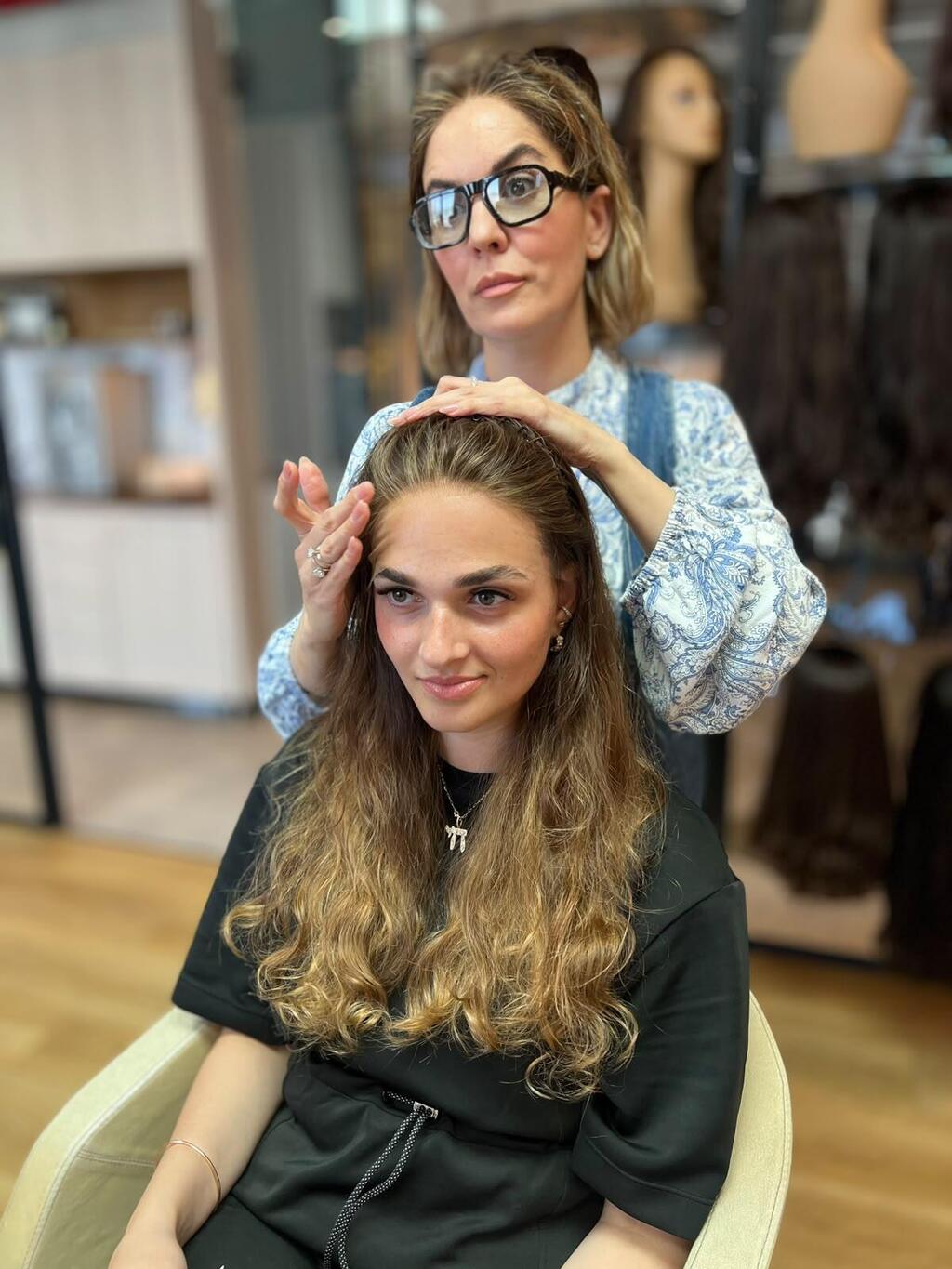
Zehava Weitzman, owner of a boutique wig business for 30 years
(Photo: Courtesy)
Weitzman compared high-quality human hair to diamonds. “This is also a rare raw material, except in this case, it is human,” she said. “As demand increases, supply decreases.
“Twenty years ago, we bought hair for about $400 per kg. Today, we pay $6,000 to $7,000 per kg for the raw hair alone.”
“There is also enormous waste in the production process. When the raw hair arrives, about 70% of it is unsuitable for the wigs we make in Israel, because we use only the longer strands.
“Production has changed as well. In the past, most wigs were made in China, and I would order thousands of finished pieces from a factory. Today, most are produced in Israel, where labor costs are far higher, and the level of precision is completely different from what it was 20 years ago.”
In her view, current prices are not unreasonable. “Think about a wedding dress,” she said. “People understand why a wedding dress can cost 17,000 or 18,000 shekels (about $5,600 to $5,900), even though it is worn for only a few hours.
“A wig, by contrast, takes a great deal of time to produce, and the work does not end once it is delivered. For an entire year, the customer may return for repairs, adjustments, finishing touches and improvements, all of which are included in the warranty.
“You can choose a simpler product, just as you can choose inexpensive or luxury clothing. But anyone who wants precise, handmade work that sits naturally and looks as though the hair is growing directly from the scalp has to pay for that quality.”
Weitzman firmly rejected accusations that wig makers are cashing in on religious women. “I have heard the claim that we are making money at the expense of religious women, but it is simply not true,” she said.
“Religious women indeed invest more in their appearance today, but that does not mean we are exploiting them. Just as I cover my body with beautiful, high-quality clothing, a wig is part of the way I observe Jewish law in a dignified and attractive manner.”
She also rejected claims of profit margins reaching hundreds of percent. “In the past, when I ordered finished wigs from China, it was easy to calculate the profit,” she said. “Today, when I produce a wig, I often do not know what the final profit will be.
“For an entire year, I continue working with the customer. Sometimes I replace hair, make repairs and refine the fit. Quite often, I discover that in the end, I barely made any profit on the wig.”
At least one major Hasidic movement has already imposed limits. The Ger Hasidic community maintains maximum wig prices, while in most other Hasidic groups, prices can rise far higher.