


Israel’s severe drought this year is being described by experts as the worst in a century. As November begins with a rare heatwave, with temperatures up to 8 degrees Celsius above the seasonal average, some Israelis are turning to faith for relief.
Dozens of students from the HaAri school in Safed, along with teachers and residents from Tiberias and nearby communities, gathered Wednesday on the shore of the receding Sea of Galilee — whose water level now stands 28 centimeters below the lower red line — to hold a mass prayer for rain.
Mass prayer for rain held at the Sea of Galilee
(Video: Igud Arim Kinneret)


The event, led by Safed Chief Rabbi Shmuel Eliyahu, a member of the Chief Rabbinate Council, was held in the belief that “the power of prayer and hope can change this worrying trend.”
Rabbi Dov Sandman, a faculty member at HaAri school, said it was the third time the institution had organized a prayer for rain at the Sea of Galilee. The previous gatherings took place in 2003 and 2019, and, he noted, “both were followed by winters blessed with abundant rainfall.”
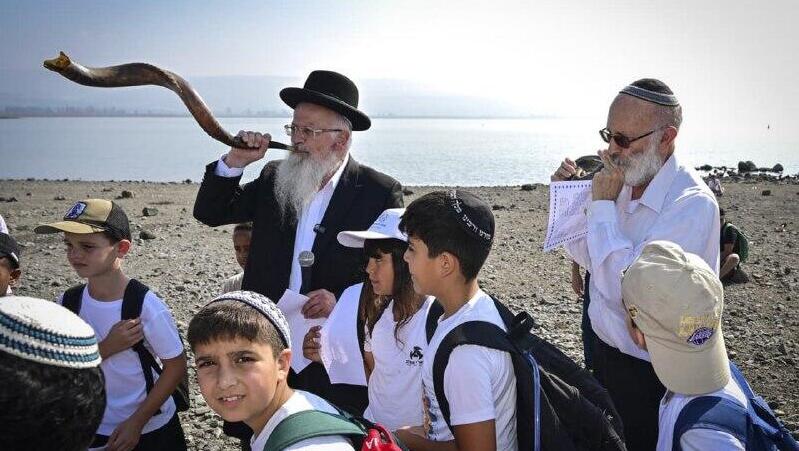
“We’re praying not only for the Land of Israel, but for the whole world — that it will be blessed with rain,” Rabbi Eliyahu said. He explained that the decision to hold the event on the lakeshore this year was deliberate: “So that the children could see with their own eyes the result of the lack of rain, the shoreline receding meters into the lake, and understand just how vital their prayers are.”
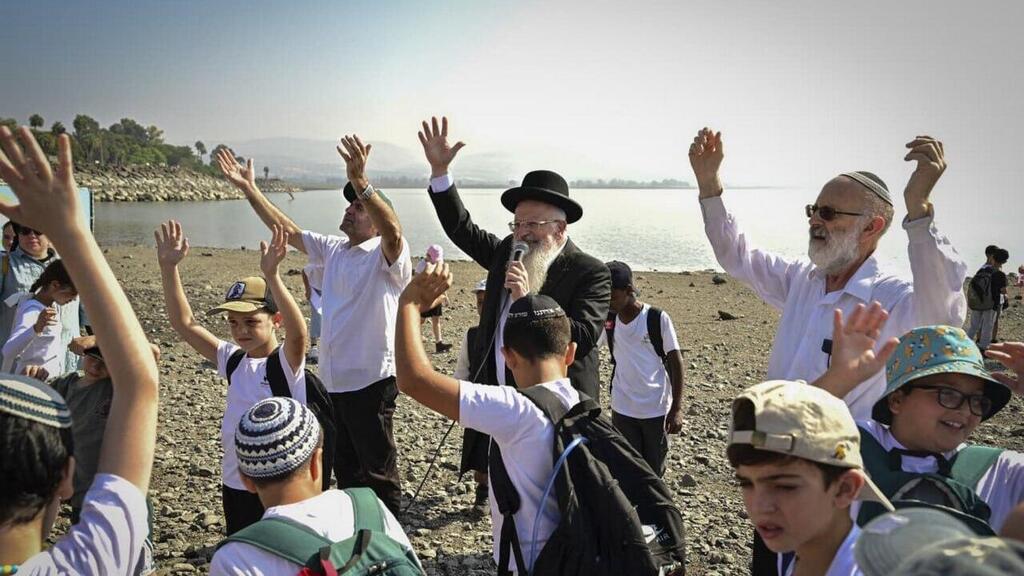
(Photo: Igud Arim Kinneret)
The students were welcomed by Uriya Frankel, head of education, community, and outreach at the Kinneret Cities Association, who said the gathering was “a hopeful event of prayer and song.” Frankel added, “We join these prayers for a rainy winter that will end the drought and refill the Sea of Galilee.”
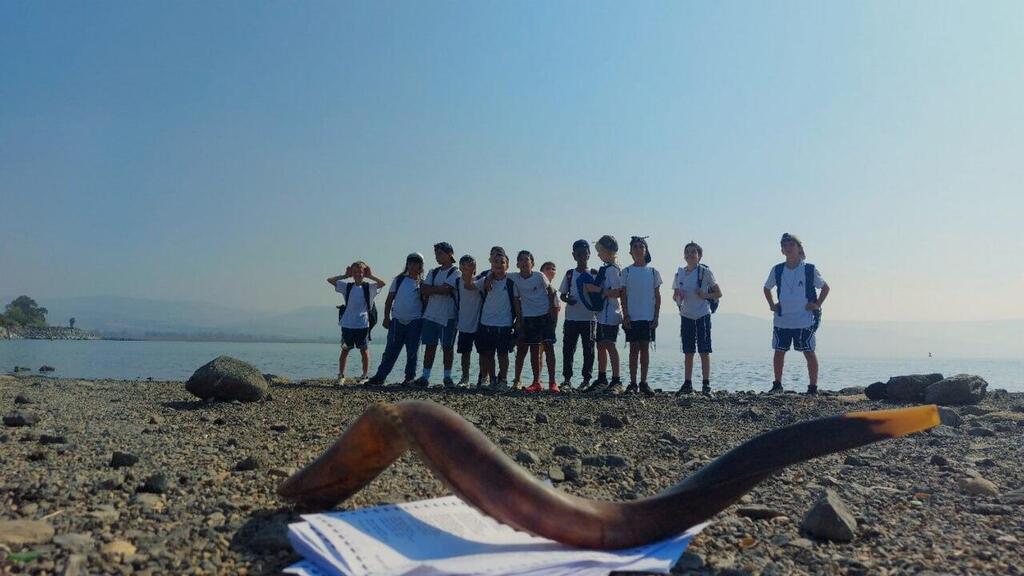
(Photo: Igud Arim Kinneret)
Meanwhile, the unseasonably warm weather continues. According to Meteo-Tech, the heatwave is expected to last until Tuesday, after which temperatures will drop slightly but remain higher than average for the time of year.
If the dry conditions persist into the new year, the Water Authority is expected to impose deeper cuts to agricultural and environmental water allocations. Officials are also considering measures such as drying up public gardens in some municipalities to conserve what remains of the country’s water resources.