


As the global Jewish community confronts a wave of antisemitic violence, Jonathan Greenblatt, CEO of the Anti-Defamation League, says the world is witnessing not only a surge in attacks, but a collapse of moral consistency.
In an interview with ynet, Greenblatt argues that the outrage directed at Israel over the war in Gaza, contrasted with near silence over Iran’s brutal repression of its own people and atrocities elsewhere, exposes what he calls “selective rage and moral emptiness.”
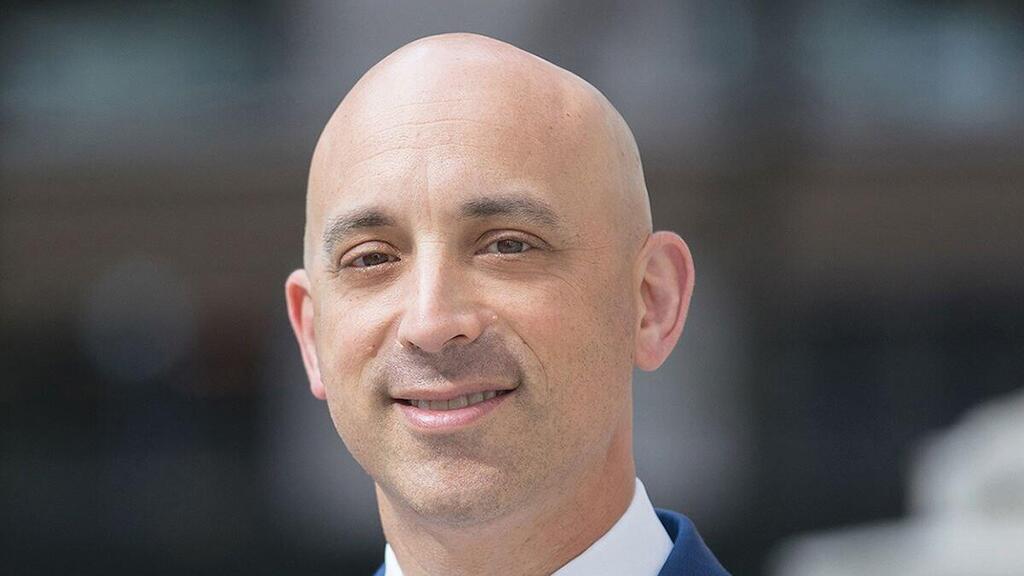
In 2025 alone, 20 people were murdered in antisemitic attacks worldwide: 15 in a terrorist attack at Bondi Beach in Australia; two Israeli Embassy employees killed in Washington; two worshippers murdered during Yom Kippur prayers in Manchester; and one woman killed at a march for Israeli hostages in Boulder, Colorado.
Against that backdrop, Greenblatt says antisemitism is being fueled not only by individuals but by powerful institutional and state actors.
“This is not just about lone extremists,” he says. “There are institutional players and sovereign states that continue to stoke antisemitism. Qatar, for example, spreads it through media outlets like Al Jazeera, through manipulation of Wikipedia content and by amplifying voices like Tucker Carlson, whom they hosted in Doha. Iran has been a central, sustained source of antisemitism for decades. These forces are being amplified by governments that continue to export anti-Jewish hatred.”
‘An epidemic moment’
Asked whether 2025 was the deadliest year for antisemitism since the Holocaust, Greenblatt pauses.
“It depends how you measure,” he says. “I would actually argue that 2023 was the most lethal year for antisemitism, because roughly 1,200 people were slaughtered by Hamas solely because they were Jews or happened to be in the Jewish state.”
In the diaspora, however, he says the current year stands out.
“Yes, I think this is empirically the most brutal year we’ve seen in recent memory. You can go back to attacks in Bulgaria, Mumbai and elsewhere, but antisemitism sits at the root of all of them.”
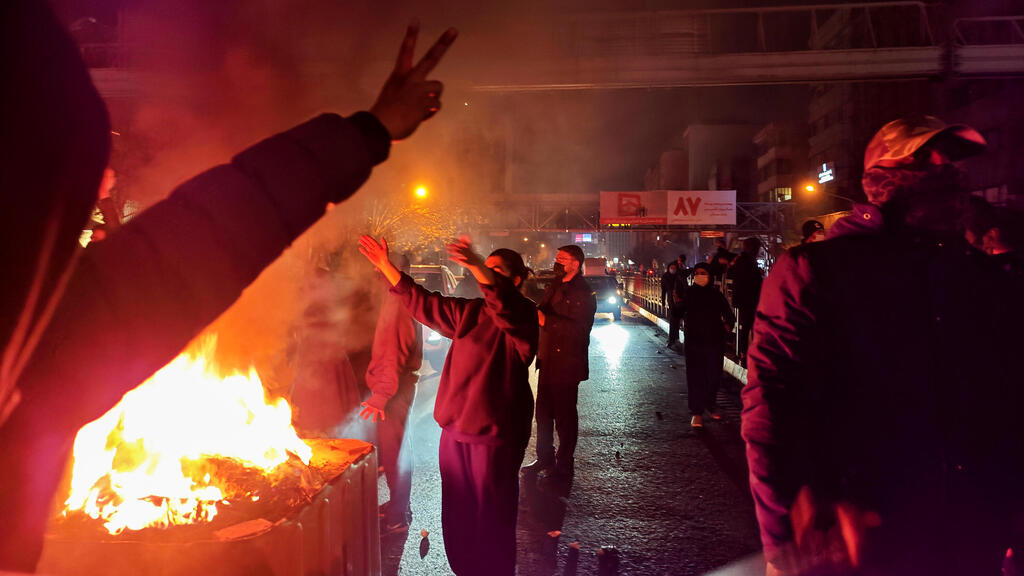
Protests in Iran on January 8
(Photo: Anonymous/Getty Images)
Beyond fatalities, the data is stark. In New York City, where Greenblatt lives, police reported that 57 percent of all hate crimes last year were antisemitic. FBI data consistently shows that about 70 percent of religiously motivated hate crimes in the United States target Jews, despite Jews making up just 2 percent of the population.
“That is an unbelievable number,” he says.
He also points to attacks on Jewish public officials. In Pennsylvania, Gov. Josh Shapiro’s home was set on fire in what authorities described as an antisemitic attack on the first night of Passover.
“That’s not even counting vandalism and harassment,” Greenblatt says. “I’m talking about kinetic incidents. We are living in a moment when antisemitism in the diaspora has reached epidemic proportions. The attack at Bondi Beach was a tragic and ugly punctuation mark on a horrific year.”
Attitudes as dangerous as attacks
According to the ADL’s 2024 Global 100 survey, conducted across 102 countries, 46 percent of the world’s adult population holds entrenched antisemitic views. That figure is more than double what the ADL found a decade earlier.
One in five respondents had never heard of the Holocaust, and fewer than half recognized its historical reality. Nearly a quarter expressed favorable views of Hamas.
“This isn’t just about murders or vandalism,” Greenblatt says. “It’s also about attitudes. And all of this together represents an immediate and urgent threat to the Jewish people.”
‘Vulgar hypocrisy’
Greenblatt is particularly blunt when asked about comparisons between Israel’s actions in Gaza and Iran’s violent suppression of protests.
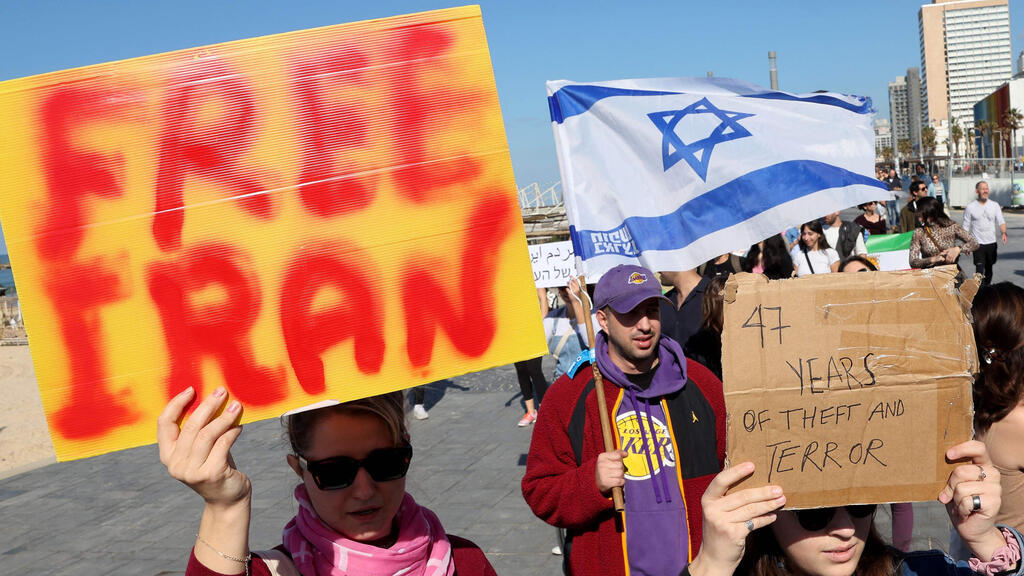
A demonstration in Tel Aviv in support of Iran protests
(Photo: Amir Levy/Getty Images)
“It is vulgar. It is offensive. It is sheer hypocrisy,” he says. “There isn’t even a fraction of the outrage toward Iran that we see elsewhere. The numbers there are far worse. Look at Sudan. Look at Syria. There is nowhere near the same attention.”
He continues: “When people only become animated when the Jewish state is involved, but stay silent when Jews themselves are attacked or when atrocities happen elsewhere, it tells you everything. There is no moral anchor. No moral center. Everything shifts according to narrative.”
October 7 as a turning point
Greenblatt says the current wave did not begin overnight.
“October 7 was tragic on many levels,” he says, “not least because it underscored the vulnerability of Jews, even in the Jewish state.”
What shocked him most, he says, was what followed.
“While the massacre was still unfolding, while we were trying to understand who was alive and who was dead, we saw demonstrations in the U.S., Europe and Australia in support of Hamas and the perpetrators. That wasn’t just jarring. It was horrifying.”
He contrasts this with other global tragedies.
“No one cheers massacres in Sudan. No one celebrates the kidnapping of girls in Nigeria. No one applauds bombings in Ukraine. Only when Jews are butchered, raped and slaughtered did we see jubilation. That was deeply alarming.”
Why it isn’t fading
Asked why antisemitism has not declined even after the war ended, Greenblatt points to three forces.
First, extreme polarization. “In polarized societies, extremists thrive.”
Second, cynicism and distrust of institutions. “When people stop trusting media, government and science, conspiracy theories flourish. Jews are always the default scapegoat. Antisemitism itself is a conspiracy theory.”
Third, social media. “Platforms like X, Facebook, Instagram and TikTok are super-spreaders of antisemitism. It generates clicks. It generates money.”
Combined with foreign influence from countries like Iran and Qatar, he says, the result is a “perfect storm.”
Concern over New York’s mayor
Greenblatt says he is deeply concerned about New York Mayor Zohran Mamdani, though he stresses the ADL will work with any elected official.
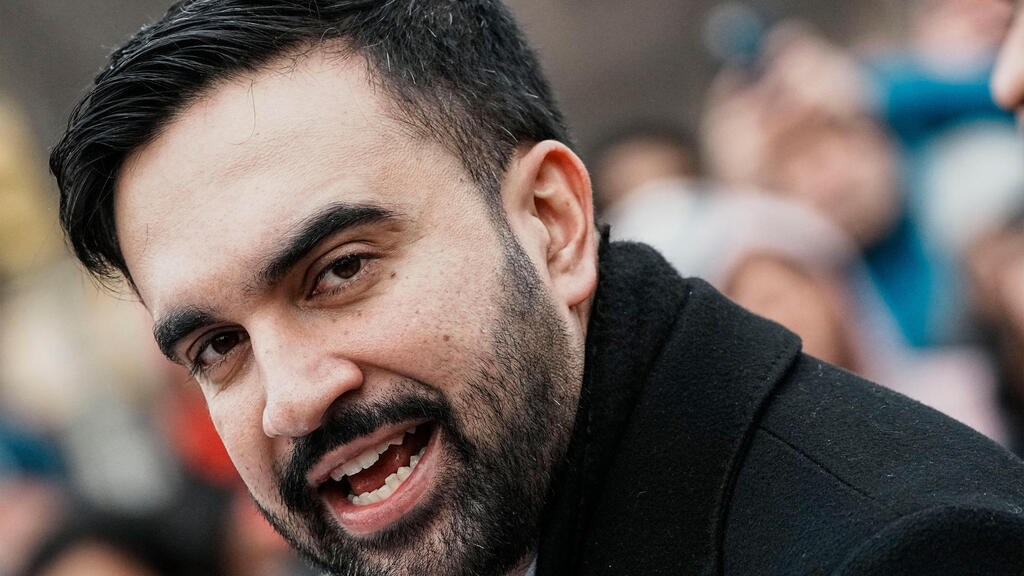
New York Mayor Zohran Mamdani
(Photo: Eduardo Munoz Alvarez/ AP)
“We are worried because of his casual, almost reflexive anti-Zionism,” he says. “When there was a pro-Hamas protest outside a synagogue, he condemned it only after every other official had done so. His initial response was that he didn’t like the language used.”
At another incident, where Jews were spat on and threatened outside a synagogue during Mamdani’s inauguration, Greenblatt says the mayor again focused on language, then blamed the worshippers.
“That was shocking,” he says. “The early signs are not good.”
‘Zero tolerance for intolerance’
Greenblatt credits the Trump administration with taking concrete steps to protect Jewish communities, particularly on college campuses, while warning against tolerating antisemitic voices in positions of power.
“I don’t think Tucker Carlson or anyone promoting anti-Jewish conspiracy theories should be given a platform in the White House,” he says. “There needs to be zero tolerance for intolerance.”
Recent surveys show that 55 percent of American Jews experienced antisemitism in the past year, 57 percent believe it is now a normal part of Jewish life and 14 percent have made contingency plans to leave the country if necessary.
“Those are unimaginable numbers,” Greenblatt says. “We’ve never seen anything like this before.”
He pauses.
“We are living through a moment where antisemitism in the diaspora has reached the dimensions of an epidemic.”