

She was the daughter of Ethbaal, the idol-worshipping king of Sidon and Tyre, who married Ahab, king of Israel, as part of a political alliance. She eventually died after being hurled from a window, with dogs leaving behind only her skull, hands and feet.
Jezebel is depicted as one of the most dominant female figures in Jewish tradition, though she is presented in an overwhelmingly negative light. The Bible attributes to her cunning and enormous influence over one of the strongest kings of the Kingdom of Israel, while rabbinic tradition added further layers to her image.
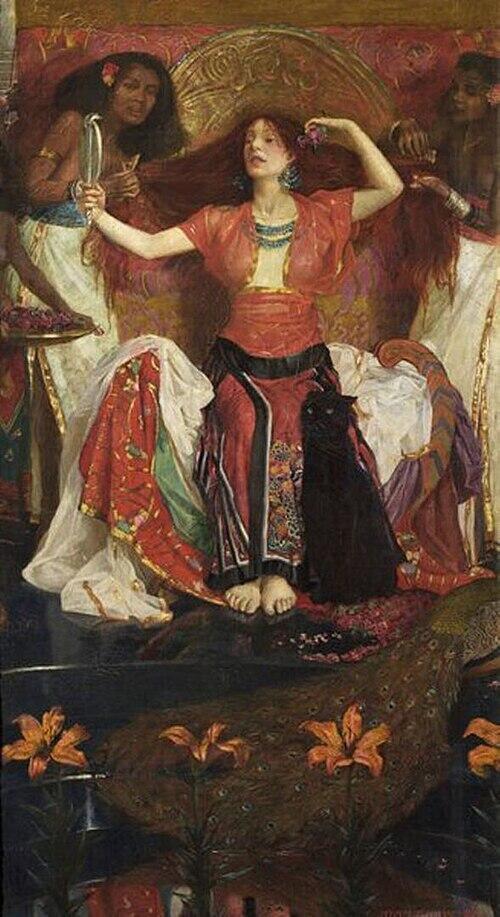
The leader who called a prophet 'the troubler of Israel'
It is impossible to truly understand the Israelite-Phoenician queen Jezebel without first understanding her husband, Ahab, one of Israel’s greatest kings.
The Bible recounts how, after the death of King Solomon, the united kingdom split into two: the Kingdom of Judah under Rehoboam and the Kingdom of Israel under Jeroboam. Jeroboam strayed from God’s ways, and through the prophet Ahijah, God promised to bring disaster upon his house.
After more than 20 years on the throne, Jeroboam died. Six kings followed him in rapid succession: Nadab, Baasha, Elah, Zimri, Tibni and Omri. Then came Ahab — and he was different. He was a leader.
The six relatively mediocre kings before him focused mainly on political and military matters. Religion and culture interested them far less, and they largely continued Jeroboam’s legacy. Ahab rejected that passivity. In his view, a king was not merely a governing figure responsible for national security. A ruler, he believed, had to reshape his people according to his worldview, including in spiritual and moral matters.
Ahab therefore decided to institutionalize idol worship in Israel. The Bible states: “And Ahab made an Asherah. Ahab did more to provoke the God of Israel, to anger than all the kings of Israel who were before him.”
Rabbinic tradition was equally harsh. Rabbi Yohanan said Ahab inscribed on the gates of Samaria that he denied the God of Israel, and claimed there was not a single furrow in the land where Ahab had not placed an idol and bowed to it.
This organized rejection of God eventually led to the dramatic confrontation between Ahab and the prophet Elijah. Ahab mocked the prophecy that idol worship would bring drought upon the land, and Elijah responded by declaring that drought would indeed come.
Yet alongside this organized apostasy, Ahab was also regarded as a great ruler.
“It is important to remember that Ahab was responsible for a major construction boom in the land,” said Rabbi Nechemia Steinberger, rabbi of Ohel Yitzhak synagogue in Jerusalem and host of a Bible podcast on the Kikar HaShabat website. “He built many new cities and led the people into one of the most prosperous economic periods in their history. Militarily and politically as well, Ahab’s empire was considered one of the greatest in Israel’s history.”
Steinberger notes that rabbinic tradition says Ahab “ruled the world,” with hundreds of kings subject to him. Archaeological inscriptions discovered in the 19th century also describe his vast military power, including an unusually large number of soldiers and chariots.
Steinberger believes this explains why Ahab, meeting Elijah during the years of drought, angrily asks him: “Is that you, troubler of Israel?”
Ahab appears genuinely convinced that Elijah, perhaps through mystical powers, had brought the drought upon the people. The encounter occurs while Ahab himself is searching for water and grass alongside Obadiah — again presenting him as a king personally concerned for his people.
Ahab’s death would once again combine these contradictions. Before the great battle against the king of Aram, he ignored the warnings of the true prophet Micaiah, who predicted defeat, and instead listened to 400 false prophets promising victory.
During the battle, Ahab fought on the front lines like an ordinary soldier until a stray arrow struck him. Blood poured from his body, yet he refused to lie down or evacuate, remaining upright in his chariot so his troops would not see his condition and lose morale.
The Bible describes how he finally died by evening, his blood filling the floor of the chariot. According to the text, dogs later licked his blood exactly as Elijah had prophesied.
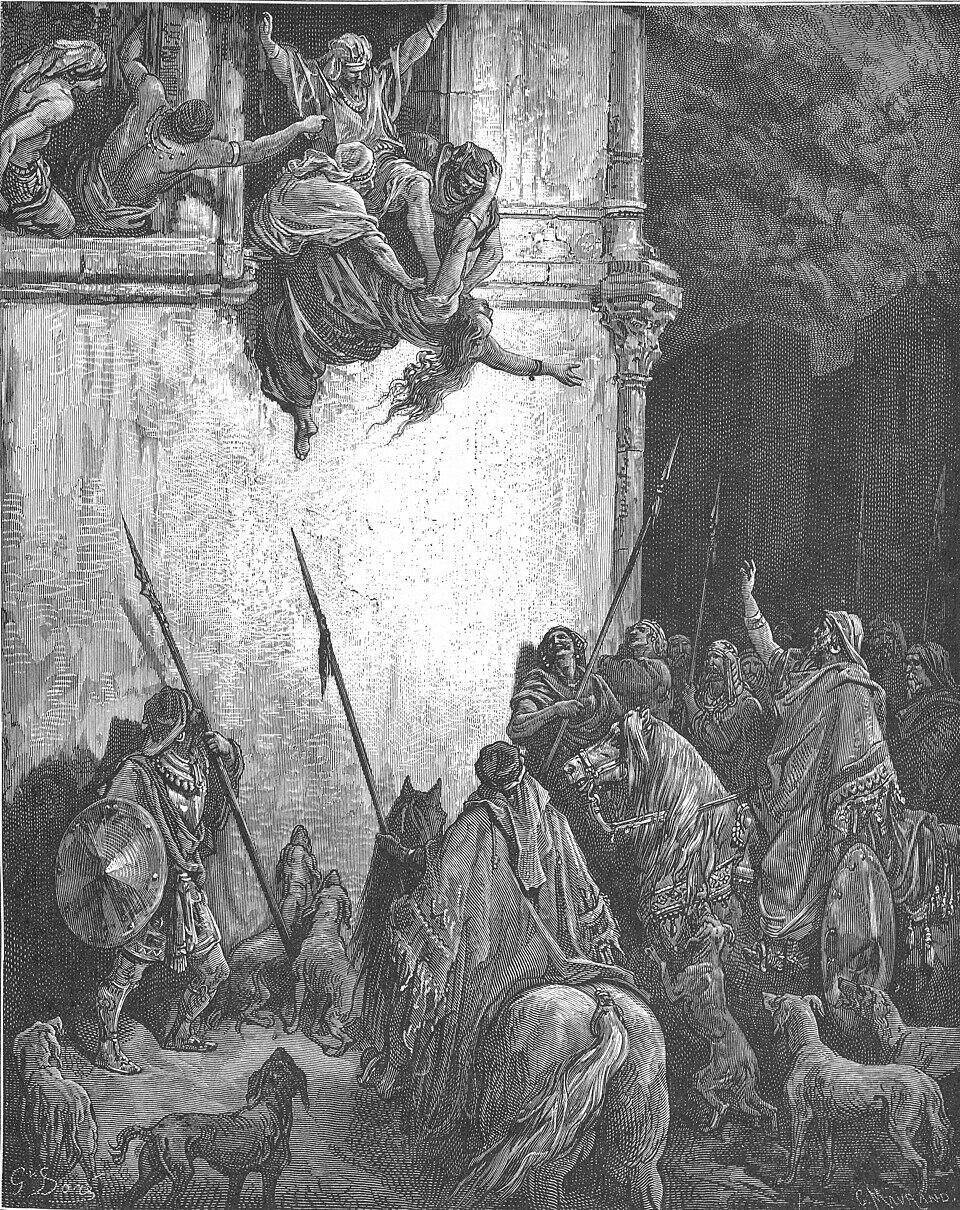
The Death of Jezebel – Engraving by Gustave Doré
The mastermind
Despite the negative associations surrounding her name, scholars believe “Jezebel” may originally have been a prestigious royal title. She was the daughter of Ethbaal, king of Sidon and Tyre. By marrying the daughter of such an influential foreign ruler, Ahab hoped to strengthen ties between the kingdoms.
Political marriages were common in the ancient world, but Ahab may not have realized that Jezebel had no intention of serving merely as a decorative symbol of the alliance.
If she was coming to Israel, she intended to wield power.
And she did. Ahab quickly learned that he could rely on his strong-willed wife in both the theological and political arenas. Whether the two were deeply in love or whether Jezebel’s devotion was primarily a means of preserving her own power is impossible to know, but the biblical account is unequivocal regarding her influence: “There was none who sold himself to do what was evil in the sight of the Lord like Ahab, whom Jezebel his wife incited.”
Rabbinic tradition adds that every day she weighed Ahab and donated an equivalent weight in gold to idol worship — a kind of intimate pagan ritual reserved only for the two of them.
But Jezebel understood that this was not enough. Recognizing the influence of God’s prophets, she launched a mass campaign against them while simultaneously building her own royal court of 850 prophets of Baal and Asherah.
This was power that could not be ignored. Not only did the kingdom’s greatest statesman stand beside her, but nearly a thousand prophets figuratively ate from her hand.
What she failed to account for was Elijah.
The prophet from Gilead, unafraid of confronting Ahab, declared that rain would cease. He later staged the dramatic showdown on Mount Carmel, where fire descended from heaven to consume his offering while ignoring those of the false prophets. Afterward, Elijah brought the false prophets down to the Kishon River and slaughtered them.
When Ahab informed Jezebel of Elijah’s actions, she erupted in fury and vowed revenge. She even sent Elijah a direct message warning that within a day his life would be taken just as he had taken the lives of her prophets.
Elijah fled once again and later passed his prophetic authority to his disciple Elisha.
When the king’s honor was hurt
The story of Naboth’s vineyard offers another glimpse into the dynamic between the royal couple.

Clusters of grapes in the vineyard
(Photo: David Silverman / Getty Images)
Ahab descended to his winter palace in Jezreel and noticed a vineyard he desired. He asked Naboth for it, but Naboth refused to part with his ancestral inheritance.
Ahab reacted dramatically, returning home “sullen and vexed,” lying on his bed, turning his face away and refusing to eat.
Why was he so devastated? After all, it was only a vineyard.
Steinberger explains that Jezebel immediately grasped the deeper issue: the king’s honor had been wounded. She promised to restore his status. The vineyard itself mattered less than what it represented — the authority of the king.
“Do you now reign over Israel? Arise, eat bread, and let your heart be joyful; I will give you the vineyard of Naboth the Jezreelite.” Jezebel effectively tells him.
Naboth, unknowingly, became a central figure in the cruel drama surrounding the emotions of the man sitting on Israel’s throne.
Jezebel sent letters in Ahab’s name to the elders and judges of Jezreel. False witnesses soon appeared, accusing Naboth of cursing God and the king. The corrupt judges accepted the testimony, sentenced Naboth to death and had him stoned outside the city.
They then sent Jezebel a brief message: “Naboth has been stoned and is dead.”
That was enough. Jezebel hurried to Ahab to inform him that Naboth was gone and the vineyard was now his.
As Ahab happily made his way to claim the vineyard, Elijah confronted him with the famous rebuke: “Have you murdered and also taken possession?”
Why did Elijah address Ahab rather than Jezebel, who orchestrated the scheme? Politics, it seems, never changes. Kings, presidents and prime ministers throughout history have claimed they “did not know” about the actions of their wives, children or aides. Others were blamed — chiefs of staff, advisers, assistants. They were the guilty ones. The rulers themselves, supposedly, knew nothing.
The queen’s end
After Ahab’s death, his son Ahaziah became king. When Ahaziah died childless, his brother Jehoram succeeded him.
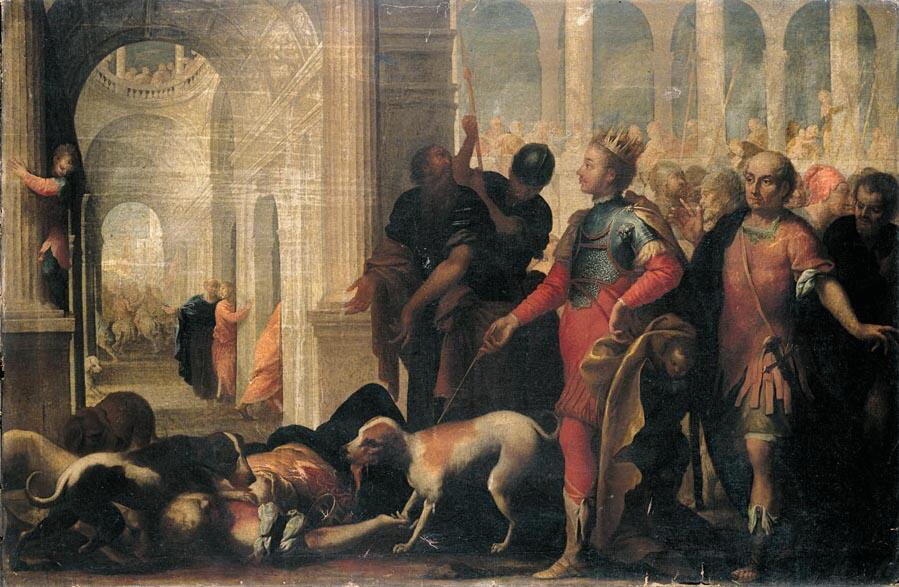
Queen Jezebel is punished by Jehu – painting by the Italian painter Andrea Celesti
Meanwhile, Elisha instructed one of the prophets to anoint Jehu son of Jehoshaphat as king. His mission was to destroy the house of Ahab and establish a faithful and righteous monarchy.
Jehu, portrayed as cold and fully self-controlled, quickly rode to Jezreel, where Jehoram was staying. When Jehoram asked him, “Is it peace, Jehu?” the new king answered furiously: “What peace, so long as the prostitution of your mother Jezebel and her witchcraft abound?”
Jehoram attempted to flee but was killed, his body thrown into Naboth’s vineyard. Jehu then turned his attention to Jezebel herself.
The queen mother had already heard of the revolt and prepared for Jehu’s arrival in her own way: “She painted her eyes, adorned her head and looked out the window.”
Why beautify herself at such a moment? Perhaps Jezebel hoped to seduce the new ruler and save her life. More likely, she chose to die as a queen — regal and fearless to the end.
Jehu was unmoved. Looking up at the window, he called out: “Who is on my side? Who?” And two or three eunuchs looked down at him. “Throw her down!” yelled Jehu. So they threw her down.
They did.
Her blood spattered the wall and the horses, and Jehu trampled her under his horse's hooves.
Moments later, Jehu calmly sat down to eat and drink. Only afterward did he order that Jezebel be buried, “for she is a king’s daughter.”
But when servants went to bury her, they found only her skull, feet and palms. The rest had been devoured by dogs, fulfilling Elijah’s prophecy that “Dogs will eat Ahab's wife Jezebel at the plot of land in Jezreel.”
Rabbinic tradition explains that the queen’s skull, hands and feet remained intact because she used to celebrate with Israelite brides and grooms on their wedding days, dancing, clapping and rejoicing with them.
For Steinberger, this final detail captures the unusual complexity that defined the royal couple: genuine concern, empathy and attentiveness toward ordinary people alongside profound moral and theological corruption.