

Every evening, shortly before sunset, the largest delegation in Santo Domingo descends on the El Embajador hotel. Unlike the participants in the sixth Latin America conference of the Combat Antisemitism Movement, or CAM, which ended on August 26, it is not registered at reception, does not need a name badge and does not wait for police vehicles to escort it. The more than 1,500 green Hispaniolan parakeets, an endemic species on the island, crowd into an Indian almond tree at the hotel entrance and make enough noise to rival even the 70 lawmakers and senior Latin American officials from 19 countries gathered inside.
Scientists have been tracking this strange urban natural phenomenon for years, with the tree canopy looking as though it might collapse under the weight of the birds. It is unclear why they chose this particular tree as their nightly roost, but the division is clear: a five-star hotel for humans in the back, an all-inclusive hotel for parrots in front. We make the mistake of people who did not read the fine print, walk beneath them and quickly discover what is included in the package.
Noisy crowds of parrots outside the hotel in Santo Doming
(Video: Daniel Edelson)


Either way, El Embajador is a fitting backdrop for a conference about politics, memory and Jews. The hotel opened in 1956 during the rule of dictator Rafael Leónidas Trujillo, built to host fellow dictators from around the world, including Marcos Pérez Jiménez of Venezuela. It was considered the first luxury hotel in the Dominican Republic and to this day serves as the official salon of the local elite. Years later, scenes from “The Godfather Part II” were filmed there.
Christopher Columbus reached the island in 1492, and six years later his brother Bartholomew founded Santo Domingo, the oldest continuously inhabited European city in the Americas. It was here that the first cathedral, hospital, customs house and university in the New World were established. Now, in honor of the conference, the government has added another “first” to the list: The Dominican Republic has become the first country in the Caribbean to adopt the International Holocaust Remembrance Alliance, or IHRA, definition of antisemitism. The irony is that the region’s largest conference landed in a country with almost no history of persecuting Jews. Quite the opposite — when the world’s doors were closing to Jews, this country left one open.
Gallery
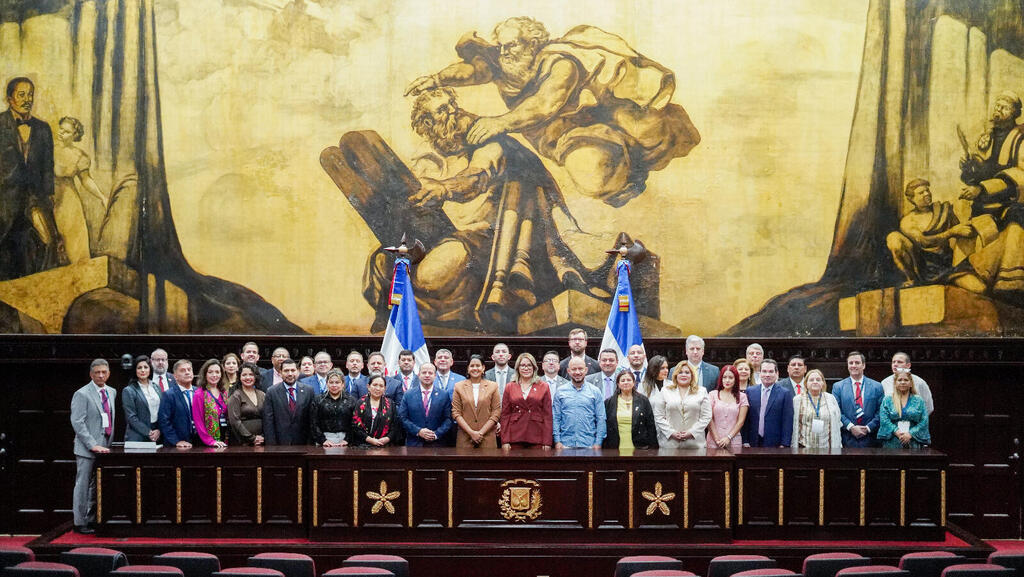
CAM delegation visits the Dominican Republic Parliament's Chamber of Deputies
(Photo: Daniel Edelson)
On the evening we arrive at the hotel, the local aristocracy is celebrating at a Golden Age of Hollywood-themed ball. The women are in sequined gowns, the men in tuxedos, a Rolls-Royce Ghost is parked at the entrance and the entire lobby is an homage to “The Great Gatsby.” Outside is a manicured tropical jungle, a spa and an infinity pool; inside, each room has a private Jacuzzi at its center. All this luxury costs less than a room in a questionable New York hotel. One conference participant, Nora Bracho, a Venezuelan lawmaker who stayed here nearly 20 years ago, surveys the room and solemnly informs us: Nothing has changed.
Despite the distance, we quickly discover many similarities between Israel and the Caribbean. In both cases, these are loud, intensely family-oriented cultures. When the plane’s wheels touch the runway, applause breaks out; the seat-belt sign goes off and the aunt in the next seat is already charging into the aisle, stepping on feet and gently scolding the flight attendants. In the arrivals hall, it feels as if the entire country has come to pick up the entire country. Whole families crowd behind the barrier, shouting names and waving phones.
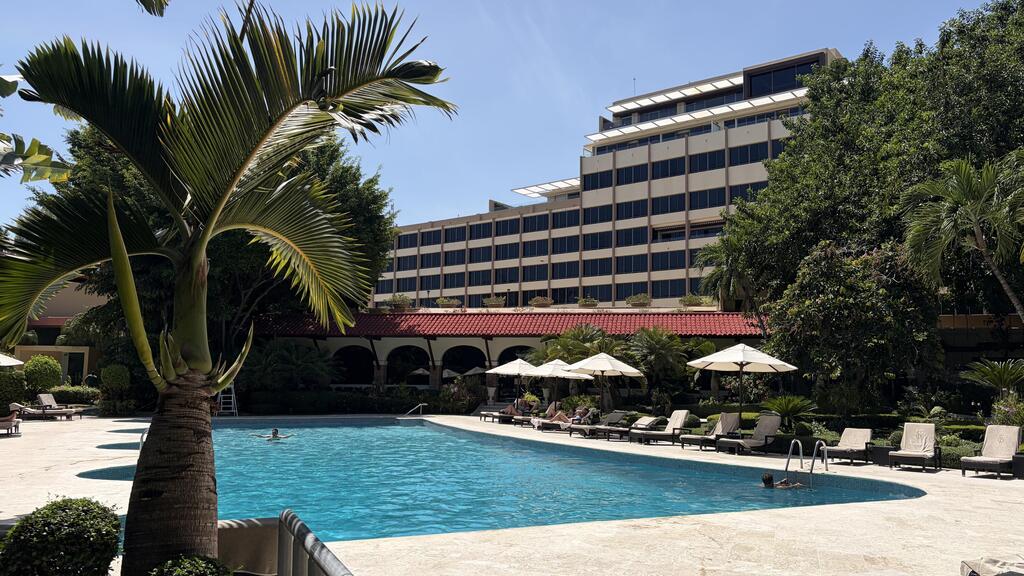
El Embajador hotel in Santo Domingo
(Photo: Daniel Edelson)
Outside the terminal, Uber offers the option of ordering a motorcycle. The Dominican Republic was the first country in Latin America where Uber Moto was launched. The driver maintains the pioneering spirit and it turns out he left the passenger helmet at home. In the event of an accident, matters are apparently settled between those involved without bringing in the app or the insurance company, assuming there was one.
We weave between cars, absorb potholes and pass vehicles driving against the flow of traffic. A police cruiser passes us, but the officers do not seem impressed. Traffic on the highway is almost at a standstill, but Yanir Drori, vice president of the island’s tiny Jewish community, sees the glass as half full: “Traffic jams are a sign of an advanced country. It means we’re like respectable cities around the world.”
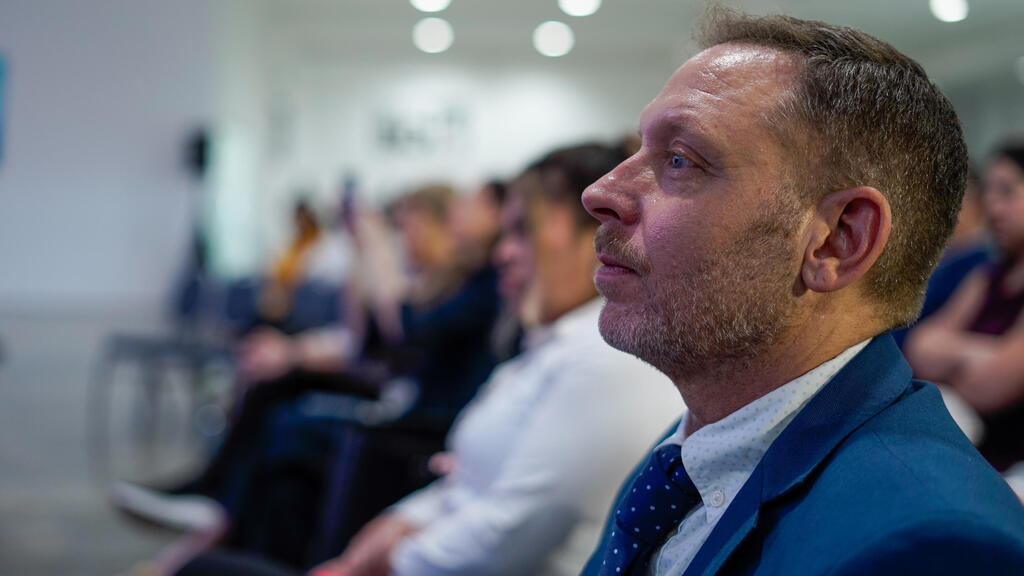
Shay Salamon, CAM’s director of Latin American affairs
(Photo: Daniel Edelson)
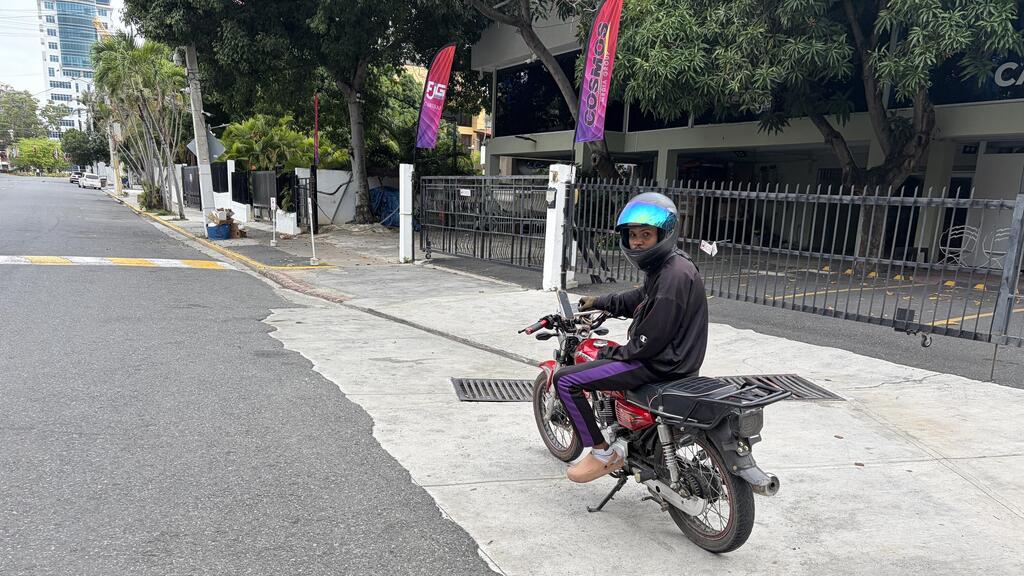
'Uber Moto': Shared motorcycle ride
(Photo: Daniel Edelson)
At the hotel, every conference participant receives a gift bag that doubles as an introductory course to the country: cassava crackers, plantain chips, coconut milk candy, a wooden fan and the most valuable item of all — a bottle of water, because even at a five-star hotel guests are warned not to drink from the tap. The fan goes into action immediately. Outside it is more than 35°C, and the humidity makes every suited lawmaker look as if he has made a bad political decision. During the conference, police vehicles escort us everywhere.
The doors opened to Jews
The Dominican Republic is defined as a “Second World country,” but the street offers a more useful definition: two worlds sharing the same island. Chickens on the metro, malls with Zara and Michelin restaurants alongside power outages, electrical cables wrapped around utility poles in an architecture of chaos and many homes without air conditioning. Nearly one in six residents lives in poverty, despite massive tourism and free-trade zones producing clothing and textiles for international brands such as Nike, Timberland and Hanes.
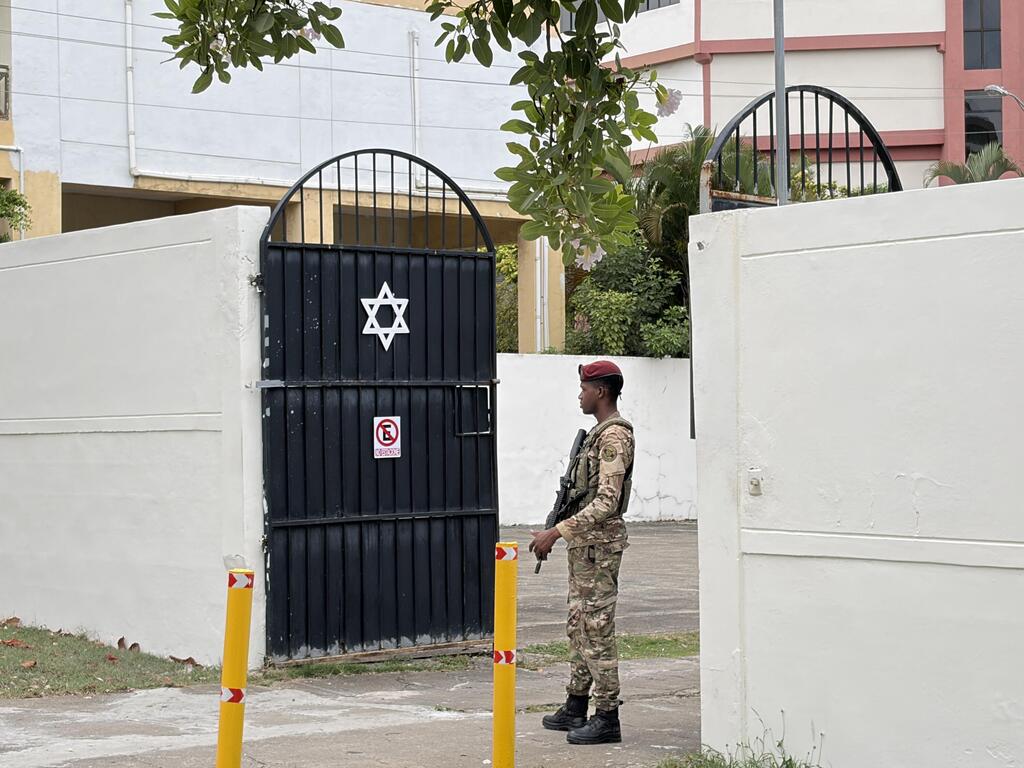
Guard at the entrance to the only active community synagogue in the country
(Photo: Daniel Edelson)
Clothing and homes are painted red, yellow, blue and green, and bachata and merengue — two forms of music and dance born here — spill into the streets. Christianity overlooks it all. The country is predominantly Catholic, with a large evangelical population. At the center of the national flag is a cross and an open Bible, while above the podium in parliament a huge mural depicts Moses receiving the tablets.
In 1937, dictator Trujillo ordered what became known as the “Parsley Massacre,” in which residents of Haitian origin were murdered in the border region. His soldiers held up sprigs of parsley and asked suspects to say its Spanish name, perejil; those who struggled with the pronunciation were identified as Creole-speaking Haitians and killed. Estimates put the death toll at close to 15,000.
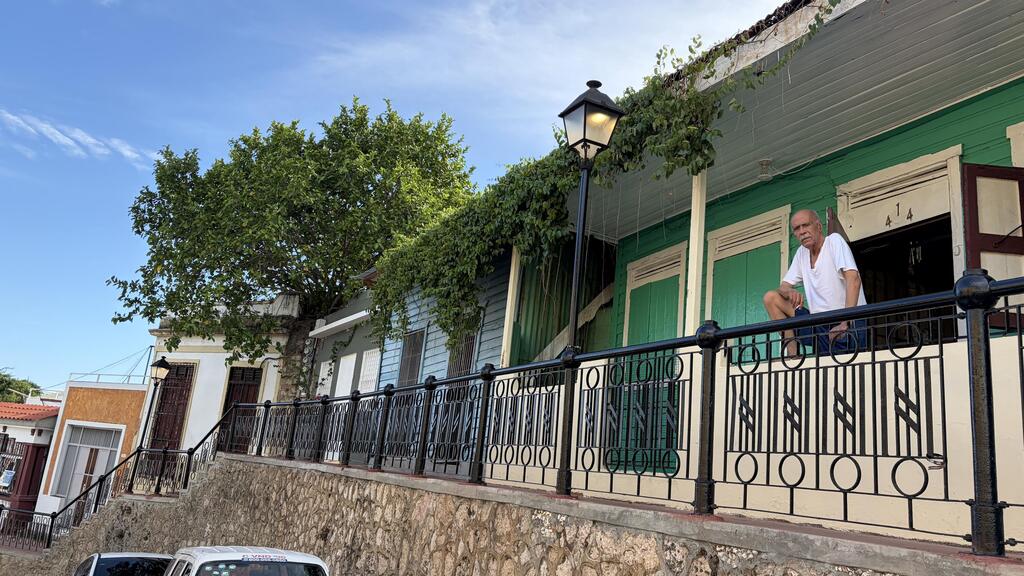
Parts of 'The Godfather II' were filmed in Santo Domingo
(Photo: Daniel Edelson)
A year later, at the Evian Conference, while countries around the world explained why they could not accept Jews fleeing Europe, Trujillo offered refuge to as many as 100,000 refugees. Historians point to his desire to rehabilitate his image after the massacre and also to “whiten” the country’s population.
Thousands of visas were issued, but only 645 Jews ultimately arrived in the country. Many settled in Sosúa in the north. The urban Europeans were required to become tropical farmers, raising cattle, making cheese and butter and establishing a cooperative that became a leading food brand that still exists today, Productos Sosúa.
During the conference participants’ visit to parliament, local lawmaker Elías Wessin Chávez says he still buys their butter. “When all the doors closed, the door of the Dominican Republic remained open,” he says.
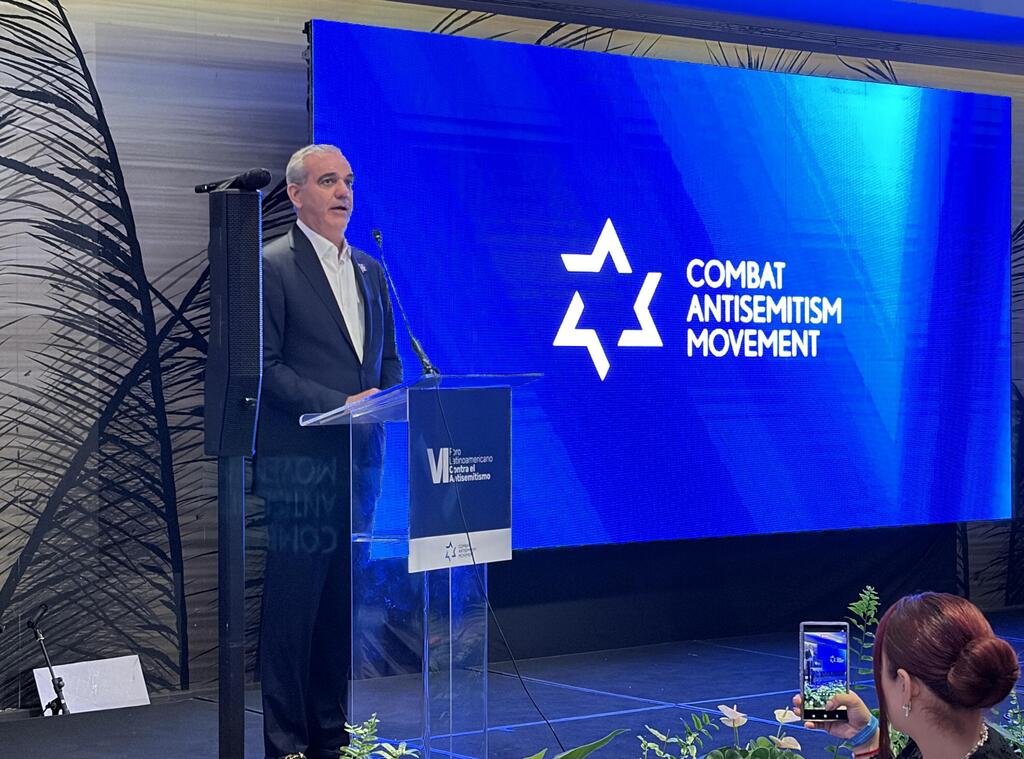
Dominican Republic President Luis Abinader announces the adoption of the IHRA definition of antisemitism
(Photo: Daniel Edelson)
Alongside adopting the antisemitism definition, President Luis Abinader promised at the conference 50 million pesos, about $850,000, for a new building for the Jewish museum in Sosúa. Abinader, a hotel magnate elected on a pledge to eradicate corruption, appeared in the Pandora Papers in connection with two shell companies he owned. He denied wrongdoing and today enjoys relatively broad support in the country.
Between legitimate criticism and hate speech
For Shay Salamon, CAM’s director of Latin American affairs, and his right-hand woman Nurit Caplivschi, Abinader’s announcement was the moment when months of meetings, phone calls and persuasion turned into government policy. Throughout the week, the two looked like a mobile situation room. A senior official from Chile lost his wallet on the way to the airport; the father of one participant died and she had to move up her flight; an emergency in another community also required an immediate return home. Caplivschi moved between halls at the speed of someone one more phone call away from a nervous breakdown, but she answered the one after that too.
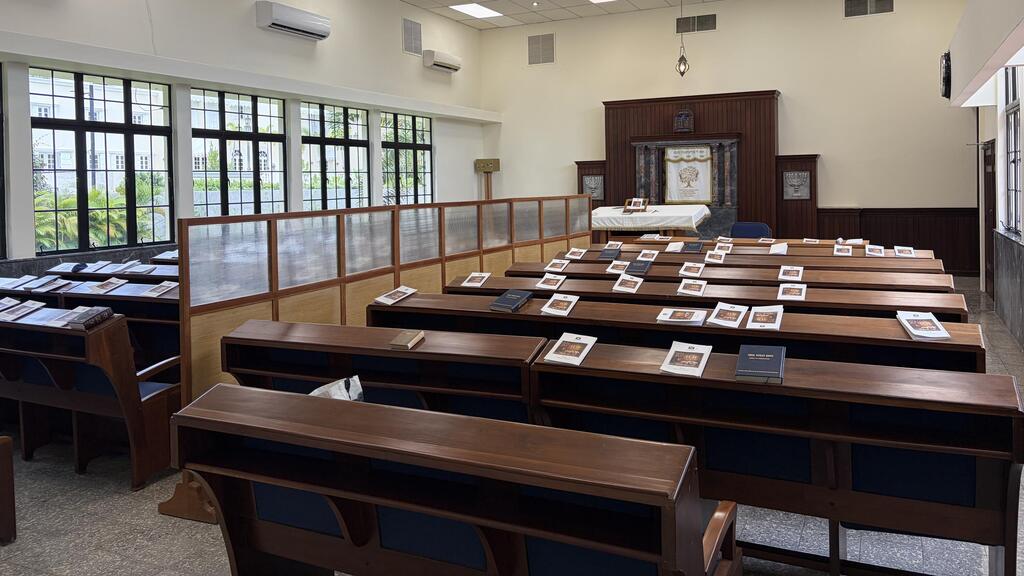
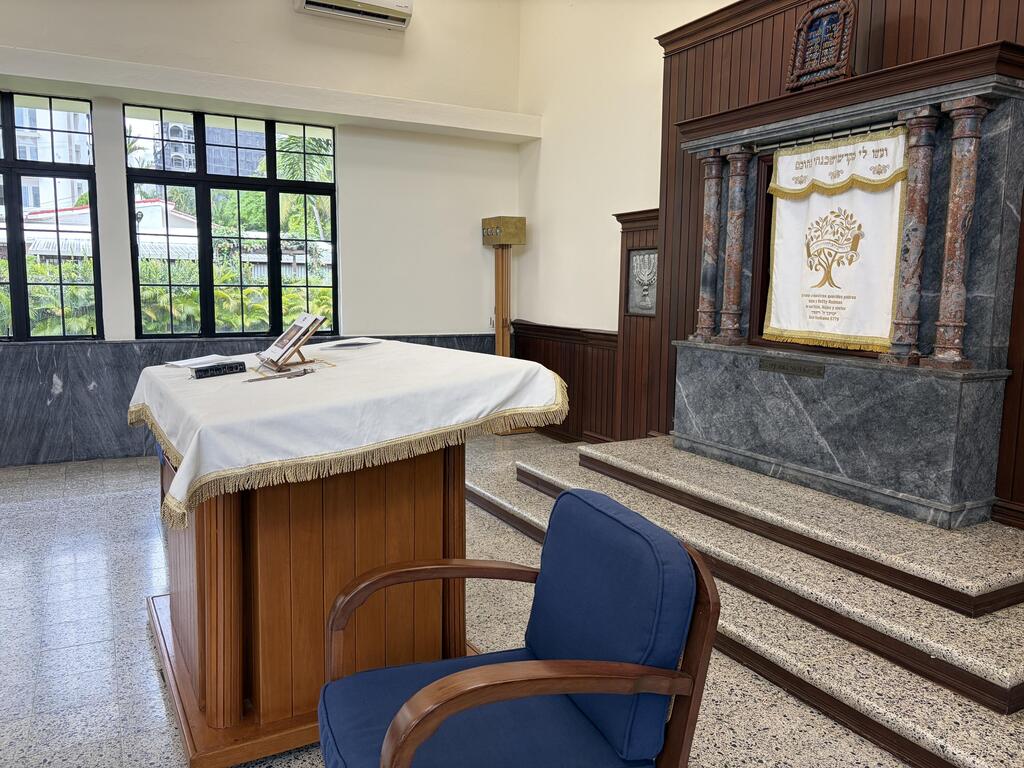
Inside the Santo Domingo community synagogue
(Photo: Daniel Edelson)
(Photo: Daniel Edelson)
In the end, the organizers are intensely mission-driven. “Fighting antisemitism is not the responsibility of the Jewish community,” Salamon says. “It is the responsibility of governments.”
Salamon, who is Israeli and Uruguayan, came to CAM after heading an IsraAID delegation to Guatemala and working with the country’s president. The first regional forum was held there in 2021 with eight countries; in Santo Domingo, the number was already approaching 20. His vision is to create a Latin American voice capable of operating between crises and to connect lawmakers with counterparts in countries that have almost no infrastructure for fighting antisemitism. Argentina, with its large Jewish community, memory of two deadly terrorist attacks and a government friendly to Israel, is in his view a regional laboratory from which smaller countries can learn.
The IHRA definition of antisemitism, adopted in 2016, is not a law and is not legally binding. It describes antisemitism as a certain perception of Jews that may be expressed as hatred toward them and includes 11 examples, seven of them relating to Israel. Supporters say it gives police, education ministries and governments a common language. Critics, including human rights organizations and Jewish scholars, warn that an overly broad use of the term antisemitism could restrict legitimate criticism of Israel.
Salamon does not dodge the controversy. “It is legitimate to criticize Israel,” he says, “but to call Israel a ‘genocide state’ and blame Jews in the Diaspora for what Israel does is no longer legitimate.” In his view, a definition allows a state to monitor, educate and assign responsibility. “This is especially important at a time when antisemitism has become a digital product. The algorithm rewards radical hate speech because it generates reactions,” he explains.
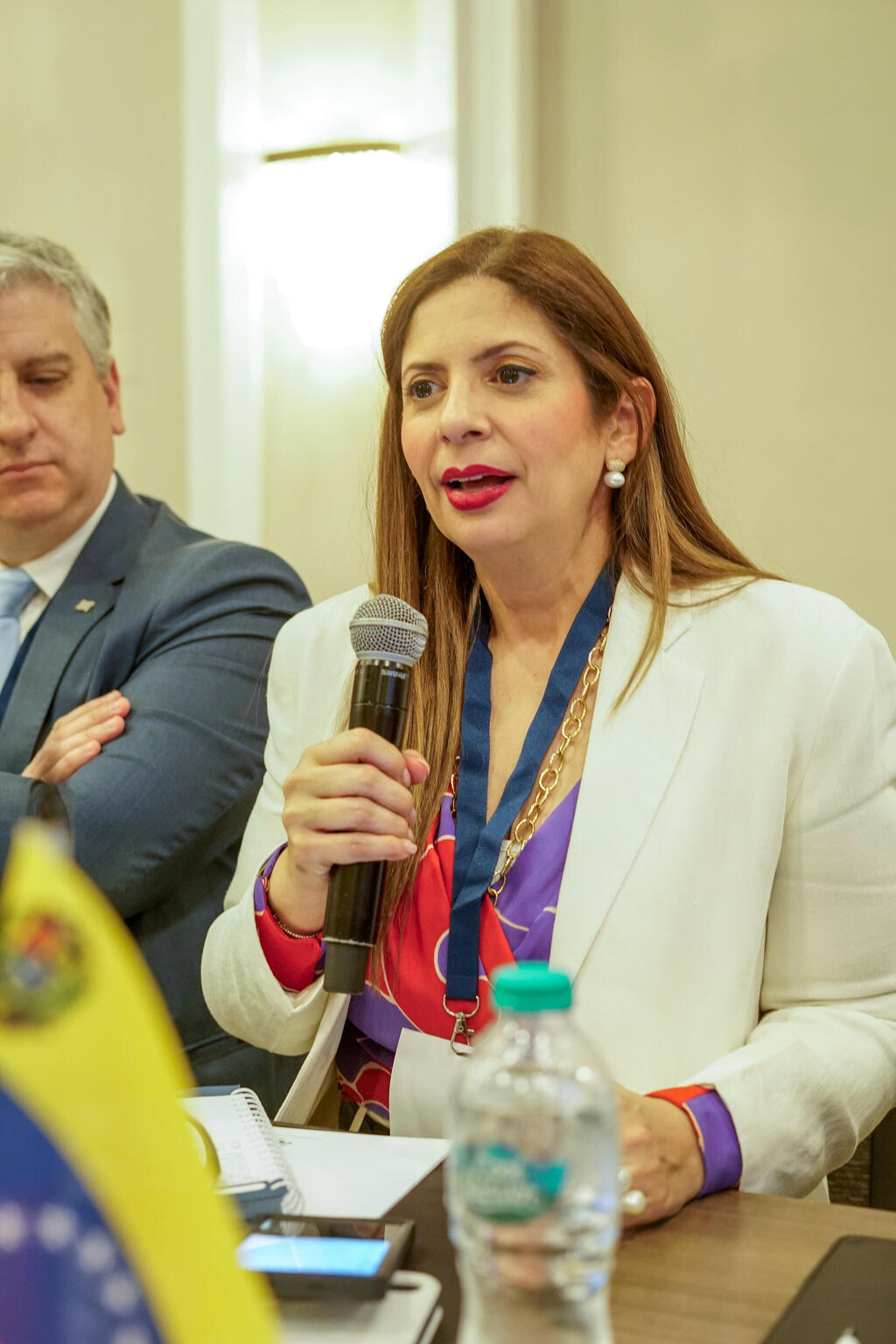
Venezuelan lawmaker Nora Bracho at the conference
(Photo: Daniel Edelson)
Abinader stressed in his announcement that defining antisemitism does not require support for any particular government or taking a position on the conflict. That same evening, the Foreign Ministry formalized the declaration, making the country the seventh in Latin America to adopt it. Rabbi Yehuda Kaploun, Donald Trump’s special envoy to combat antisemitism, promised Washington’s support and urged those in the hall to be “pro-Semites, not antisemites.”
Even before the announcement, the delegation takes over the Chamber of Deputies. Parliament is in recess and the guests are invited to be “Dominican lawmakers for a day.” They sit in the seats, play with the voting system and open drawers. Behind the marble they discover aspirin, open bags of peanuts and papers no one has thrown away. Bracho looks at the walls and says parliaments look the same everywhere in the world: “Everyone is desperate to project power.”
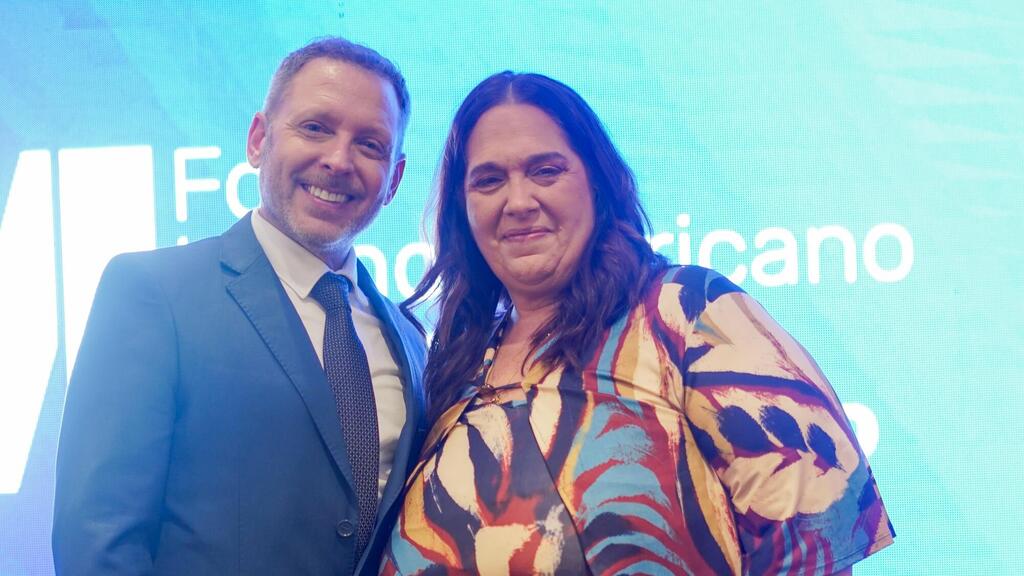
Shay Salamon, CAM’s director of Latin American affairs, and his right-hand woman Nurit Caplivschi
(Photo: Daniel Edelson)
Local lawmaker Carmen de la Rosa, a member of the Israel friendship group, says that, after October 7, Israel is an example of the power of survival. Chamber President Alfredo Pacheco warns that one must not wait for hatred to turn into violence. Wessin Chávez notes that the Holocaust did not begin at Auschwitz, but when propaganda took over reality. “You are allowed to criticize a government, including the Israeli government,” he says. “But attacking Jews because they are Jewish is antisemitism.”
At the end, the guests are handed bottles of iconic Dominican rum, which many complain they will not be able to take onto the plane.
The pendulum swings
Bracho, 55, turns out to be one of the delegation’s most colorful figures. Every time she is introduced as “a member of the Venezuelan Congress,” she immediately clarifies: “From the opposition!” She has no intention of being associated with the regime of Nicolás Maduro or his replacement, Delcy Rodríguez. After bariatric surgery she lost nearly 50 kilograms, and today divides her time between parliament in Caracas and Zulia state in northwestern Venezuela, while three poodles wait for her at home — “my children.”
In the car, she asks the driver to play Danny Ocean, a Venezuelan singer exiled to Miami and engaged to a Dominican model. The driver replies in rapid Dominican Spanish, compressing five words into a single syllable, and Bracho cannot understand him. In a way, it is a perfect mirror of Latin America in 2026.
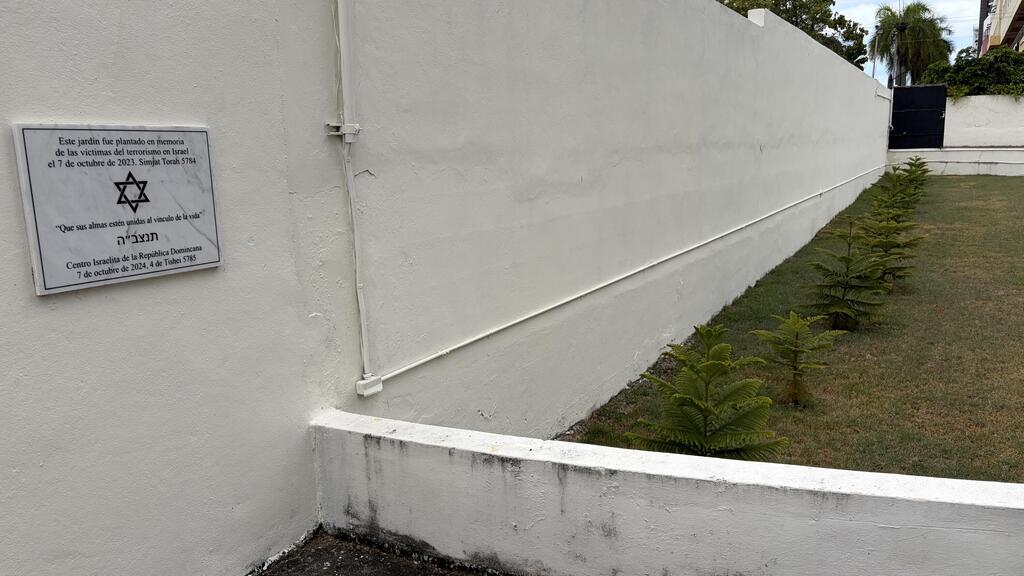
Memorial to October 7 victims
(Photo: Daniel Edelson)
According to her, the most admired person in Venezuela right now is “Uncle Trump,” who removed Maduro. Rodríguez, who had been Maduro’s right-hand woman, is “swallowing the frog” and “behaving herself” because “Trump’s gun is pointed at her head.” For years, Bracho says, Venezuelans were taught to support the Palestinians and distrust Israel — a mixture of alliances with Russia and China, left-wing tradition and an official message repeated until it became habit. “It was never entirely clear to us why,” she says.
Colombia, too, is undergoing change. Right-wing President Abelardo de la Espriella took office in August after four years of left-wing rule under Gustavo Petro. Conference participant Pastor Viviana Valbuena, who runs a Messianic congregation in Bogotá with her husband, Raúl Rubio, calls it “South America’s pendulum.” She spent part of her childhood in Nahariya, where her parents served with the United Nations, absorbing Hebrew and Israeli chutzpah, and now hopes the pendulum does not swing back too quickly.
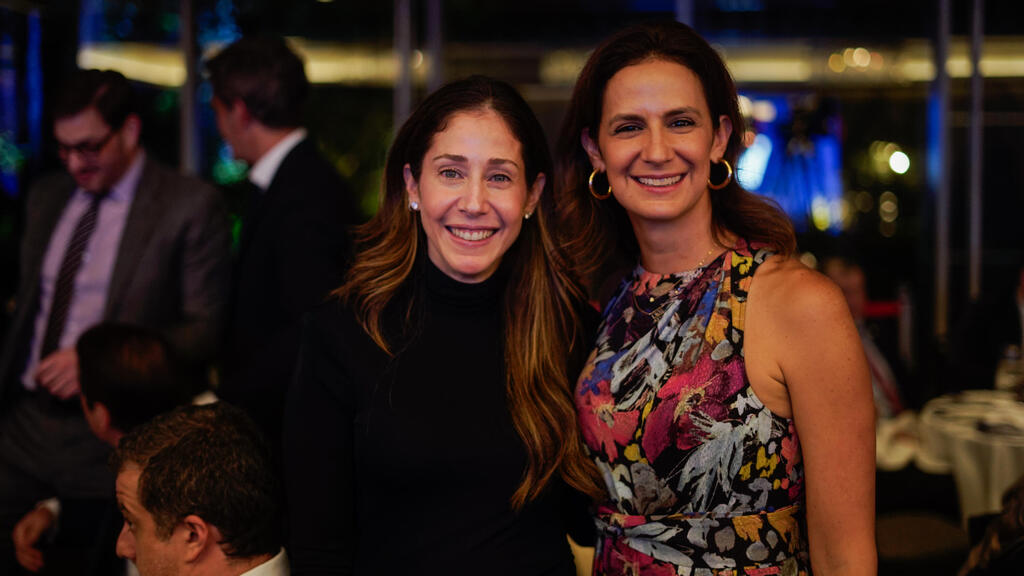
Deborah Apeloig and Karen Koenig
(Photo: Daniel Edelson)
According to her, Petro encouraged anti-Israel protests in the streets and on university campuses, and her and her husband’s fight against antisemitism felt like a struggle against the state’s official narrative. The conference gives her a “toolbox” for legislation and online work.
In Uruguay, by contrast, conference participant and educator Isabel Burstein has already stopped wearing a Star of David around her neck. Swastikas have appeared near her, at synagogues and in the Jewish cemetery, and Jewish students have been attacked. “I’m here because it’s important to get out of the ghetto and feel like family,” she says. “This conference reminds us that we’re not alone. What’s wrong with preaching a little to the choir? It strengthens us.”
Nearby is Dr. Washington Abdala, also from Uruguay, a former Harvard researcher and politician who served as speaker of the Chamber of Deputies and ambassador to the Organization of American States, or OAS, and later became a stand-up comedian and television personality. For him, a Christian of Lebanese-Syrian descent married to a Jewish woman, “this conference is not the answer. But it is part of a process that I am happy to take part in.”
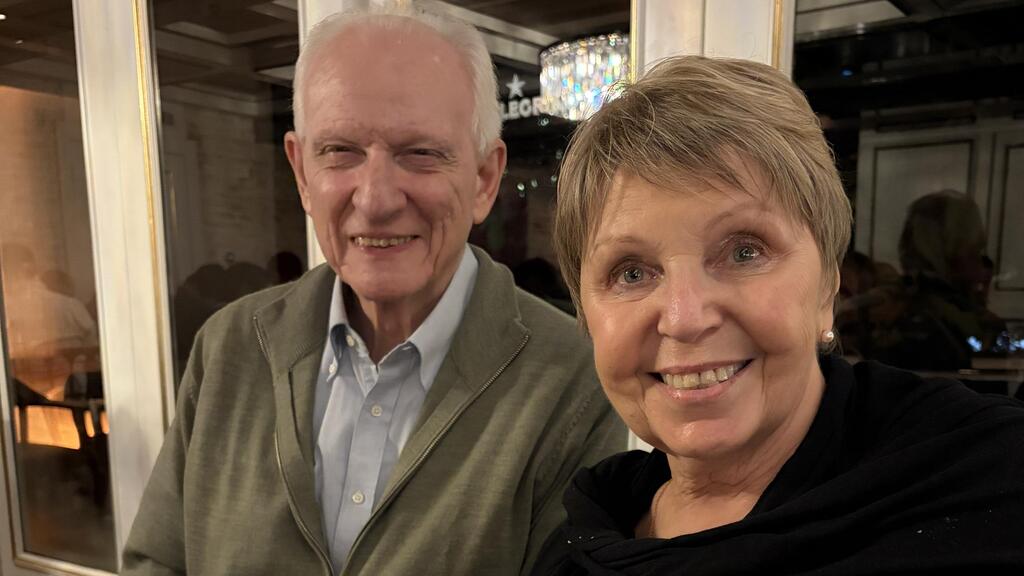
Isabel Burstein from Uruguay with her husband, Eduardo Kohn, who is responsible for Latin American affairs at B'nai B'rith International
(Photo: Daniel Edelson)
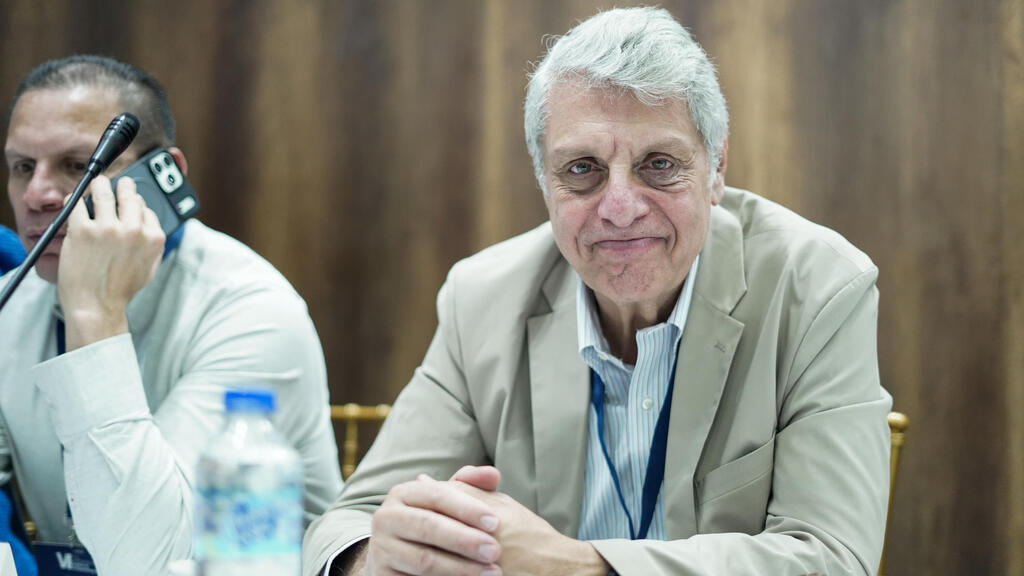
Dr. Washington Abdala of Uruguay, former speaker of the Chamber of Deputies and ambassador to the Organization of American States
(Photo: Daniel Edelson)
At an event in the courtyard of a museum in the colonial city, a saxophonist plays “Adon Olam” for us. Around him, delegates drip with sweat and wave the fans they were given. On the walls is an exhibition of 23 illustrations by Argentine cartoonist Adrián Franco, “No Discrimines,” intended to explain antisemitism to young audiences. It is an initiative of the Israeli, German and Argentine embassies together with CAM.
In fact, it is the first diplomatic event for Israel’s new ambassador, Oren Bar-El, who has been in the Dominican Republic for only a week and a half. “Young people ask what the Holocaust has to do with them. The question is how to reach them,” he says. “It is true that there is no antisemitism in the streets here, but the discourse starts on social media.”
CAM organizers want to bring the exhibition to additional countries, but in several cases, such as Mexico — despite its Jewish president, representatives demanded that a pro-Palestinian exhibition be displayed alongside it, and the plan was dropped.
Anti-Israel protesters arrive
The next day, at the University of the Caribbean campus, or UNICARIBE, it becomes clear that the discourse is not confined to the internet. In the middle of one discussion, a young man and woman stand up and shout “genocide.” The room freezes for a moment. They leave, get on a motorcycle and disappear.
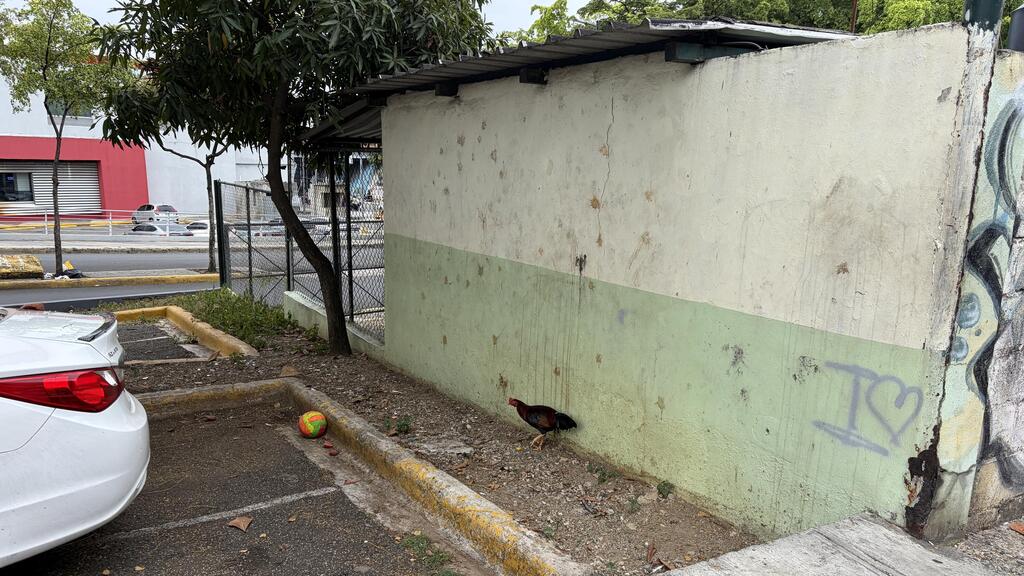
Chicken on the street in Santo Domingo
(Photo: Daniel Edelson)
Bracho and Deborah Apeloig, a Venezuelan-born Jewish influencer, are convinced they heard Venezuelan accents. Instead of confronting them, dozens of participants shouted “God bless you” and “We love you” at the two and blew kisses in their direction. “Hatred should only be answered with love,” Apeloig explains. But the incident cracks the sense of local immunity in a country that has barely known street-level antisemitism.
Karen Koenig knows this transition well. She is spokesperson for the local Jewish center, a social media influencer and granddaughter of Holocaust survivors. Twelve years ago she fled Venezuela with her husband because of the regime and the atmosphere toward Jews. She was trained at Yad Vashem in Israel and lectures about the Holocaust in schools. Her most viral video dealt with the Holocaust, and recently she has begun to notice comments such as “you Jews always play the victim.” When she asked people to pray for the return of the hostages during the war, she was told: “You are completely crazy.”
In her social media bio, she identifies herself as a Zionist and proud Jew. “People here don’t know Jews,” she explains, “so I show them that I’m as Jewish as it gets, so they can get to know the supposed ‘monster.’” Koenig helped organize the conference and invited a popular local influencer to speak at one of the sessions. She did not mention Israel or the war, only the fight against antisemitism, and he refused.
“He didn’t want his brand to be ‘contaminated.’ I don’t blame him,” she says. “I understand that he was afraid of the online debate. But the Holocaust did not come from nowhere. First there is exclusion, othering and stigma, and then violence can follow. It is not the same thing, of course, but there are lines you need to recognize. We are at the best possible moment to change this, before it is too late.”
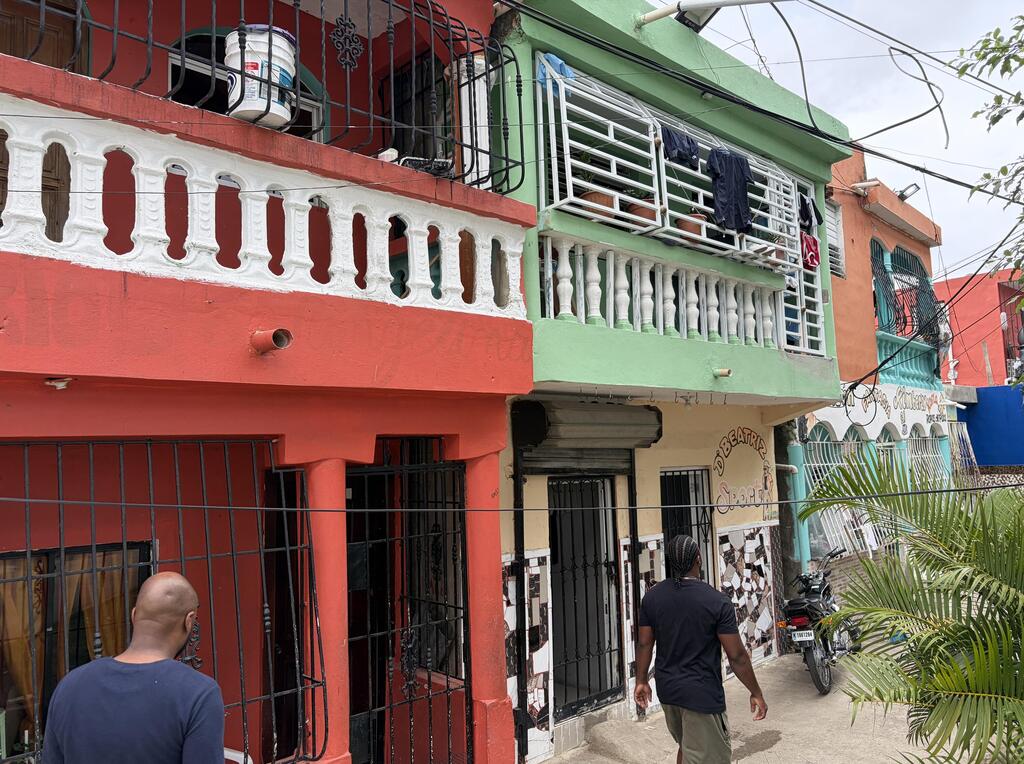
Houses painted in bright colors
(Photo: Daniel Edelson)
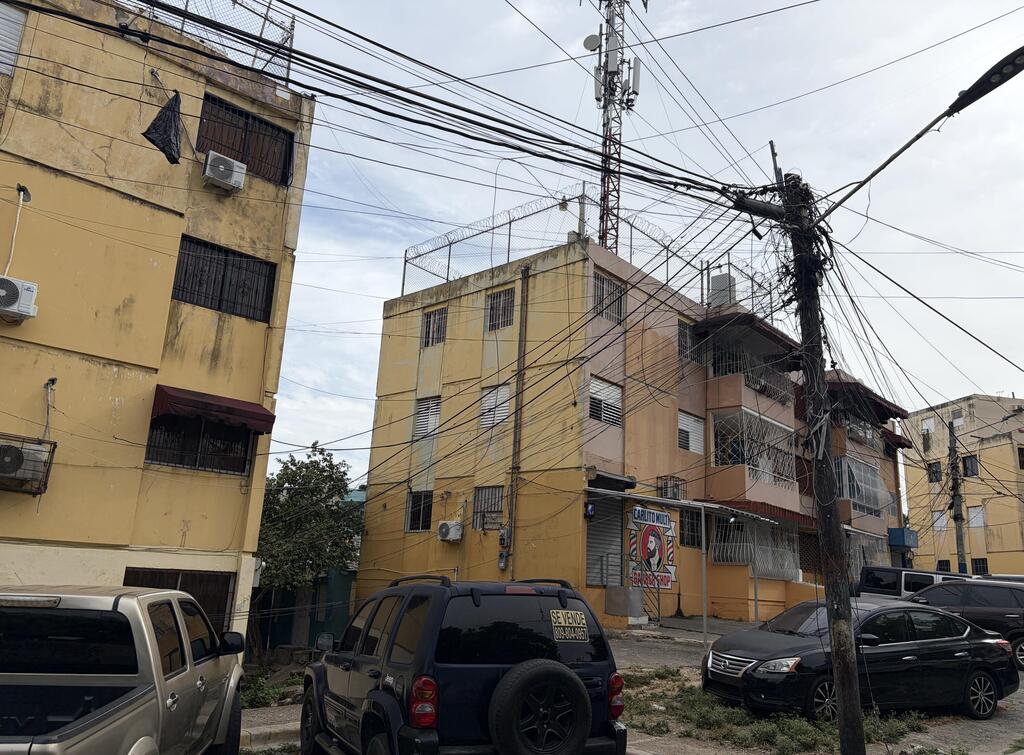
Another side of Santo Domingo
(Photo: Daniel Edelson)
International estimates until recently put the number of Jews in the Dominican Republic at around 100. Koenig and community vice president Yanir Drori speak of close to 1,000 if mixed families, newly arrived Israelis and part-time residents are counted. Many arrived after October 7, including young tech workers who work remotely. There is no full Jewish school, but there is Chabad, a kindergarten and Hebrew classes. The war increased anxiety and also brought the community out of the shadows.
People who had kept a low profile for years began giving interviews, holding public events and explaining what was happening in Israel. The community donated to kibbutzim in southern Israel and to the construction of shelters, and assisted with training on coping with post-trauma. “This is not a wealthy community like in North America,” Koenig says, “but we try to contribute to Israeli causes. It is very close to our hearts.” She says that, precisely at a time when social media became more hostile, October 7 also brought into the community Jews who previously had wanted nothing to do with its institutions.
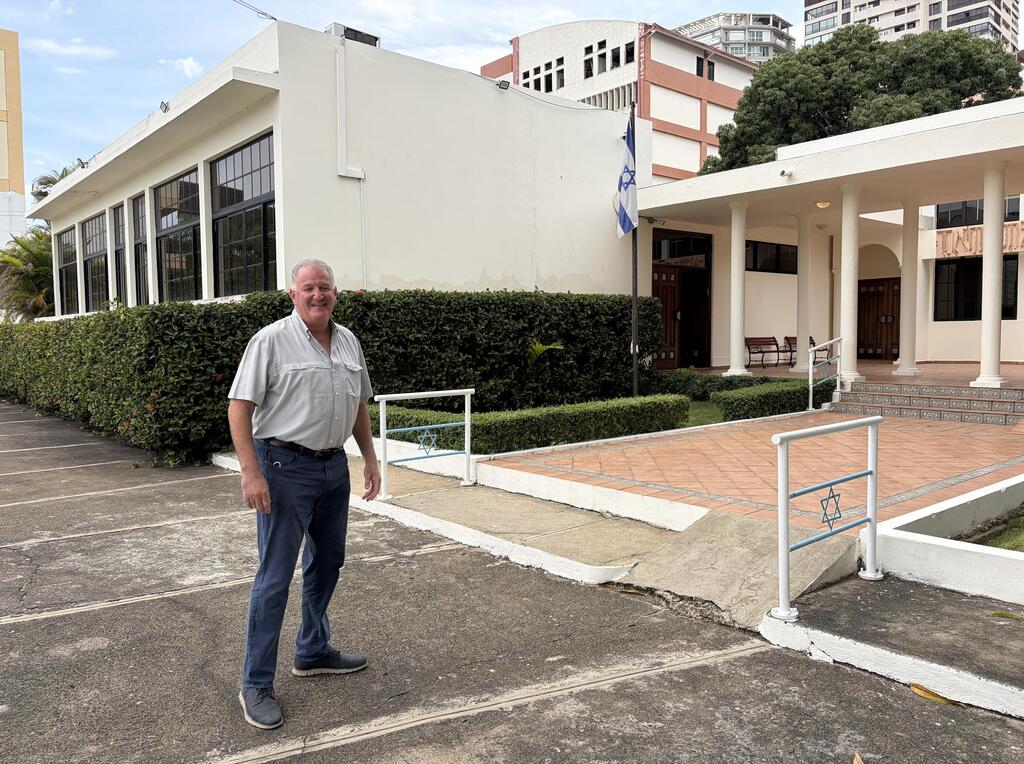
Community vice president Yanir Drori outside the local synagogue
(Photo: Daniel Edelson)
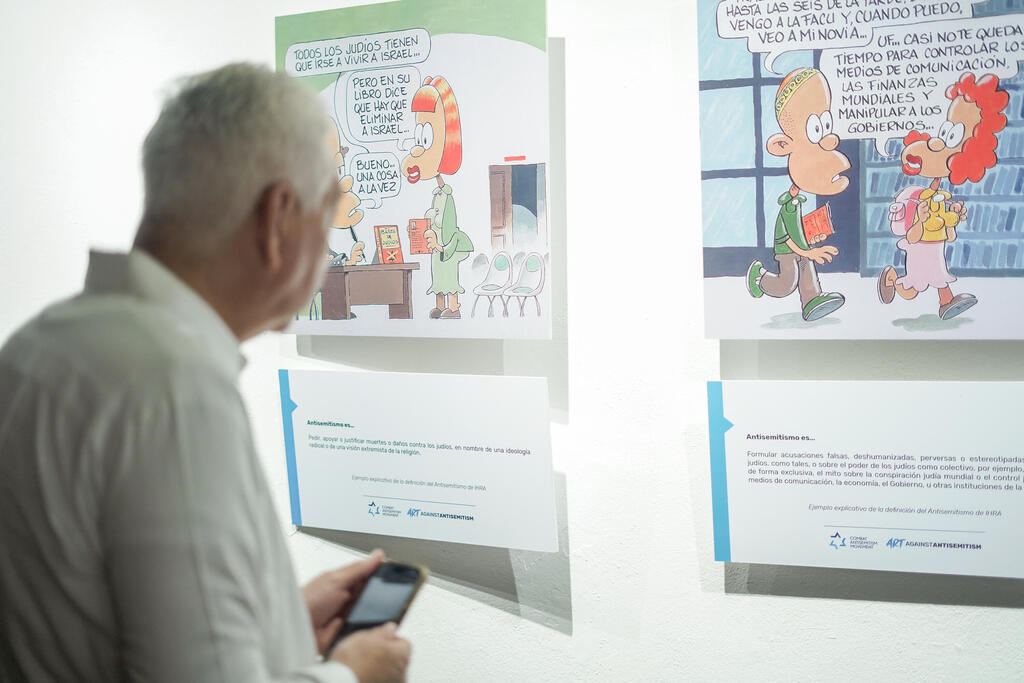
Exhibition of 23 illustrations by Argentine cartoonist Adrián Franco, 'No Discrimines,' intended to explain antisemitism to young audiences
(Photo: Daniel Edelson)
Drori, 54, is a small one-man empire. He employs about 1,400 people across several businesses, including ForceSOS, an app he founded for ordering emergency services. He is originally from Kibbutz Beit Kama. His family moved to Venezuela, he returned to Israel as a lone soldier and came to the Dominican Republic to visit a friend. He fell in love with the place, married a local woman, divorced, moved to the United States, met his current wife Jennifer on a plane and eventually returned to Santo Domingo. On the day of the conference, his 18-year-old daughter arrived in Tel Aviv for a Masa program, and he is over the moon.
He takes us to the only active community synagogue in the country, aside from two Chabad houses. At the entrance, an armed soldier in a red beret greets us, courtesy of the state. The running joke here is that sometimes there are three guards for five worshippers. The property, now worth tens of millions of dollars, was given to the community during the Trujillo era. Trees have been planted in the courtyard in memory of relatives of community members murdered on October 7. Drori has a tree there too, in memory of Yehonatan Hagbi, who was murdered in Moshav Yakhini.
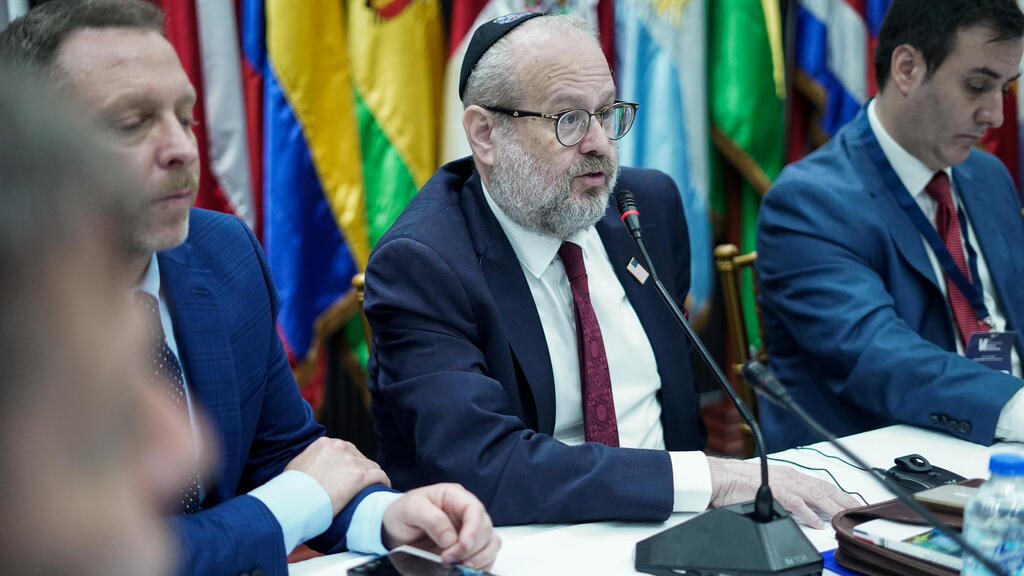
Rabbi Yehuda Kaploun, US President Donald Trump's special envoy to combat antisemitism
(Photo: Daniel Edelson)
On the way back, we pass an Arab restaurant called Habibi. Drori is friends with the owner. “The Jewish community lives here alongside the Muslim community in very good relations. That is not where the hatred comes from,” he says. He is careful not to get overly excited about the new pro-Israel wave on the continent: “Just as it came, it can disappear.”
On the final day, the delegates are driven to a Caribbean beach an hour from the city, with pale sand, turquoise water and glasses of piña colada sweating instead of the guests. Apeloig asks each person to promise one practical change by the next conference. A representative from Costa Rica pledges to bring to his country the cartoon exhibition shown at the conference. Others promise to start at home, so their children will not grow up in an atmosphere of hatred.
Caplivschi’s phone continues ringing even on the sand, and Salamon is already talking about the next conference, with Colombia marked as a possible host. Valbuena likes the idea: “A great miracle happened in Colombia.”
- The writer was a guest of the Combat Antisemitism Movement — CAM