

Not many people know this, but the holiday commonly known as Sigd actually has another name of equal significance: “Mehelelle.”
While Sigd expresses bowing, submission and humility — a movement downward — the word Mehelelle expresses praise, thanksgiving and uplift — a movement of spiritual elevation and upward gaze.
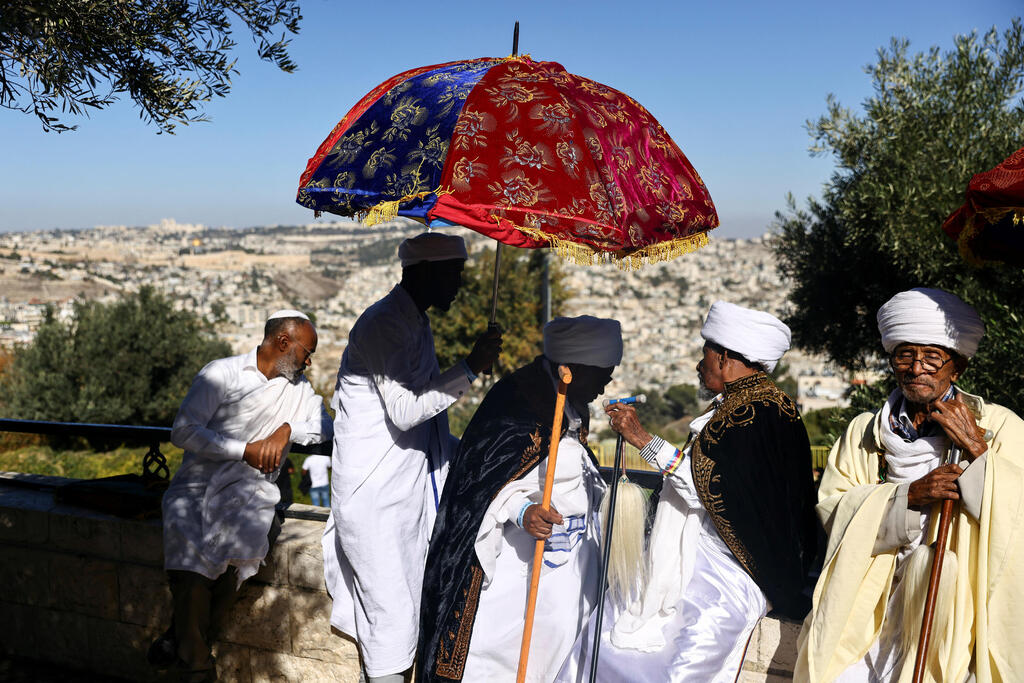
These two names, so different from one another, reveal the depth of the holiday and its inner tension — between humility and praise, prostration and transcendence, submission and redemption.
What is the meaning of this duality? And what does it reveal about the inner secret of Sigd — a holiday of body and soul, of descent and ascent, of human beings and their God?
Let us expand the view and see how the two names — Sigd and Mehelelle — complement one another and together tell the deeper story of the Sigd holiday.
Memory and forgetting, sea and dry land
“The world is full of memory and forgetting — like sea and dry land. Sometimes memory is solid ground — stable, enduring. And sometimes memory is the sea itself — covering everything, washing over, drowning. And forgetting? At times it is the saving dry land, like Ararat.” — Yehuda Amichai (My Life, My Life)
Why does Amichai choose this image of sea and dry land? Perhaps because the distinction between sea and land exists only in our eyes. The land is what is visible — but beneath the surface of the sea lie entire worlds: depths of memory, of pain, of hidden life.
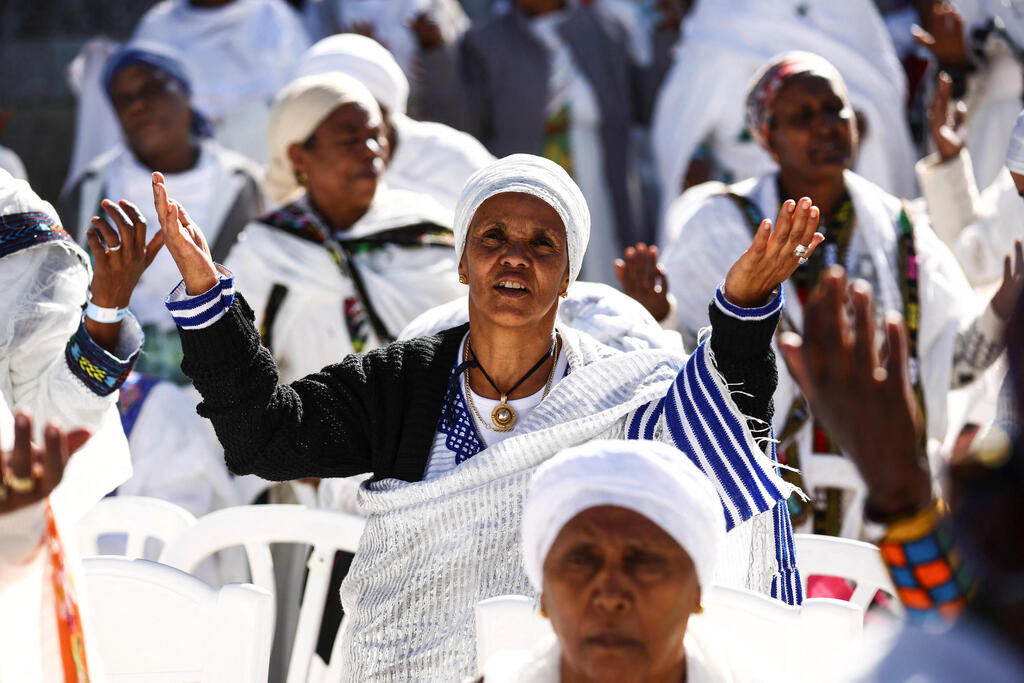
(Photo: Reuters)
It is easy to cling to what is solid and familiar, but sometimes it is precisely that stability that causes us to forget our deepest essence — the hidden parts beneath the waves.
Recently, a booklet was published titled “Voices Following the Journey: Stories of Beta Israel, Creating Memory and Healing,” produced by the International Center for the Study of Ethiopian Jewry at Ono Academic College.
The booklet was born from dialogue with the stories of those who perished and survived the journey to Israel, through the Sudan and the refugee camps in Ethiopia.
The inspiration came from Marty Hershkovitz, the son of Holocaust survivors, who noted that among Ethiopian Jews — just as among Holocaust survivors — a similar coping mechanism developed: silence. A whole generation that did not speak — not of loss, not of the threatening memories, not of the dead. Of the six million Jews murdered in the Holocaust, only 4.8 million appear in Yad Vashem’s names database. The remaining 1.2 million — men, women and children — remain anonymous, without any record of their lives or deaths. As if they never lived.
Marty, who grew up in a house of silence, chose to break it — founding the organization “Creating Memory” and building a new family out of the dust of the past. “I am searching for God,” he says, “to build myself a family from particles of dust.” From this insight, he invites Ethiopian Israelis as well — to move from silence to remembrance, from repression to revelation.
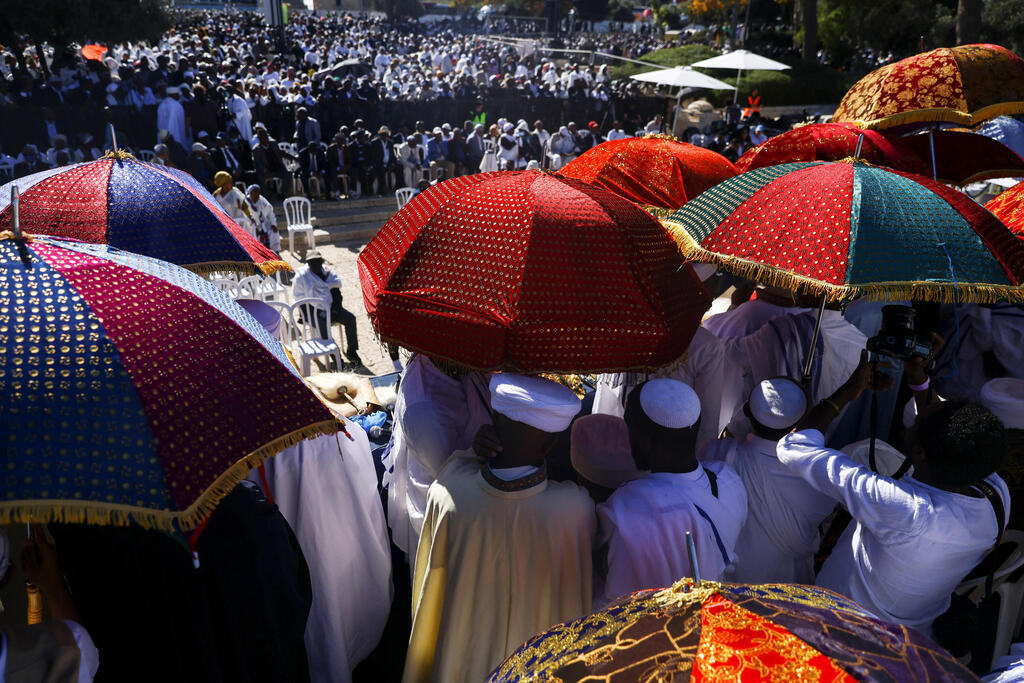
(Photo: Reuters)
So what is more correct? To speak — or to remain silent? To cling to memory — or to allow forgetting to heal? To stay at sea — or rise to dry land?
The lesson of Sigd
Not long ago, I was in the office of Dubi Eichenwald, CEO and publisher of Yedioth Books. His office feels like a world of memory — every object tells a story. One story that etched itself in my mind was the connection between destruction and rebirth, between father and son, between the Holocaust generation and the generation of the State of Israel.
On Nissim Mishal’s book “70 Years of Israel” lay a small sign that read: “God, give me the strength to shut up.” On the wall hung a picture of Eichenwald’s father — a Holocaust survivor with the number on his arm — studying Talmud. A generation of silence. Facing him — the son, asking God for the strength to remain silent.
I asked myself: what does this all mean? Perhaps it is a request for balance — to know when to speak and when to be quiet; when words heal, and when silence protects the heart.
I also thought of the returned hostages from Gaza — people who experienced hell. The impulse to speak is natural — but sometimes silence is not weakness; it is strength.
Perhaps here Sigd offers its answer.
A holiday of descent and ascent
The power of Sigd lies in its ability to remind us that human strength reveals itself precisely in times of crisis. It teaches us not to escape reality, but to delve deeper into it — to discover the hidden forces beneath the sea and lift them up to dry land — to life.
Like Rabbi Akiva, who laughed at the sight of the destroyed Temple — not out of coldness, but because he already saw within the ruin the seeds of redemption.
 Rabbi Dr. Sharon Zeude Shalom Photo: Sasson Tiram
So, too, in the consciousness of Ethiopian Jewry: redemption born from destruction, a faith that does not deny pain but confronts it with courage. During Sigd, as the community ascends the mountain with the Orit (Torah), some place a stone upon their heads. The stone symbolizes humility, submission; the Orit symbolizes light, faith, praise. Two faces of one holiday — “Sigd” — from bowing down “Mehelelle” — from Hallelujah. It is precisely in lowering the head that the heart rises.
This is a holiday that asks us to live truthfully — to see reality in its full complexity; to choose light even when the world is dark; to hear the Divine voice say again: “Let there be light — and there was light.”
For there is a time to remember and a time to forget, a time to speak and a time to be silent, a time of sea and a time of dry land.
Sigd teaches us the great art of knowing the difference.
- Rabbi Dr. Sharon Zeude Shalom is the founding director of Ono Academic College's International Center for the Study of Ethiopian Jewry. He is also the author of The Living Geniza (Open University, 2022), Dialogues of Love and Fear (Koren, 2021) and From Sinai to Ethiopia (Gefen, 2016).