

Few officers in American history have shaped the U.S. Navy as profoundly as Adm. Hyman G. Rickover — a small, sharp-tongued engineer who transformed the fleet from diesel and steam into the atomic age. As the Navy celebrates its 250th anniversary, Rickover’s life reads like a uniquely American story: a poor Jewish immigrant who rose to build the most powerful undersea force on Earth.
Born Chaim Godalia Rykower in 1900 in the Polish town of Maków, then under Russian rule, Rickover’s early years were defined by hardship. His father was a tailor, his family among the millions of Jews targeted by pogroms. In 1905 they fled to the United States, settling in Chicago. There, the boy who would later command admirals delivered telegrams and worked odd jobs to help his family survive.
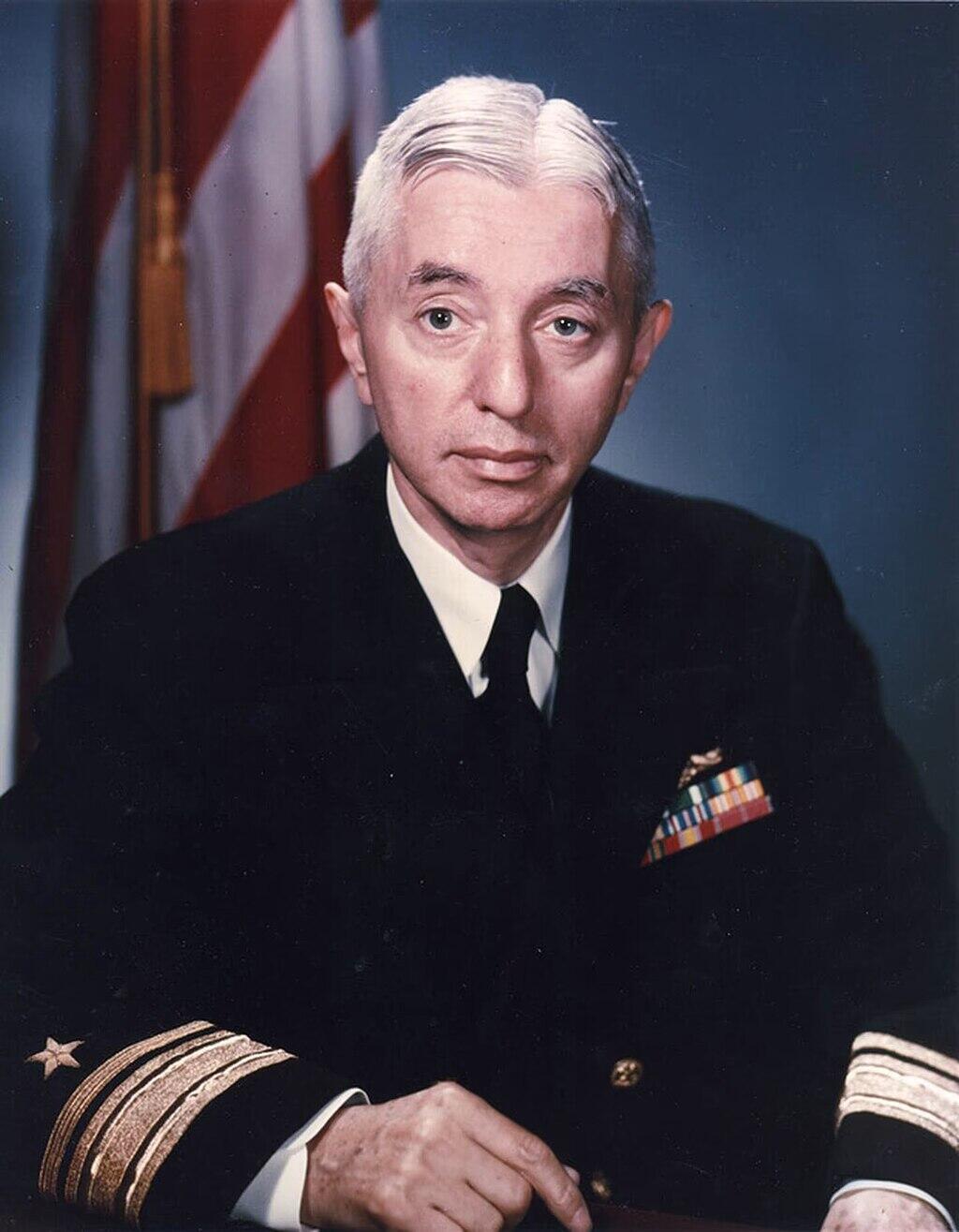
When he entered the U.S. Naval Academy in Annapolis in 1918, he had already learned the habits that would define him: precision, thrift and an unrelenting sense of duty. He had little interest in social life, preferring books to banter. Classmates saw him as a quiet outsider, earnest to the point of discomfort. Yet Rickover excelled, graduating in 1922 and beginning what would become a 63-year career — the longest in U.S. military history.
From the deck plates to the drawing board
Rickover’s first years at sea were far from glorious. He served aboard the destroyer USS La Vallette and the battleship USS Nevada, often sidelined by illness. But it was in those early days that his fascination with engineering took hold. The Navy of the 1920s prized seamanship and hierarchy; Rickover prized systems and ideas.
Determined to study further, he earned a master’s degree in electrical engineering from Columbia University, one of the few naval officers at the time to hold an advanced scientific degree. He married Ruth Masters, and after returning to active duty, served on submarines S-9 and S-48. The boats were cramped, temperamental and prone to failure — ideal laboratories for a man obsessed with improvement. Rickover tinkered, redesigned and repaired. When equipment broke, he found ways to make it stronger.
His technical skill caught attention. By the outbreak of World War II, he was leading the Electrical Section of the Bureau of Ships, overseeing the design and construction of warships across the fleet. He was demanding and famously impatient, insisting that every cable and circuit meet his standards. The Navy, for all its traditions, had never seen anyone quite like him.
The atomic vision
When the war ended, the Navy faced a question of identity in a world newly divided by nuclear power. Rickover saw the answer before anyone else. In 1946, as the Atomic Energy Commission was established, he volunteered to join a research team at Oak Ridge, Tennessee, to study atomic reactors. Most of his colleagues viewed the atom only as a weapon. Rickover saw it as an engine — the perfect power source for a submarine.
The idea seemed fantastical: a ship that could stay underwater indefinitely, limited only by its food supply. But Rickover had little patience for what others deemed impossible. He pressed, argued and maneuvered his way through bureaucratic walls, eventually persuading President Harry S. Truman that nuclear propulsion could redefine the Navy’s future.
Nine years later, his dream surfaced — literally — with the 1955 launch of the USS Nautilus (SSN-571), the world’s first nuclear-powered submarine. “Underway on nuclear power,” her commanding officer radioed, marking the start of a new era.
The iron hand of a perfectionist
Rickover’s triumph brought him enormous authority — and notoriety. He personally interviewed every officer assigned to the nuclear fleet, grilling them on physics, engineering and moral judgment. The process was legendary: candidates faced him while seated on a chair with the front legs sawed shorter, forcing them to maintain their balance while answering questions.
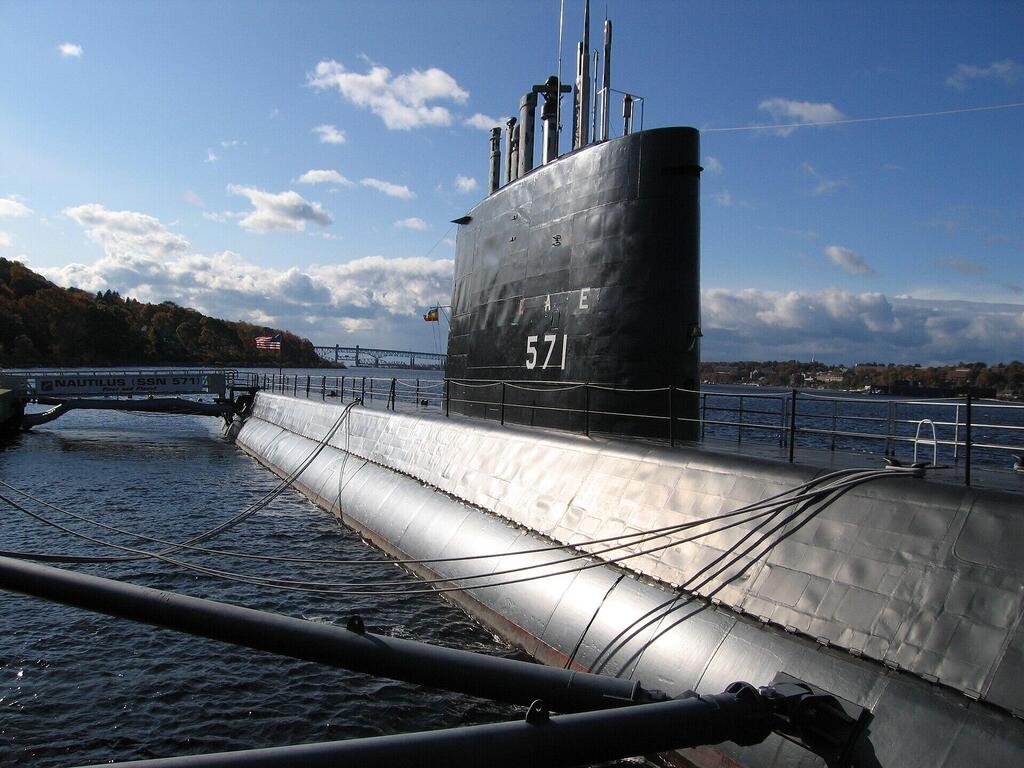
USS Nautilus
(Photo: Wikimedia)
Those who gave careless or lazy responses might find themselves shown the door — or locked in a broom closet to “think.” The experience was grueling, but those who passed earned his lifelong respect. One of them was a young naval officer named Jimmy Carter, who decades later, as president, would award Rickover the Presidential Medal of Freedom.
He was equally ruthless with contractors. If a shipbuilder’s work fell short, he refused to pay. Quality was not negotiable. To some, he was a tyrant; to others, a visionary who saved lives by refusing to compromise. His obsessive standards became the culture of the nuclear navy — a system so reliable that no American nuclear submarine has ever suffered a reactor accident.
Power and paradox
Rickover’s influence stretched far beyond engineering. Presidents sought his advice, and politicians feared his candor. When President John F. Kennedy proposed a multinational NATO nuclear fleet, Rickover warned that sharing atomic command would lead to disaster. Kennedy listened — and the plan died.
He was promoted to full admiral in 1973, an extraordinary distinction for a man who had never commanded a battle fleet. Yet behind the rank lay personal tragedy: the deaths of his mother and wife, and a heart attack that nearly ended his career. Still, he continued to work — meticulous, irritable, unstoppable.
In 1982, at age 82, Rickover was forced into retirement by President Ronald Reagan amid allegations that he had accepted gifts from major defense contractors, including General Dynamics and General Electric. Rickover admitted receiving about $67,000 in items such as travel and furniture but denied any impropriety. He pointed out, correctly, that he had rejected hundreds of millions in claims from those same firms.
His removal came as a shock — one he reportedly learned about from a television broadcast rather than from the Navy itself.
An uncomfortable prophet
Rickover remained outspoken until the end. He championed nuclear energy for peaceful use, deplored the waste of bureaucracy and warned of humanity’s capacity for self-destruction. “We’ll probably destroy ourselves,” he once said. “Some new species will come up that might be wiser than we are.”
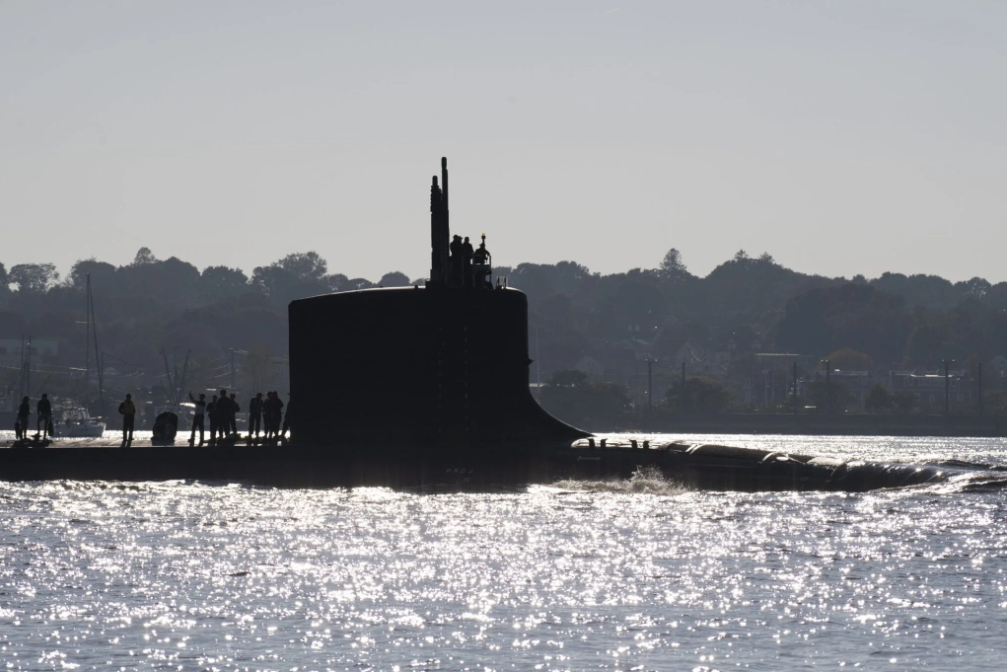
USS Hyman G. Rickover (SSN-795)
(Photo: US Navy)
He died on July 8, 1986, at the age of 86, and was buried in Arlington National Cemetery. By then he had earned two Congressional Gold Medals and the Presidential Medal of Freedom, and his career had spanned six decades, 13 presidents and three wars.
Two submarines have since been named for him: USS Hyman G. Rickover (SSN-709), commissioned in 1984, and USS Hyman G. Rickover (SSN-795), a Virginia-class vessel launched in 2023. Both carry forward his legacy of precision and endurance.
The enduring legacy
Rickover’s mark on the Navy is more than technological. It is cultural — a philosophy built on accountability, intellect and moral courage. He demanded that officers think independently, question assumptions and accept personal responsibility for every decision. His approach transformed not only how the Navy built submarines, but how it built leaders.
He was an unlikely revolutionary: a son of Jewish immigrants, short and brusque, who rarely smiled and never flattered. Yet through sheer intellect and persistence, he bent the Navy — one of the world’s most tradition-bound institutions — toward a new era.
As the Navy celebrates 250 years of service, its nuclear fleet sails as the most powerful on the planet. Every vessel that slips silently beneath the ocean’s surface bears, in some measure, the imprint of Hyman Rickover — the Jewish godfather of the U.S. nuclear navy, who refused to accept limits and, in doing so, changed the course of history.