

A new Jewish Agency report paints a complicated picture of young Jews around the world after Oct. 7: They are increasingly worried about antisemitism and hostility toward Israel, yet many also say the moment has sharpened their sense of identity and their determination to act.
The report found that 74% of young Jews worldwide believe they can positively shape the future, a figure that surprised even researchers tracking the trend. “We knew that this was a trend, but we were really surprised by the data in many ways,” Dr. Shelley Kedar, the Jewish Agency’s chief impact officer, told ynet Global in an interview.
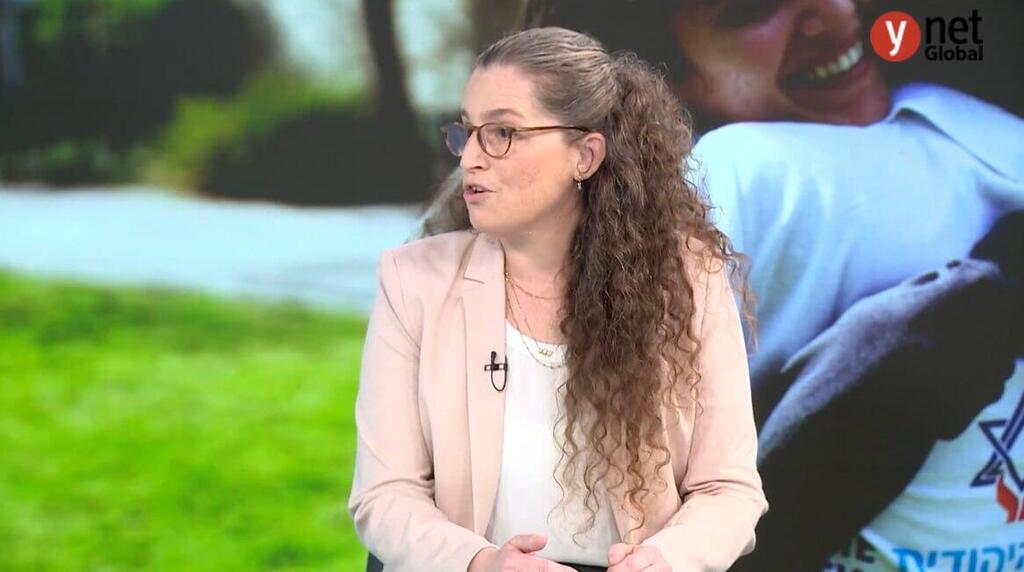
Studio interview with Dr. Shelly Kedar of the Jewish Agency


“I think we feel it on the streets, particularly in Israel, but also around the world, when we look at the surge of people really looking to make meaning of their Jewish identity and of their connection. I think what's driving it is that people have been pushed to the limit on Oct. 7."
That shift, Kedar said, has made both Israel and Jewish life feel more immediate and personal to many young Jews who may once have kept those questions at a distance. “Israel has become a very personal issue,” she said. “Whether before they maybe could have compartmentalized it, put it aside, put it as part of their lives, it’s now become a very prominent issue in their life, and they’re choosing to take action, not just on Israel but also on Jewish life.”
Kedar said the report points to a generation that is not retreating in the face of hostility, but instead becoming more engaged. “We are witnessing a generation that is continuing other generations in a better trajectory in activism and in a sense of agency, but also in creativity,” she said. “We’re seeing a lot of different ways in which people are now saying, ‘I want to take part in the Jewish community. I want to be involved with Israel.’”
She rejected the idea that optimism and anxiety are somehow contradictory. “People are driving action and hope because they are concerned,” she said. “We’re actually not going to normalize antisemitism. We’re going to stand up. We’re going to demand to be active and effective and safe citizens of the countries in which we live.”
Kedar argued that rhetoric treating antisemitism as inevitable risks dulling the response to it. “When we say, ‘In every generation we’ve been hated,’ we need to be careful with that,” she said. “In every generation, it’s not that we’ve been hated. In every generation we actually stood up to our enemies and those who wanted to shut us down and came out with a very creative and positive way to affect the world.”
The Jewish Agency, she said, is trying to channel that sense of urgency into concrete action. Its efforts are focused on “two major impact areas,” she said: “strengthening Israel” and “strengthening mutual responsibility."
(Photo: Shutterstock)
Kedar outlined five main avenues for that work, including promoting aliyah, helping strengthen communities in Israel’s north and south, deepening Israelis’ connection to world Jewry, expanding young Jews’ connection to Israel and Jewish education, and bolstering the resilience and safety of Jewish communities worldwide.
“No community should be left behind,” she said, adding that the organization is taking “very active steps” to support communities “in their resiliency, in their training and in their safety.”
Kedar said the aftermath of Oct. 7 reinforced for many Jews around the world that Israel cannot be taken for granted. “October 7 brought back a realization that we cannot take Israel for granted,” she said. “It still needs the work of everybody, the entire Jewish people, to continue driving the vision of the venture that is called the State of Israel.”
At the same time, she stressed that the renewed sense of connection does not mean blind support. “It’s not an unequivocal support for everything that we do here,” Kedar said. “It’s not Pollyannaish, it’s not shallow. It’s actually a deep sense of connection and also a drive to action.”