

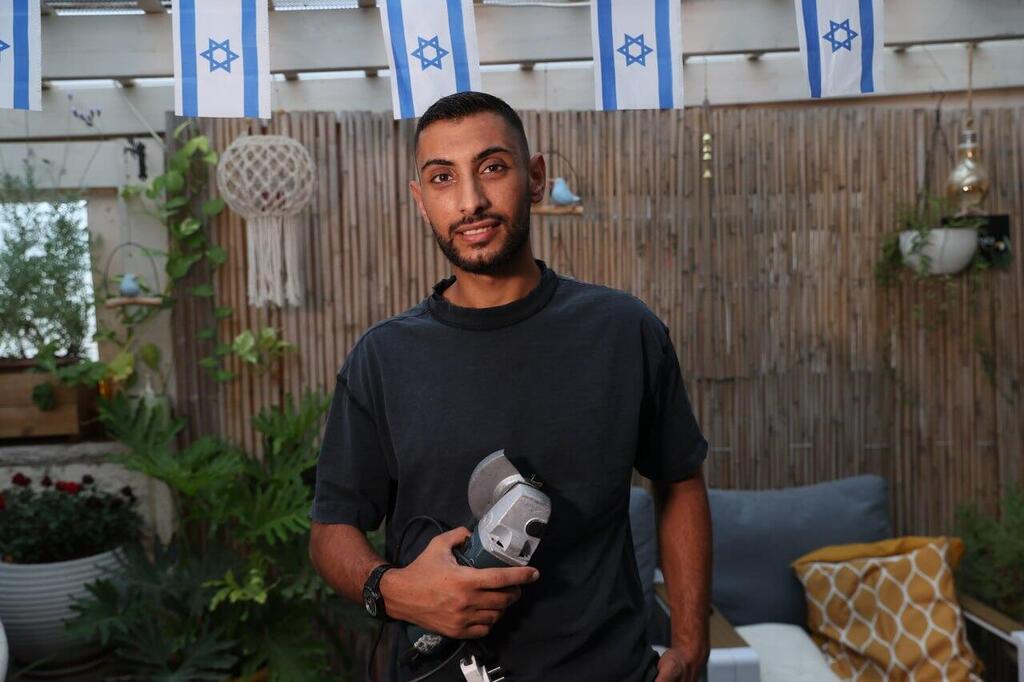
If Moshe Avraham had been asked a decade ago what his life would look like at 22, it is unlikely he would have imagined where he is today. He has completed his high school education, trained in electrical work, holds a steady job and is in a relationship. This Sukkot, instead of searching for somewhere to sleep, he will spend the holiday with his partner and her family.
Getting there took years. Avraham grew up in Jerusalem’s Mea Shearim neighborhood in the extremist ultra-Orthodox Neturei Karta community. His parents were divorced and he had no relationship with his father. “The community was very extreme. We would throw things at police officers,” he recalled.
From childhood, he said, he was taught to be suspicious of nearly everyone outside that world: the military, state institutions and even Zionist Haredi Jews. Then, when he was 13, his own home was suddenly closed to him.
After his family moved from Mea Shearim to Jerusalem’s Romema neighborhood, Avraham began spending more time outside the house. He also secretly acquired a cellphone. “One day my family found out,” he said. “They told me, ‘From now on, neither you nor the phone are coming into this house.’ They locked the door, and that was it. I had nobody to talk to. I banged hard on the door and there was no answer. They never opened the door for me again.”
That was the beginning of a period of homelessness. Avraham slept in bomb shelters, in bathrooms at Jerusalem’s Central Bus Station, camped in a forest and occasionally stayed with friends.
When Sukkot arrived the following year, he still had no home. “I was 14 and I had nowhere to be,” he said. “I wandered the streets, and then I found a sukkah in Sacher Park. My sister and I slept there.”
The holiday has carried a painful double meaning for him ever since. “For me, Sukkot has been a trauma ever since, because it is basically the story of my whole life: I didn’t have a home. I had nowhere to be,” Avraham said. “Everyone goes out for the holiday dressed in white, dressed nicely, and you’re the only strange one. You can’t understand what that feels like.”
That same year, welfare authorities found him and assigned him a social worker. “He told me, ‘Listen, you can’t live on the street. I want you to have a warm bed,’” Avraham recalled.
That intervention eventually brought him to Otot, an Israeli nonprofit that operates shelters, homes and support programs for young people at risk. But accepting help was not easy. At Etnahta, one of the nonprofit’s programs for at-risk youth, Avraham said everything initially felt foreign and threatening because of the worldview in which he had been raised.
“But from the first moment, I was shocked,” he said. “They offered me food. They changed my sheets. I grew up being taught to hate Zionists and secular people in general. We were afraid to enter their institutions, and in the end I was treated wonderfully there.”
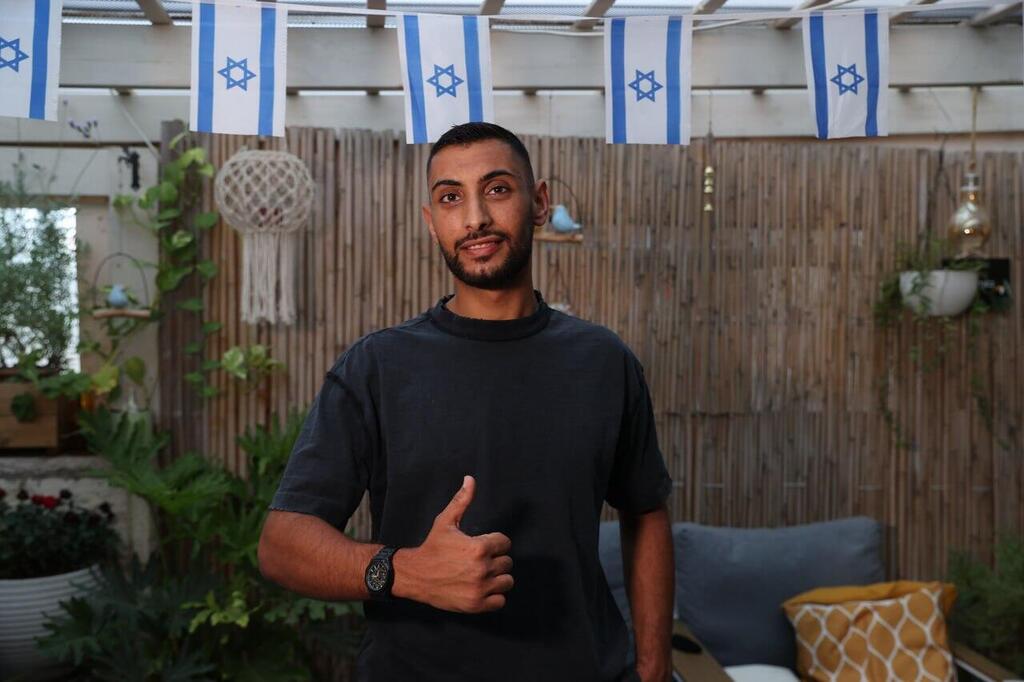
Moshe's new life
(Photo: Alex Kolomoisky)
His progress was far from linear. For roughly three years, Avraham moved between institutions and the street before eventually settling into one of Otot’s long-term residential programs. There, he completed his high school education. He later studied electrical engineering technology and today works as an electrician, supports himself and is in a relationship.
For those who accompanied him through the process, the change has been dramatic. Otot operates some 40 shelters, homes and other programs for at-risk young people across Israel.
Yoav Hartal, the organization’s director of development and partnerships, has known Avraham since he first arrived.
“It is especially moving to see him today: educated, organized and confident,” Hartal said. “When Moshe came to us, he was in a very difficult situation. He repeatedly rejected attempts to help him and reached some very difficult extremes. The distance he has traveled since then is enormous.”
Hartal said Avraham’s experience reflects a pattern Otot sees repeatedly. “Very often, the first response is simply a roof over someone’s head and a safe place,” he said. “From there begins a much longer process of building trust, returning to a framework, closing educational gaps, learning a profession and preparing for independent life.”
“To see Moshe today, with a profession, a relationship and a life he built for himself, is a great source of pride.”
Sukkot itself is also beginning to take on a different meaning. “When the holiday approaches, I get a little depressed,” Avraham said. “But today I have the ability to talk about it and cope with it. Otot gave me incredible tools.”
About a year and a half ago, he met his partner, Ben Chen. This Sukkot, he will celebrate with her and her family.
Asked about his dream for the future, Avraham returned to the abandoned sukkah in Sacher Park and to the childhood he does not want his own children to experience. “I want a family, and I want my child always to be with me in the sukkah,” he said. “I will never let my child be sent out of the sukkah. Not out of the home and not out of the sukkah. Ever.”