

When Nazi mobs destroyed some 1,400 synagogues, prayer halls and other Jewish institutions during Kristallnacht on Nov. 9-10, 1938, they did more than burn buildings.
Dozens of organs, pianos and small harmoniums went up in flames. Alongside Torah scrolls, prayer books and libraries, hundreds of pieces of synagogue music disappeared as well, works written over the course of a century for cantors, choirs and, in many cases, instrumental accompaniment. Now, nearly nine decades later, an ambitious project is trying to bring that lost musical world back to life.
Assaf Levitin performs Emanuel Feist’s ‘Ashamnu’ with the German Chamber Choir
(Video: Courtesy of Assaf Levitin)


Gallery
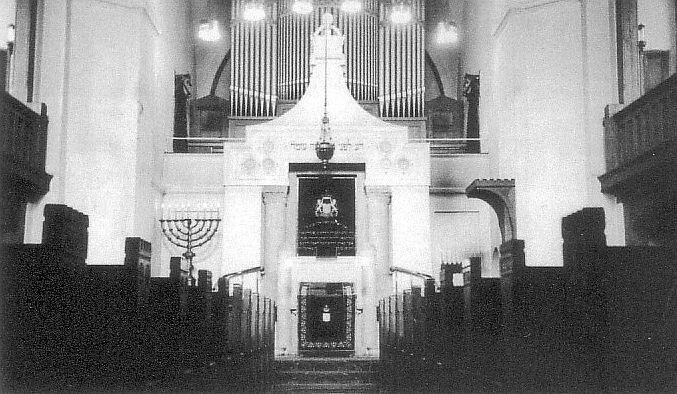
The synagogue in Bingen am Rhein, built in 1905 and destroyed by the Nazis in 1938
(Photo: Unknown author/Wikimedia Commons)
Israeli-born cantor Assaf Levitin and fellow cantor Amnon Seelig have edited Hashivenu: Synagogue Music from Germany, 1838-1938, an eight-volume anthology being published by Edition Peters, one of the world’s oldest and most prominent classical music publishers.
The project draws on thousands of surviving pages of synagogue music, much of it forgotten for generations, and converts the works into modern digital notation so they can once again be performed by choirs and congregations around the world.
“The Jewish organ is no different from the ordinary organs built during the Romantic period,” said Levitin, a liberal cantor in Germany and deputy chairman of the German Cantors Association, which he and Seelig also founded.
“Every organ is the product of painstaking craftsmanship that can take months or years. Each set of pipes produces a different color, and an almost unlimited number of such sets, made of wood or metal, can be combined depending on the space and budget.”
Germany’s grand synagogues once invested heavily in that sound. The synagogue on Berlin’s Oranienburger Strasse, Levitin noted, had an enormous organ with four keyboards. The synagogue’s famous golden dome survives today above what remains of an adjacent structure, while the main prayer hall itself was destroyed. “These synagogues took great pride in the music that was written especially for them,” he said.
The tradition grew out of the transformation of German Jewish religious life beginning in the 1830s, when what would develop into Reform Judaism began taking shape. The movement differed considerably from Reform Judaism as it is known today, but two musical innovations became particularly significant: women were incorporated into synagogue choirs, and instrumental accompaniment, especially the organ, became part of worship.
From 1838, when an influential early collection of synagogue music appeared, until Kristallnacht a century later, hundreds of works were published and performed across Germany. Many vanished without a trace in 1938, particularly in smaller communities where sheet music was often stored in a wooden cabinet beside the organ. In other cases, only a handful of copies survived.
‘Mah Tovu,’ from an album by composer Samuel Lampel, recorded by Levitin with the Leipzig Synagogue Choir
(Video: Courtesy of Assaf Levitin)
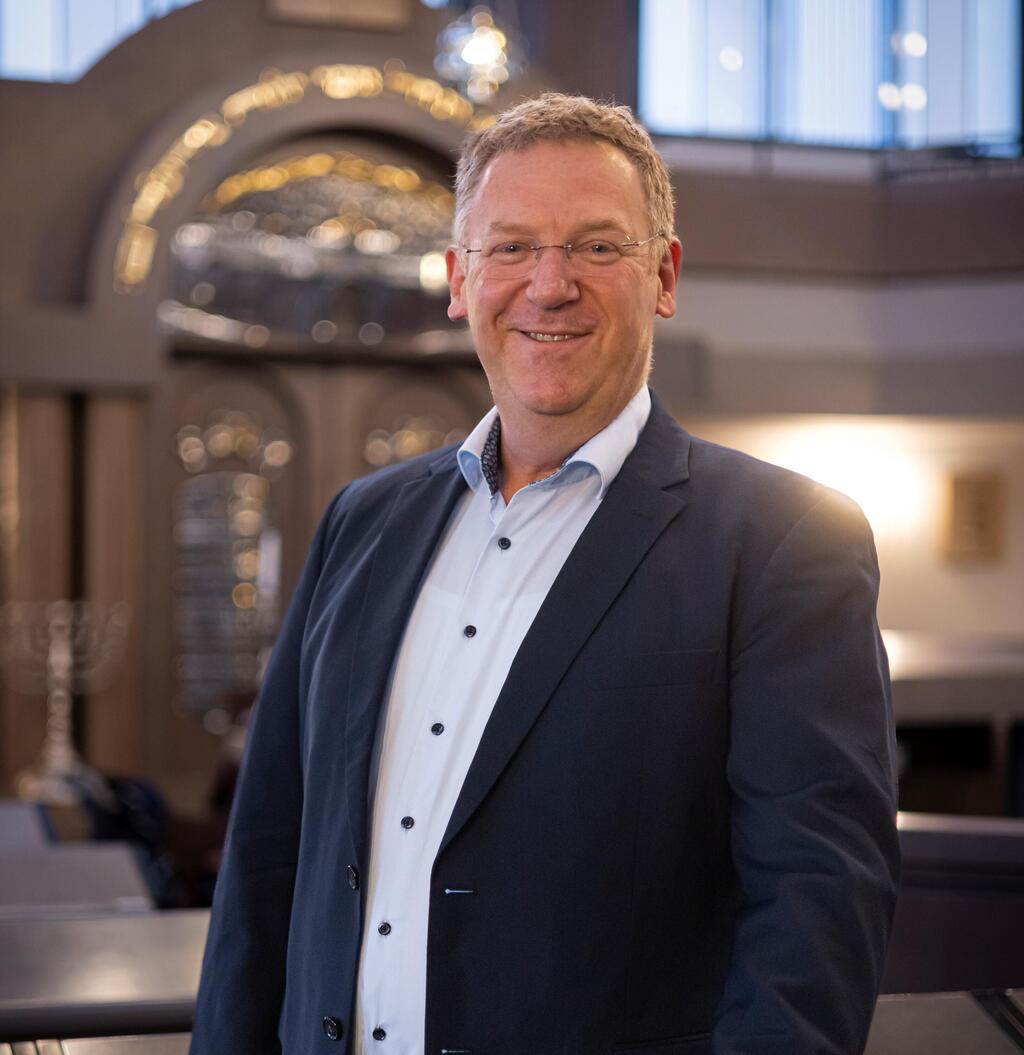
Assaf Levitin
(Photo: Lys Y. Seng)
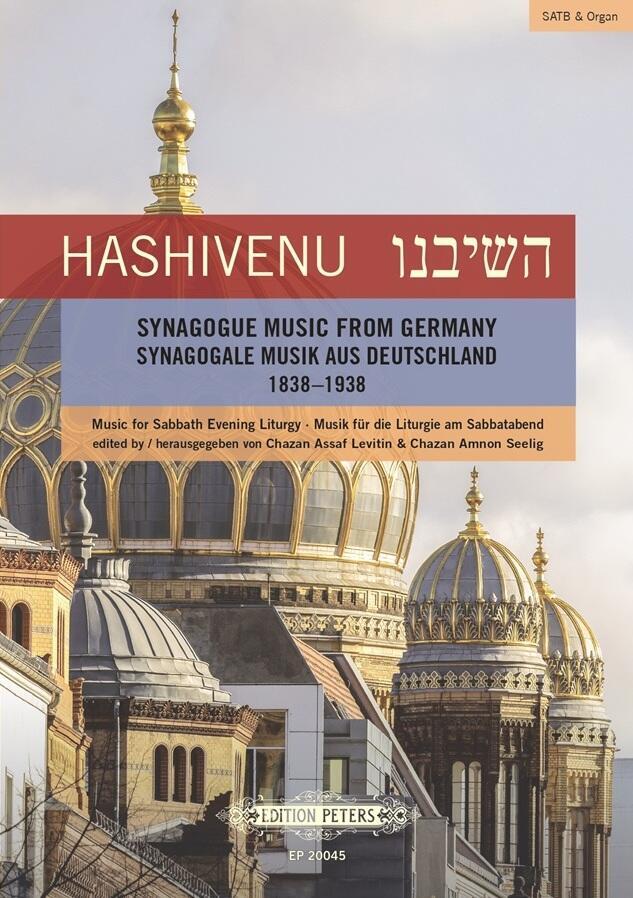
The first of eight volumes of the ‘Hashivenu: Synagogue Music from Germany, 1838–1938’ sheet music anthology
(Photo: Courtesy of Assaf Levitin)
A buried musical treasure
About 20 years ago, the library of Goethe University Frankfurt placed digital scans of roughly 400 publications from the period online. Alongside famous composers such as Louis Lewandowski are names unfamiliar even to many specialists in Jewish music.
Together, the collection contains roughly 20,000 pages of material, a vast musical archive sitting online but often difficult to navigate. “If I, as a cantor, want to find every version of ‘Kol Nidrei’ written during that period, I have to open every one of the 400 titles and search through them myself,” Levitin said.
The problem begins with something as basic as spelling. German Jews in the 19th century used Ashkenazi Hebrew pronunciation, and composers transcribed Hebrew words inconsistently into Latin characters. One might write Kol Nidre, another kowl nidrej, and another kawl nidreh.
Even after a piece is located, performing it can be difficult. “The notation is often outdated and extremely crowded,” Levitin said. “Almost everyone paid to have the music printed themselves, and they were not wealthy. In many places there are obvious mistakes in the notes or the text. Without expertise in cantorial music, performing these works is almost impossible.”
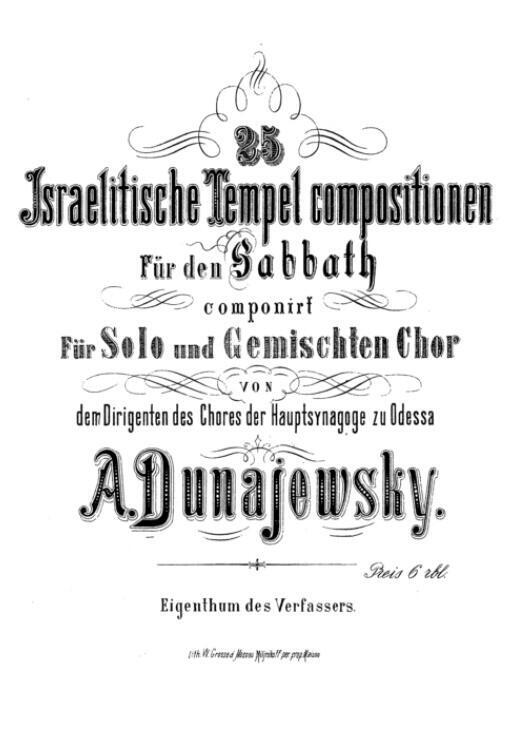
The first page of one of the sheet music booklets found in the Frankfurt archive: Abraham Dunajewski’s ‘25 Synagogue Compositions’ (1893)
(Photo: Courtesy of Assaf Levitin)
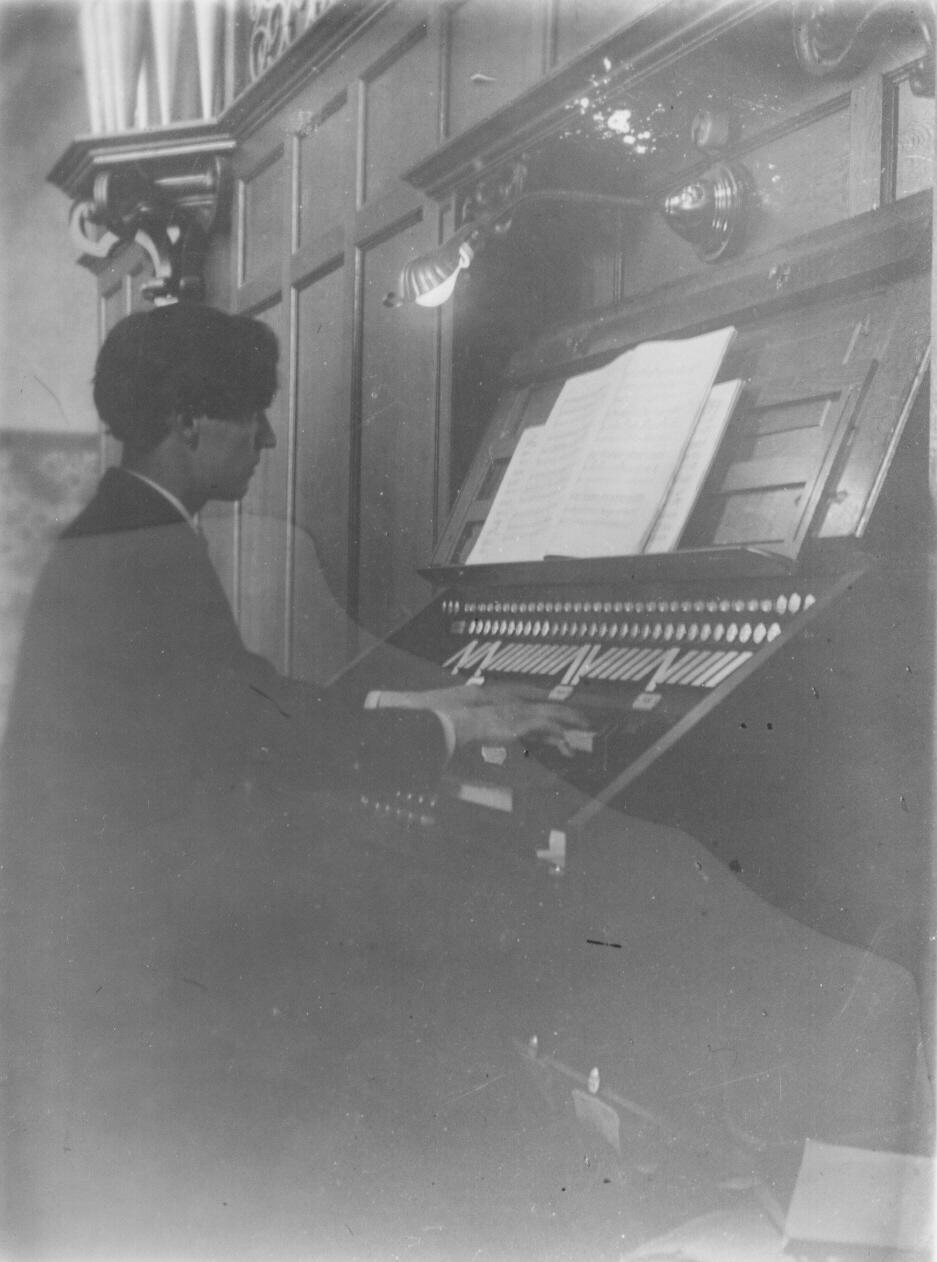
An organist at the Bielefeld synagogue, circa 1910
(Photo: Rennrudi/Wikimedia Commons)
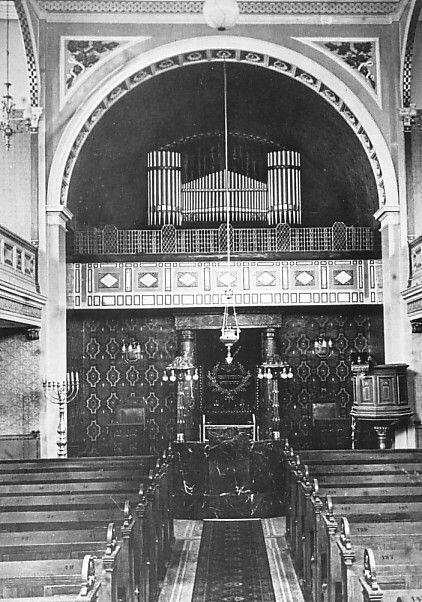
The synagogue in Heidelberg, built in 1878 and destroyed during Kristallnacht in 1938. Photo from 1913
(Photo: StadArchiv Heidelberg/Wikimedia Commons)
That challenge led Levitin and Seelig to create Hashivenu. The first of the anthology’s eight volumes is scheduled to be published during the upcoming Sukkot holiday. It focuses on music for Friday night services, while later volumes will cover Shabbat, the High Holidays, the three pilgrimage festivals, minor holidays and the Jewish life cycle.
The editors also made a significant linguistic choice: replacing the historic Ashkenazi pronunciation reflected in many of the original scores with the modern Sephardi-style Hebrew pronunciation used in most synagogues today.
“We transferred the works into digital notation and standardized the Hebrew transliteration according to a system we developed specifically for the project,” Levitin said. The goal, he explained, was to make it possible for choirs anywhere in the world to perform the music without having to bring in Hebrew-language coaches.
Levitin, who was born in Givatayim and spent much of his childhood in Rosh Pina in northern Israel, initially studied opera in Israel before completing his studies in Germany. He studied cantorial music in 2011 and has worked professionally as a cantor since 2016.
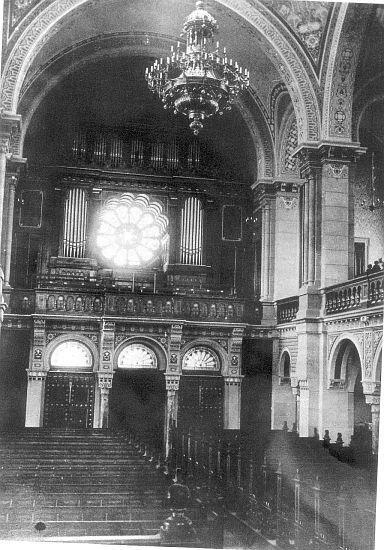
The organ above the Torah ark at the Kaiserslautern synagogue, circa 1890–1900
(Photo: Alemania-Judaica/Wikimedia Commons)
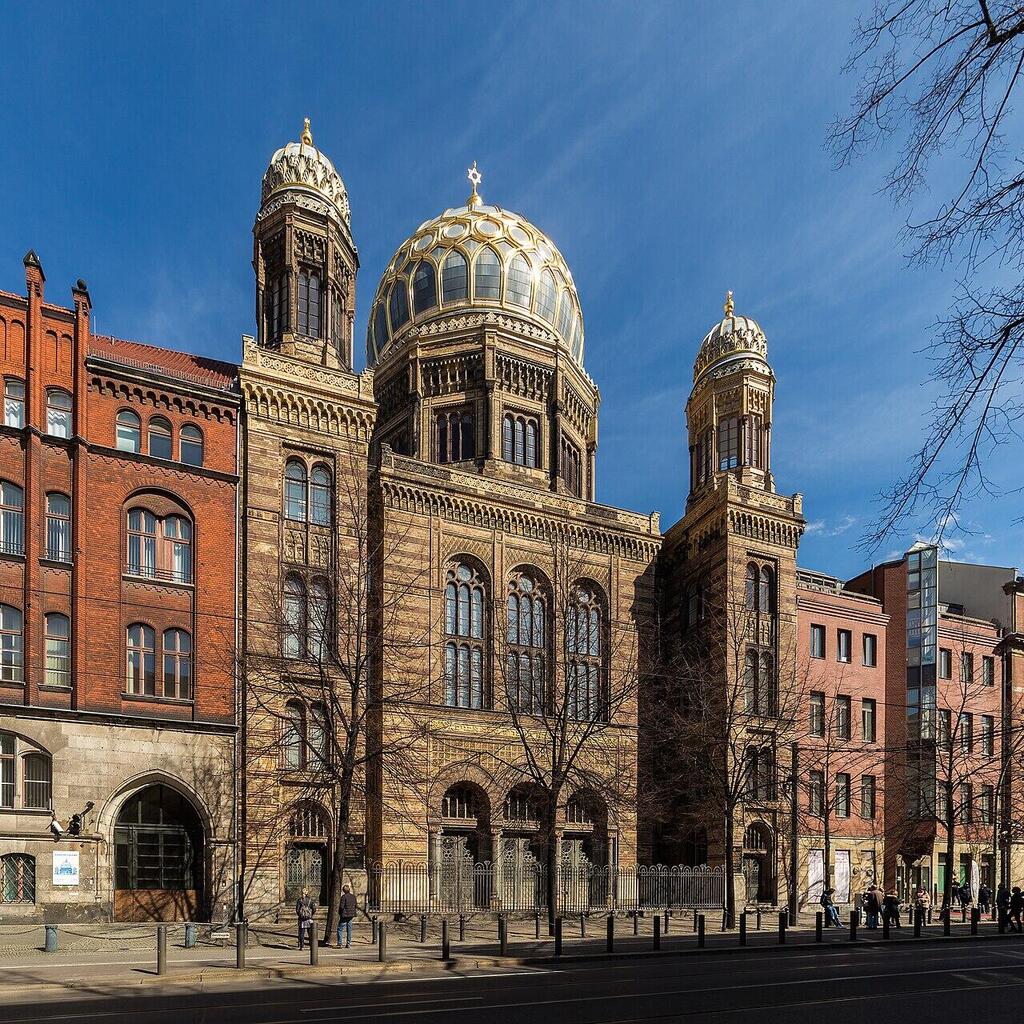
The synagogue on Oranienburger Strasse in Berlin, which housed a massive four-keyboard organ
(Photo: Ansgar Koreng/Wikimedia Commons)
For Levitin and Seelig, the partnership with Edition Peters carries meaning beyond the publisher’s reputation for musical quality.
The company itself has a complicated Jewish history. Edition Peters was once owned by Jewish publisher Max Abraham, who left the business to his nephew, Henri Hinrichsen. The company was expropriated twice, first by the Nazis in 1939 and later by East Germany’s communist authorities in 1950. The family received compensation for the loss of the business only in 1993.
Today, Levitin said, the publishing house prominently acknowledges that history. Large photographs of its former Jewish owners hang at its entrance, accompanied by an account of what happened to them and the company. “There is no way to change the past, but there is certainly a way to confront it honestly and repair what can be repaired,” Levitin said.
“In the case of Hashivenu, we are pleased that a publishing house that was once part of the silencing of Jewish music is now making such a major effort to bring that music back to the forefront.”
The project’s name carries its own historical and religious resonance. Hashivenu comes from the Hebrew verse traditionally recited when the Torah scroll is returned to the ark: “Return us to You, Lord, and we shall return; renew our days as of old.”
For Levitin, the words capture the purpose of the project. “We saw it as a command from the composers of the past,” he said, “pleading with us to help them once again hear the songs of praise they composed to glorify and elevate their prayers. We are fortunate to have been given that privilege.”