

Tens of thousands of worshippers gathered overnight between Saturday and Sunday at the Western Wall plaza in Jerusalem to recite Selichot prayers ahead of Rosh Hashanah and Yom Kippur. The Selichot gathering was held in the presence of rabbis and cantors.
The Western Wall Heritage Foundation said that, since the beginning of the Hebrew month of Elul, more than half a million worshippers have taken part in Selichot services at the Western Wall plaza. During the gathering overnight between Thursday and Friday, Rabbi Shmuel Rabinowitz, rabbi of the Western Wall and the holy sites, joined the tens of thousands present in emotional prayers for the safety of IDF soldiers and security forces, and for the unity and security of Israel.
Selichot prayers at the Western Wall overnight between Thursday and Friday
(Video: The Western Wall Heritage Foundation)


The Selichot prayers at the Western Wall are being held under heavy police security. Israel Police said its deployment includes reinforcing both uniformed and undercover forces, maintaining public order and security and directing traffic along routes leading to the Old City and event centers.
“Jerusalem District officers and Border Police fighters will continue to act with determination to safeguard the public, and we ask the public to remain vigilant, be patient and follow the instructions of the police officers and fighters deployed in the area,” the police said in a statement.
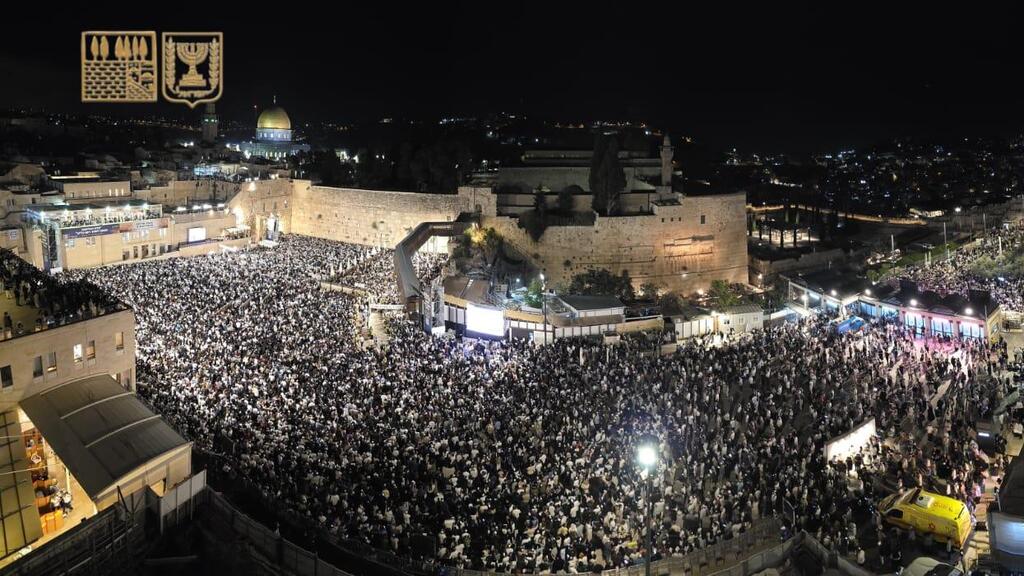
Selichot prayers are also being held at synagogues across the country and around the world at midnight or in the early morning hours. Overnight, for the first time this season, worshippers following Ashkenazi customs also joined the Selichot prayers, which they begin on the Saturday night before Rosh Hashanah, while Sephardic Jews begin immediately after the start of the month of Elul on the Jewish calendar.
Selichot prayers are recited during the month of Elul and between Rosh Hashanah and Yom Kippur. They include pleas for mercy, liturgical poems and prayers, as well as the recitation of the “Thirteen Attributes of Mercy” — 13 expressions of divine compassion said to have been revealed to Moses after he sought forgiveness on behalf of the people of Israel following the sin of the Golden Calf.
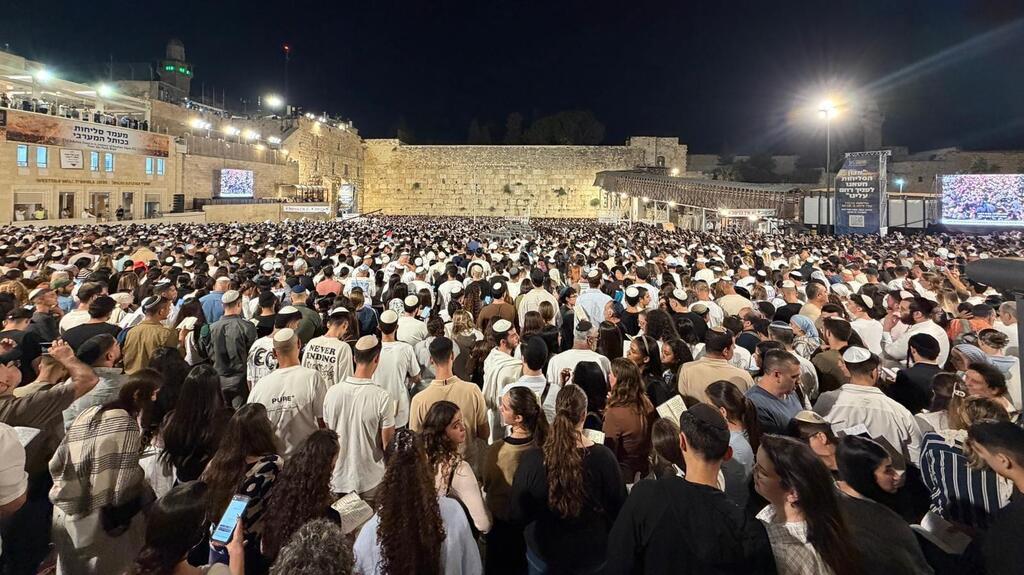
Tens of thousands gathered at the Western Wall Saturday night for Selichot prayers
( Photo: The Western Wall Heritage Foundation)
The main custom is to recite the prayers after midnight or in the early morning hours, times that according to Kabbalistic tradition are considered an “auspicious time,” when prayers are believed to be received in heaven with particular attentiveness and mercy. Many people come to recite Selichot at the Western Wall, and every year, on the final night of Selichot, a mass gathering is held there with tens of thousands of worshippers in the presence of Israel’s chief rabbis.
Selichot prayers have different versions and liturgical poems that vary from one community to another. Some were written by Rabbi Solomon ibn Gabirol, Rabbeinu Gershom and Rashi. In some communities, including those in Italy, Libya, Georgia, Poland, Lithuania, Yemen and Prague, different poems and customs were added, so the prayer service can vary considerably from one synagogue to another. Among Sephardic communities, the Selichot text remains almost unchanged from day to day, while Ashkenazi communities recite a different order of Selichot each day.