


In New York, a city where building a community can be difficult even among millions of people, a different kind of “kibbutz” has taken shape over the past two years. There are no fields or dairy barns, but there are Shabbat tables, challah, wine and hundreds of young Jews gathering to eat together, meet new people and feel part of a community.
Kibbutz NYC, which founder Jake Wysotsky calls “New York’s first kibbutz,” began almost by accident about two years ago. Wysotsky, a 28-year-old Jewish chef, started hosting Shabbat dinners for friends at his home. Word spread, more people joined, then friends of friends, and what began as an intimate gathering steadily grew.
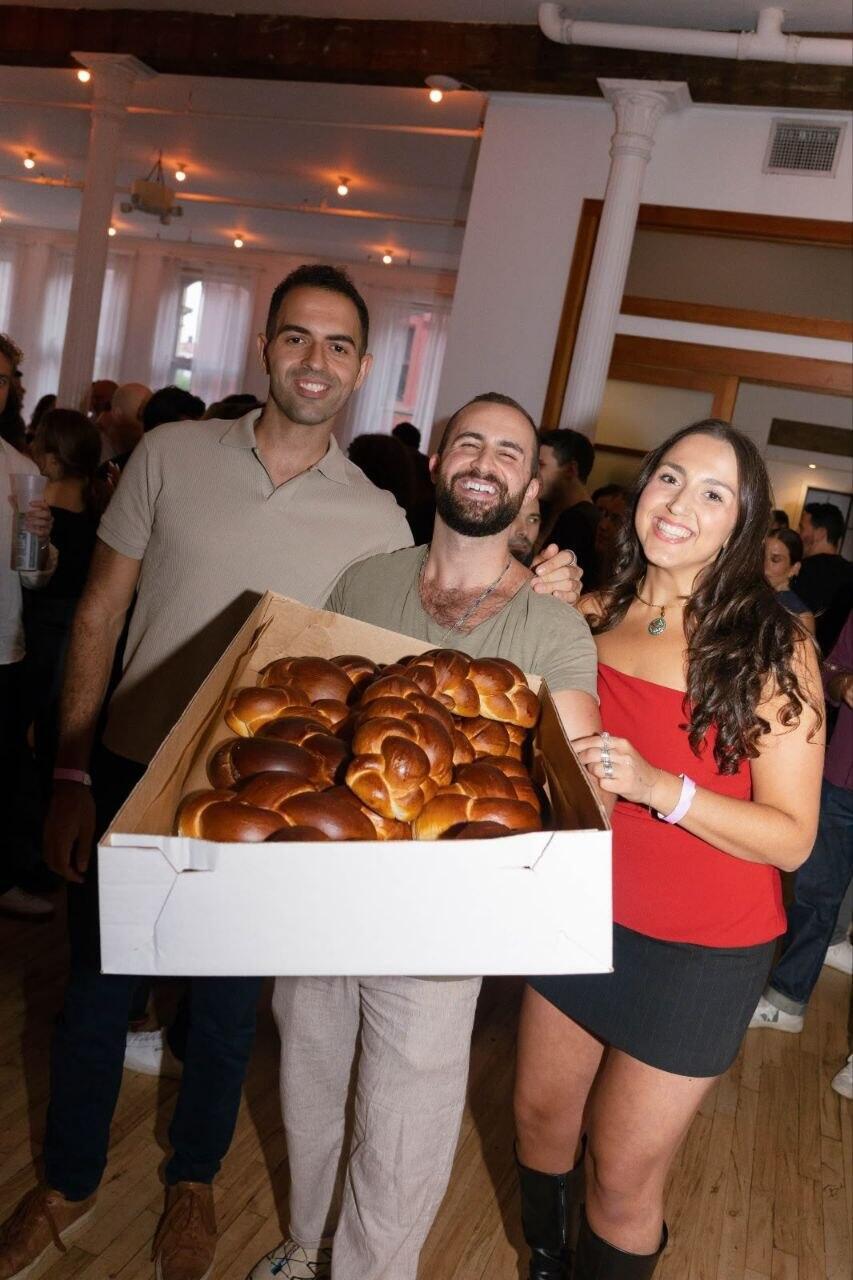
Today, more than 300 people attend the community’s events each week, and thousands have taken part since it was founded in 2024.
“What started with one person cooking dinner became a community sustained by the thousands of people who came to Kibbutz NYC and made it their own,” Wysotsky said. “The community grew because people come back, bring their friends and take an active role in what happens here.”
The choice of the word “kibbutz” is more than a New York gimmick. Wysotsky grew up in the Reform movement in New Jersey and spent his summers at NJY Camps, one of the largest Jewish summer camp networks in the United States.
At 18, he spent a gap year in Israel through Aardvark Israel, a Masa Israel Journey program combining volunteering, studies, Hebrew lessons and travel. Participants live in apartments in major Israeli cities, experiencing life in the country as part of the local routine rather than as tourists.

‘New York’s first kibbutz’
(Photo: Courtesy of Kibbutz NYC)
“That year changed me. I gained the independence that allowed me to explore the things that interested me most, especially cooking,” he said. “Many of the dishes I serve today at Kibbutz NYC began back then in the apartment where I lived in Tel Aviv, including the shawarma that has become one of the community’s favorite dishes.”
His connection to Israel remained after he returned to the United States, but after Oct. 7 it took on a different meaning.
“I felt like I was just standing still. I couldn’t focus on work, and I kept thinking, I’m here in New York and not in Israel. What can I really do from here to make a difference?”
Together with several friends, Wysotsky organized a five-kilometer run in Central Park that drew about 400 Jewish runners and raised $20,000.
“At that moment, I realized I had the ability to bring people together,” he said.
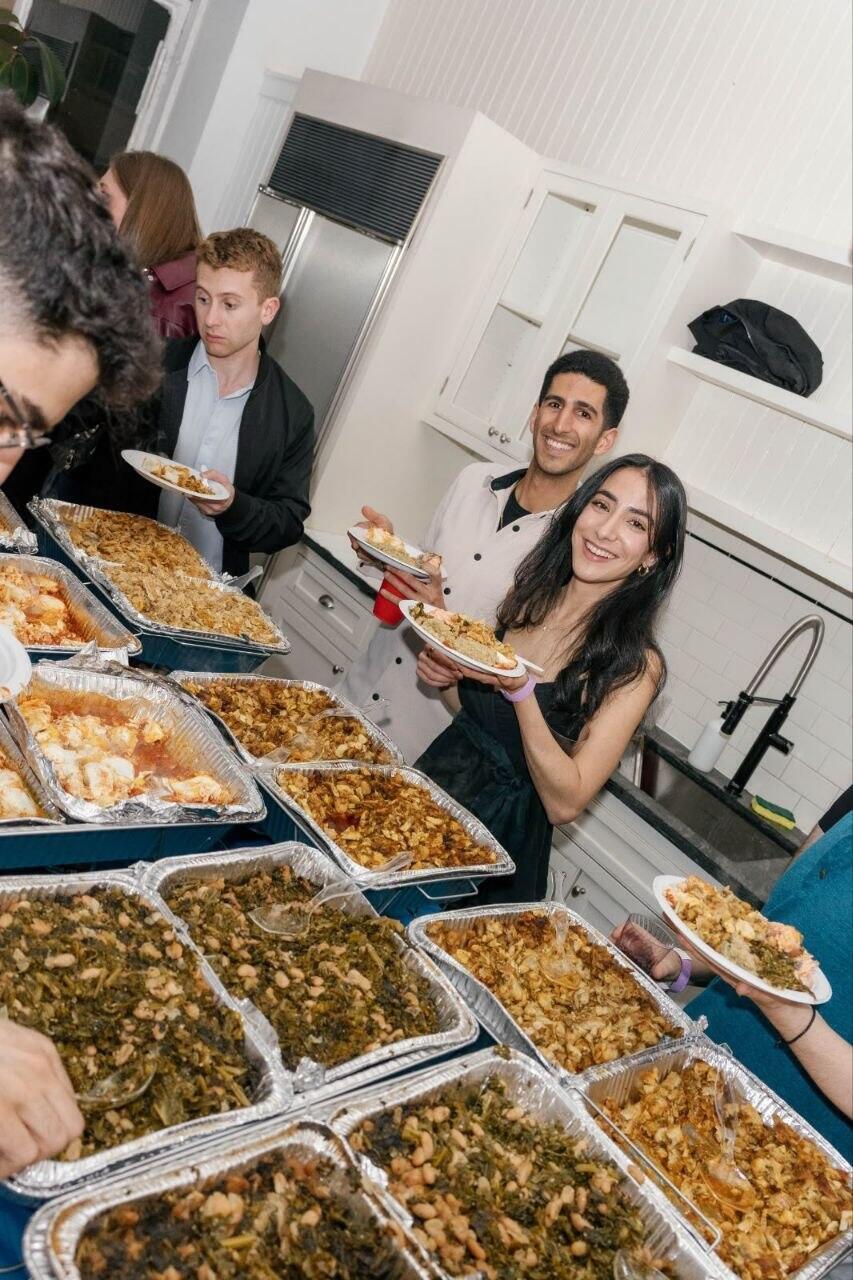
A Kibbutz NYC event
(Photo: Courtesy of Kibbutz NYC)

(Photo: Courtesy of Kibbutz NYC)
From there, the idea for Kibbutz NYC began to take shape. When it came time to give the project a name, Wysotsky returned to an idea he had encountered in Israel. Not the historic kibbutz model of collective labor and communal living, but the principle behind it: people meeting regularly, eating together and building a community around themselves.
That principle is also reflected in the details of the Shabbat dinners. Instead of waiters and bartenders, guests serve themselves from a buffet of kosher Israeli food and from the bar.
“It’s intentional and illustrates the kibbutz-like character of the evening. We all share what is under the same roof, and above all, we serve one another,” he said.
There is no single type of participant around the table either.
“The Kibbutz NYC community is very diverse, just like Israel. You can meet someone who won’t touch their phone throughout Shabbat sitting next to someone who just posted a story from our falafel-eating contest.”
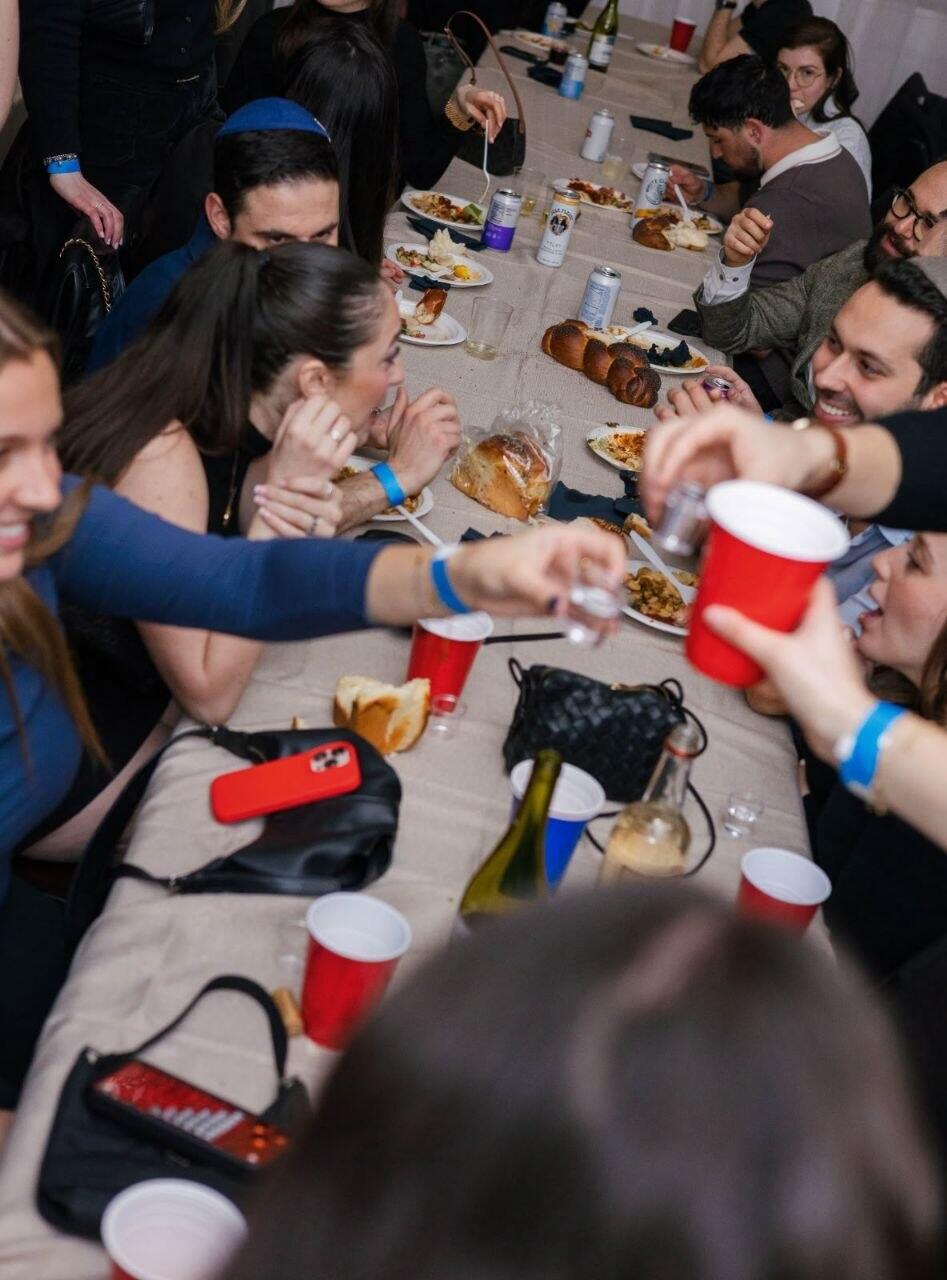
A meal at Kibbutz NYC
(Photo: Courtesy of Kibbutz NYC)
Some participants come after moving to New York and looking for a social circle. Others want to reconnect with Judaism, while some hope to find a relationship. For Wysotsky, that diversity is part of the point.
“We do everything we can so that no one feels they have a reason to give up the opportunity to come and experience Shabbat.”
That need, he said, has become especially pronounced since Oct. 7, amid events in Israel and the atmosphere experienced by many Jews in New York.
“People need a place where they can simply come and feel that they belong. Kibbutz NYC gives people a place to be Jewish without apologizing, to celebrate, connect and be surrounded by people who understand them.”
Despite the circumstances in which the community grew, Wysotsky stresses that he does not want it to become a political arena. His goal, he says, is simpler: to create a space where anyone can arrive without having to explain their identity and find others looking for the same sense of belonging.
The connection to Israel that began long before Kibbutz NYC was founded continues today. Wysotsky now works in content and recruitment at Masa Israel Journey and recently participated in one of the organization’s influencer delegations to Israel, while continuing to lead Kibbutz NYC.
The community model he encountered in Israel has ultimately taken on a New York version of its own.
“Even five or 20 years from now, I want that feeling to remain,” Wysotsky said. “No matter who you are or where you came from, there will always be a place for you at our table.”