

For the first time since the war, a delegation of paytanim (liturgical poets and singers) from Israel’s Center for Andalusian Culture and Piyyut traveled to Essaouira this week to take part in Morocco’s inaugural Three Religions Festival, an official event bringing Jewish, Muslim and Christian artists together on one stage.
The Israeli singers performed Hebrew piyyutim alongside Moroccan Muslim paytanim and Christian vocalists, blending Hebrew and Moroccan liturgical traditions in a public display of interfaith and intercultural dialogue.
On one stage in Essaouira: Israeli, Muslim and Christian paytanim unite in song 3
(Video: Mayer Cherem)


The festival was initiated by André Azoulay, the Jewish adviser to King Mohammed VI of Morocco, with the aim of promoting tolerance, mutual understanding and cooperation among religions and communities.
The event drew a large audience from Morocco and Jewish communities around the world. Among those in attendance were the chief rabbi of Paris, Michel Gugenheim.
On the festival’s opening night, the delegation performed in the city’s traditional ancient hall, where a spiritual joint prayer gathering for the three religions took place.
Gallery
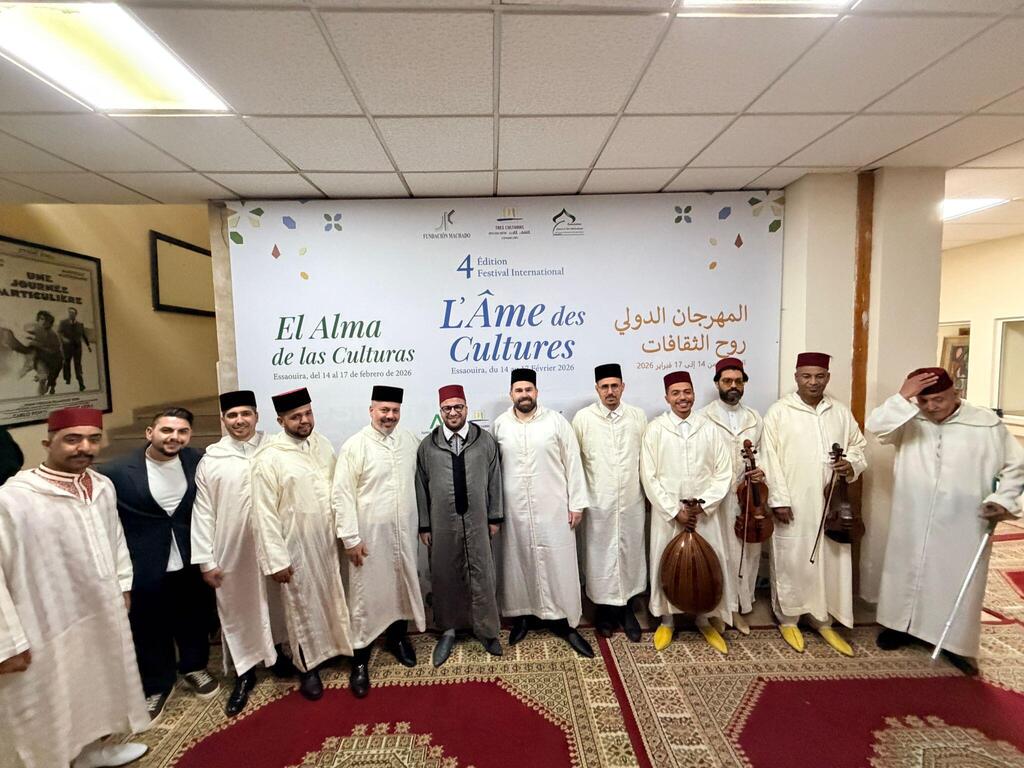
Israeli paytanim from the Center for Andalusian Culture and Piyyut pose with Moroccan Muslim musicians and festival organizers during the Three Religions Festival in Essaouira, Morocco, February 2026
(Photo: Mayer Cherem)
The evening began with the Muslim group performing “Zawiya” chants—singers and maddahin (religious teachers) from the Sufi Qadiriyya order—who offered praise and devotional remembrance of God in mesmerizing song.
They were followed by the Israeli delegation’s paytanim, who performed selections from the traditional Shirat HaBakashot for Parashat Mishpatim (the Torah portion of the week), based on ancient Maghrebi musical traditions.
Finally, a Christian procession from the Franciscan a cappella ensemble Grupo Zohar de Ariate from the Málaga region of Andalusia presented popular religious songs in the Andalusian tradition. The evening concluded with a powerful joint performance.
Jewish paytanim, together with the Essaouira children’s choir, perform selections from the Andalusian al-Ala repertoire in Hebrew and Arabic
(Video: Mayer Cherem)
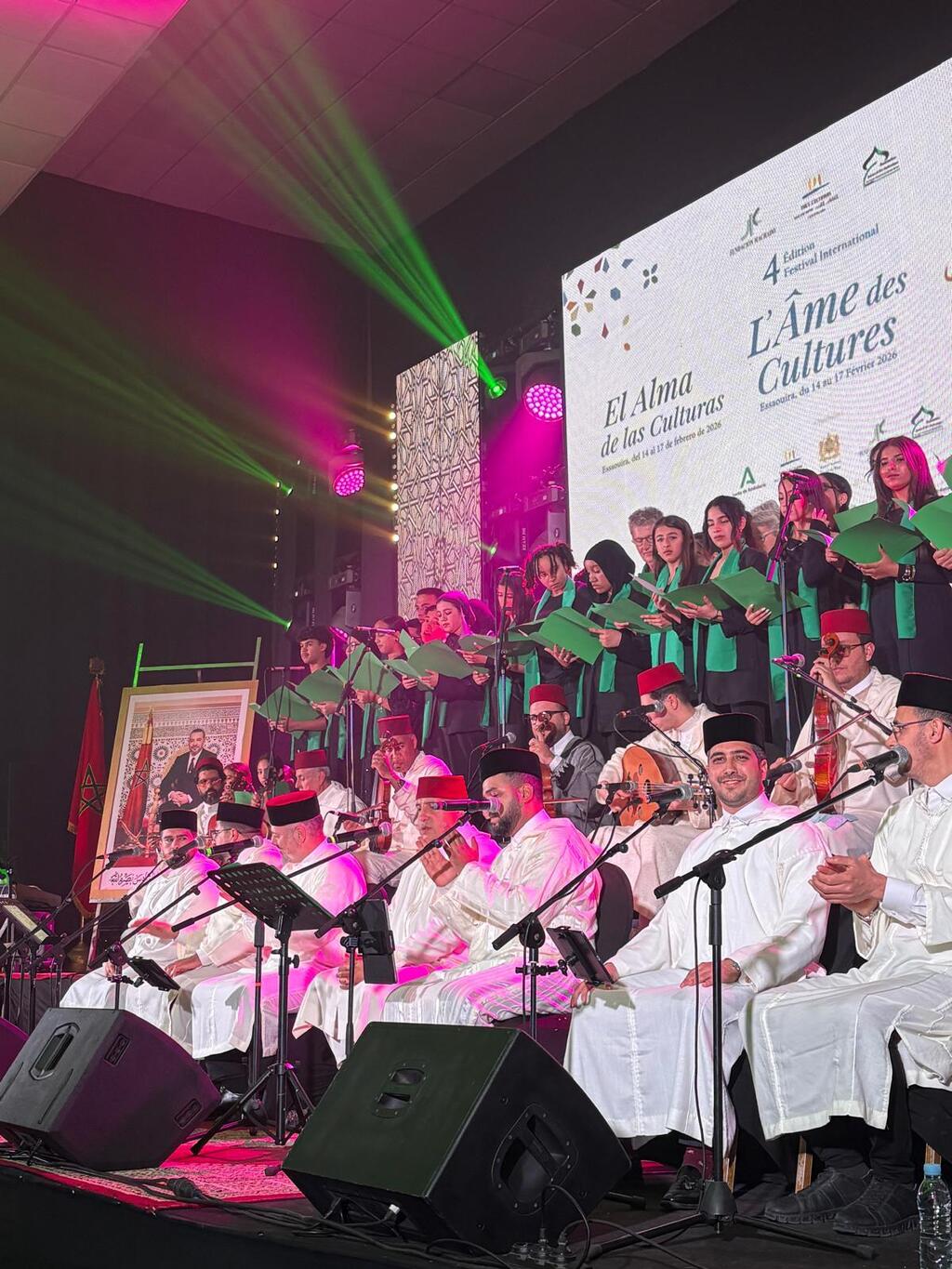
Israeli paytanim from the Center for Andalusian Culture and Piyyut perform alongside Moroccan musicians and a children’s choir during the Three Religions Festival in Essaouira, Morocco, February 2026
(Photo: Mayer Cherem)
The following day, they performed in the city’s modern concert hall. The Jewish paytanim, together with the Essaouira children’s choir, performed selections from the Andalusian al-Ala repertoire in Hebrew and Arabic.
The highlight of the performance was a historic rendition of the remarkable composition written by the poet Rabbi David Buzaglo—the piyyut Ach Bekh Moladeti, set to the Andalusian melody Tushiya Saba’iya. This complex work, which due to its musical intricacy had never before been fully performed professionally, was received with an emotional round of enthusiastic applause.
(Video: Mayer Cherem)
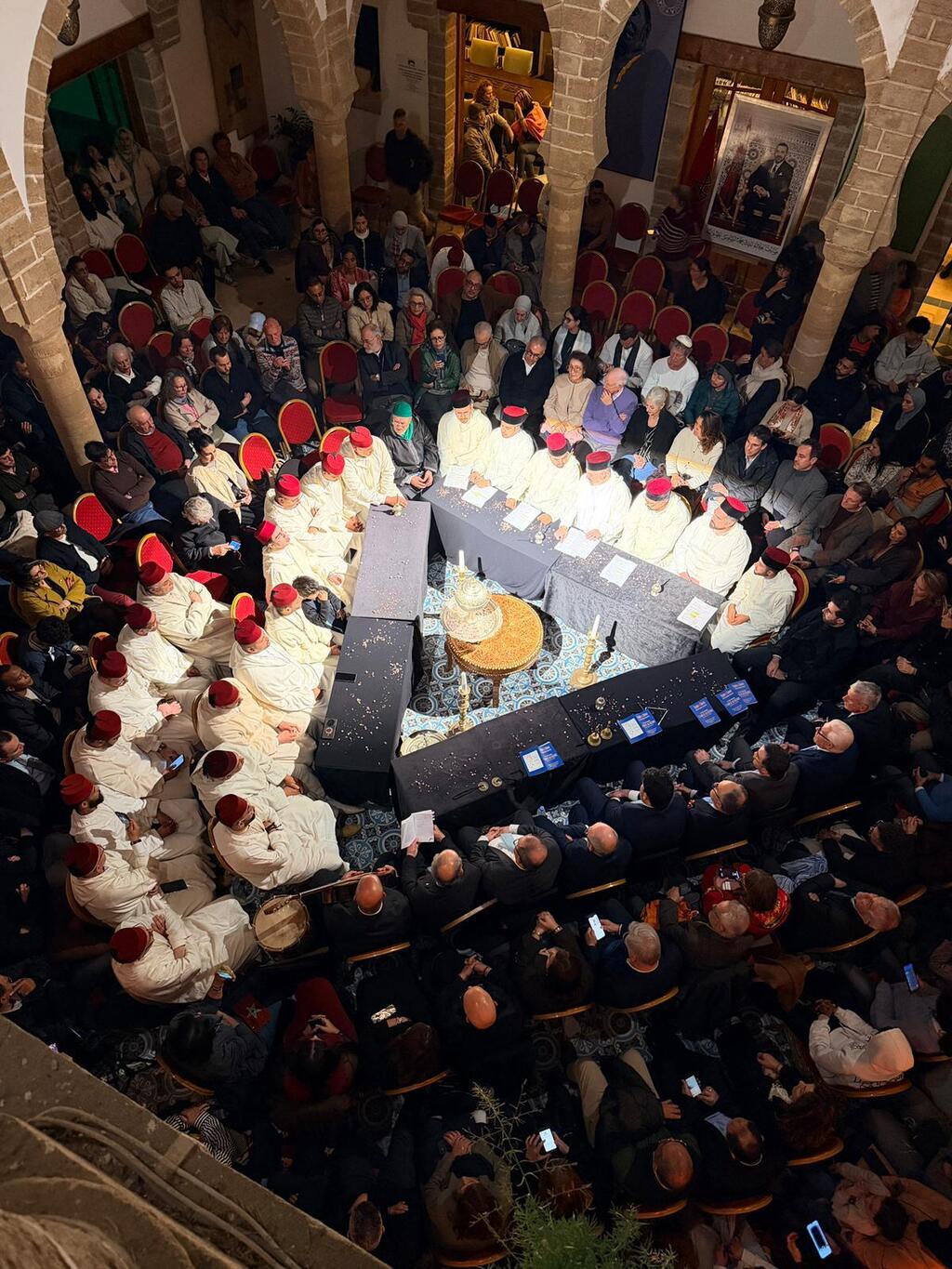
Israeli paytanim and Moroccan Muslim chanters gather for a joint performance during the Three Religions Festival in Essaouira, Morocco, February 2026, as an audience looks on from the historic Beit Dakira Jewish museum
(Photo: Mayer Cherem)
The delegation concluded the festival at the Jewish museum Beit Dakira, where the paytanim performed powerful piyyutim. An unforgettable moment occurred when Moroccan artists in the audience could not restrain themselves and joined the Israeli musicians and paytanim in singing together in Hebrew and Arabic.
During the festival, Azoulay met backstage with members of the Israeli delegation for an emotional conversation about Israel, the strong connection with Morocco, music and future collaborations to strengthen ties between the peoples and the two countries. Azoulay expressed his intention to sign a permanent cooperation agreement between Moroccan and Israeli cultural institutions.
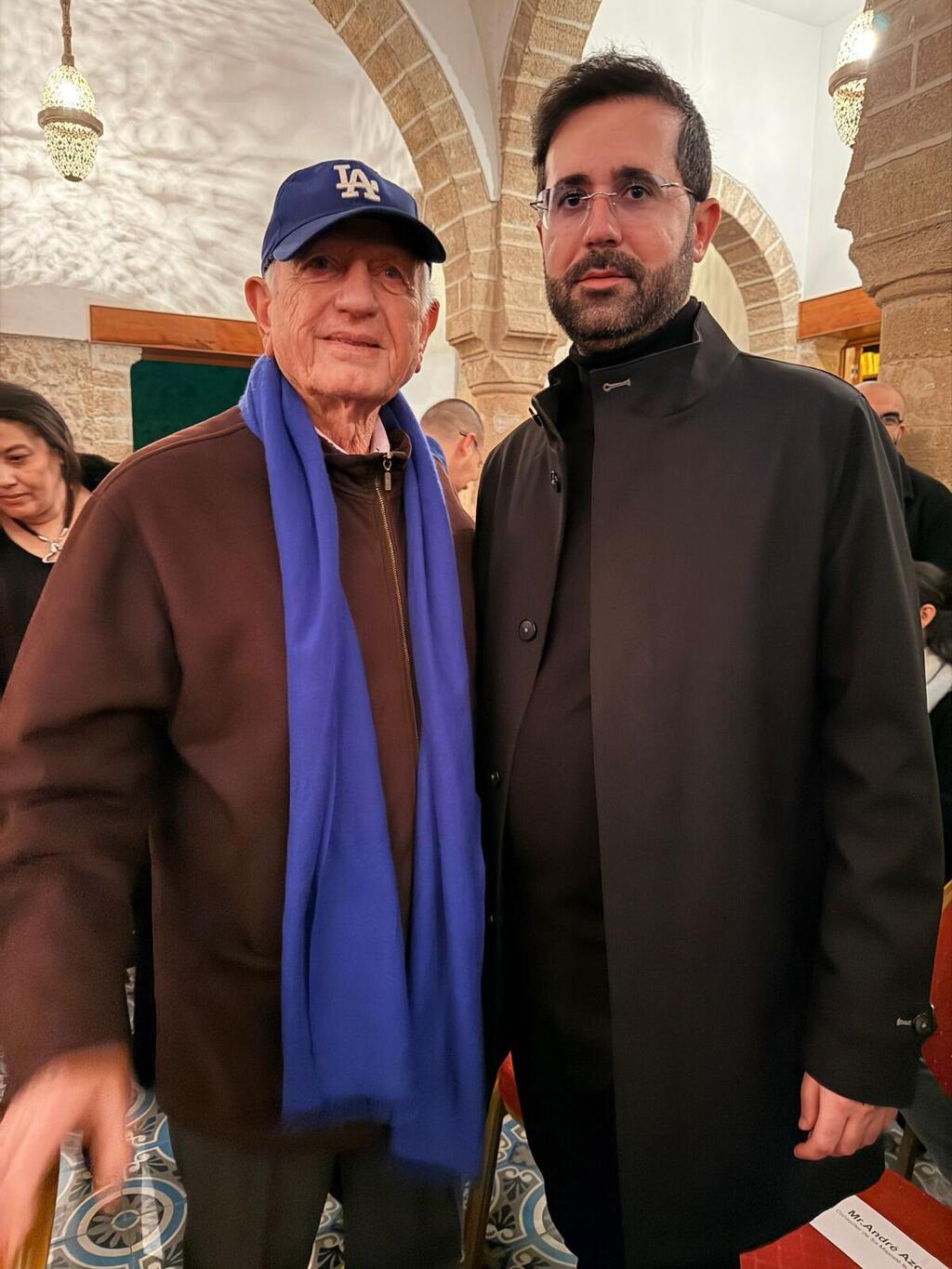
André Azoulay, the Jewish adviser to King Mohammed VI of Morocco, and Yehuda Dahan, head of the Israeli delegation
(Photo: Mayer Cherem)
“We were deeply moved to receive the invitation to participate in this unique event, especially after two complex years of war during which relations were strained," said Israel Ohayon, CEO of the Center for Andalusian Culture and Piyyut in Israel.
"We came to Morocco with a sense of mission, and the delegation felt completely safe and was received with great respect and appreciation. Music and piyyut once again proved that they are a true bridge between peoples and religions.”