


The European Jewish Association (EJA) held an emergency conference in Brussels on Wednesday addressing legal proceedings in Belgium against mohels, or ritual circumcisers, who perform brit milah on infants. Participants warned that the move could undermine religious freedom and minority rights, and set a dangerous precedent for Jewish and Muslim communities across Europe.
The conference, which also included Muslim representatives, presented a policy paper calling for legal clarity, recognition of qualified practitioners, and the promotion of regulation and dialogue rather than criminalization. A joint interfaith panel featuring legal experts and politicians emphasized the need to balance children’s rights, parents’ rights and freedom of religion, while avoiding the criminalization of religious traditions.
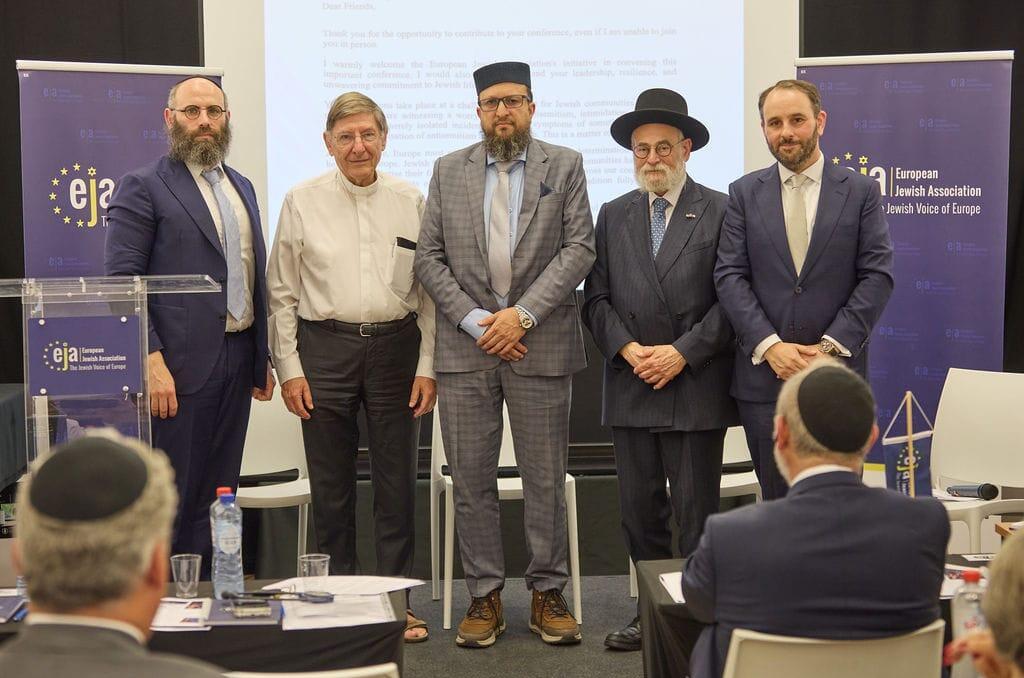
EJA Chairman Rabbi Menachem Margolin opened the conference: “This is not really a debate about circumcision. This is a debate about the limits of freedom in Europe. The real question is whether democracies protect minority rights only when it is convenient, or also when those rights are put to the test. What happens in Belgium will be judged far beyond its borders.” He warned that “the legal proceedings against circumcision could determine the future of Jewish life in Europe.”
“For Jews, circumcision is not only a medical procedure. It is one of the central foundations of Jewish life and identity," Margolin added. "Decisions on this matter are currently being made without full facts, without sufficient discussion and without proper examination of the evidence regarding a relatively minor medical procedure. The purpose of this conference is to close that knowledge gap. Above all, governments must be equipped with the correct information in order to protect Jews’ right to live as Jews.”
At the emergency conference, senior medical experts challenged the claim that religious circumcision poses a public health concern. Dr. Michael Ben-Akon, head of the pediatrics department at Laniado Hospital and a member of the joint Health Ministry committee for certifying mohels, said that approximately 2 billion men worldwide have undergone circumcision.
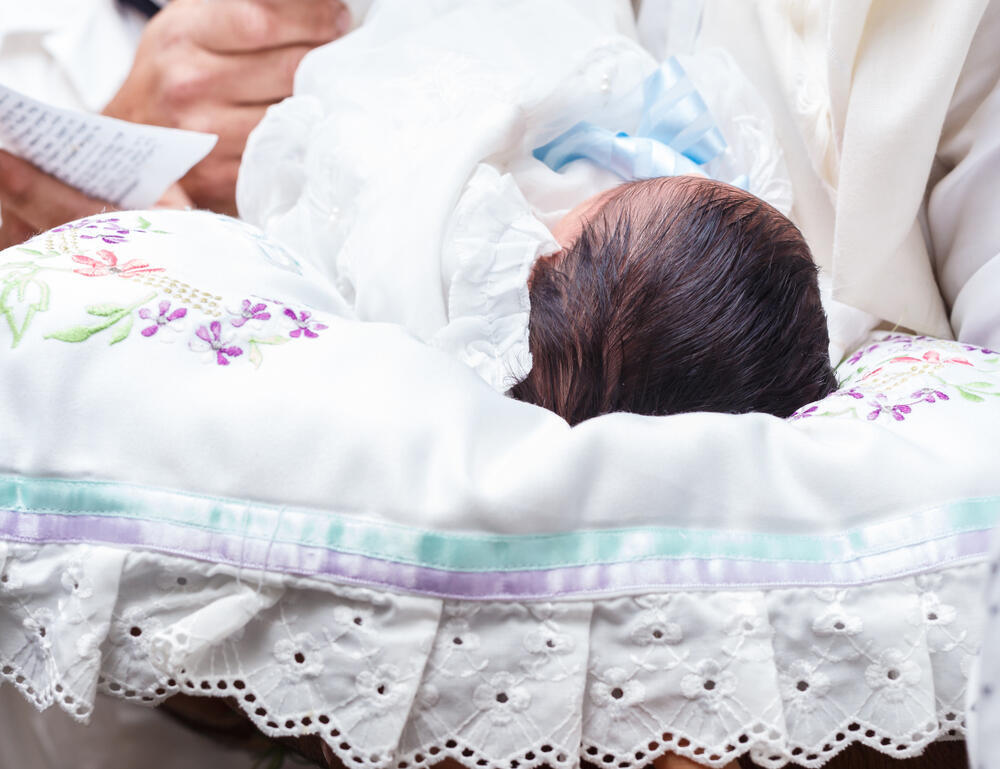
A brit milah
(Photo: natushm/Shutterstock)
He said medical literature indicates an overall complication rate of under 0.4% and an infection rate of under 0.06%. Israeli data were also presented showing that of approximately 70,000 to 75,000 circumcisions performed annually, 35 complications were reported in 2018 — a rate of about 0.5 cases per 1,000 procedures. Ben-Akon added that about 70% of circumcisions in Israel are performed by certified mohels operating under a structured training, examination and oversight system jointly managed by the Chief Rabbinate and the Health Ministry.
Dr. Sas Barmoshe, a senior urologist in Belgium, and Dr. Nuphar Veiga, a senior biomedical sciences expert at the University of Leuven, presented studies suggesting a link between circumcision and reduced rates of urinary tract infections, certain cancers and sexually transmitted diseases. They said existing evidence does not support portraying circumcision as a significant public health issue.
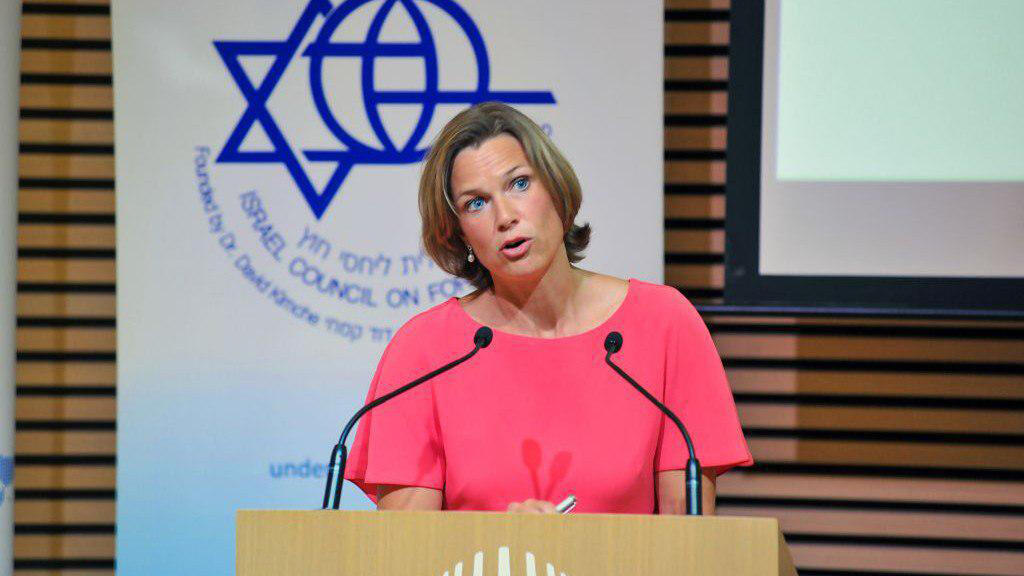
Katarina von Schnurbein, the European Commission Coordinator on Combating Antisemitism and Fostering Jewish Life
(Photo: Andres Lechko)
A message from European Commissioner for Health and Animal Welfare Olivér Várhelyi was also presented at the conference, in which he reiterated the EU’s commitment to protecting Jewish life in Europe. “Jewish life belongs to Europe. Jewish tradition belongs to Europe,” Várhelyi wrote. He said Jewish communities must be able to practice their faith in safety, dignity and freedom, while fully preserving their religious traditions.
Katarina von Schnurbein, the European Commission Coordinator on Combating Antisemitism and Fostering Jewish Life, also addressed the issue. “The European Commission is aware that circumcision is one of the most important traditions for Jews. A ban on this ancient practice would in effect mean a ban on the flourishing of Jewish life in any EU member state," she said. "In line with the EU strategy on combating antisemitism and fostering Jewish life, we will continue to do everything we can to ensure that Jewish life continues to thrive in Europe. In fact, Europe can only thrive when its Jewish communities thrive.”
Conference participants repeatedly warned that legal proceedings in Belgium could evolve from a local case into a broader European precedent, with implications extending well beyond Belgium’s Jewish and Muslim communities.
“Human rights are not tested when they protect the majority. They are tested when they protect minorities,' Margolin said at the end of the conference. "When the protection of one minority is weakened, the protection of all minorities is weakened with it. The question facing Belgium today is not what kind of Jews can live in Europe. The question is what kind of Europe Europe wants to be.”