


A tractor brought into the Jewish cemetery in Brzesko, Poland, for work to lay foundations for the repair of a collapsed wall drove over graves, shattered headstones and excavated directly into burial plots without religious supervision.
The work resulted in fragments of human bones being scattered across the site and dozens of gravestones being damaged.
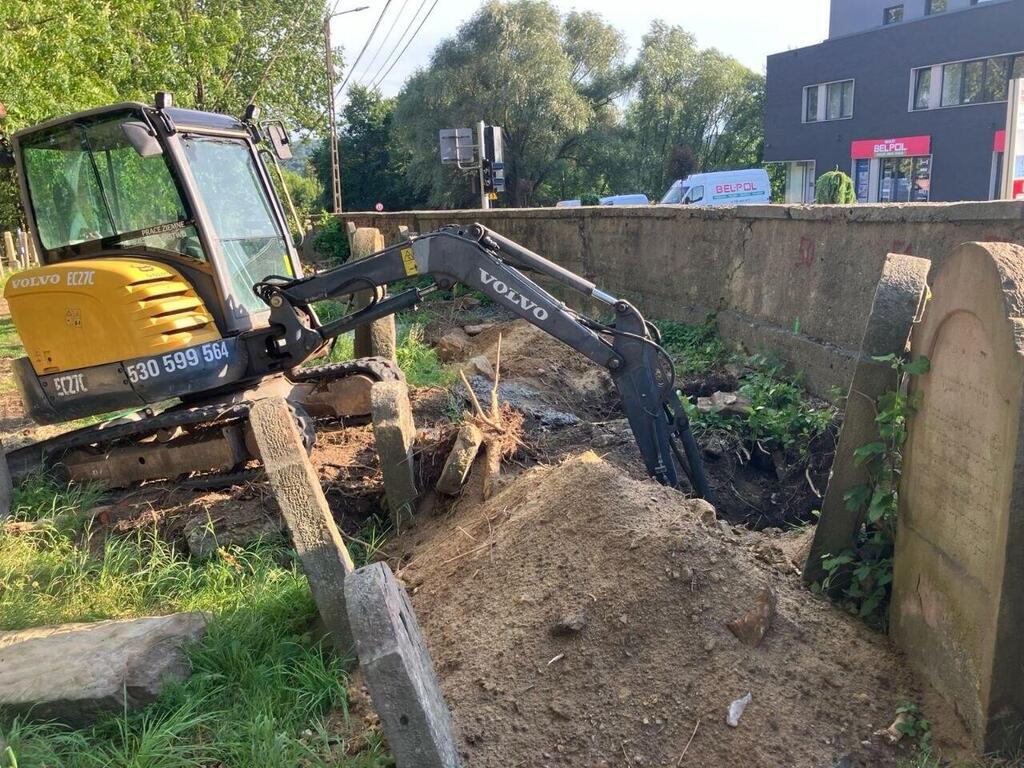
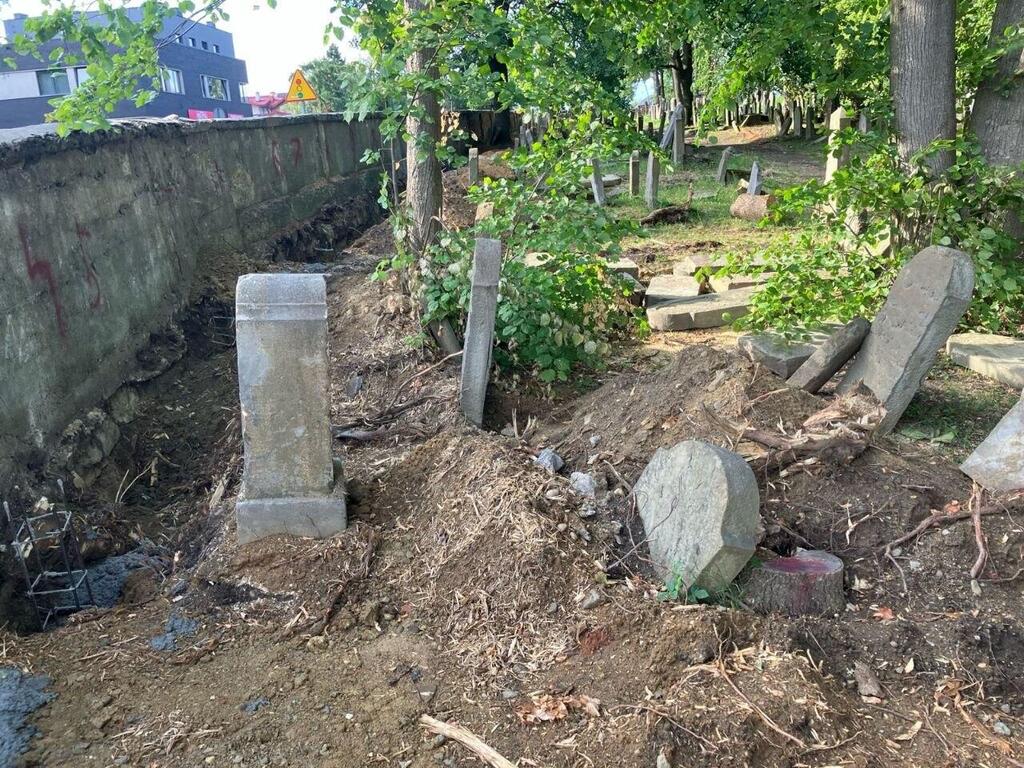
Headstones damaged during the work
(Photo: J-nerations)
The project was initiated by the owners of the cemetery, leaders of the Jewish community in Krakow, including the community president. According to sources familiar with the matter, the person overseeing the work is described as a representative of the Jewish community, despite having arrived from the United States with his brother.
The sources sharply criticized the pair, accusing them of heavy-handed conduct and of failing to properly supervise property that they say does not belong to them personally. Renovation work at Jewish cemeteries is generally supposed to be carried out under halachic, or Jewish religious law, supervision by a cemetery preservation committee experienced in overseeing such projects.
The cemetery in Brzesko, known in Yiddish as Briegel, contains the graves of a number of prominent rabbis, including Rabbi Aryeh Leib Lipschitz, known as Aryeh Devei Ilai; his son Rabbi Meshulam Zalman Yonatan; Rabbi Pinchas Templer of Dembitz-Briegel; Rabbi Pinchas Templer, son of Rabbi Mattityahu; Rabbi Menashe, son of Rabbi Menachem or Nachum Tzvi; and Rabbi Tuvia, son of Rabbi Meshulam Zalman.
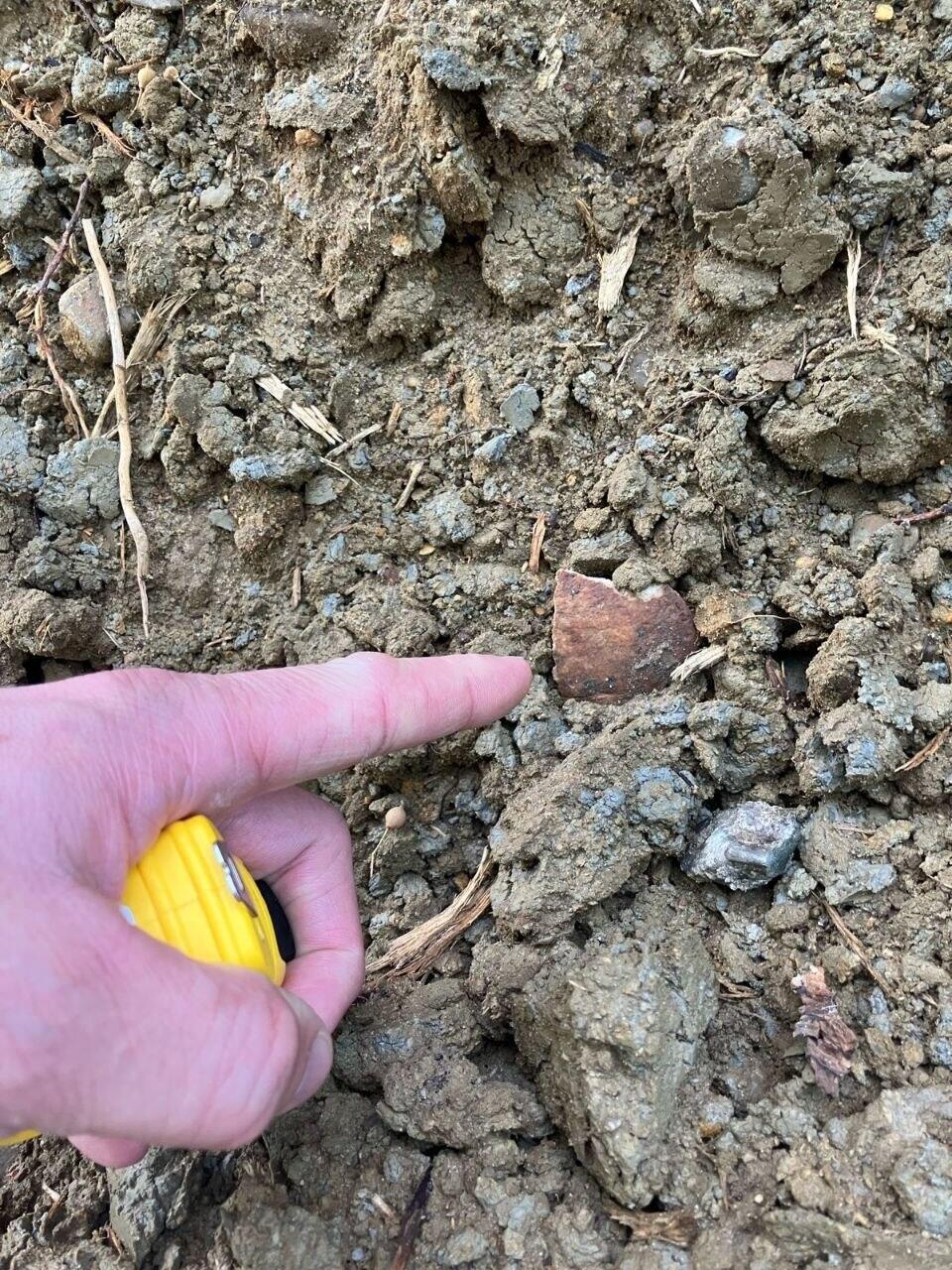
Bones were scattered throughout the site
(Photo: J-nerations)
Meir Bulka, chairman of J-nerations, an organization dedicated to preserving Jewish heritage in Europe, condemned the incident. “This is not the first time we have seen the Jewish community of Krakow act contrary to halachic practice,” he said.
“Unfortunately, for years, outside interests have shaped the conduct of this community and no one has spoken out. The Jewish people must raise their voices by every possible means to prevent them from operating without halachic supervision and through practices that amount to taking money from Jews whose only wish is to visit the graves of their ancestors and pray at the graves of righteous figures.”