


The deadly attack at Sydney’s Bondi Beach, in which 15 people were killed during a Hanukkah candlelighting event held by the Jewish community, did not occur in a vacuum, according to data and analysis published Wednesday by the Ministry for Diaspora Affairs and Combating Antisemitism.
The report points to a clear and sustained pattern of incitement, glorification of terrorism and open antisemitism that preceded the attack by months, well before the fatal shooting. According to the findings, 1,654 antisemitic incidents were reported in Australia between October 2024 and September 2025, an increase of about 400 percent compared with the annual average prior to October 7, 2023.
Flowers and candles were placed at the site of the attack at Bondi Beach


Beyond the statistics, the report describes what it calls a tangible deterioration on the ground. On October 7, 2025, the anniversary of the Hamas attack, graffiti praising the terrorist group and explicitly calling to “Oct 7, do it again” appeared in Melbourne and other locations. Authorities investigated the incidents as vandalism and glorification of a terrorist organization. Additional incidents of incitement were recorded the following day as part of protests and demonstrations tied to the date.
The radicalization continued, the report said. On Nov. 8, about 60 neo-Nazi activists held a demonstration in Sydney outside the New South Wales parliament, calling for the abolition of what they termed the “Jewish lobby.” Later that month, Australia’s federal police raided a private home in Queensland following ongoing antisemitic threats online, seizing weapons and items associated with Nazi ideology.
Gallery
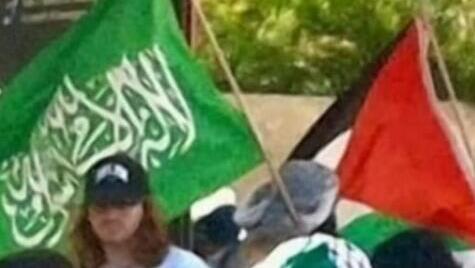
A Hamas flag at a pro-Palestinian demonstration in Brisbane in October
(Photo: Ministry for Diaspora Affairs)
On Nov. 29, public buildings at Bondi Beach itself were vandalized with violent, anti-Zionist graffiti. During the same period, arrests were made and indictments filed against neo-Nazi activists accused of possessing extremist materials and inciting violence.
Alongside the physical incidents, the report cited what it described as an unprecedented surge of antisemitic discourse on the social media platform X, with more than 445,000 antisemitic posts recorded in Sydney and about 414,000 in Melbourne alone. Influencers and public figures, the report said, promoted claims about a “Jewish lobby,” denied the existence of antisemitism and compared Jews and Zionists to murderers, rhetoric that it said moved from online spaces into the streets.
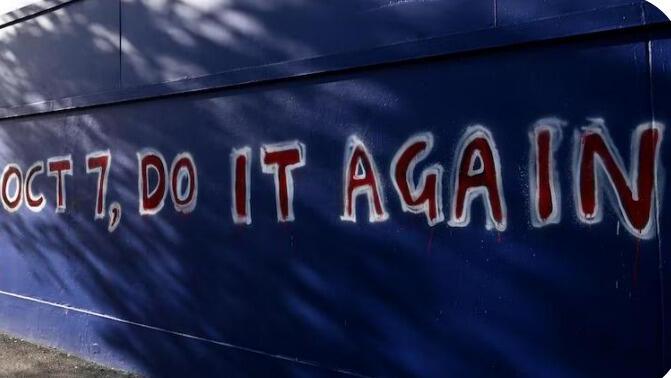
Graffiti calling for another October 7
(Photo: Ministry for Diaspora Affairs)

Graffiti glorifying Hamas
(Photo: Ministry for Diaspora Affairs)
Against that backdrop, the ministry concluded that the Bondi Beach attack was not an anomaly but a violent culmination of a prolonged climate of incitement, radicalization and inadequate response, one in which warning signs were visible long before blood was shed.
Ministry for Diaspora Affairs and Combating Antisemitism Director-General Avi Cohen-Scali said the attack was shocking but not surprising. He said it followed months in which the Australian government allowed antisemitic incitement, the glorification of terrorism and hateful discourse to spread in public spaces, on university campuses and across social media.
“When graffiti praising Hamas, neo-Nazi demonstrations and calls to abolish the ‘Jewish lobby’ are met with tolerance and weak enforcement, violence eventually spills into the streets,” Cohen-Scali said. “The responsibility of a democratic government is to stop incitement in time, not to settle for condemnations after the fact. Ignoring the warnings led to disaster, and innocent members of Australia’s Jewish community paid the price with their lives.”