

Yaara Widman Samuel, a major in the reserves, used every spare minute she had in the war room at a base somewhere in northern Israel to open the Gemara and the Shulchan Aruch and study for the Chief Rabbinate exams. In civilian life, she is already a Torah authority at the religious Kibbutz Ein Hanatziv in the Beit She’an Valley, teaching Torah classes, answering questions of Jewish law and serving as a ramit — a rabbinic teacher — at the women’s seminary on the kibbutz.
She completed advanced Torah studies and even received ordination from Maharat, an Orthodox institution that trains women to serve as spiritual and halachic leaders. But when the High Court of Justice handed down a precedent-setting, historic ruling after seven years of deliberations, forcing the Chief Rabbinate to allow women to take rabbinical exams, Widman Samuel knew she would register.
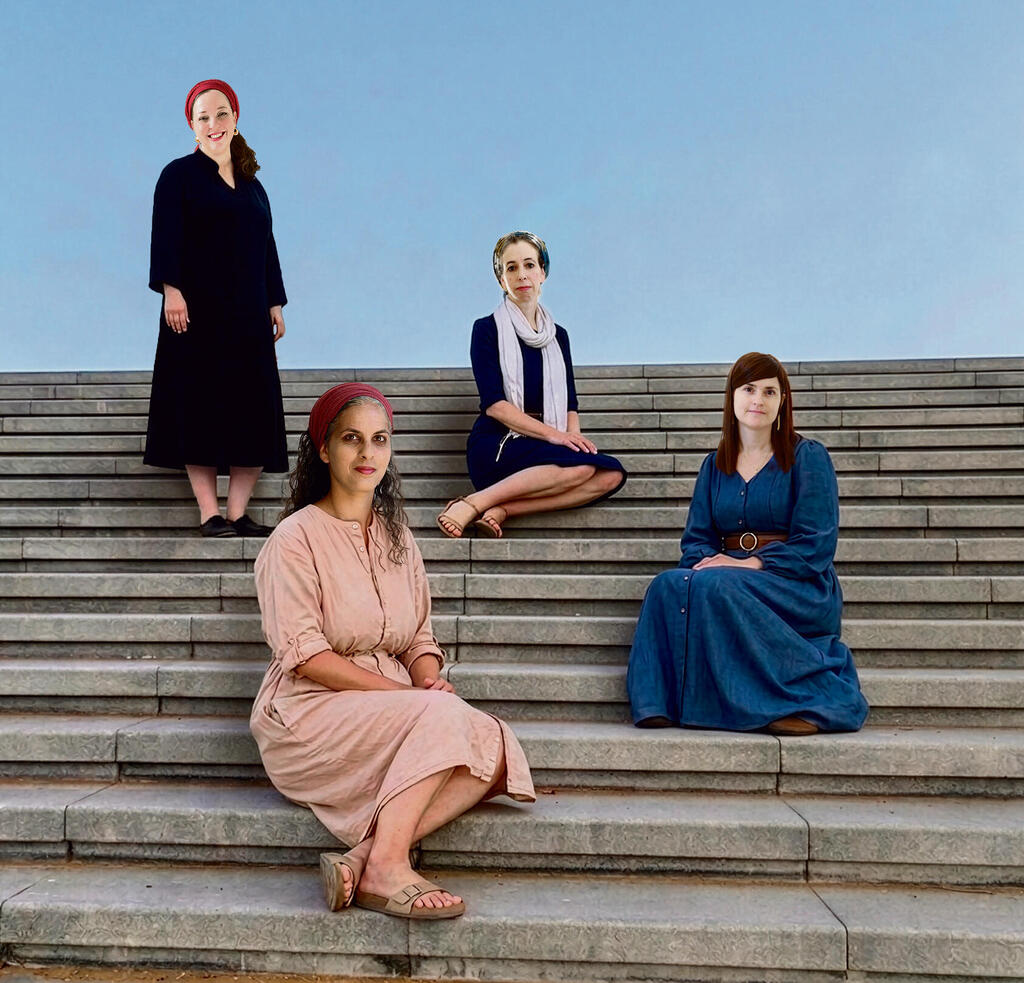
“I’m doing this for my 10-year-old daughter. When she comes with me to the seminary, it’s obvious to her that she is part of the prayer service, and when she grows up and maybe wants to rule on Jewish law, it will be clear to her that this can be done in the State of Israel, exactly like a man. My children are growing up in a home where Torah is a beloved word, and a mother ruling on halacha is not a dirty word. The fact that this isn’t foreign to them is beautiful and sweet.”
What was it like studying for the ordination exams while serving on active reserve duty?
“It was a beautiful Israeli moment during shifts, when I had a moment and opened a book, and the people around me would say, ‘Don’t bother her, she’s studying.’ Or when my secular commander would say, ‘Bring your mourning laws’ — she was tested on the laws of mourning — ‘you have to pass the exam.’”
But the road to recognition by the establishment is a rocky one for the pioneering women walking it. On April 27, Widman Samuel, 36, who is married to a carpenter and is a mother of three, arrived at the Religious Services Ministry to take the exam along with two other women. The men, incidentally, were tested at the International Convention Center in Jerusalem. That separation matters, and we will return to it later.
But back to our story. Widman Samuel had been released from reserve duty only the day before. Her husband, who is also serving, as a soldier in Lebanon, came especially that morning to help, get the children to their frameworks and pick them up at the end of the day. The plan was that she would return home in the afternoon and he would go back to his post. In retrospect, it was a naive plan.
“I got up early in the morning, excited. I hadn’t slept very well at night either. I was really anxious that I would forget all the material and embarrass myself. Come on, all eyes were on me. The male rabbinic establishment that would say, ‘See, they studied at a Torah institution and they don’t know anything,’ or ‘There are no worthy women, women are stupid.’ The religious feminist eyes were on me too. It was a stressful moment.”
And still, you set out.
“When I arrived, the head of my kollel, Rabbanit Avital Engelberg, who is one of the petitioners, and my rabbi from the kollel, who ordained me, were waiting for me. He blessed me and strengthened me, telling me I was part of a Jewish chain of men and women who study Torah. They also sang to us on the way to the classroom. We entered the room, and there was a coffee corner they had prepared for us, and lovely Haredi proctors who welcomed us warmly.
“At 10:30, there was a large clock in front of us. The exam was supposed to begin, and nothing happened. We asked the proctors, ‘What’s going on?’ and they told us the forms were delayed. What does that mean? ‘They haven’t arrived at the building.’ We said OK, a few minutes. From the International Convention Center to Givat Shaul is a few minutes on foot. At 11, the proctors told us, ‘They’re in a briefing.’ Who is in a briefing? What briefing? Why is there a briefing after the exam has already started? We wrote to the attorneys who filed the petition, who were outside, that the exam was being delayed. Still, we didn’t make a drama. We were sure it would start soon.”
What time had you reached by then? It sounds nerve-racking.
“It was already 12:30, two hours into an exam that wasn’t happening. We were climbing the walls. Crying and laughing, asking each other questions, and all that time there was tension in the air. We simply didn’t know what was happening, and no one came to explain it to us. We called the attorneys, who told us that the Rabbinate’s legal department had told them the Rabbinate had been instructed to let women take the exam. It was clear this was improper.
“Our attorneys filed an urgent request with the High Court, and Justice Noam Sohlberg announced that if the women did not begin the exam by 3 p.m., all the exams that day would be invalidated. An hour later, the time when examinees were allowed to leave for the restroom, the attorneys asked us to put our cellphones aside so no one could claim someone had told us the questions. They were looking for us, and we had to be as meticulous as possible.”
Was it clear to you that you would stay until 3 p.m. and only then start a five-hour exam?
“At 2, the proctors got a phone call, took our notebooks, packed up their things and left the room, and we didn’t know what to do. We felt humiliated and embarrassed. We asked them to give us a technical victory over this whole thing. They told us that wouldn’t happen.
“At 2:35 p.m., I got a call from an employee in the Chief Rabbinate’s examinations division asking if we were still there, because if we wanted, we could take the exam. We hesitated. We were already very exhausted. Our heads hurt and our hearts hurt. We came to be tested on halacha, and they simply humiliated us. My brother had come especially from Jerusalem, going in the opposite direction, to be with the children. When I wrote to him that I would be late, he told me, ‘Everything is fine, the children are in good hands,’ but another examinee had a nursing baby.”
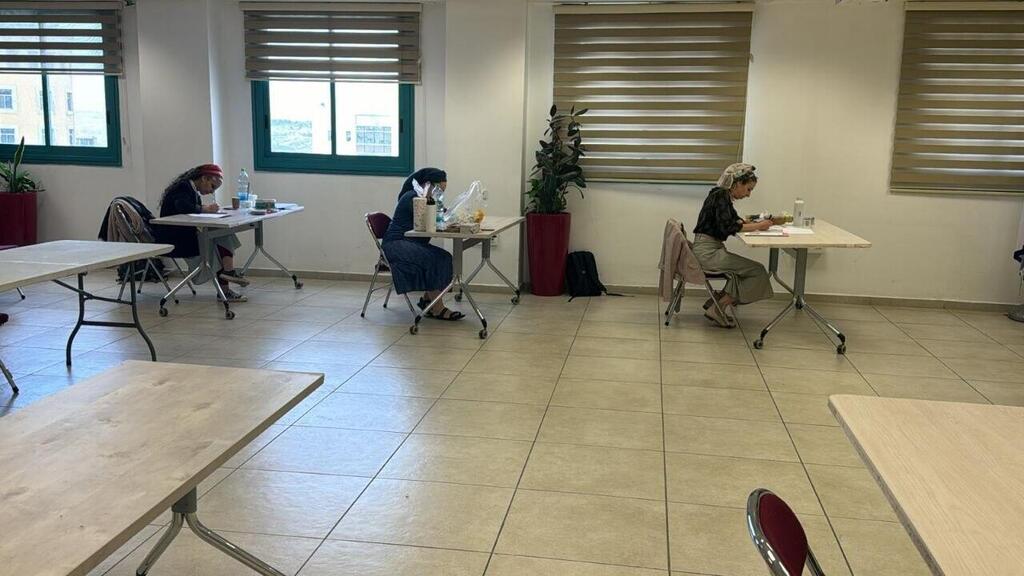
Ruth Agiv, Rachel Tzaban and Yaara Widman Samuel take the exam
(Photo: Itim)
How did you decide to stay and take the exam?
“There was a moment when I looked at Ruth [Agiv] and said to her, ‘Are we going in?’ and she answered, ‘We’re going in!’ We understood that this was the right thing. It was a historic moment. It was for us, who had studied for months, and for those who would come after us. We decided to enter the classroom with our backs straight and our heads held high.”
Do you know what happened? Because there was a classroom, there were proctors, there was a coffee corner. On the face of it, the Rabbinate had swallowed the bitter pill.
“We were told that the rabbis who were supposed to come answer questions that arose during the exam staged an Italian strike. One was sick, one couldn’t come. There was no one to come. After the High Court announced it would invalidate the entire exam, suddenly a solution was found. The Ashkenazi chief rabbi, Rabbi Kalman Meir Ber, announced that he would answer questions by phone. A solution that could have been found that morning. None of us used it. I had questions and preferred not to ask.”
Yaara was born and raised in Beit El. “I was raised to love Torah. I learned that Torah is something with which you can help people, lead a community and dream in a Jewish language. The message that the only ones who can engage with Torah are men went over my head; I missed it. I don’t feel that I am rebelling against the place I grew up in but that I am implementing the values of the place I grew up in.”
When she finished the Ofra religious girls’ high school, she arrived at the women’s seminary in Ein Hanatziv. “It was the first time in my life that I opened the door of a beit midrash, saw all the books filling the walls and knew I could study whatever I wanted, and no one would cut out paragraphs for me and teach me only something specific. I could open a book and study it from beginning to end. That was where I understood this was my place.”
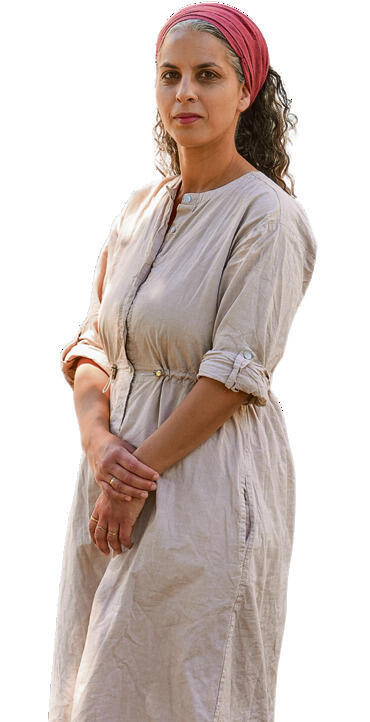
Yaara Widman Samuel
(Photo: Effi Sharir)
In a video call with Rabbanit Sarah Segal-Katz, 47, who is married to a programmer, is a mother of three and researches religious feminism and Jewish law, she takes me back to the days when privately ordained women rabbis, including herself, decided to petition the High Court of Justice to order Israel’s Chief Rabbinate to allow women to take the rabbinical ordination exams.
Segal-Katz has lived with her family in New York for the past three years, where she teaches and lectures on halacha, Jewish law, including through the Giluya Center she founded.
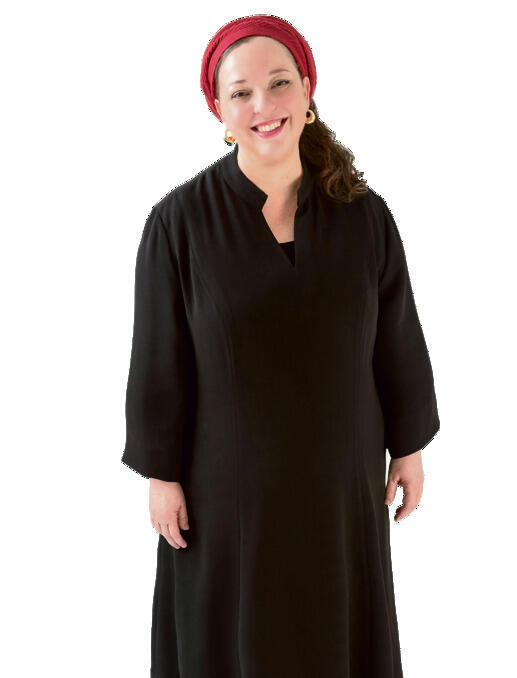
Sarah Segal-Katz
(Photo: Romina Hendlin)
“In 2018, Rabbanit Avital Engelberg and I decided to go onto the Chief Rabbinate website and fill out the registration forms for the exams,” she says. “We said, ‘We have the knowledge, let’s take the exams.’ I studied for five years in the first halacha program in Israel, at Beit Morasha, the Center for Advanced Jewish Studies, and Avital studied at Maharat. We took exams, we have certificates and we received ordination from rabbis. Back then they were still careful and called it ‘teachers of halacha,’ until the language matured. In any case, now we wanted official state validation that our knowledge has significance. Just as we studied at university and received a degree, here too we accumulated halachic knowledge and want it to be recognized.”
So you filled out the forms. What happened?
“They asked for certificates showing halachic knowledge and recommendations from rabbis. OK, we had that — recommendations from rabbis and women rabbis. We submitted the forms properly and got an answer at lightning speed. It was negative, of course. There are six exams in the ordination track, and each exam is taken separately. I asked to be tested on the laws of niddah, menstrual purity — that’s my forte. The answer was that only men can be tested on niddah. It makes you grab your head and say, ‘Seriously?’”
Unbelievable. But in fact, this was a kind of maneuver, because it was clear to you that women had no foothold in the Rabbinate exams.
“Of course, it was a test case. The Rabbinate is a state body funded by taxpayer money, and it cannot be that the state refuses to recognize a growing phenomenon of worthy women who studied and were ordained, and who want to be partners in providing religious services. Two years before the petition, then-Interior Minister Aryeh Deri equated Torah education with an academic degree, and on that basis men who completed kollels could apply for public tenders. We, the group that petitioned, which also included Rabbanit Rachel Keren, Rabbanit Shlomit Flint and Rabbanit Shlomit Piamenta, had already managed. We invested our own money in our studies, we hold ‘Yoreh Yoreh’ certificates, we teach and the public recognizes us. But tomorrow, a 20-year-old woman may want to study halacha seriously and apply for a public position, and the choice should be in her hands.”
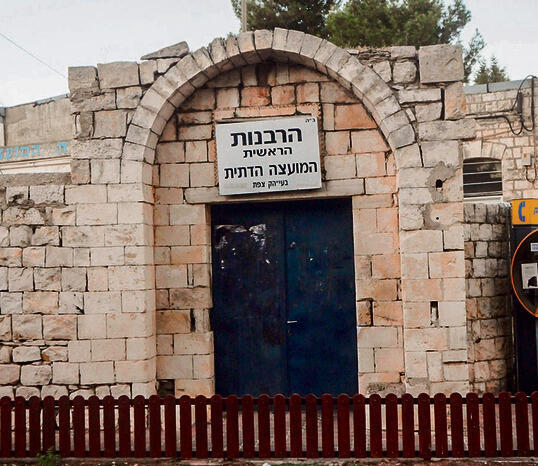
The Rabbinate building
(Photo: Avihu Shapira)
Segal-Katz was born in Jerusalem’s Haredi Ezrat Torah neighborhood to parents from Haredi families who slowly began moving toward religious Zionist circles.
“At the Neve Chana girls’ high school in Gush Etzion, the world of halacha opened up to me, and I took a matriculation exam in Gemara when that was still pioneering. After a year of study at Midreshet Shuva, I enlisted in the air force. I served in an operational role as a commander in the control array. I knew that when I was discharged, I would continue studying halacha. In the Revivim program at the Hebrew University, I completed bachelor’s and master’s degrees in Bible and Jewish thought. In exchange for the generous scholarship I received, I taught Jewish studies in secular high schools.”
And then you went the extra mile and decided to study for rabbinical training.
“I got married close to age 30 to a baal teshuvah, someone who became religiously observant, and we had many halachic challenges. It was clear that one of us needed to study halacha seriously. We both took a year off from our jobs, and each of us studied in a beit midrash. When we talked about one of us going deeper, my husband said, ‘Are you kidding me? You’re the one who needs to go study.’”
What did your family, with its Haredi roots, think of this path?
“There are parts of my family that fight against what I am working for. When I began studying halacha, I was constantly asked, ‘But what’s the endgame?’ I answer that one day women will be part of the rabbinic staff in synagogues. Communities also need spiritual women leaders who bring a female perspective.”
She identified the first signs of change in religious society years earlier.
“At first I would sit with a couple, and the man would say, ‘But do you know a rabbi who says that?’ Slowly, that disappeared. And still, all of us are a kind of wilderness generation. We already had self-confidence in the academic knowledge and Torah knowledge we had accumulated, and in our teaching experience. We were part of Beit Hillel, an organization of Orthodox rabbis and women rabbis, where every woman with halachic knowledge carries the title ‘rabbanit.’ That was a real historic change, and we understood the time had come to file a petition with the High Court. Then we turned to the Itim organization, and its excellent legal department drafted the petition. It is important to emphasize: We did not ask the Rabbinate for ordination, but to be tested in all six ordination exams.”
In effect, the petition and the High Court ruling allow women to pass the ordination exams but not to receive the Rabbinate’s official certificate or be recognized by the state as women rabbis.
“This achievement seemed attainable to us,” says a source close to the petition, hinting at a “salami method” on the road to full equality. “Demanding rabbinical ordination is already entering a battlefield, but there is no doubt that this is where it is going. Mainstream religious Zionism today recognizes women’s authority far more in terms of halachic knowledge, so it is natural that society itself will not settle for partial certificates without the overarching certificate that recognizes the women rabbis’ authority. This is the social change, and the pressure will come from the public. The court rules according to where the public is.”
Segal-Katz reinforces the point. “Yeshiva students receive their ordination certificates from their yeshiva, not necessarily from the Rabbinate, and we thought that made the petition very easy. The court also said fairly quickly that there was indeed discrimination here.”
So how did it still take about eight years until your petition was accepted?
“Many times the High Court is described as progressive. That is not true. There is attentiveness to the public, and here there was a long process and countless discussions with the Rabbinate. The High Court tried to reach agreements. The Rabbinate tried to say, ‘We cannot allow women to be tested. Let the Labor Ministry test them, the way it tests electricians.’ We did not agree to that, as the legal principle says: separate is not equal. Incidentally, they did not manage to produce a proper legal document with organized arguments explaining why women could not be tested. They simply said, ‘We cannot.’”
Then came July 15, 2025, the day the High Court accepted your petition.
“The day before, I spoke with a partner in this journey and told her I did not see a future for the petition. Then the next day there was an explosion of phone calls and WhatsApps. I received the ruling written by Justice Sohlberg, and in it he mentioned that week’s Torah portion, the daughters of Zelophehad, who fought to receive what was due to them, the inheritance of their dead father. Then I went back onto the Rabbinate website to register for the exam. All those years I said this was not a theoretical petition. When the day came, even though I no longer needed it, I would take the exam.”
And this time you received a proper notice saying your candidacy had been accepted and the exam would be held on such-and-such date?
“Within a few weeks, the Rabbinate blocked registration for the exams — for men and women alike. It bears repeating: This is a government website that ends in gov.il. The Sephardic chief rabbi, David Yosef, attacked the High Court, saying, ‘They are trampling the Rabbinate with a heavy foot.’”
And when did registration for the exams finally open?
“About half a year after the High Court ruling. After Passover, they told us we had been assigned to an exam taking place in two and a half weeks. That too was crooked. Each exam is based on a huge amount of material, and there really was not enough time to prepare. But fine, niddah is a subject I know well. In the end, the campaign in Iran happened and the exams were postponed a bit.”
But then you decided not to take it. What happened?
“We received the location and realized we were being tested separately from the men. That means our box of exams comes from a different place, and we can easily be identified. I am listening to the chief rabbis. I hear them in the media. In a booklet that was distributed, they called for a fast day against the day on which women were tested. I also hear Rabbi Tzvi Tau. He is one of the important Haredi-nationalist rabbis, and if he says the High Court justices and the women asking to be tested are a cancer, then demanding an independent body to verify the integrity of the exam process is not an unreasonable thing. Look, after the storm over the exam, the chief rabbis announced that after the elections they would initiate a law bypassing the High Court that would bar women from serving in rabbinical positions.”
When is the next exam?
“The Rabbinate again closed the option to take the summer exam, came to its senses and opened the October session, and I intend to take the exam. I have already registered.”
It is no coincidence that the Haredi Rabbinate and the Haredi-nationalist rabbinate were up in arms and cooperated in an effort to stop the move, using every tool at their disposal: interviews, halachic rulings, public statements and emergency meetings. This is a true revolution. These women are part and parcel of religious Zionism. They are not Reform or Conservative. They are also no longer satisfied with the compromise titles “teachers of halacha” or “women of halacha.” They are women rabbis, and they say so without apology.
Their knowledge is no less than that of any other rabbi, after they spent many hours in the beit midrash or kollel and passed ordination exams in the private track in which they studied. The number of women studying in halacha programs has more than doubled since the petition was filed. Every year, 40 women in Israel study in the various halacha programs, and there are already about 200 women ordained as rabbis in Israel. At the beginning, the heads of the halacha programs were rabbis. Today, the overwhelming majority are women rabbis, women who studied in those programs and were ordained. The rabbis moved aside, and the role passed to women.
So what does their rabbinic routine look like? These women, who from childhood were accustomed to peering through the curtain of the women’s section to hear a sermon delivered from the men’s section, have become the ones standing and preaching from the men’s section, giving Torah classes to all worshippers in the synagogue, men and women alike.
They teach in Torah study frameworks such as seminaries and yeshivas, provide personal and couples’ halachic counseling and conduct life-cycle ceremonies. They officiate at zeved habat, a naming ceremony for a baby girl, at pidyon haben, the redemption of a firstborn son, together with the officiating kohen, and more and more people are asking them to officiate at weddings. Sometimes this is done jointly with a rabbi, and sometimes the wedding ceremony is conducted solely by a woman rabbi, in which case it is not recognized by the Rabbinate. Incidentally, a petition filed by the Rackman Center is currently being heard by the High Court, in which women rabbis are seeking to officiate at weddings that will be recognized by the state.
Segal-Katz, for example, officiated at many weddings before moving to New York three years ago.
“At first the reactions were surprised. Maybe it aroused antagonism,” she says. “But in truth, there is no halachic problem with a woman officiating at a wedding ceremony, if she is well-versed in the laws of betrothal and divorce.”
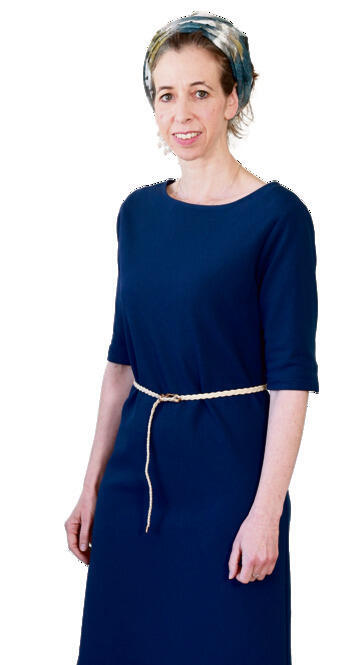
Dr. Ruth Agiv
Pediatric dentist Dr. Ruth Agiv, 44, of Leshem in Samaria, is married to a programmer and a mother of five. She did not need another profession, certificates or status. She came to the study of halacha purely out of love for Torah.
“I work in a very practical profession, and at the end of the day, I was missing spirit,” she says. “All my life I have been in a process of searching. I grew up in the religious world, and I always had questions. There was a certain innocence of, this is what is written, don’t think too much and don’t ask too much. I was considered a bit rebellious, but it was received nicely. The more I studied and tried to understand, the stronger my connection to this world became.”
Agiv, who was born and raised in Jerusalem, also went on to study at a women’s seminary.
“I studied at Shuva, in Ofra, but the orientation there was more Hasidic and less analytical. If I am committed to religious practice, I want to understand why I do what I do. I studied in all kinds of frameworks — classes here, independent study there, on the side. For several years now, my husband and I have been studying the daily page of Gemara. It was frustrating at first, when I couldn’t understand and he couldn’t teach me.”
And then you decided to study in an organized framework?
“You could call it a midlife crisis at 40. I realized something was missing. I couldn’t make do only with my work, and I came to the ‘teachers of halacha’ program at the Matan Hasharon Beit Midrash. This world fascinates me.”
And how did you decide to take the ordination exams?
“I had been studying two major subjects for two years, niddah and mourning, and I was tested on them. When we finished them, we received notice that the Rabbinate had opened the exams to women. That was very serious news, because we are the target audience for this. I hesitated, because it’s a question of whether I want to be at the center of this struggle, to be the face of it. The first ones are the ones who take the blows. I said, ‘Maybe we should wait for others to take the step, sit for the exams and see what happens.’ I knew it meant entering a kind of war.”
So what tipped the scales?
“I came to this study out of love for Torah and a desire to go deeper. I have a profession, and I’m not going to replace it. I am part of the religious-Torah world, and I want to belong even more. I am entering the halachic world because someone opened the door for me. When I was a girl, there was no such thing as women studying Gemara, certainly not halacha. It was not accepted. I really saw before my eyes how, year by year, it became consensus. If someone else fought for me, opened the door for me, now it is my time to take the next step, to be part of the process at the end of which women will receive recognition from the Rabbinate. I am holding the door open to allow the women who come after me to enter.”
How did the circles closest to you respond?
“My parents were very supportive — how wonderful, of course you should take the exam, it’s a challenge. And there is another circle, the extended family, that says, ‘Why are you going against it? It isn’t accepted.’ It is a little sad that people are not really interested in what halacha says in this case, and put more emphasis on what is or is not accepted. Halachically, women are permitted to rule on Jewish law. Until now, they simply did not have access to all the material. When people speak in terms of ‘not accepted,’ that is something very closing. We are perpetuating something that carries a heavy price. It used to be unacceptable for women to take part in synagogue life, and women really did grow distant. I have a lot of anger about that.”
Yaara said you were a major part of the decision to stay and take the exam in the end.
“I had studied so much. My investment in the learning was enormous. For two months I shut myself in a room to study and told the children, ‘We’ll meet afterward.’ If I hadn’t taken the exam, it would have been a huge disappointment, that all of it had been for nothing.”
What do you say — did you pass?
“It was a fair exam, and I came out feeling good.”
You attended the Knesset discussion on what happened on exam day.
“The Rabbinate representatives said rabbis had refused to cooperate and answer questions, and that all day they were working on a solution. It was clear that this was not the real story. There was a struggle here conducted by the chief rabbis. They had to prove to their public that they were not giving in. But that doesn’t matter. I am already studying for the next exam, in niddah. The more I study, the more appetite I have, and I want to take all the exams.”

Moria Ran
Moria Ran, divorced and a mother of three from Petah Tikva, is a historian and researcher of religious feminism who has served for the past five years as the rabbanit of Pelech High School for girls in Tel Aviv. This year she is on sabbatical. It is another marker of the evolution taking place in the religious public: school rabbanit, rather than rabbis, in girls’ high schools.
In October, she will take the exam on the laws of Shabbat. She says she studies dozens of hours a week for the test.
“I was a teacher of history, Talmud and halacha, and after several years I was appointed rabbanit. Two years later, I went to study in a beit midrash, and I have been in a study program for four years.”
How did you get onto this path?
“I love studying Torah, but it is also rooted in feminism. Even as a child, I hated that the boys played soccer and the girls didn’t. I would play with the boys. I would go with my father to synagogue and sit next to him, until that was no longer appropriate. It was really frustrating to discover that I had to move to the women’s section. My brothers were expected to get up for prayers on Shabbat morning, and we girls, my sister and I, were not asked to. But I would get up for prayers anyway. There was also frustration that the boys in the Bnei Akiva branch knew how to open a Gemara and I didn’t. I didn’t even know how to look at the page. I really felt sorrow. It was clear to me that after national service I would go study Torah at a seminary. I looked for a seminary where you didn’t have to cook meals, where everything was taken care of for us and we could simply immerse ourselves in study. My parents were very opposed.”
Why?
“As far as they were concerned, it was a waste of a year. They pushed me very strongly toward studies before marriage, or at least before having children. My brother studied in a yeshiva after the army, and he never heard from them that it was a waste of time. My mother also used to say all the time, ‘Who will marry you if you study Gemara?’ It is not normal, it is even masculine. Not something women are supposed to do. It reached the point where I paid for that year at Midreshet Lindenbaum myself.”
And what happened at the end of that year?
“It changed my life. It made my religious identity my own. After you study so much, you ask, ‘How did they hide this from me? How did they rob me of the key to the Jewish bookshelf?’ There was great anger and frustration. All that richness enticed me to continue studying. I completed a bachelor’s degree in Land of Israel studies and Talmud, and from there went straight to a doctorate on the biography of Prof. Alice Shalvi, one of Israel’s pioneering feminists, as a reflection of changes in the status of women. I studied at Bar-Ilan University’s midrasha and also at the beit midrash of Herzog College in Jerusalem. The rest of the time I made a living from teaching, including in the army’s conversion program.”
Did you already understand then that you wanted to be a halachic authority?
“That was really not in my mind. Now it is more so, but when I started four years ago, the idea was: Let me study Torah, reach the sources, understand how halacha works. I was not interested in ruling on Jewish law. The more I study, and the more people come to me with questions — from the personal, private circle, and it keeps expanding — I understand that yes, I want to help people.”
As a historian, the correct term is rabba, not rabbanit, which originally described the rabbi’s wife. So how did the title rabbanit catch on?
“The word rabba sounds to us like a word taken from Reconstructionist, Conservative or Reform Judaism. It smells to us like something too liberal. But people in Israel are used to hearing the word rabbanit, and women within Orthodoxy are constantly expanding meanings. So we took an existing word and expanded its role, and now it can be accepted much more easily.”
Being a rabbanit and divorced is surely not simple. Rabbis are perceived as exemplary figures, and your image is cracked.
“I am proud to say that I am the rabbanit of the divorced crowd. There are groups of divorced men and women online and on WhatsApp, and when interesting halachic questions come up, such as whether to continue keeping the father’s customs at home when he no longer lives there, I write a halachic response. The next halachic question I want to answer is the removal of head coverings for divorced women and widows. The answer is always connected to the next match, or to the question of whether it harms her livelihood. No one ever looks at the woman’s wishes. What if it is emotionally heavy for her to carry the head covering? I removed my head covering the day after I got divorced.”
For now, the women rabbis are not planning another petition that would take them another step toward equality. They are busy implementing the ruling, sitting down to study for the exams. The public, however, is already looking ahead.
Regarding the claims about exam day, the State Attorney’s Office responded to the urgent petition filed that same day with the High Court: “The exam forms were not distributed to the women who arrived to take the exam at 10:30, as was supposed to happen ... From the moment the legal bureau of the Chief Rabbinate of Israel became aware of the matter, it began acting to ensure that the exams would also be held for the women examinees.”
- The Chief Rabbinate did not provide a response by press time regarding the other claims raised in the article.