

The town of Postville, Iowa, lies in the frontier region of the Midwest, halfway between the state capital of Des Moines and the cities of Madison, Wisconsin, and Minneapolis, Minnesota—and close to none of them. It is seemingly just another small, isolated town in the middle of nowhere that could have served as the perfect location for a Coen brothers cinematic thriller, much like Fargo, North Dakota, which is about a six-and-a-half-hour drive away.
But in real life, Postville is not just another provincial Midwestern town. It is more like a shtetl, featuring two synagogues, a beit midrash (house of study), and even a Chabad house. Its population numbers only about 2,500 residents, many of whom are Orthodox Jews who made the pilgrimage there in the late 1980s to establish the Agriprocessors kosher slaughterhouse. The plant - which closed in 2008 and filed for bankruptcy after a federal immigration raid, and reopened again as Agri Star less than a year later after it was sold at auction - has served as their source of income and provided strictly kosher (glatt) meat to numerous Jewish communities across the United States. Now, all of this stands in question after a fire destroyed the complex.
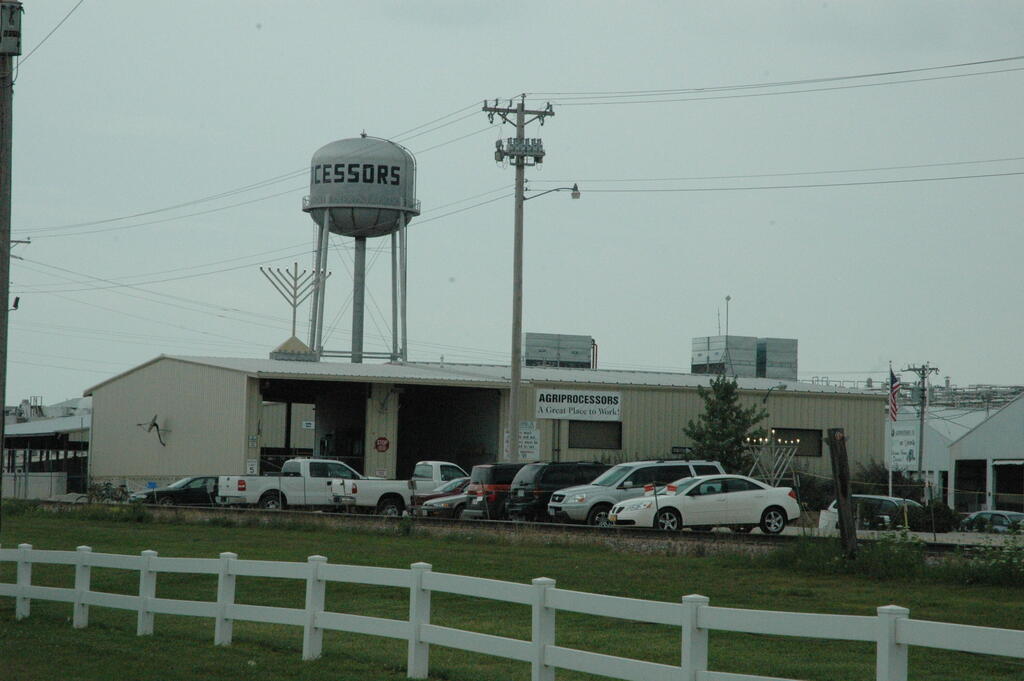
The Agriprocessors slaughterhouse was founded by Aaron Rubashkin, a Russian-born Chabad Hasid who immigrated to the United States and earned a living as a butcher in New York. He later founded a meat marketing company, and in 1987 he decided to expand the business and head west to Iowa following a surprising opportunity that came his way: purchasing an abandoned meat processing plant in a God-forsaken Iowa town in the midst of an economic crisis. Thus was born Postville’s Golden Calf, which made a great deal of money for its owners as the largest kosher slaughterhouse in the United States - a significant link in the food chain for Jewish communities across the U.S. and even in Israel (as the only slaughterhouse authorized by the Chief Rabbinate to import meat into the country).
Many Sabbath dishes - cholent, brisket, and later grilled chicken - reached the tables of families in Brooklyn, Los Angeles, and Bnei Brak directly from Iowa. The Rubashkin family continued to manage the business from New York, but even they understood that processing cow tongues and chicken thighs required human hands on deck. Kosher working hands were needed, and Jews arrived in droves to Postville following the new employment opportunity that opened up before them.
According to the population registry from the late 1980s, fading Postville absorbed about a hundred new Hasidic families after the opening of the slaughterhouse. A new community was born in the town, which transformed into a Jewish oasis in the middle of the Midwest. One of the residents, Aaron Schimmel, a Chabad Hasid, recalled in a 2015 interview with the JTA: "Postville might be at the edge of the world, but you can still buy tzitzis, yarmulkas, shirts and more!”
However, this extraordinary community has faced quite a few difficult trials since then. The latest among them is the massive fire that broke out on Tuesday at the slaughterhouse, which threatens to shut it down for an extended period. The fire began in the complex's laundry room and, according to authorities, it was accidental and not arson.

The fire on Tuesday that destroyed most of the Agri Star Meat and Poultry processing plant in Postville
(Photo: Screenshot from X social media, KolHaolam)
It took firefighters three days to bring the flames under control, and damages are currently estimated in the millions of dollars, according to the local fire chief - who himself worked at the slaughterhouse in his youth. The bottom line: about 75% of the complex burned down, and it is currently unable to operate. Meanwhile, around 600 workers will find themselves without a job, and thousands of American Jewish families will be forced to find alternatives to the kosher meat provided by the slaughterhouse.
This is a massive crisis for the kosher meat plant, but not the first, and perhaps not even the most severe among them.
In May 2008, a surprise immigration raid on the slaughterhouse led to the business's closure and bankruptcy. The rise of antisemitism cannot be blamed (even though white supremacist organizations like the Patriot Front and the Aryan Freedom Network operate in Iowa), and the presence of Hasidim in Postville certainly wasn't pleasing to the state's racists, but the isolated shtetl was too far away even for them.
Those who did go the distance were FBI and DHS agents who arrived at the compound equipped with search warrants for undocumented immigrants. At the end of the day, they located 389 foreign workers, mostly from Mexico and Guatemala, who were employed at the slaughterhouse without permits. It was the first raid of its kind up to that point. Nearly half a year later, the slaughterhouse received a massive $10 million fine, and the boss, CEO Sholom Rubashkin - son of the founder- was arrested on conspiracy charges of harboring undocumented immigrants and aiding and abetting aggravated identity theft. He was released on bail pending trial.
Shortly thereafter, the younger Rubashkin’s situation deteriorated significantly. He was arrested again at his home in Postville on suspicion of fraud over a loan repayment scheme he attempted to set in motion. This time he was jailed due to the fear that he would flee to Israel and find refuge there under the Law of Return; he was released only after severe movement restrictions were placed on him, compelling him to remain within the boundaries of Allamakee County - the county where Postville is located - which transformed for him from a private paradise into a private hell.
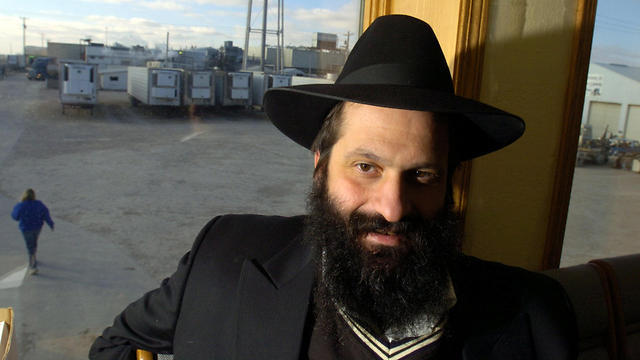
Sholom Rubashkin
(Photo: TNS)
This, of course, paled in comparison to the sentence handed down to him in the summer of 2010 at the conclusion of the trial: 27 years in prison and payment of debts totaling $27 million. In the meantime, allegations arose against Rubashkin regarding the illegal employment of minors, though these were ultimately dismissed. It is doubtful this brought any comfort to Rubashkin, who spent the next seven years at the medium-security Federal Correctional Institution in Otisville, New York. The person who got him out was President Donald Trump, who, at the request of Professor Alan Dershowitz, decided to commute Rubashkin’s sentence on December 20, 2017. He was set free, but the slaughterhouse in Postville and the community around it never fully recovered.
The 2008 raid by authorities on the slaughterhouse was a devastating blow to the booming business, but even before that it had to deal with various unusual complaints regarding its conduct. In 2004, the Postville municipality opened an investigation into Agriprocessors on suspicion of discharging wastewater into the municipal water system. Management eventually pleaded guilty to the offense and was forced to pay a $600,000 fine (in a different case filed by a private citizen, Menachem Gabay claimed the local water authorities were polluted by antisemitic tendencies and quoted the city clerk saying that “We wish the Jews had never come here. I wish the Jews would leave Postville”).
That incident joined another scandal that same year involving animal welfare violations alleged by PETA. Covert footage from inside the slaughterhouse revealed cruelty to cattle resulting from the kosher slaughter procedures. Ultimately, procedures at the plant were altered under pressure from the U.S. Department of Agriculture, American kosher certification agencies, and even the Chief Rabbinate of Israel.
However, the saga continued to echo when, in 2005, it was revealed that USDA representatives had been negligent in their duties during inspections at the complex and had even accepted bribes from management.
The various scandals and the major upheaval Agriprocessors underwent following the 2008 FBI raid pushed the plant into non-kosher slaughter under court oversight. Bankruptcy was declared, and the plant was put up for public auction. Taking advantage of the opportunity was Canadian-Jewish billionaire Hershey Friedman, who purchased the plant in the summer of 2009 and breathed new life into it under a new name: Agri Star.
Work resumed, and the slaughterhouse returned to operating at full capacity. “It wasn’t done for financial purposes; it was done to really cater to the Jewish community,” Friedman told JTA in 2016. “During the time Rubashkin was closed, the price of beef roughly doubled. After we acquired it, it came right back down.”
The money injected by the savvy businessman may have restored the steady supply of kosher meat to Jewish communities across the United States, but it was not enough to rehabilitate the local Jewish community, which had shrunk by half. Estimates suggest half of the Hasidic families moved away, and although religious institutions continue to operate there, fewer and fewer people attend them these days.
What will become of the Jewish community in Postville and the entire town after the slaughterhouse fire leaves their workplace closed for a long time? This is unclear.
Hundreds of workers will find themselves unemployed, and given the major economic crisis currently facing Iowa—where farmers are under tremendous pressure due to skyrocketing fertilizer prices amid the war in Iran—it is hard to imagine what other employment opportunities might be available to residents. Many are expected to leave; after all, they need to find sources of income to put (kosher) food on the table.
At the same time, many kosher-observant Jews across the U.S. and Israel will now have to find alternative sources of food to literally put kosher food on the table.