

Wearing a gold necklace bearing the Hebrew word “tikvah,” or hope, and speaking near-perfect Hebrew, Anna-Suzette Pfeiffer, 23, came to march through the streets of Jerusalem and prepare for the opening of a new exhibition on antisemitism.
Anna received the necklace from Luis Har, who survived Hamas captivity in the Gaza Strip. She learned Hebrew while volunteering for two years in southern Israel. But the personal story that brings her to Israel is far more jarring: Her grandfather was a clerk at the Auschwitz extermination camp, and research she conducted found that he was also involved in operating the camp’s systems.
Gallery

Anna-Suzette Pfeiffer: 'Even if I cannot change the past, I can change the present and the future'
(Photo: Alex Kolomoisky)
This week, some 500 members of March of Life arrived in Israel, many of them descendants of Nazi officers and soldiers, for a series of solidarity marches in support of Israel. At the same time, a special exhibition will open in Jerusalem focusing on the history of antisemitism, Holocaust remembrance and the responsibility of future generations to fight hatred and stand with the Jewish people.
Over the past year, the movement has held more than 100 marches in support of Israel and Jewish communities in major cities around the world. The activists are now in Israel, with marches and solidarity events planned in Haifa, Netanya, Ashkelon, Tiberias and other cities.
Among the delegation members is Pfeiffer, who discovered in the Yad Vashem archives that her grandfather was responsible for electrifying the barbed-wire fences at Auschwitz and also worked in the gas chambers. Pfeiffer was among the initiators of the new exhibition in Jerusalem, which will examine the development of antisemitism through the generations — from the Holocaust to today’s wave of hatred against Jews and Israel.
“I am full of regret and sorrow — but even if I cannot change the past, I can change the present and the future,” she said. “It is important to me that Israelis know they are not alone. We are completely here for them, forever.”

'Antisemitism only changes its face over the years, but the meaning and intention are the same'
(Photo: Alex Kolomoisky)
Pfeiffer, who lives in Germany, will remain in Israel until the end of September. She said her connection to Israel began with extended volunteer work at ADI Negev in southern Israel.
“The exhibition opening in two days is about the story of antisemitism in Christian countries. It tries to understand why antisemitism still exists after the Holocaust,” she said. “For us, the exhibition is about giving hope and letting Israelis know they are not alone. That they have friends all over the world. We are Christians and we love Israel. We know and recognize the terrible things that happened in the past.”
About a week ago, footage posted on social media from Barcelona sparked outrage after two women were denied entry to a women-only sauna because one of them was wearing a Star of David necklace. Pfeiffer sees that incident as another expression of a deeper problem in Europe.
“In Spain, the situation is very bad. In Germany, we learn about the Holocaust in school. I think that in Spain, they still do not talk about antisemitism at all. Not about the Inquisition, not about how they were friends of the Nazis or how Spanish-speaking countries in America opened their gates to Nazis. That is why it is so important to talk about the past.”
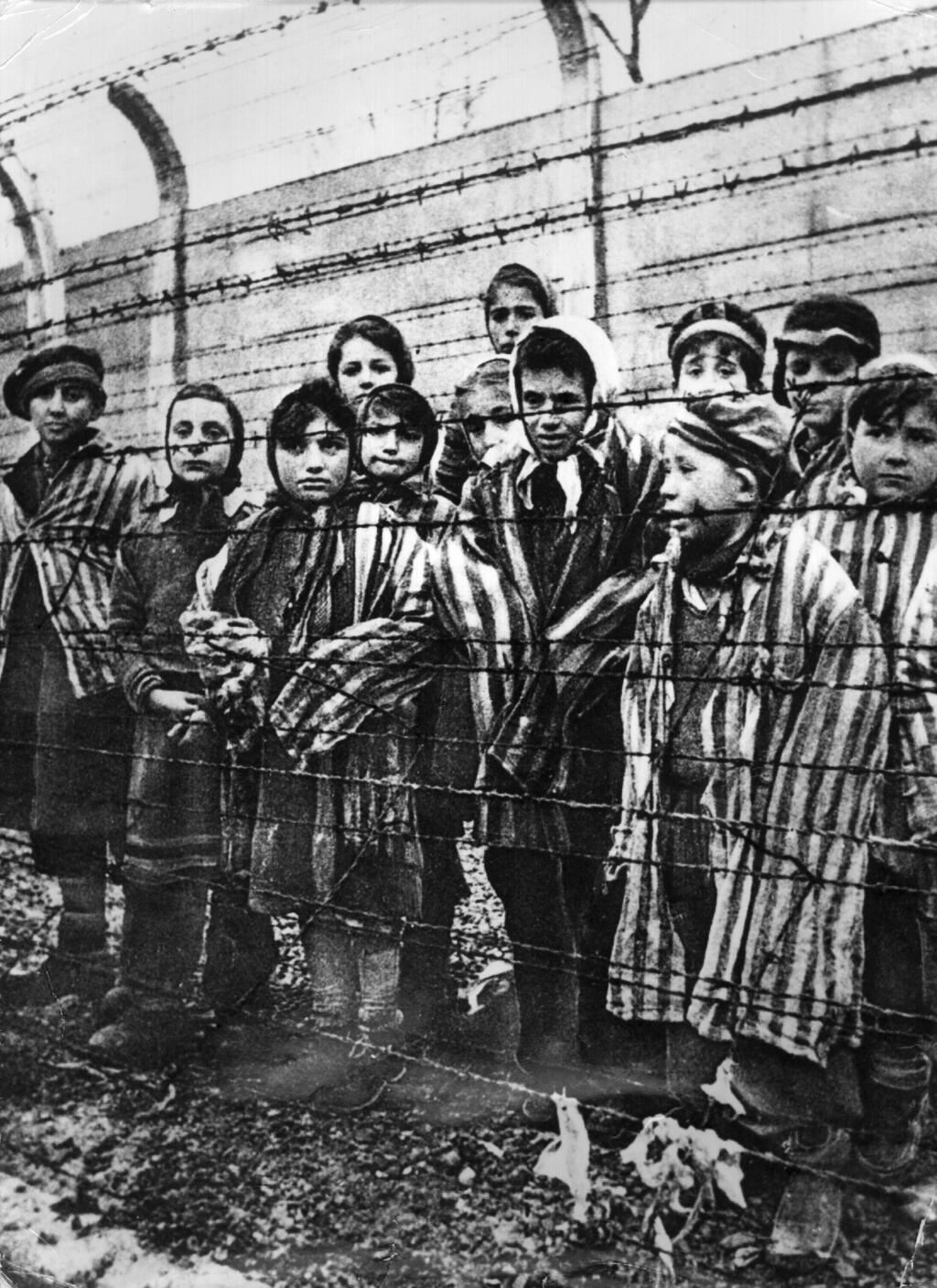
Child survivors of Auschwitz on the day the camp was liberated by the Red Army in 1945
(Photo: Alexander Vorontsov/Keystone / Hulton Archive / Getty Images)
She thinks claims comparing wartime Israel to the Nazis is another form of antisemitsm.
“Those are the faces of antisemitism. As early as the Middle Ages, Christians attached inverted stereotypes to Jews. They depicted them as people who murdered babies. Now they put the same stereotypes on Israelis, after what Hamas did,” she said. “Antisemitism only changes its face over the years, but the meaning and intention are the same. There is only one Jewish state in the world. There is no reason it should not exist. If all the neighboring Arab countries hate Israel and threaten it, then the only Jewish state clearly needs an army and needs to defend itself.”
She also criticizes what she says is a common approach in parts of Europe toward terrorist organizations.
“Unfortunately, in Europe we are very humanistic. We think that if we just talk to everyone, there will be peace here. It does not work with terrorists.”
She said even those close to her do not always understand her choice to come to Israel now.
“My friends in Germany did not understand why I was going to Israel at this time. They thought I would die here, that there is a war here,” she said. “I have many friends from the organization who hold marches and meet with Holocaust survivors. In Germany, people do think it is good to do something like this, but my friends, for example, think there are problems in Germany that are more important to solve first. Maybe I have something extra.”