


Three young Jewish women deported in 1944 to the Nazi concentration and extermination camp Auschwitz were initially destined for almost certain death. Against all odds, however, they survived the horrors — and gave birth to healthy babies shortly before the collapse of Nazi Germany and the liberation of the camps by Allied forces.
Now, just over 80 years later, those three babies — Eva Clarke, Hana Berger-Moran and Mark Olsky — all 80 and among the youngest Holocaust survivors, are revealing the almost unimaginable story of their mothers’ survival. The three were unaware of one another’s existence until they first met in 2010. “We found each other,” Olsky told CBS’s “60 Minutes.” Clarke and Berger-Moran added, “We should have been together from day one.”
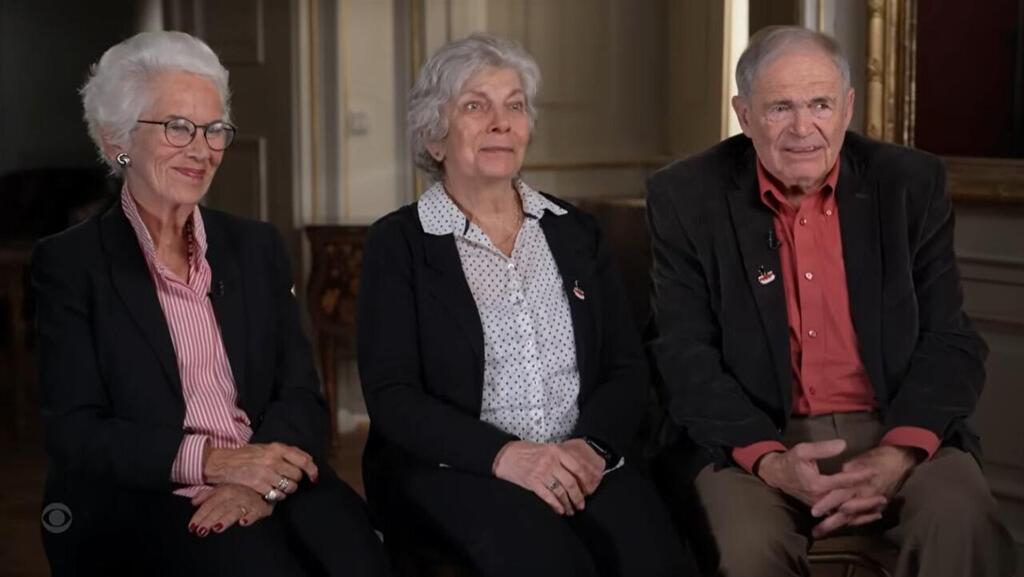
Their mothers — Anka, Priska and Rachel — came from Czechoslovakia and Poland. The three married women, who did not know one another, were crammed into cattle cars and sent to Auschwitz in 1944. Unlike many others who were sent directly to the gas chambers, they were selected for forced labor in the camp.
Berger-Moran said her mother saw her father for the last time through a barbed-wire fence. “He told her, ‘Be careful and think only good thoughts.’ He repeated it again and again,” Berger-Moran told “60 Minutes” correspondent Lesley Stahl.
According to author Wendy Holden, who wrote “Born Survivors,” the three women managed to conceal their pregnancies — something that could have led to immediate execution — thanks to loose clothing they were issued that had previously belonged to prisoners who had been killed.
They were later transferred to a labor camp in Freiberg, Germany. “During the six months there,” Clarke said of her mother Anka, “she became more and more hungry, and it was clear she was going to give birth. If the Germans had discovered it, they likely would have sent her back to Auschwitz to kill her.”
As Allied forces advanced in 1945, the Nazis decided to eliminate forced laborers in an attempt to destroy evidence. But for reasons that remain unclear, guards did not execute the women — and even placed bets among themselves on whether the baby to be born would be a boy or a girl.
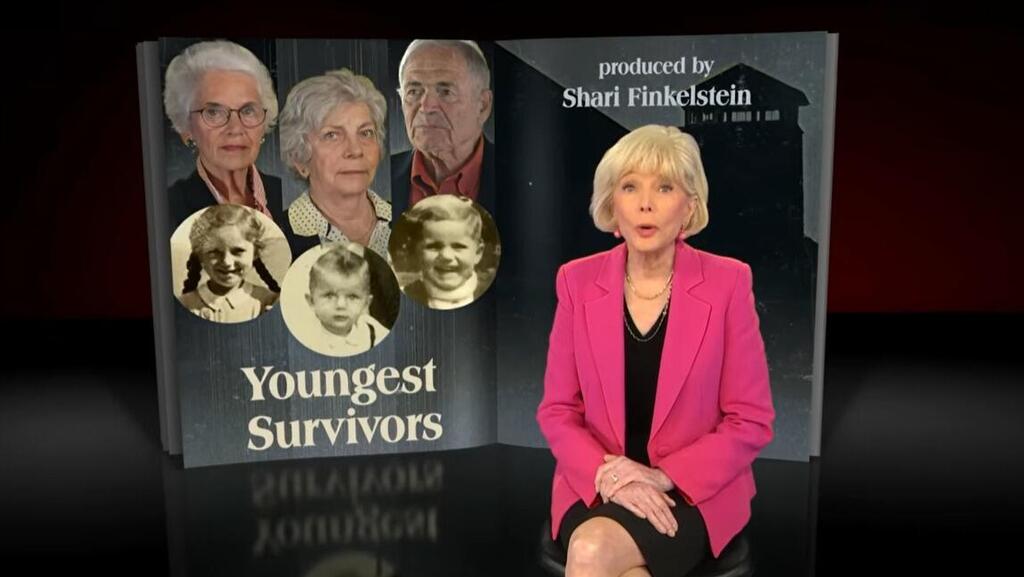
Lesley Stahl
(Photo: CBS )
The prisoners were later loaded onto a train for a 16-day journey without food or water en route to the Mauthausen concentration camp in Austria. Rachel, Olsky’s mother, gave birth during the journey while surrounded by the dying. Anka also delivered her daughter in the camp.
When they arrived at Mauthausen, they learned the camp had run out of gas the day before. “If the train had arrived a few days earlier, none of us would have survived,” Clarke said. Days later, the camp was liberated by soldiers of the U.S. Army’s 11th Armored Division, part of Gen. George Patton’s Third Army.
After the war, Berger-Moran and her mother returned to Czechoslovakia. Clarke was raised in Britain. Olsky’s family lived in Germany and Israel before settling in Chicago. None of the three fathers survived the Holocaust.
Only decades later did the three discover one another through the internet. They first met at the Mauthausen memorial site in May 2010, shortly after their 65th birthdays. “We sat, talked, laughed and cried — and compared the three stories,” Clarke said.
Today, at 80, and despite having 11 grandchildren among them, they are still often referred to as “the babies.”