

For one night each summer, Tel Aviv becomes an open-air celebration. As part of the city's annual Laila Lavan (White Night) festivities, thousands of residents and visitors fill the streets for live music, cultural performances, food, art and markets that stretch across the city.
One of the busiest stops this year was Kikar Givon, where handmade jewelry, artwork, Judaica, fashion, home décor and food-inspired creations drew crowds long before sunset. Friends greeted one another across market stalls, curious visitors wandered between vendors speaking English and Hebrew, and new immigrants transformed folding tables into showcases of their new lives in Israel.
Shuk Olim 2026
( Video: Matan Turkia)


At the center of the plaza was Shuk Olim, a marketplace dedicated to businesses founded by olim. Organized by Nefesh B'Nefesh, in partnership with Israel’s Ministry of Aliyah and Integration, The Jewish Agency for Israel, Keren Kayemeth LeIsrael, and Jewish National Fund-USA, together with The Tel Aviv-Yafo Municipality’s Aliyah Promotion Authority and Business Development Authority, the event was designed to give immigrant entrepreneurs a platform to introduce their businesses to thousands of Israelis while highlighting the contribution they make to the country's economy and cultural life.
Gallery
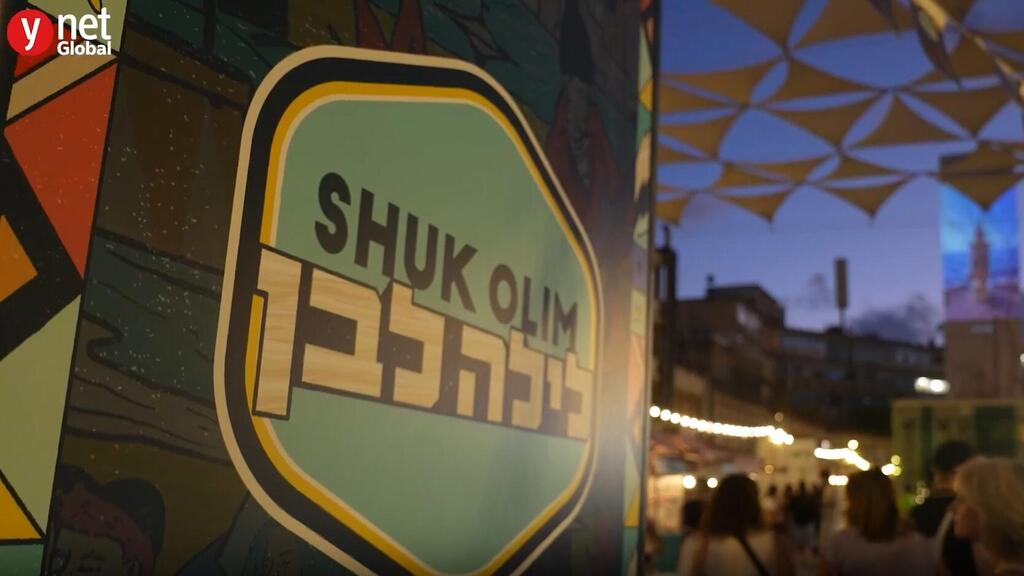
Shuk Olim, a marketplace dedicated to businesses founded by olim and Organized by Nefesh B'Nefesh
(Photo: Matan Turkia)
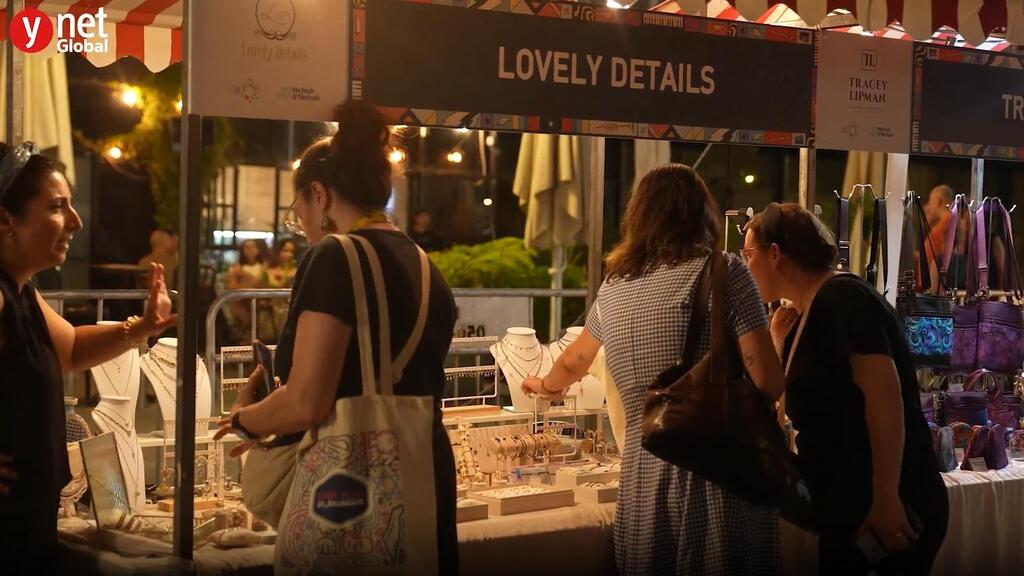
The event was designed to give immigrant entrepreneurs a platform to introduce their businesses
(Photo: Matan Turkia)
For many participants, the market represented much more than a place to sell products. It was another step in building a future after making aliyah.
Adv. Guy Avner, Vice Mayor and City Council Member responsible for Aliyah and Integration at the Tel Aviv-Yafo Municipality described Laila Lavan as "a huge event" spread across 10 locations throughout the city. "This special place here, Shuk Olim, provides olim hadashim an opportunity to showcase their art, enjoy themselves and present their businesses," he said.
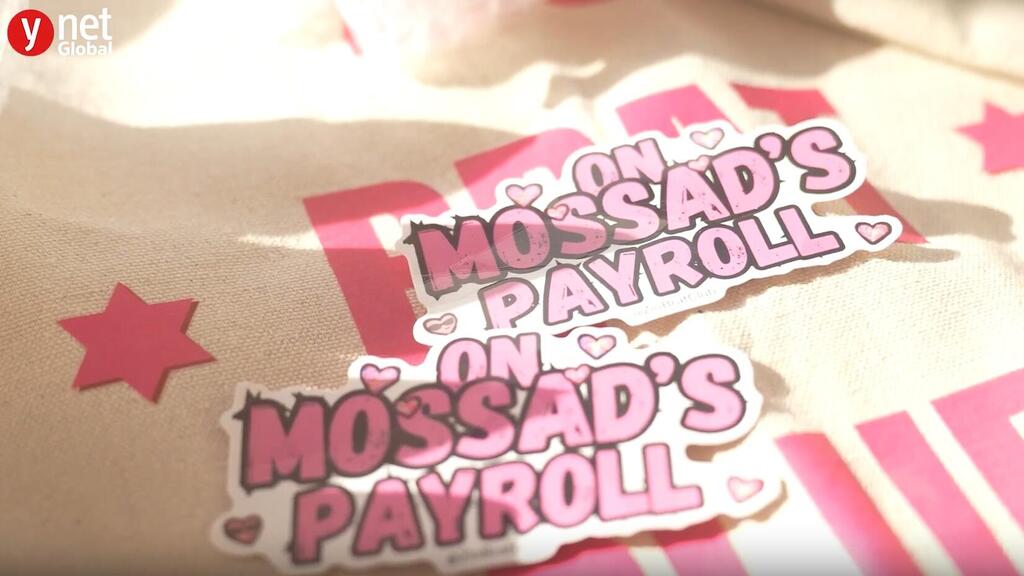
That vision could be seen throughout the market, where every booth reflected a different immigration story. For Tamara Tayar, founder of Ziobratclub, humor became a form of advocacy. "I founded it because I felt there was such a need for better hasbara," she said. "I wanted to satirize everything, turn it into something funny and make people proud of who we are."
Having recently made aliyah herself, exhibiting at Shuk Olim carried special significance. "I only recently made aliyah, and to already have my own stall here and be doing something for Zionism feels amazing," she said. "I especially love when Israelis come over and tell me they love it. I feel so proud."
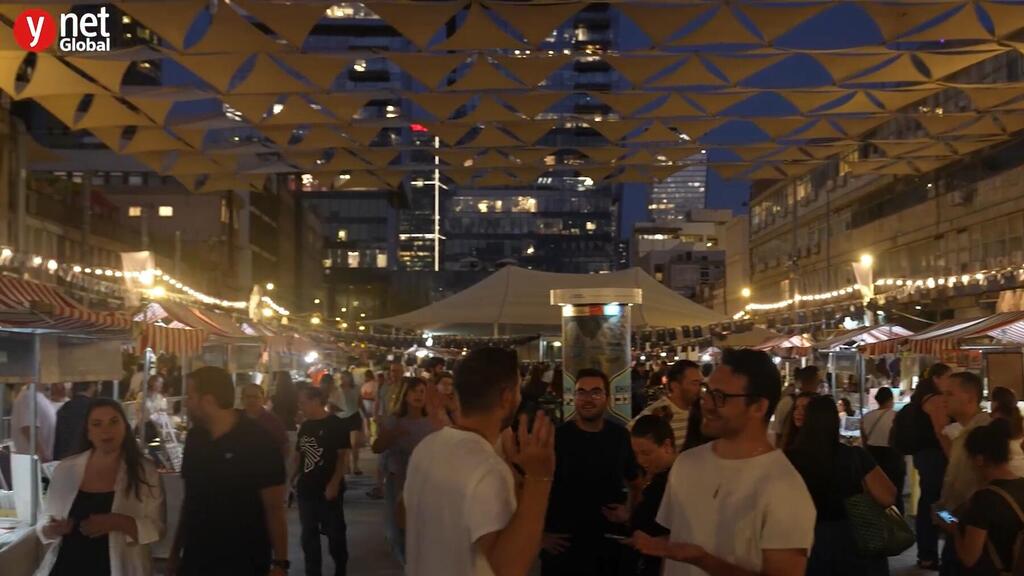
Each booth telling a different immigration story
(Photo: Matan Turkia)
Just a few stalls away, Julia Levine, who immigrated from Minnesota, displayed delicate embroidered jewelry and handmade accessories through her business, Sew Cute. While the pieces were colorful and playful, many were inspired by the realities of life in Israel.
"I create wearable art," she said. "I'm inspired by many things, especially the situations we're living through here." Levine said creativity has become both a profession and a way to process life's challenges.
"I'm able to use creativity as therapy," she said. "Then I get to share those creations with our community and with the world, starting here in Tel Aviv, which has been incredibly welcoming."
Returning to Kikar Givon also marked a personal milestone.
"This is where I launched my business four years ago," she said. "Being back here today, surrounded by all these creators, feels like a beautiful full-circle moment."
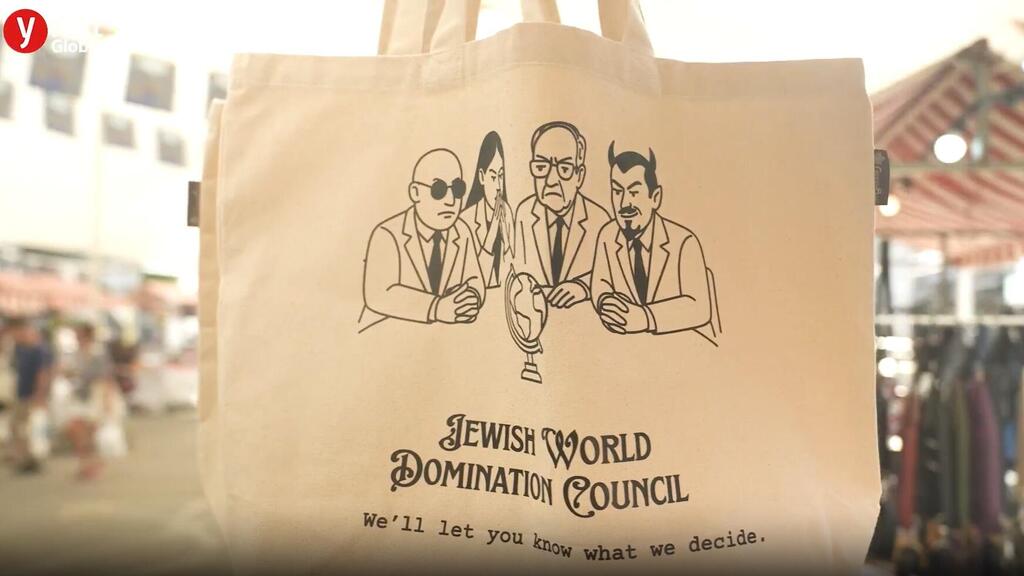
Across the market, entrepreneurs found original ways to weave Jewish identity, personal history and creative passion into their work
(Photo: Matan Turkia)
Many at the market said they have been surprised by the willingness of Israelis to support new immigrant businesses
(Photo: Matan Turkia)
Throughout the market, many entrepreneurs found unique ways to blend their Jewish identity, personal stories and creative passions. For Imbar Slavat, who moved to Israel from Toronto five years ago, that connection came through food. Her business, Shuk 'N Chic, celebrates Jewish and Israeli culture with designs inspired by familiar favorites such as challah, bagels, Bamba, Krembo and Milky.
"I'm obsessed with Jewish and Israeli food," she said. "We see lots of Magen David jewelry and maps of Israel, which I love, but I always celebrated my Judaism through food." She wanted people to wear something that felt both meaningful and joyful. "I wanted people to celebrate Judaism in a fun and different way," she said.
Building a business after immigrating is rarely easy. Entrepreneurs arrive without established professional networks, longtime customers or local connections. Yet many at the market said they have been surprised by the willingness of Israelis to support new immigrant businesses. "Things like this really celebrate olim," one participant said. "So many Israelis genuinely want to help and support you."
According to Nefesh B'Nefesh, creating those opportunities is precisely the purpose of Shuk Olim. "The goal of Shuk Olim is to support olim with small businesses by giving them an opportunity to showcase their talents, not only to other olim but to the wider Israeli public," said Devon Conway, TLV Olim Events & Partnerships Manager at Nefesh B’Nefesh..
The organization also hopes the market demonstrates the broader contribution immigrants make to Israeli society. "We want to show the State of Israel and the world the incredible olim and everything they contribute to this country," Conway said.
The event serves another important purpose beyond attracting customers. "They're meeting potential clients, but they're also meeting other immigrant entrepreneurs. Networking in Israel is crucial for success."
For David Ratz, who made aliyah from New York last year, Shuk Olim marked his first public market after selling primarily online. "It's exciting not only to showcase my work but also to meet other artists and be part of this creative community," he said.
Nearby, Dara Mironov, who immigrated from Russia and founded House of the Sun, displayed handmade crochet accessories inspired by her new home. "The name means we're all under this bright Israeli sun," she said. "My brand is about creating little warm things that make people feel better."
She laughed about the irony of building a crochet business in a country known for long summers. "Crochet is usually associated with winter," she said. "Figuring out how to adapt it to such a sunny country has definitely been a challenge." Even so, she left the market encouraged. "It's inspiring to see so many creative people doing amazing things," she said. "It makes you feel that this society is truly open to creativity and art."
As evening fell and the crowds grew larger, Shuk Olim became more than a marketplace. Every booth reflected a different journey, businesses shaped by memories of countries left behind, by Jewish identity, by wartime resilience, by reinvention or simply by the determination to start over.
The products attracted visitors, but it was the people behind them who defined the event. They came to Israel not only to build new lives, but also to create, innovate and contribute to the country's cultural and economic fabric.
As Devon Conway put it, "They're not just coming to make a new home. They're coming to build a new business as well."
On a warm Tel Aviv night filled with music, conversation and creativity, that idea captured the spirit of Shuk Olim. It was a celebration not only of aliyah, but of everything that comes after, building a community, creating opportunity and transforming a new country into home.