


Antisemitic violence across the world’s seven largest Jewish communities reached its deadliest level in more than 30 years in 2025, according to a new report by the J7 task force.
The report found that the total number of antisemitic incidents in the seven countries rose by 136% compared with 2022, the year before Hamas’ October 7 terror attack on Israel. Violent incidents increased by 97% over the same period.
Gallery

Scene of the Yom Kippur attack in Manchester. 'Antisemitism crosses borders, and our response must cross borders as well'
(Photo: Christopher Furlong/Getty Images)
The J7 includes the United States, Canada, Britain, France, Germany, Australia and Argentina, which together are home to more than 90% of Jews living outside Israel.
Twenty people were killed in antisemitic attacks last year in Sydney, Manchester, Washington, D.C., and Boulder, Colorado, making 2025 the deadliest year for antisemitic violence against Diaspora Jews since 1994, when the AMIA Jewish community center in Argentina was bombed.
The J7’s second annual report documented more than 23,000 antisemitic incidents across the seven countries in 2025.
This year’s report also included a chapter examining the rise of antisemitism in Ireland, reflecting the spread of similar trends beyond the J7 states.
“Antisemitism across the seven J7 countries is no longer a passing wave; it has become our new reality,” the task force said in a joint statement.
“Governments must stop reacting after Jews are attacked and start acting beforehand, through meaningful security funding, stronger legislation and social media platforms that enforce the rules they themselves have written.”
Jonathan Greenblatt, global CEO of the Anti-Defamation League, said the J7 forum was established in 2023 because no country could confront antisemitism alone.
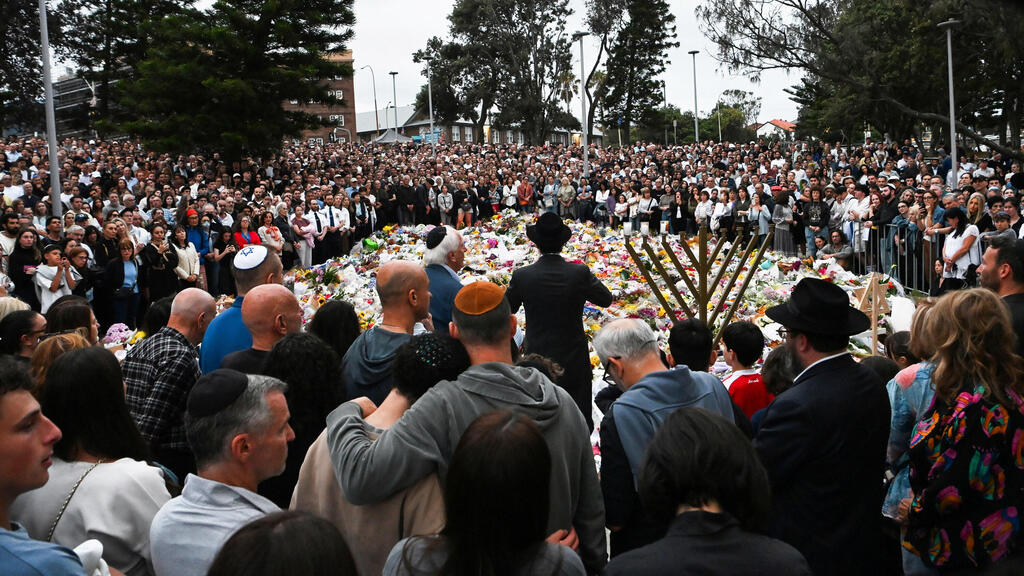
Gathering at the site of the Bondi Beach massacre in Sydney to honor the victims of the Hanukkah attack
(Photo: REUTERS/Flavio Brancaleone)
“2025 was one of the most violent years ever recorded for American Jews. We were targeted in attacks an average of 17 times a day,” he said.
“This is not only an American crisis. Every J7 country remains at levels significantly higher than before October 7, 2023. Antisemitism crosses borders, and our response must cross borders as well.”
According to the report, 15 people were killed in an attack during a Hanukkah celebration at Bondi Beach in Sydney. Two people were killed at Manchester’s Heaton Park synagogue on Yom Kippur, two were killed at the Capital Jewish Museum in Washington, D.C., and one woman was killed in Boulder.
Across all J7 countries, antisemitic incidents remained substantially above the levels recorded before October 7.
In 2025, the number of incidents declined by 33% in the United States, 20% in Australia, 16% in Canada and 16% in France. Britain recorded a 5% increase, Argentina a 4% increase and Germany a rise of less than 1%.
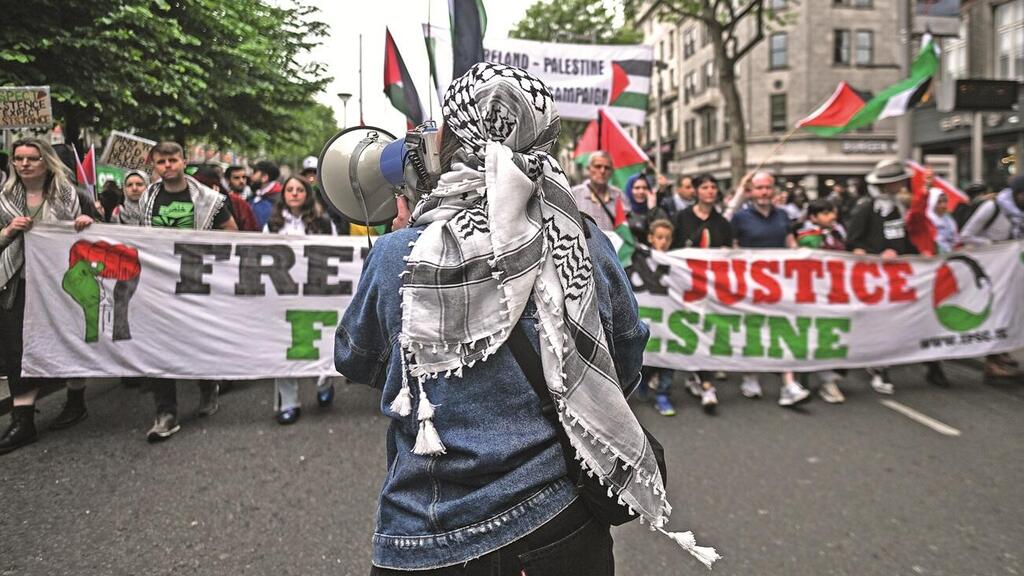
Pro-Palestinian protest in Dublin, Ireland. The trend extends beyond the J7 countries
(Photo: Artur Widak/GettyImages)
Despite the year-on-year decline in some countries, the longer-term trend remained sharply upward.
Australia recorded the largest increase in antisemitic incidents since 2021, up 270%, followed by Germany at 215%, the United States at 131% and France at 124%.
Germany continued to record the highest rate of antisemitic incidents relative to the size of its Jewish population, with nearly 70 incidents for every 1,000 Jewish residents in 2025.
That rate was almost five times higher than Australia’s, six times higher than Britain’s and nearly 70 times higher than the rate in the United States.
Anti-Zionism was identified as a central factor in a significant share of antisemitic incidents: 48% in Britain, 45% in the United States and 23% in Germany.
Footage from the Bondi Beach massacre
(Video: Eliyahu Ben Zion)


In Ireland, whose Jewish community numbers about 2,200 people, 143 antisemitic incidents were reported in just six months, a rate of 65 incidents per 1,000 Jews.
Ireland currently has neither a national strategy for combating antisemitism nor dedicated government funding for Jewish community security, the report said.
“The J7 annual report makes clear that antisemitism is no longer a temporary wave, but a continuing global crisis affecting Jewish communities across all seven countries,” said William C. Daroff, CEO of the Conference of Presidents of Major American Jewish Organizations.
“The J7 forum was created out of the understanding that no community can confront this threat alone. Governments, institutions and technology companies must act urgently, enforce the law, strengthen security systems and ensure that Jews can live safely and openly.”
The J7 called on governments and law enforcement agencies to take proactive steps to protect Jewish communities rather than responding only after attacks occur.
It also urged authorities to close legal loopholes that allow antisemitic incitement to go unpunished, including cases in which such rhetoric is presented in anti-Zionist language.
The task force further called on technology companies to strengthen enforcement against hateful content, increase transparency and expand cooperation with civil society organizations to address emerging threats.