

Dita (Edith) Kraus, a Holocaust survivor who served as the secret librarian of the children’s block in Auschwitz, died on Saturday at the age of 96. Kraus, who lit a torch at Israel’s Holocaust Remembrance Day ceremony in 2014, was the central figure in the book "The Librarian of Auschwitz," which recounts her harrowing experiences in the Nazi death camp.
In a January interview with ynet, marking 80 years since the liberation of Auschwitz, Kraus recalled: “There were about 12 to 14 books, including an atlas and a Russian textbook. As the librarian, it was my responsibility to safeguard these precious volumes. At the end of each day, I carefully collected the books and hid them in a secret location. If the Germans had found me with them, they might have killed me. The fact that I could sit indoors and not do hard labor in the freezing cold gave me a chance to survive — in fact, it allowed me to be chosen for life. Yes, the books saved me from death in the gas chambers.”
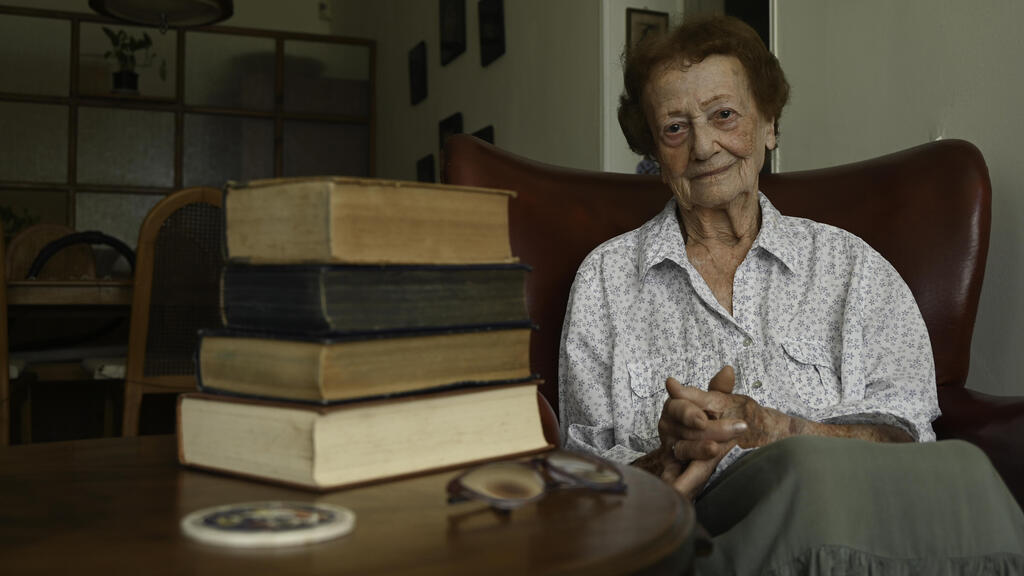
Born in 1929 in Prague to Dr. Hans Polach, a lawyer, and his wife Elisabeth, Dita Kraus was their only child. In 1940, her parents arranged private lessons for her after she was barred from school. In a local sports field — one of the few public spaces where Jews were allowed — she met Fredy Hirsch, a charismatic teacher and educator who later played a key role in her life.
In November 1942, Dita and her parents were deported to the Theresienstadt ghetto. Despite severe overcrowding, meager food, and forced labor, the ghetto saw a rich cultural life, with lectures and educational programs.
In December 1943, the family was transferred to Auschwitz, where numbers were tattooed on their arms. They were placed in the “Czech family camp” in Birkenau. Dita’s mother fell ill and was placed in isolation, and six weeks later her father died. Dita had to break the news to her mother: “I came to the wall of the isolation barrack, where she lay on the other side, and shouted the news to her.”
In Auschwitz, Dita was appointed librarian of the small children’s block library. Fredy Hirsch, whom she had met in Prague, ran the block and led a group of Zionist counselors who filled the children’s time with educational content — geography, history, Judaism and more. One of the counselors was Otto Kraus.
In March 1944, about half of the children in the block were murdered, along with Fredy Hirsch. Dita was kept on for work in the barrack. In May, she and her mother passed a selection led by Josef Mengele and were sent to Hamburg, Germany, for forced labor. From there, they were transferred to the Neuengamme and Tiefstack labor camps. In March 1945, they were moved to Bergen-Belsen, which was liberated by the British army a few weeks later. Dita and her mother were transferred to a nearby displaced persons camp. On June 29, 1945, two months after liberation, her mother died from the physical toll of the camps.
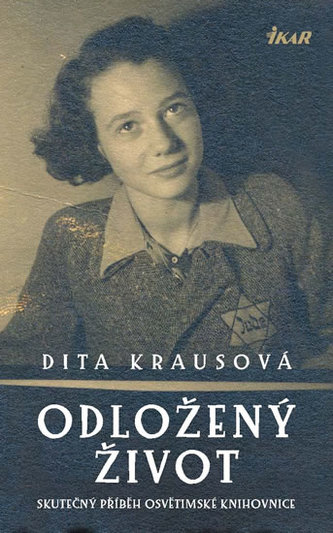
Cover of the book about Dita Krauss
Dita later returned to Prague, where she reunited with her aunt, grandmother (who had survived Theresienstadt), and Otto Kraus, who had also survived. They married, started a family, and immigrated to Israel in 1949 with their firstborn son. Dita and Otto spent about 30 years as teachers at Hadassim Youth Village.
Her grandson, Udi, wrote on Facebook: “With great sorrow and a broken heart, my beloved grandmother, Dita Kraus, died today. A larger-than-life personality — painter, writer, teacher, and so much more than I can put into words. From the day I was born, she was a central part of my life, my spiritual guide, and my best friend. I loved her with all my heart. Rest in peace, dear Grandma.”
Tributes were also paid in the Czech Republic. Czech Foreign Minister Jan Lipavský wrote on Twitter: “I was deeply saddened to hear of the death of Dita Kraus — our brave compatriot and Holocaust survivor. I fondly remember our meetings and her eternal life spirit, through which she won the hearts of all those around her. My sincere condolences to her family and loved ones.”