


"My Chuka, I asked that you open this letter at the end of shiva. I don't know why. Maybe because that is when everything will begin to sink in, the visitors will stop coming and you will feel alone. You should know that I plan to make quite a commotion up there. As for loneliness, know that I am with you every moment. I don't know if you feel it, but the noise I'll make above will be loud, and I hope you will understand that I am with you at anytime."
These words were read with deep emotion earlier this week by Meital Cohen, 29, as she rose from shiva for her husband, Zvi Cohen.
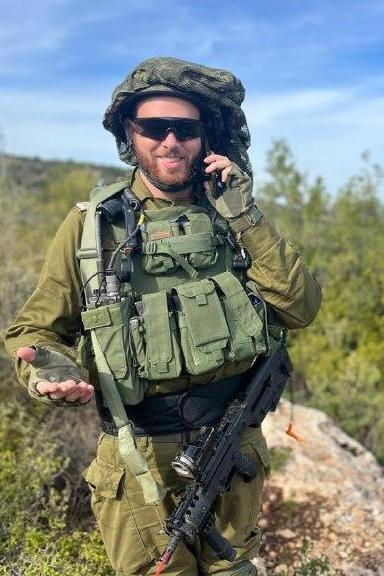
Zvi Cohen died after a prolonged battle with cancer, which didn't stop him from continuing his reserve duty in Gaza. Even when friends urged him to put his health first and step away from combat roles, he refused, determined to be wherever he was needed. After leaving farewell letters for his wife Meital and their children David and Tamar, and even buying them gifts, family and friends are now trying to come to terms with his absence and carry on in his spirit.
Survived by a 6-year-old son and a 4-year-old daughter
Meital, 29, was left with a 6-year-old son and a 4-year-old daughter. "Zvi turned 30 in October. I will be 30 in May," she says. "We moved to Nehalim because of Zvi’s work. He was an instructor at a religious boarding school, and together we served as youth coordinators in the community."
"Since October 7, Zvi had served several reserve rounds. He was called up immediately at the start of the war and served as a deputy company commander. His unit was initially deployed in the north, and he was slated for promotion to company commander. Around that time he started having trouble swallowing, pain in his throat," Meital recalls. "He did not get it checked because he did not want to miss even a second with the soldiers."
One weekend, when Zvi returned home, he was severely dehydrated because he could barely eat or drink. "We went to the emergency room and they said it was probably severe heartburn. The battalion doctor told him to get rechecked. We did further tests and discovered an aggressive cancer between the esophagus and the stomach."
Zvi underwent chemotherapy and a major surgery. After he recovered, he returned to reserve duty. Unable to serve in combat, he moved to a logistics role, overseeing equipment convoys entering and leaving Gaza. "He was in Gaza despite his condition," Meital says. "When friends suggested he rest, he accepted the new role with humility and embraced stepping back from combat."
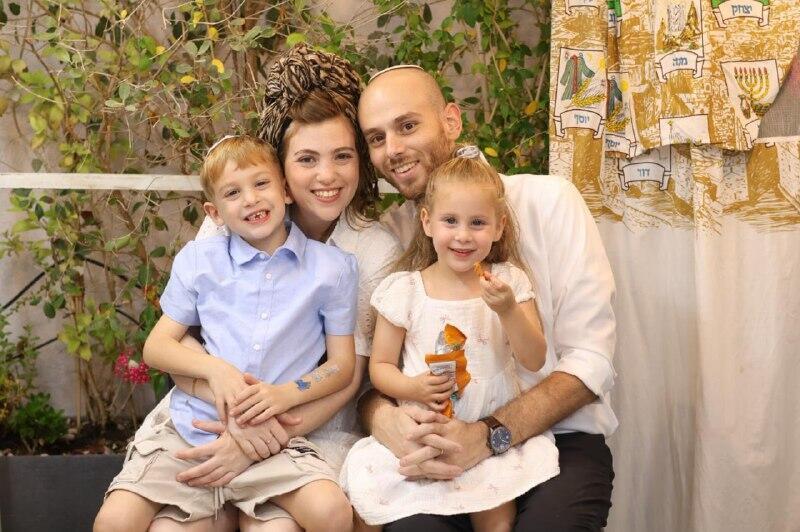
Zvi Cohen, his wife Meital and children
In August 2024, the cancer returned. After further treatments, Zvi recovered and continued his reserve role, mostly remotely, including via Zoom meetings. Then the cancer struck for a third time.
"He never stopped worrying about the soldiers," Meital says. "He saw a soldier who posted about the trauma he was suffering and said he could not afford a lawyer. Zvi organized a fundraiser to help him. There were many stories like that. He treated everyone personally, with humor, signing messages, “Here is ‘Esophagus Command.’”
In recent months, his condition deteriorated. "We could see that he was no longer improving," Meital says. "He bought the children prayer books with their names, wrote me a letter to be opened at the end of shiva, and asked us to cling to life and raise the children with values and love."
A farewell on Friday night
Zvi died on Friday night about a week and a half ago. "A week earlier he asked me if it was time to say goodbye. I said yes," Meital recalls. "He met with his parents, his siblings and mine. He was busy with farewells and instructions. He kept saying, 'Please do not memorialize me. I do not want a Torah scroll, a spring or a lookout named after me. I want you to go on with your life and be happy'. He told me I should remarry, move forward, make sure the children are happy and raise them with values."
"Before Shabbat we printed a confessional prayer. His brother recited it. I asked him, 'Are you finished, are you ready?' He said, 'I am not finished, but I am ready'. I told him I was ready too. We decided to let Zvi go and give him quiet time. It felt like he was already between this world and the next. We welcomed Shabbat, sang “Shalom Aleichem,” and I prayed that the angels of peace would accompany him out.
"We had a warm, joyful Shabbat meal, just as he wanted. At some point his brothers heard him calling us from the room, and we understood it was over. The house was filled with a special light. It was incredibly powerful."
"Zvi died the way he lived. He died a hero," Meital says. "He did not die in the war, but he died a hero in another war, even if it's not the kind of heroism we usually imagine. He knew he was going to die, prepared and said goodbye. He chose the path. We never questioned whether he should stop serving or whether he had already given enough and should step back to recover.
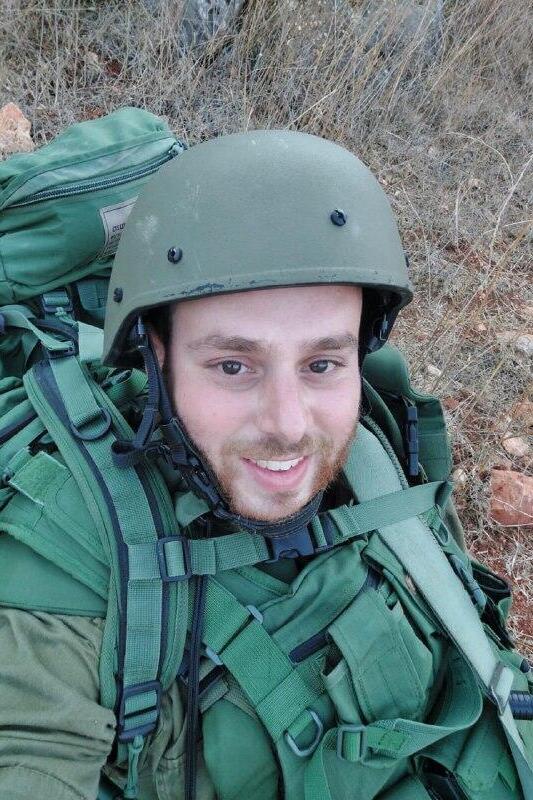
Zvi Cohen: 'We could see that he was no longer improving'
"Zvi went wherever he was needed. That is how I knew him. For us, reserve duty was never a question of if or how, but when. We were always the first to step forward."
'We wanted you back'
His company commander, identified as D., eulogized him: "Zvika, everyone loved you. We spent six months together from October 7, side by side in all the chaos. Attacks on positions, missiles overhead, strange missions along the fence, endless hours on alert with vests on. We wanted you back so badly. When we entered Gaza, it was right as you were recovering from treatments, but for you it was clear you were coming. Even if not on the battalion’s front line, then to help from the rear."
R., who replaced Zvi as deputy company commander, said: "During the war we shared moments, hardships and challenges. When Zvi had to leave for treatment, I stepped in with a sense of mission and a real desire to continue his path. We always talked and laughed about the moment he would return to us healthy and whole."
Rabbi Netanel Elyashiv, who taught Zvi at the Eli pre-military academy, said: "When we founded the Part of the Solution association a little over a year ago, to strengthen social cohesion, confront polarization and promote values we both believed in, I asked you to be part of the leadership forum and a field coordinator.
"I needed someone I could rely on, devoted but also honest and straightforward, someone who knew how to offer criticism. And that is exactly what you were. You felt you leaned on me, but you didn't know how much I leaned on you, how much encouragement and strength you gave me."