

For more than two decades, Nitsana Darshan-Leitner has waged a battle few thought possible: suing terrorist organizations, hostile states and financial networks in courts around the world and forcing them to pay. Last week, that long campaign reached a defining moment. A U.S. federal appeals court reinstated a $655.5 million judgment against the Palestinian Authority and the Palestine Liberation Organization, reviving a case Darshan-Leitner helped lead for years.
Gallery
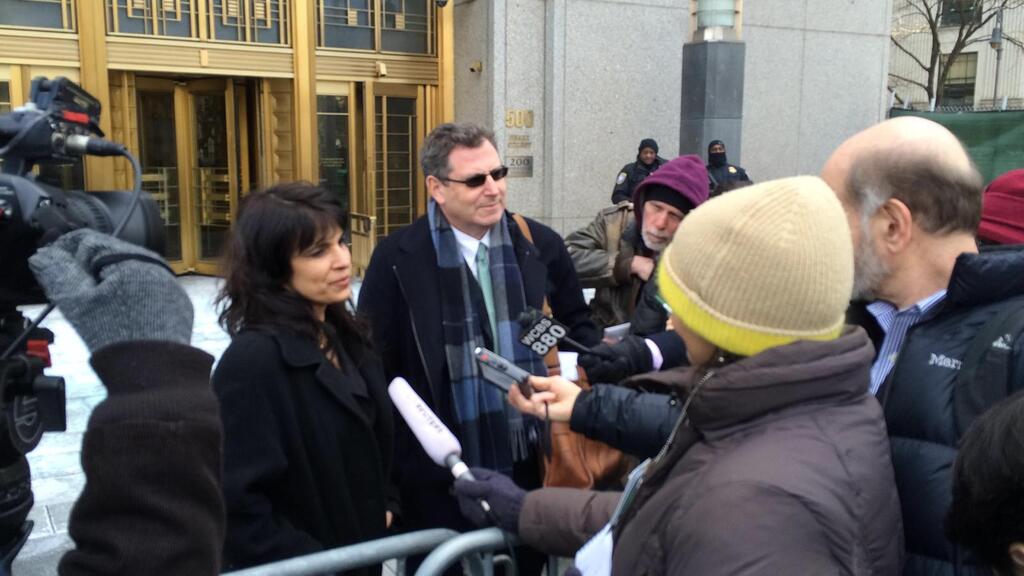
Nitsana Darshan-Leitner and Kent Yalowitz outside the Sokolow v. Palestinian Authority courthouse in NYC in 2015 after winning a verdict for terror victims
(Photo: PR)
The ruling, tied to attacks during the Second Intifada, is not just a legal victory. It is a validation of a strategy she has pursued relentlessly since the early 2000s: follow the money. “It was clear to us from the beginning that if you dry up the financial infrastructure, you can dry up terrorism itself,” she says.
Turning victims into plaintiffs
Darshan-Leitner is the founder and president of Shurat HaDin, an Israeli civil rights organization that represents victims of terrorism in lawsuits worldwide. Her model is simple in theory and radical in practice: use civil litigation to hold perpetrators and their financial backers accountable.
Unlike criminal prosecutions, which depend on governments, her cases are filed on behalf of individual victims. Families who lost loved ones, survivors of bombings, or those injured in attacks become plaintiffs in a legal fight that can last decades. “The victims are not victims anymore,” she says. “They are fighting back.”
Her work has targeted not only organizations like Hamas and Hezbollah, but also banks, charities, and even multinational corporations accused of facilitating terror financing. Over the years, she says, her team has secured judgments worth hundreds of millions of dollars and seized assets across jurisdictions.
A mission born in the Second Intifada
Darshan-Leitner’s path was shaped during the violence of the Second Intifada. Fresh out of law school, she and her colleagues made a decision that would define her career. “We decided to join the fight against terrorism in the way lawyers know best, by going after the money,” she says. One of her earliest cases followed the 2000 lynching of Israeli reserve soldiers in Ramallah. From there, the lawsuits multiplied. Within a few years, her team began winning cases and securing large judgments.

Infamous brutal Ramallah lynching captured in Oct 2000
But the strategy was initially dismissed. “People told me, ‘What are you doing? This is like Don Quixote, fighting windmills,’” she recalls. Her response was grounded in a key insight: even the most militant organizations rely on the global financial system. “Every terror group has a bank account. Every terror-supporting state has assets,” she says. That vulnerability became the cornerstone of her legal approach.
The courtroom as a battlefield
Darshan-Leitner’s cases are rarely confined to the courtroom. They often involve parallel battles in politics, diplomacy and legislation. In the United States, she helped push for legal changes that would allow American victims of terrorism abroad to sue foreign entities. The recent appeals court ruling relied in part on such legislation, including provisions linking payments to terrorists with U.S. jurisdiction. “It’s not just a legal fight. It’s also a political and legislative struggle,” she says.
'People told me, ‘What are you doing? This is like Don Quixote, fighting windmills'
Her work has brought her into contact with lawmakers, intelligence agencies and international regulators. Her work has also intersected with a covert Mossad-linked unit known as Tziltsal, Hebrew for ‘harpoon,’ established under former Mossad chief Meir Dagan. The unit focused on tracking and disrupting terror financing worldwide, providing intelligence-based evidence on financial flows to terrorist organizations. Through this collaboration, Darshan-Leitner expanded lawsuits beyond direct perpetrators to include banks, charities and states involved in funding networks.
Expanding the fight
In recent years, Shurat HaDin has widened its scope. Darshan-Leitner describes a shift from purely legal action to what she calls a “consciousness battle,” including media campaigns, digital advocacy and international conferences aimed at countering antisemitism and delegitimization. “We realized we also have to fight in the arena of public opinion,” she says.
Her organization now targets a broader ecosystem: social media platforms, international NGOs and financial pipelines she alleges are tied to terrorist activity. Following the October 7 attacks, she says she is representing hundreds of victims and preparing new lawsuits, including cases against charities and international bodies.

Darshan-Leitner, the ALL CAPS team and guest former IDF spokesperson Lt. Col. Jonathan Conricus
(Photo: Reyan Preuss)
Darshan-Leitner has also stepped into the media arena as the host of “ALL CAPS,” recently launched on ynet Global, a program aimed at confronting antisemitism and anti-Israel narratives in the public sphere. The show blends legal insight with sharp commentary, bringing together experts and public figures to challenge misinformation. “You can’t file a lawsuit on behalf of the Jewish people, but you can fight in the arena of public consciousness,” she says, explaining her shift from courtrooms to the battle over narrative.
The emotional toll
Darshan-Leitner is a mother of six, including triplets. Alongside her public legal battles, she has built a life deeply intertwined with the same mission, both professionally and personally.
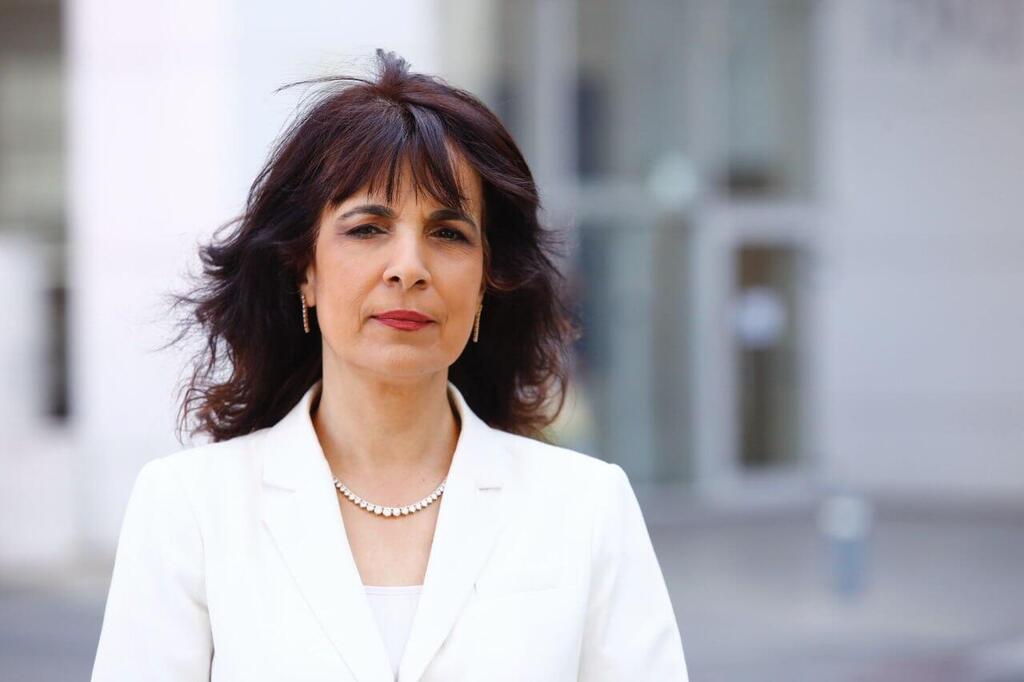
Nitsana Darshan-Leitner is the founder and president of Shurat HaDin – Israel Law Center
(Photo: Pavel Tolchinsky)
Behind the legal victories is a deeply personal cost. Darshan-Leitner describes her work as emotionally consuming. Years of hearing victims’ stories have changed her. “I’ve become much more sensitive. I find myself moved to tears by things that once wouldn’t have affected me,”. Her children, she says, grew up seeing their mother as someone who could “fight terrorism,” often asking her why attacks could not be stopped. For many families she represents, the legal process offers no closure. “Time doesn’t necessarily heal,” she says.
'If the world truly wants to eliminate terrorism, it must unite to choke off its oxygen pipeline'
Over time, Darshan-Leitner has helped shape what she describes as a new legal doctrine: terrorism litigation as a tool of deterrence. Her argument is that financial pressure can succeed where military or diplomatic efforts fall short. She points to cases where banks were fined billions or assets were seized, forcing networks to collapse. “If the world truly wants to eliminate terrorism, it must unite to choke off its oxygen pipeline,” she says.
A precedent with global implications
The reinstated U.S. judgment may mark a turning point. By affirming that American courts can hear such cases, it opens the door for more lawsuits against foreign entities linked to attacks on U.S. citizens. For Darshan-Leitner, that is the real victory. “It changes the rules of the game,” she says in response to the ruling.
For an international audience, her work illustrates a broader shift: the use of civil law as a weapon against terrorism, turning financial systems into arenas of accountability. For Darshan-Leitner, the mission remains unchanged. “There is a price,” she says. “You cannot kill and walk away without paying.”
First published: 19:44, 04.09.26