

In the final hours of Israel’s 1981 election campaign, Yaakov Meridor delivered what sounded like a promise from the future.
Speaking on Israel Radio on June 28, two days before voters went to the polls, the senior Likud candidate said he had partnered with a scientist who had developed a revolutionary energy-producing device. It was based on a chemical process, he explained, and its efficiency was so extraordinary that it defied accepted scientific limits.
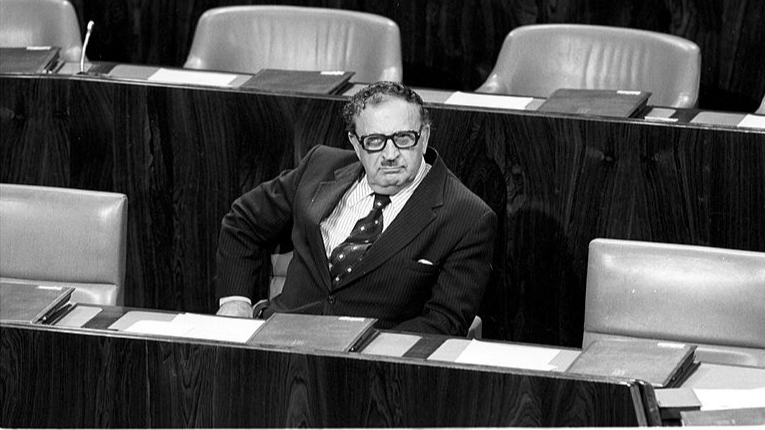
To illustrate its power, Meridor reached for an image that would soon enter Israel’s political folklore. It was, he said, like taking an ordinary household light bulb and using it to illuminate an entire city — “like Ramat Gan.”
The phrase would later be distorted and mocked as a promise of a single bulb lighting all of Ramat Gan. At the time, however, Meridor spoke with confidence and urgency, portraying the discovery as a global turning point whose implications were still impossible to grasp.
Meridor was not a fringe figure. A former Irgun commander, businessman and longtime public figure, he was one of Likud’s most prominent candidates and was widely regarded as a potential successor to Prime Minister Menachem Begin. Likud’s victory two days later returned him to Knesset and into the cabinet, where he was appointed minister of economic affairs and planning, a powerful super-ministry created specifically for him.
The energy invention did not fade after the election. It followed Meridor directly into government.
Meridor said the device produced 17,000 kilocalories of energy from an input of just 23 kilocalories. He claimed the raw material was non-depleting and available entirely within Israel. Electricity that cost 5 cents per unit in New York, he said, would cost just a single cent. He urged a halt to equipment orders for the Zikim power station, later known as the Rotenberg plant, arguing that the discovery could soon make such facilities unnecessary.
He also warned darkly of external threats. Oil producers, foreign scientists and industrial powers in Europe, the United States and the Soviet Union, he said, would not sit idly by. Aircraft, he suggested, were already filled with agents and industrial spies. Publicity, he argued, was dangerous. Details would have to wait.
The claims grew more dramatic. At an appearance at the Diamond Exchange later that day, Meridor compared the invention’s importance to the wheel and predicted it would render Arab oil wells obsolete. Israel, he said, would become an economic powerhouse with the strongest currency in the world and would pay off its national debt within years.
Experts reacted with near-universal skepticism, describing the statements as election rhetoric untethered from scientific reality. Still, the story refused to die.
In the months that followed, Meridor continued to speak of progress. In September 1981, he said the system had reached an efficiency of 60 percent, compared with a theoretical maximum of 40 percent in conventional energy production. He said test results were repeatable and that practical implementation would take two to three years.
Aware of the conflict between his public office and private venture, Meridor approached State Comptroller Yitzhak Nebenzahl for guidance. He was told the project could proceed, subject to approval by an exceptions committee. The Weizmann Institute declined to evaluate the invention, citing the lack of a registered patent and the secrecy such a review would require.
The controversy reached Knesset in November, when opposition lawmaker Yossi Sarid demanded a formal debate. In a biting speech, Sarid derided Meridor as a fantasist and warned that if the energy breakthrough proved illusory, Meridor’s place was not in government. Energy Minister Yitzhak Berman responded awkwardly, stressing that the project was a private initiative and that secrecy prevented public scrutiny.
Meridor promised a full public unveiling.
That unveiling came in March 1982, when Israeli television cleared its regular programming for a special broadcast devoted to the invention. Anticipation was intense. Delays to the broadcast prompted angry calls from viewers, some saying the tension felt like the eve of war.
The device was shown on screen, though its operation was not explained. The engineer who conducted the experiments, Yitzhak Shakhterman, was named. The inventor, however, remained anonymous. Meridor repeated his earlier claims, calling the moment a turning point for Israel and saying he wished he were younger to see the changes unfold.
Behind the scenes, skepticism hardened. Leaks to Haaretz described a system resembling existing turbine technology rather than a scientific breakthrough. Even that description was later shown to contain technical errors. Reports said the prototype was being guarded at a site in the Negev and that more than $500,000 had already been spent on the project, with millions more expected.
The national debate intensified. Some scientists said the idea might improve efficiency in a limited niche by about 10 percent — useful, but far from revolutionary. Others dismissed the entire affair as irresponsible hype. Former president Ephraim Katzir publicly criticized the uncritical presentation of a supposed scientific advance. One Technion professor said Israel was being treated “like a Zulu tribe.” Another noted that ideas of unproven economic value appeared by the dozens every week.
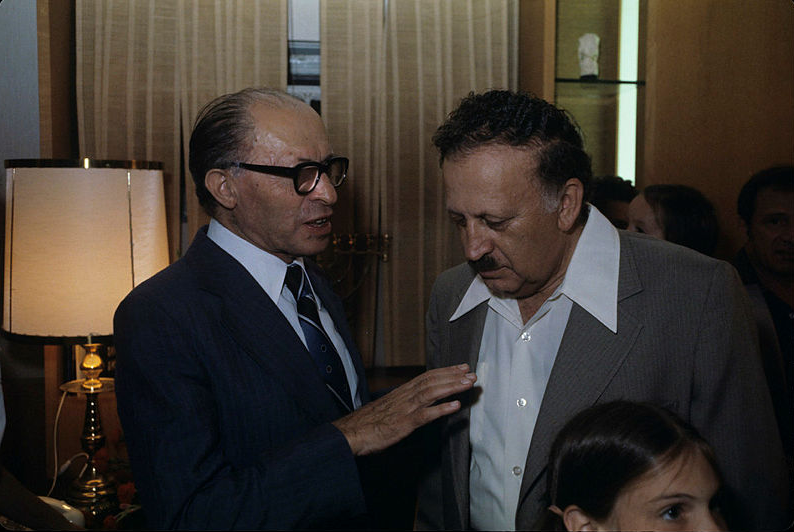
(Photo: David Rubinger)
Meridor sought to address Knesset to defend himself, arguing that he had the right to respond to Sarid’s attacks. The move backfired.
Just days before the scheduled speech, the media revealed the identity of the inventor: Daniel Berman, a 47-year-old convicted con artist. Berman had been sentenced in 1980 to a fine and a suspended prison term. In the past, he had posed as an engineer and academic without completing even a master’s degree, attempted to teach at Tel Aviv University and falsely wore the uniform of an officer during the Yom Kippur War.
The exposure was devastating. Meridor later called it the greatest blow of his life.
At Prime Minister Begin’s urging, Meridor did not speak in Knesset. Instead, a statement was read on his behalf by Speaker Menachem Savidor, declaring that no public funds had been spent and leaving the rest, as Meridor put it, “to the judgment of history.” Opposition lawmakers protested the unprecedented move and renewed calls for his resignation.
The press response was brutal. Columnists mocked Meridor’s warnings about industrial spies. Some suggested patenting the date of the television broadcast as April Fools’ Day. Critics accused public broadcasters of sensationalism and of signing a so-called exclusive agreement to produce a comprehensive film about the invention.
Parallels were drawn to other national obsessions of the period, including Begin’s decision to reopen the investigation into the 1933 murder of Chaim Arlosoroff. Commentators spoke of an era of false messiahs and grand illusions. Newspapers printed parodies, fairy tales and satirical sketches about miracle fuels and imaginary machines.
Meridor did not resign. Begin urged him to endure the attacks, as Begin himself had done in the past. But the damage was irreversible.
Meridor did not run in the 1984 election and left the government that year. Whatever chance he once had of succeeding Begin disappeared. Though he continued to pursue energy ventures and founded a company with academic partners, his political legacy became inseparable from a single phrase: the light bulb that would light all of Ramat Gan.
When Meridor died in 1995, former Prime Minister Yitzhak Shamir offered a more measured assessment. Meridor, he said, had a powerful imagination but was also a man of action who had realized many of his ambitions.