


“I’ve never told my story before. This is the first time, and I’m really nervous. In the past three years, I’ve begun to talk about what I went through. Part of my recovery is telling my story in my own words.
I’m 31 years old, a college graduate living in central Israel. I immigrated from the former Soviet Union when I was 18. My story happened in Israel, but its roots are in Russia. I grew up in what most would call a normal family. My father was a human rights lawyer, my mother a musician who worked with children, and I had an older half-brother. It was a patriarchal world. My father was strong, charismatic, and the provider. My mother depended on him. We all did.
Where we lived was deeply chauvinistic and sexist. A woman couldn’t walk down the street in short clothes without being harassed. Men were dominant, and women were expected to find someone to support them. I saw very few women who built their own independence. I learned to survive in that world and make choices that fit it. Now I understand I don’t have to play by those rules. I have the right to change them.
When I lived in Russia, I romanticized prostitution. How many movies or books about sex work have a happy ending? I thought it was about strength, courage, and choice.
For the last five years of his life, my father managed a strip club in Russia. I never understood what led him there. It was the opposite of his legal work defending human rights. Maybe he got involved with the wrong people. Maybe he made a bad turn. I don’t want to take responsibility for his actions, but I believe he was also a victim. Prostitution harms not only women but men too. It damages their lives as well.
To me, there is no difference between stripping and prostitution. My father always insisted there was no prostitution in his club, but that was nonsense. When a woman takes off her clothes for men’s pleasure in exchange for money, that is prostitution. That is how I see it. The club was five hours away from our city. I think my father wanted to protect his reputation, so he didn’t open one locally.
My father died suddenly of a heart attack after I immigrated to Israel. I feel his death is somehow connected to me. He loved me deeply and wanted a better life for me. When I told him I was working as a stripper, it broke him.
I once went with him to the club. A father and daughter driving together, listening to music, and then arriving at his workplace, where I saw things no 15-year-old should see. Back then, I thought it was cool. My dad was cool, and so was I. That was a lie. I used to be proud of him, but now I judge him. It is hard to judge someone who is gone.
He was an oppositionist. We talked a lot about the direction Russia was taking under Putin. When the punk band Pussy Riot was jailed, he said, “If women are imprisoned just for speaking out, this country is heading in a bad direction.” I listened. I chose Israel because of its connection to Judaism and because we believed it was a better place.
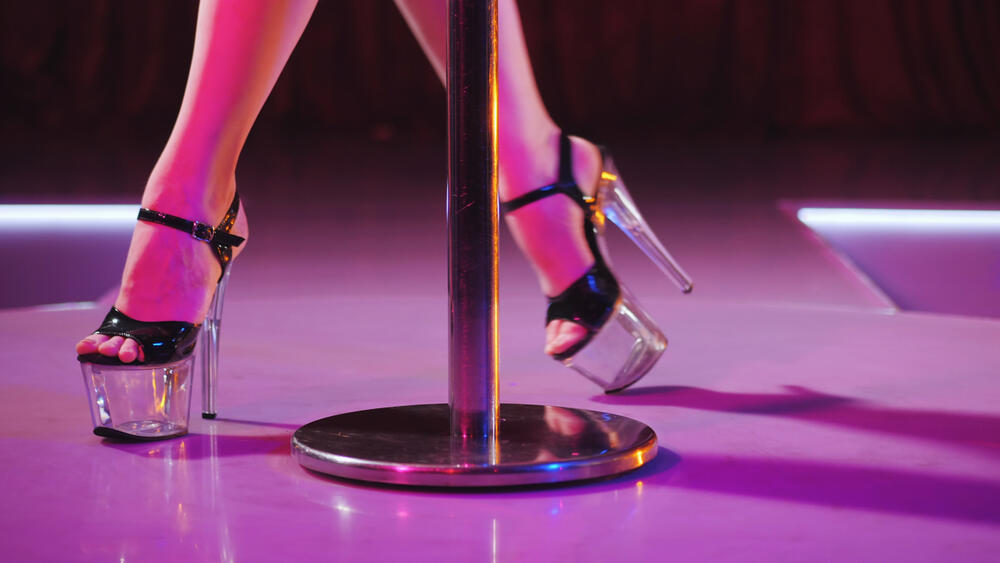
I romanticized prostitution
(Photo: Shutterstock)
At 18, I came alone through a youth program. After a year, I got citizenship and stayed, studying, working, and learning Hebrew. And then I entered prostitution. Why? I wanted to prove to my parents that I was independent, strong, and capable of making it on my own. It seemed logical at the time, especially after everything I had seen in Russia.
The first strip club I went to in Israel hired me immediately. I know now that something leads women into stripping. I have complex PTSD. I was sexually abused in Russia. Back then, I didn’t even realize that’s what it was. In Russia, it was like, “Who cares if you want it or not? You’re already here.” The club felt the same. “We’re already here, so let’s make money.”
My first experience in an Israeli club was worse than I expected. It shocked me, but I stayed. Why? Because it felt familiar. It felt normal. Over time, I felt myself falling apart, consumed by fear. Before I started working there, I felt I had value. That disappeared. To numb that feeling, you drink, smoke, or use drugs.
In the club, I felt like meat, like men saw me only as flesh to use. They said otherwise, but I wasn’t seen as a person. Everything imaginable happened there. It’s hard to talk about it. When I worked there, I couldn’t look people in the eyes. I avoided going out during the day. When you live in a place that dark, it’s hard to see any light outside.
After my father’s death, my mother and I inherited his club in Russia. I was 20, young, naive, and unprepared to deal with his partners. We decided to go there. I came as someone who thought she was strong and brave, who “knew the business.” But I quickly realized how horrific it really was. I saw what the women there went through. How could I be part of that? We understood quickly and walked away with nothing. The club still exists, unfortunately. If I could close it, I would. But I can’t from here.
Two years after starting in Israel, I quit. It happened after I began studying painting with an artist. I behaved around him the same way I did with men in the club. When he asked to paint me, I stripped and posed. One day, I showed him a video of me playing piano at a studio event. For the first time, he looked at me with respect. That changed everything. That same day, I worked my last shift.
People need to understand that women in prostitution don’t do it just for money. I could have survived without it. I would rather have been broke than degraded. But leaving is incredibly hard. I thought I had control, but I was lying to myself.
For years after I left, I still thought that if everything fell apart, I could always go back. But I also feared it. The club appeared in my nightmares. I would wake up terrified, then relieved to remember I wasn’t there anymore. Years later, when I hit a low point, I considered returning. I even met with a woman I had worked with to ask where she was now. She told me there was another way. She introduced me to activists from "The Voice of Prostitution Survivors in Israel", "Lo Omdot Mineged", and "Turning the Tables".
I became an activist. Recently, we went to the Justice Ministry to push for extending the law that fines men for buying sex, which is due to expire in July 2025. It was the first time survivors of prostitution organized together, and I felt proud.I feel fulfilled doing this work. I want this world to change. When I am old, I will be proud I was part of it.
I understand why some strippers say, “Let us work,” but I want to tell them they deserve more, that they are worth more. Inside the club, you live an illusion of worth. They are powerful women capable of building better futures. When I worked there, I needed someone to tell me, “I see you. You can get out. You can live differently.” Instead, everyone told me it was fine and normal.
Even my mother thought so. When she heard I worked at a club, she supported it. She said it was good money and fit well with my studies. Today, she still doesn’t see the need for change. She lives in Russia, still shaped by that culture. Now that I’m learning about feminism and women’s rights, I hope I can one day explain why it matters. For now, she just says, “I don’t like feminists.”
I’ve had serious relationships. I even had a boyfriend while I was working in the club. He knew. Another ex learned about it on our first date. I think it hurt the relationship. Now I don’t know if or when to tell future partners. Some say, “Wait until you’re 80, after 40 years of marriage.” Right now, I don’t want to marry, because marriage can make women look weak. Part of me says I’ll wait until I find true love.
I love the woman I was at 20. I pity her, embrace her, and admire her. I’m proud that I got out. I love that I survived, not because it happened, but because I came through it and built a life. That’s what I love about my story.”
Many men and women still believe strip clubs are harmless
Dr. Naama Goldberg, CEO of "Lo Omdot Mineged – Supporting Women in the Sex Trade", says this story shows how the sex industry exploits women.
“The environment that surrounded this woman normalized objectification and made stripping and prostitution seem natural. We see this again and again. Under the guise of sexual freedom and empowerment, women experience emotional and physical harm. “Many Israelis believe that what happens in strip clubs is legitimate, that women work there by choice. But even the daughter of a club owner learned the hard truth. When she became a stripper, she broke her father’s heart because he knew exactly what women endure there.
 Dr. Naama GoldbergPhoto: Private album
“She faced the unbearable gap between the trauma she experienced and the messages of empowerment she heard inside the club. Her ability to see through the illusion saved her. She chose to walk away and rebuild her life.
“We call on every woman or man trapped in prostitution to know that there is another way, a better reality. Prostitution damages the mind and body, no matter how much it is disguised as choice.”