

If you had asked Capt. M., then the medical officer of the IDF’s 810th Mountain Brigade, what her unit had prepared for most extensively before launching Operation Green-White, she probably would not have had a single answer.
For months, the brigade rehearsed nearly everything that could go wrong while operating deep inside Syria: What happens if several soldiers are wounded at once? How many units of blood should the force carry? Which medical team should move where? And who treats the wounded if the medics themselves are among the casualties?
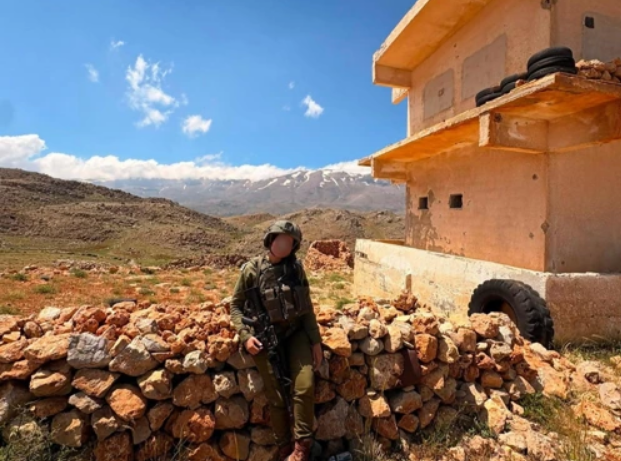
A year later, they know that the last scenario was not merely hypothetical.
“The people wounded in the encounter were the doctor and medics who had joined the force,” M. recalled.
To understand how the brigade dealt with that predicament, the story goes back to September 2025, when Operation Green-White — which would become one of the most significant missions in the young brigade’s history — moved from the planning table to the field.
Troops from the 810th Mountain Brigade, under the 210th Division, were called into action in the middle of the night for an operation that had been planned for months.
Their target was a series of abandoned commando outposts belonging to the former Syrian regime, some 38 kilometers, or 24 miles, inside Syria. Their mission was to reach weapons left behind following the fall of Bashar Assad’s government, remove them and, above all, ensure they could not fall into hostile hands.
(Wounded IDF soldiers evacuated from deep within Syria)
The troops operated at the sites for about five hours, raiding the outposts and locating weapons and other materiel that had been abandoned there.
“We found bombs, hand grenades, explosive devices and various types of missiles,” M. said. “It would be fair to say that the quantities surprised us.”
The discovery changed an operation that had been intended as a one-time mission and prompted a follow-up.
After the troops returned to Israel, preparations began for what the brigade called “Green-White 2” — another incursion into the same sector to complete the mission and remove additional weapons that remained there, again under conditions of complete secrecy.
For M., that meant returning to the medical plan developed for the first operation and reviewing it almost from scratch.
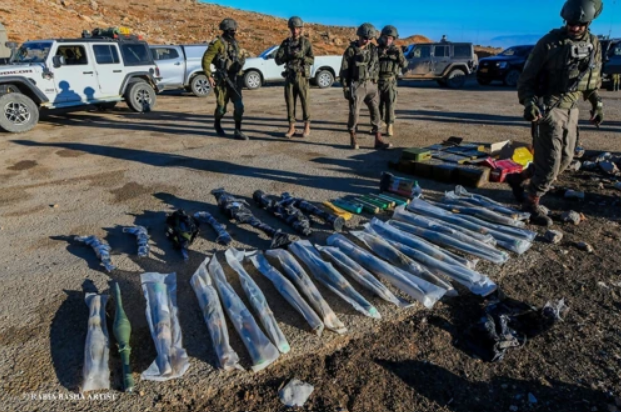
IDF forces locate military supplies and munitions in Syria
(Photo: Rabia Basha)
“When we plan an operation like this, I work on the assumption that the most complicated thing that can happen will happen,” she said. “I know I’m sending a force into a dangerous country where evacuation distances are very long. So I need to give it as much independence as possible in the field while remaining close behind and ready for anything that might go wrong.”
That independence begins with determining how many units of blood accompany the force, preparing stretchers, selecting the medical equipment troops carry into the field, identifying potential helicopter landing zones and mapping the medical teams dispersed among the troops. Planners must also determine what to do if any one of those elements suddenly becomes unavailable.
The reason, M. said, is clear from the map.
“At the depth where the troops were operating in the Syrian sector, a ground evacuation could take hours,” she said. “And even when the evacuation is by air, it’s not enough to find the nearest hospital. You have to match the hospital to the type of injury and the medical care the casualty requires.”
“In the case of a serious head injury, for example, I need to know that the casualty is being taken to a hospital that can provide the optimal treatment,” she added.
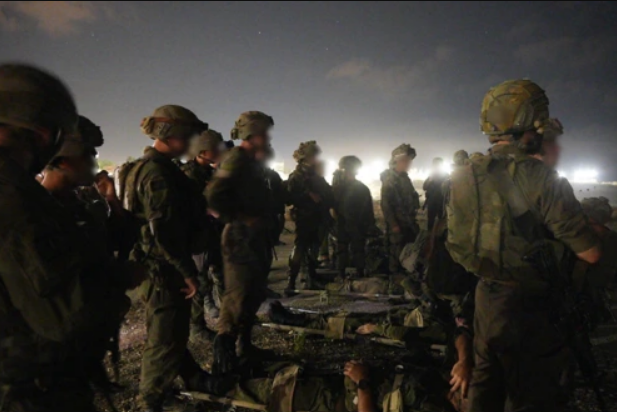
IDF forces in Syria
(Photo: IDF)
The distances are compounded by the terrain. The mountainous landscape and weather, which can quickly become extreme, played a major role in the scenarios medical teams rehearsed before Green-White 2 began.
But a central part of the plan was developed not on the ground but in the air.
During preparations, the brigade coordinated with the Israeli Air Force and its elite Unit 669 airborne combat search-and-rescue unit, seeking to reduce as much as possible the time between the first report of a wounded soldier and the moment that person could be evacuated.
“When human life is at stake, regardless of the severity of the injury, every minute matters,” M. said. “We don’t want to arrive at an incident and only then start figuring out how to land a helicopter there.”
“Before the operation, we coordinate, go over the scenarios and create a common language so that when the moment comes, everyone knows exactly what they need to do, when and how.”
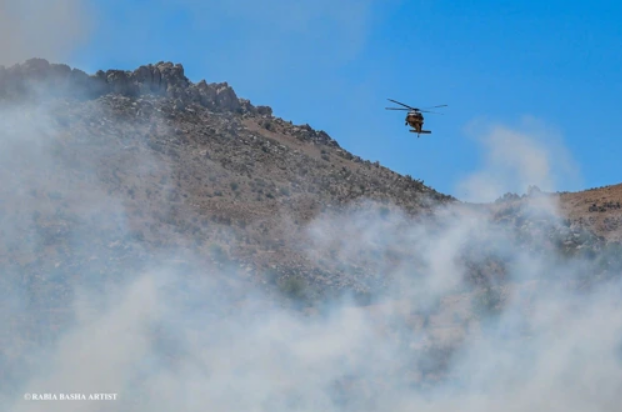
IDF helicopter on a medivac mission in Syria
(Photo: Rabia Basha)
When the second phase of Green-White was approved and troops began moving and operating inside Syria, M. sat at the central command post overseeing the mission alongside the officers responsible for providing support from behind the front line.
“It’s crazy,” she said. “You sit in the operations room and watch the forces advance, and you constantly have to know what happens if one of the soldiers is wounded right now. You can be on duty for 48 or 72 hours, and at any moment you have to be able to say where the medical team is, who can reach the casualty, how to evacuate them — and exactly where to take them.”
Then, during the operation, a grenade exploded near 810th Brigade troops.
Five members of the force were wounded, including by shrapnel and the blast. As the situation became clearer at the command post, another detail emerged that made the incident considerably more complicated: All five casualties were members of the medical team that was supposed to respond to such an emergency.
“At the moment they were needed most, the doctor and medics who had gone in to provide treatment became the ones who needed it themselves,” M. said.
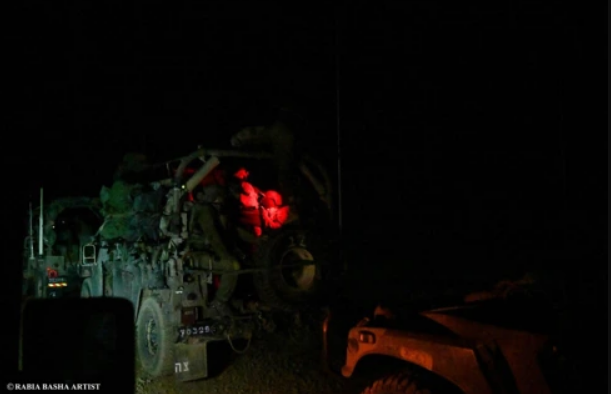
IDF forces operating in Syria
(Photo: Rabia Basha)
But the brigade had prepared for that possibility.
“Because we had prepared for this as well, we had additional teams and medical units in the field,” she said. “We were able to move forward the nearby battalion aid station and send in another team to begin initial treatment.”
Meanwhile, another race began at the command post. Once officials had established a clearer picture of the casualties and their conditions, a helicopter carrying Unit 669 personnel was dispatched.
The airborne medical team needed as clear a picture as possible of the number of wounded and the severity of their injuries before arriving. At the same time, the hospital where they would land had to prepare to receive them.
Amid the complex evacuation effort, M. said, there was another factor that does not always appear on operational charts: The soldiers on the other end of the radio were learning in real time that their friends had been wounded.
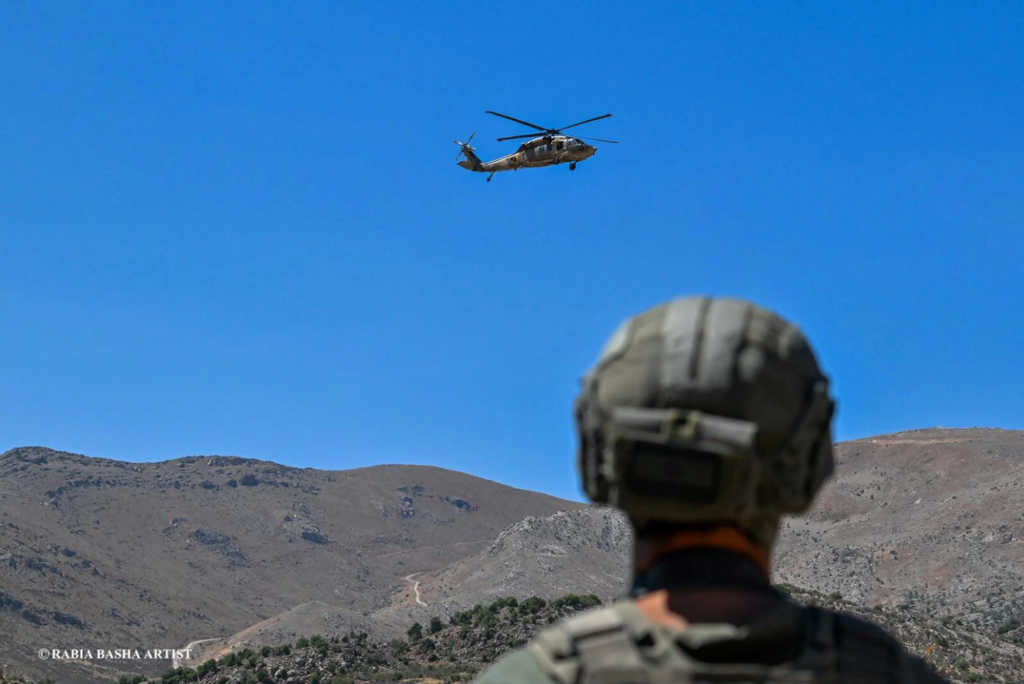
IDF forces operating in Syria
(Photo: Rabia Basha)
“The reports coming over the radio are, in the end, about people,” she said. “You have to handle it sensitively but also keep a cool head. An incident like this can very quickly create pressure, but everyone has to remain sharp and focus on getting the wounded to the hospital as quickly as possible.”
After rapid planning, instructions over the radio and the helicopter’s deployment, the aircraft reached the troops.
“Within a relatively short time, we managed to bring the five wounded from deep inside Syria to the hospital,” M. said. “The team in the field performed well, and we were able to provide the support from behind.”
“In the end, everything we prepared for actually happened in the field,” she added. “Most of the wounded were released from the hospital during that same week.”
For the Mountain Brigade, the operation came during a year that marked a historic turning point along Israel’s frontier with Syria.
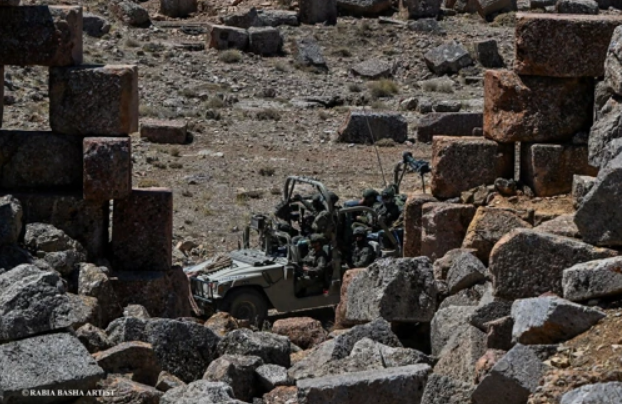
IDF forces operating in Syria
(Photo: Rabia Basha)
Looking back, brigade officials say the weapons removed from the abandoned outposts were part of a security environment that has changed dramatically — even beyond what they had expected — since the fall of the Assad government.
For M., the operation remains one of the greatest tests of her military career.
“You can equip a soldier with the best weapon and the most advanced gear,” she said. “But ultimately, that soldier needs to know that if something happens to him, there are people right behind him who know how to reach him quickly, treat him professionally and bring him home safely.”