

When police burst into a series of apartments in Petah Tikva in September 2007, what they uncovered was not only a criminal gang but a psychological and moral shock that reverberated across Israel. On seized computers were videos of beatings, Nazi salutes, swastikas sprayed across city walls and young men laughing as they humiliated strangers — all filmed by the attackers themselves.
The group called itself Patrol 36, a neo-Nazi cell whose very existence appeared to defy Israel’s historical DNA. Neo-Nazism is illegal in Israel and long considered a marginal, almost unthinkable phenomenon in a country founded in the shadow of the Holocaust. Yet Patrol 36 was real, violent and disturbingly organized.
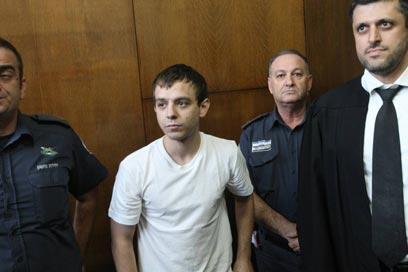
A fringe ideology takes root
Patrol 36 emerged quietly around 2005. Its members were nine teenagers and young men, ages 16 to 21, most of them immigrants from the former Soviet Union or children of such immigrants. Their families had arrived under the Law of Return, which grants citizenship to Jews and their descendants. Only one member was Jewish under religious law.
The group’s leader was Erik “Eli” Bunyatov, later known publicly as “Eli the Nazi.” Born in Turkmenistan, he immigrated to Israel as a child and grew up in Petah Tikva. Police and court records describe him as charismatic, domineering and obsessed with neo-Nazi ideology.
Patrol 36 drew inspiration from Format 18, a violent Russian neo-Nazi network that encouraged adherents to document racist attacks and distribute the footage online. Members adopted the aesthetic and tactics of international skinhead movements: shaved heads, Nazi symbolism, racist slogans and a fixation on Adolf Hitler.
Violence as spectacle
Between 2005 and 2007, Patrol 36 carried out a string of racially motivated assaults, primarily in Petah Tikva and southern Tel Aviv. Victims included migrant workers from Africa and Asia, Ethiopian Israelis, homeless people, drug users, gay men and ultra-Orthodox Jews.
Court indictments describe attacks carried out methodically and often for entertainment. Members would roam city streets armed with bottles, sticks or knives, filming themselves beating victims and forcing them to kneel, apologize or endure humiliation. Some assaults were planned in advance, with discussions about how to maximize fear and visual impact for online distribution.
In one case, several members attacked migrant workers while another filmed. In another, they beat a man suspected of being gay inside a public restroom. In yet another incident, they assaulted a homeless man while ordering him to apologize “to the Russian people.” Swastikas were sprayed across buildings afterward.
Police later said the group treated violence as both ideology and performance.
Digital radicalization
Investigators found that Patrol 36 members uploaded their videos to YouTube and extremist websites, including Format 18’s platform. The videos were edited to glorify the attackers and dehumanize victims, mimicking similar content circulating in Russian and European far-right circles at the time.
This use of digital propaganda was one reason the case drew intense scrutiny from security services. Analysts later described Patrol 36 as an early example of how online ecosystems could radicalize isolated youth and transform street violence into ideological identity.
One member, Ivan Kuzmin, later told investigators that he had grown up being called a “dirty Jew” in the former Soviet Union and a “stinking Russian” in Israel. His grandmother was a Holocaust survivor. He said the racism he experienced hardened into hatred. The quote became emblematic of the case’s psychological complexity.
Police investigation and arrests
Israeli police began investigating the group in 2006 after repeated reports of neo-Nazi graffiti in Petah Tikva. Surveillance expanded as intelligence suggested a small but active cell rather than isolated vandals.
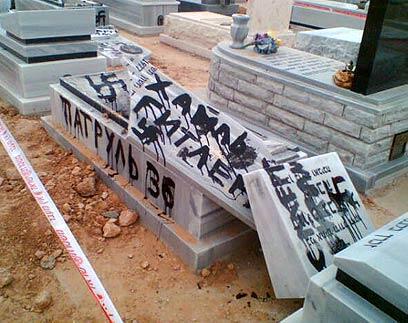
(Photo: Yonat Atlas)
On Sept. 9, 2007, police arrested seven members. Two others fled the country. Raids uncovered computers filled with extremist material, including attack videos, Nazi imagery, racist writings and evidence of contact with foreign neo-Nazi groups. Police also found weapons, explosives and components for improvised devices.
Prosecutors described the material as overwhelming.
The courtroom reckoning
Eight suspects were charged with conspiracy to commit crimes, aggravated assault motivated by racism, incitement, possession of racist materials and, in some cases, weapons offenses. Several defendants were minors.
The indictments detailed a pattern of coordinated violence, ideological indoctrination and calculated humiliation. Prosecutors requested that all defendants remain in custody, describing them as a danger to the public.
Defense attorneys argued that some defendants were followers, manipulated by older members and drawn into violence through alcohol, alienation and social pressure. Families described troubled youths struggling to integrate.
In sentencing, Judge Tsvi Gurfinkel emphasized deterrence, saying the crimes represented a moral collapse that required firm punishment. Bunyatov received seven years in prison, the harshest sentence. Others received terms ranging from one to several years.
The fugitive and the final sentence
One suspect, Dmitri Bogotich, fled Israel after his initial release. Years later, his whereabouts were revealed through media reporting in the former Soviet Union. He was extradited from Kyrgyzstan in 2010.
In 2011, an Israeli court sentenced Bogotich to 69 months in prison, citing his central role in violent, racist assaults. Judges again stressed deterrence.
Political and social shockwaves
The case triggered intense national debate. Politicians across the spectrum condemned the group, but disagreement emerged over broader implications.
Some lawmakers questioned aspects of the Law of Return, arguing that it had been exploited. Others warned against collective blame of immigrant communities. Then-Prime Minister Ehud Olmert called the case “a failure of education” and urged a response that was firm but measured.
The interior minister at the time said those embracing Nazi ideology had “no place” in Israel and raised the possibility of revoking citizenship.
Jewish organizations abroad condemned Patrol 36 but emphasized its marginal nature. The Anti-Defamation League warned against stigmatizing Russian-speaking immigrants, noting that the vast majority rejected extremism.
Institutional consequences
In the aftermath, police expanded efforts to monitor extremist activity and established specialized units focused on hate crimes and ideological violence. Between late 2007 and early 2008, authorities documented roughly 150 antisemitic incidents, many involving graffiti and online incitement.
Academics later cited Patrol 36 in studies on “militant democracy,” arguing that the case forced Israel to confront vulnerabilities previously assumed irrelevant in a Jewish state.
A lasting warning
Patrol 36 existed for only a few years, but its impact far outlasted its members’ prison terms. The case exposed how alienation, online radicalization and imported ideologies could converge even in a society built as a refuge from Nazi persecution.
For many Israelis, the images of swastikas and Nazi salutes filmed by young men speaking Hebrew and Russian remain among the most unsettling symbols of that era — not because Patrol 36 was powerful, but because it briefly made the unthinkable visible.
Nearly two decades later, the case is remembered not only as a criminal episode but as a warning: extremist ideologies do not require fertile ground to take root — only cracks left unattended.