


For nearly two years, businessman Yakir Gabay sat in his home office under the shock of October 7. With something close to obsession, he consulted and read, delved and studied, wrote and erased, until he formed a thesis on how the situation in Gaza might be resolved.
His basic assumption was that the Strip must have a different economic reality, but that such a reality is impossible without security stability. The thesis he developed rests on one iron condition: it is not the economy that will bring security, but the opposite. First, Hamas must be disarmed. Only then can something entirely different be built. From the ground up.
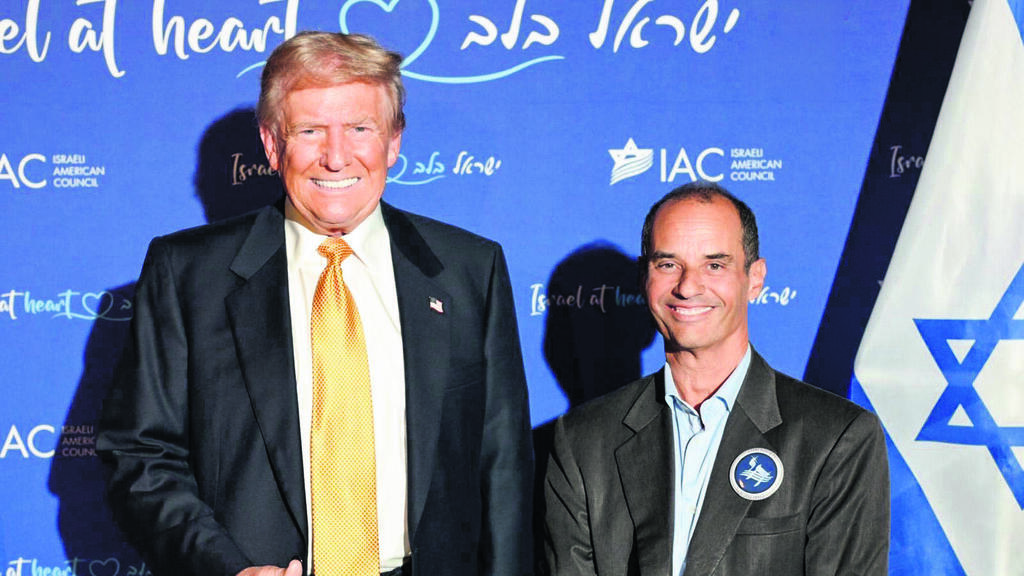
“He prepared presentations, made videos and began activating his connections,” a close friend says. “Yakir never dealt with politics. He was always strictly business. But through business he met many influential people. After October 7, he approached everyone who could influence things and who thought, like him, that this time it had to be done differently.”
At a certain point during the war, Gabay began receiving messages that other business groups, from Israel, the United States and the Middle East, were holding similar ideas. Some of them had contacts with the Biden administration in the White House. They talked, but it did not come together.
Gabay did not give up. He began slowly introducing the idea to a close friend of his, a man named Jared Kushner. We will return to their relationship. Kushner expressed interest. Several months later, with the election of Donald Trump as president, the conversations between them intensified. Last fall, as the administration presented its 20-point plan to end the war, Kushner called Gabay.
“Instead of dealing with Gaza from the side, on the margins, come and give the issue your full commitment,” the incoming president’s son-in-law told him. Gabay agreed.
Despite being an Israeli real estate tycoon with an estimated fortune of about $4 billion and an international reputation, Yakir Gabay’s name is not widely known in Israel outside economic circles. His announcement about two weeks ago as a member of the Gaza Executive Board formed by Trump, which is meant to oversee the Strip’s rehabilitation and administration, was received in Israel with some surprise.
For now, more question marks hover over the new body than exclamation points. Will it really succeed in disarming Hamas? What cooperation will it receive from the Palestinians and from Israel? How realistic is a vision of economic flourishing amid destruction and deep hostility? And how will Gabay fit into this, a man whose life and business interests stretch from Europe to the United States, yet who still holds Israeli citizenship?
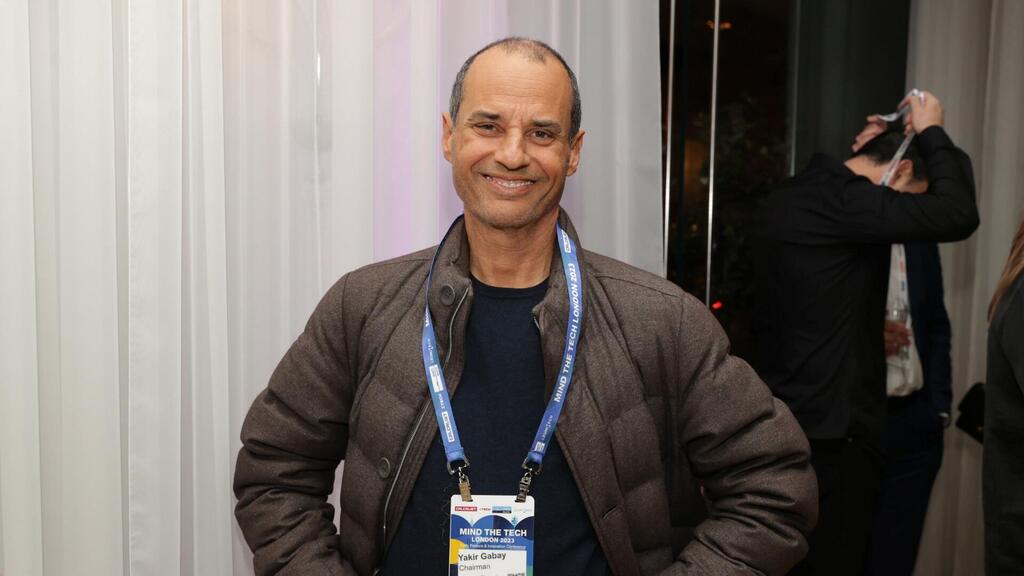
Yakir Gabay
(Photo: Orel Cohen)
A catastrophic success
The Gaza Executive Board includes, among others, U.S. Secretary of State Marco Rubio, Kushner and Steve Witkoff, former British Prime Minister Tony Blair and others.
“On this board, Gabay is not there under the title ‘Israeli,’ but as an international adviser,” a close friend explains. “Kushner did not bring him because of nationality or citizenship, but as someone with capabilities and for whom the issue matters. Even if Netanyahu were sitting in the room, it would not matter. Yakir comes from the American institutions.”
Yaron Veller, founder and CEO of venture capital fund Target Global and a friend and business partner of Gabay, says he has known him for many years and has never seen him as excited as after his appointment to Trump’s team.
“Why?” Veller asks. “Because here he has the opportunity to create something far more important than business. He is looking for action. One of the first things I told him was, ‘How great that you managed to create for yourself an entirely different world of activity.’”
A person close to Gabay says he holds very clear red lines regarding Gaza’s future.
“Without demilitarization of the Strip, the entire issue of reconstruction is irrelevant,” he says. “There will be no funds and no grants. People are talking about a budget of tens of billions of dollars over the coming decade, but from my conversations with him, not a single dollar will be given without weapons being dismantled.”
So he recognizes that there is no certainty the Gaza plan will be implemented.
“If Hamas agrees to disarm, a process will begin,” the source says. “If not, we return to a position that is much better for Israel. The IDF will be able to do the job, this time without endangering hostages. The IDF is already halfway there, with global backing and a Security Council decision that allows it to act. That means we are in a completely different world. But first, we have to give the effort a chance.”
Gabay’s vision is to build Gaza from scratch, infrastructure, buildings and economy. He looks to a high model: the United Arab Emirates. In his view, the transformation the emirates underwent over recent decades was possible because everyone there speaks business, everyone profits and therefore everyone is satisfied.
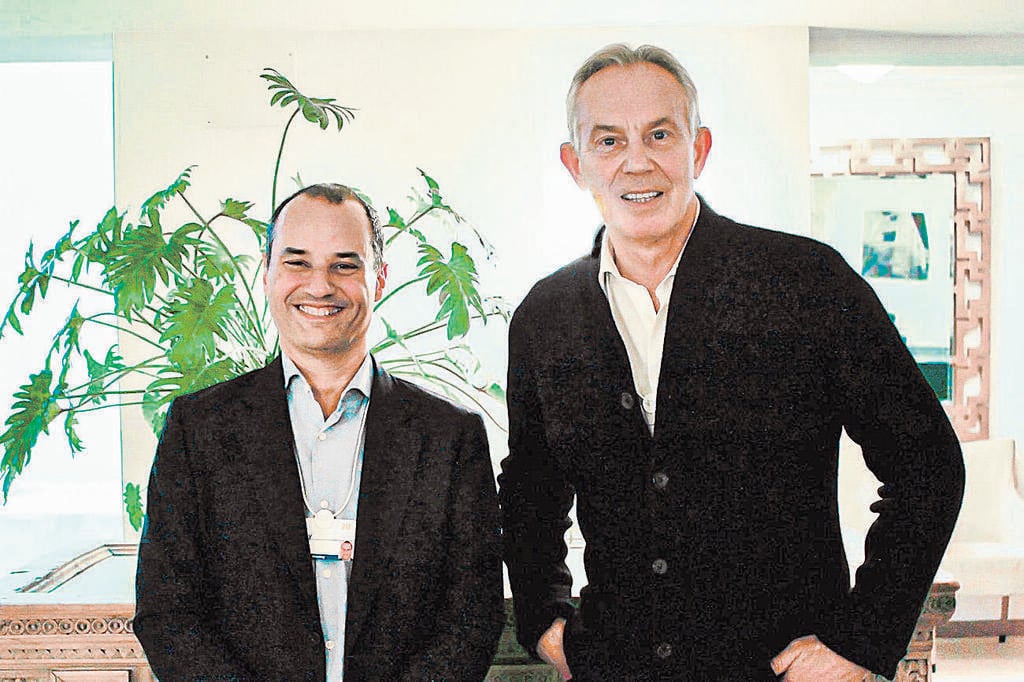
Yakir Gabay and Tony Blair
“That is the atmosphere I want to create,” he told one friend. “Not only in Gaza, but also in Judea and Samaria.”
A friend adds: “From his perspective, Gaza is an opportunity to move things forward with the Palestinians. Its advantage over Judea and Samaria is that aside from a narrow fringe, there is no debate about it. More than 90 percent of Israelis do not want to return to ruling Gaza. He wants to give it a real chance, but to learn from past mistakes and do it properly. Not to give a blank check like before.”
Will economics succeed in changing Palestinian aspirations and hostility?
“That is a matter of education,” the friend says. “On this, Yakir relies on Morocco and the UAE. Once, their textbooks also contained anti-Israel content, and they changed everything.”
It sounds very optimistic.
“He loves a phrase Kushner told him: ‘Prepare ourselves for a catastrophic success.’ There could be a sweeping success, a catastrophic success. We should also be prepared for that.”
The financier from Berlin
Gabay, 60, is married for the second time to Alena and is the father of seven children. His family and business operations are spread across four hubs: Cyprus, London, Berlin and Israel. He was born in Jerusalem and grew up in the Talbiya neighborhood, the youngest of three children of Meir and Yemima Gabay, both senior public servants.
His father served as director general of the Justice Ministry, civil service commissioner and president of the U.N. Administrative Tribunal. His mother, now 92, headed the pardons department at the Justice Ministry.
Gabay’s childhood was shaped to a large extent by a severe joint disease that struck him at age 11. From a sporty child who played soccer, rode bicycles and spent afternoons outdoors, he became a child moving between hospitalizations. Since then, he has walked with a limp, which meant he was not drafted into the military. According to family members, the experience forced him into a hard physical and mental struggle, from which he emerged strengthened.
He graduated from Gymnasia Rehavia high school and holds a bachelor’s degree in economics and accounting and a master’s degree in finance and business entrepreneurship, both from the Hebrew University. While studying, he began working in the prospectus department of the Israel Securities Authority. In the mid-1990s, he was already serving as CEO of Bank Leumi’s investment banking arm.
When his chairman stepped down, Gabay believed he deserved to succeed him.
“He told Galia Maor, the bank’s CEO at the time, ‘If I don’t get the position, I’ll resign,’” a friend from that period recalls. “And indeed, when Meir Dallal was appointed instead, he resigned. No golden parachute, nothing. He simply said, ‘I’m moving on.’”
In the early 2000s, after a stint as chairman of Gmul Investments, Gabay moved to Berlin.
“His dream was to make a million dollars and retire, but it turned out that at Gmul he made a bit more,” a friend jokes. “At that time, deals from all over the world started being offered to him, and among them, the most interesting ones seemed to be in Berlin.”
At the time, there were almost no Israeli businesspeople in the city, but Gabay and Meni Weitzman, who arrived slightly earlier, became partners and drew friends from Israel, including David Fattal, Amir and Miki Dayan, Teddy Sagi and Yehuda Braschi.
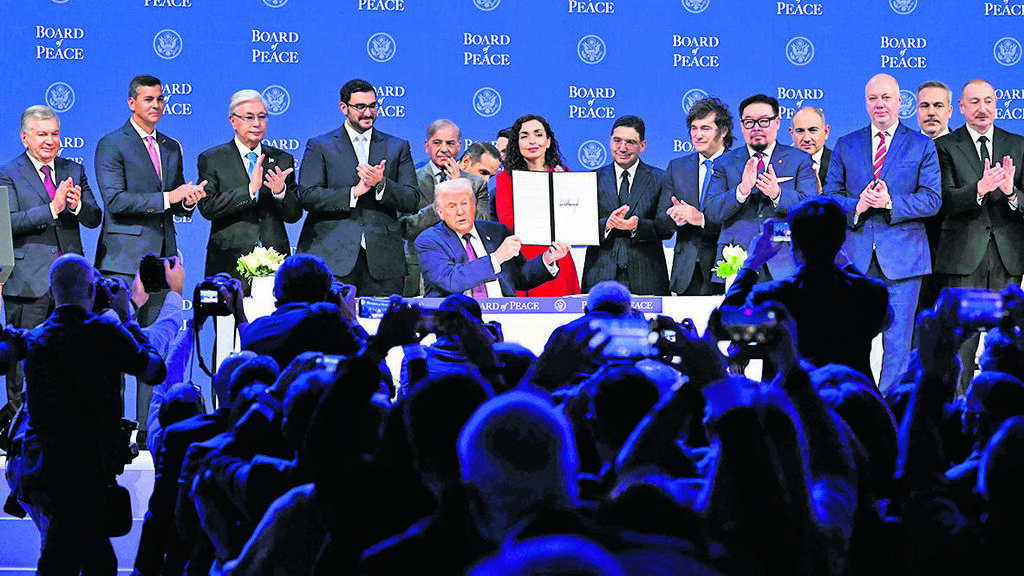
Trump presents the Board of Peace document
(Photo: Fabrice Coffrini/AFP)
Gabay moved from deal to deal, sometimes with private individuals and sometimes with institutional players. He bought assets suffering from operational or capital problems, when sellers were under pressure, improved them, sold, floated or brought in international bodies.
“It is basically the same vision he has for Gaza,” the friend adds. “Taking difficult situations and turning them into opportunities.”
In parallel, Gabay and his businesses also reached Cyprus, due to favorable tax conditions and its proximity to Israel. There, the team that forms the base of his holding companies worldwide was built. But Berlin remained the center.
Low-cost flights and no private jet
Despite his immense wealth, Gabay is known among friends for his lack of ostentation. At one point he owned a private jet, but sold it. Despite his love of the sea, he does not own a yacht like others in his circle. He has a driver only because he prefers to work while traveling.
“He would kill me for saying this,” Veller laughs. “When we lived in Berlin, he flew EasyJet and did not even pay extra for a preferred seat.”
A longtime friend adds: “In his nature, he remained a Jerusalemite. He does not pour money around. He thinks wastefulness is bad education and does not want his children to be spoiled. You will never catch him with an expensive watch.”
Because of the size of the family, they travel in a Mercedes Viano. He himself spends most of his day in a tracksuit. “If you saw him,” the friend says, “you would think he was not even Yakir’s driver.”
It can be assumed that when Witkoff and Kushner chose last October to dine with him at a Tel Aviv restaurant, Gabay did not understand what the fuss was about.
“He is not a restaurant or nightlife person at all,” the friend laughs. “At most, he will invite you for coffee.”
His casual modesty is a well-known joke among friends. Veller shares an anecdote that illustrates it well. Warren Buffett, whom Gabay admires, holds an open shareholders’ meeting once a year in Omaha. People stand in line for hours to get in.
“One day I get a call from a young Israeli entrepreneur who says, ‘You will not believe it. I am in line for Warren Buffett and Yakir is here too,’” Veller recalls. “I called Yakir and asked, ‘Are you OK?’ He said, ‘I want to see him.’ A billionaire comes with his son to the middle of nowhere and stands in line for hours. It never crossed his mind to make a phone call and skip the line.”
Entering a minefield
At the beginning of October 2023, Alena Gabay arrived in Israel for a three-day visit to arrange a family donation to the Rashi Foundation, which promotes education and welfare in Israel’s periphery. She flew back to London on Friday. The war broke out the next day.
“Yakir was deeply shaken after the massacre,” a close friend in London says. “But he was not surprised. He always believed that the combined threat of Iran, Hezbollah and Hamas would end in a major disaster.”
The war mobilized him completely. Over the past two years, he organized support events for Israel around the world and donated large sums to advocacy efforts and the struggle to free hostages. He organized an event in London for his friend Ariel Koren, who works extensively with trauma victims of the war. He also partnered with Miriam Adelson on events aimed at strengthening ties with Israel.
Now, Gabay is moving from the stands onto the field and taking part in shaping the day after in Gaza.
“If Biden or Kamala Harris had remained in power, it would have been difficult to advance the initiative,” says Yoram Alaluf, a close associate. “But Yakir does not give up. If he believes in a goal, the height of the mountain does not matter. He will reach the summit.”
Gabay has stated that he does not intend to build in Gaza himself or profit financially in any way from the work there.
“He does not want anyone questioning his intentions,” a close friend says. “He does not need the money. The time he is investing in this initiative is worth a great deal to him. In the end, those who pay the most are his children. Their father is not at home.”
Alaluf agrees. “Since October 7, it seems he has slowed down on the business side. Instead of dedicating every hour to business, he is dedicating part of it to the country.”
Former ambassador Tzvi Heifetz, whom Gabay consulted before joining the board, puts it plainly.
“He did not just sit at home and get a call from Kushner,” Heifetz says. “He worked on a plan. There were countless discussions and exchanges of papers. In the past they said the economy would solve the security problem. Yakir reversed the order. First, no Hamas.”
How does Heifetz define Gabay politically?
“On security matters, he is on the right, without compromise. But he does not get involved in Israeli politics. Maybe that is exactly why he ended up on Trump’s board.”
As a businessman, will this help him or hurt him?
“He knows he is entering a minefield,” Heifetz says. “It would be far easier to build buildings and donate money once in a while. That way everyone loves you. He took that into account. No good deed goes unpunished. It is a well-known saying.”