

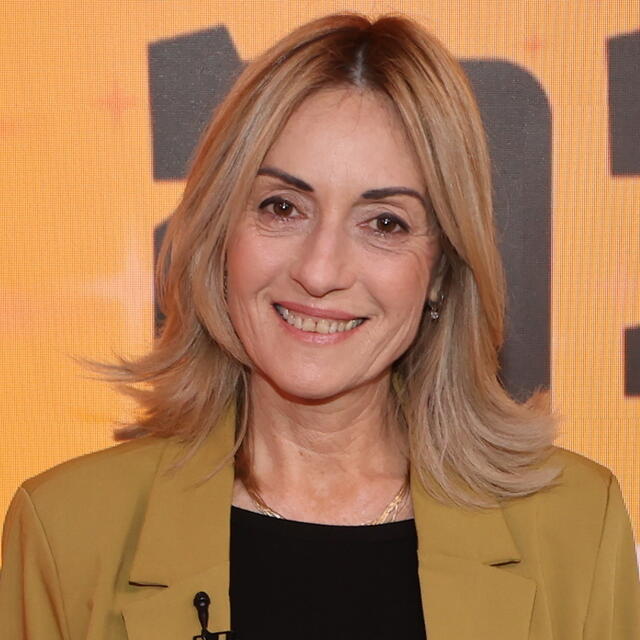
For more than five years, they have met regularly. Six women who asked to remain anonymous, the youngest around 50 and the oldest over 60, share one passion: poker.
At first, they say, they met once a week. Over the years, the frequency increased. Today they meet at least twice a week and sometimes as often as four times, each time at the home of a different member.
Gallery
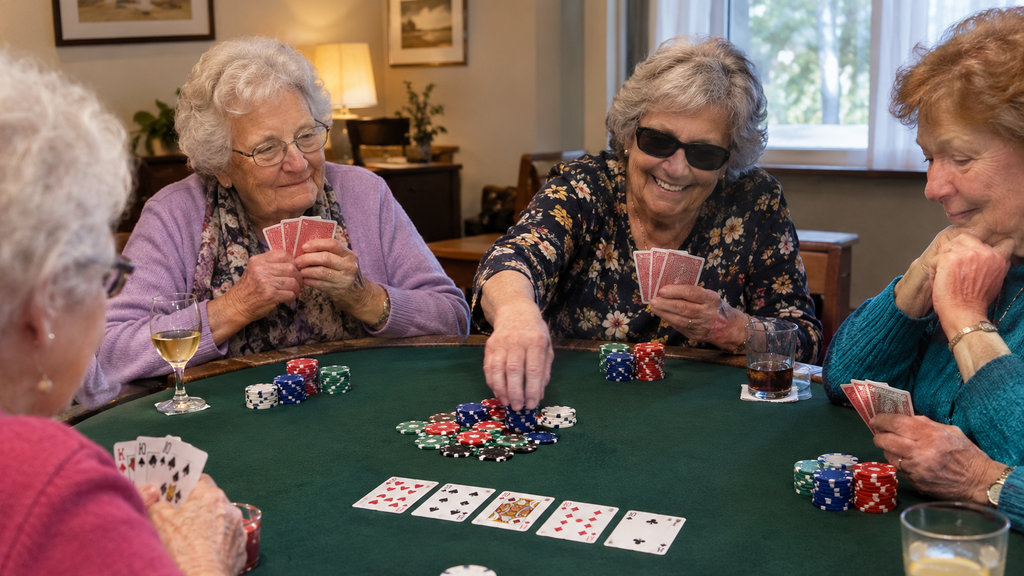
Poker after 60: Israeli women find strategy, friendship and a new kind of thrill at the table
(Photo: AI-generated illustration)
“We can’t imagine a week without poker. We all work, we’re successful and we have families, but these evenings are sacred to us. We start at around 8 p.m. and don’t close the table before 10. Some people would say we’re addicted,” R. said.
Until several years ago, poker was an almost exclusively male domain, with women largely absent from tables and tournaments. That picture has been changing, with more women, including those in their 60s and beyond, embracing the competitive strategy game.
Some play at home and others in clubs. Abroad, some women have built professional careers and achieved major tournament success.
Success on the international poker circuit can generate millions of dollars in career winnings. Vanessa Selbst, a 42-year-old American poker player and lawyer, has accumulated nearly $12 million in live tournament winnings, while Taiwanese-American player, host and commentator Maria Ho, 43, has earned more than $5.5 million.
In Israel, women’s poker remains far from those proportions, but regular players include many women in their 60s, 70s and even 80s. The 83-year-old grandmother of one of Israel’s best-known artists has been playing weekly for years, sometimes for significant sums.
‘They come to learn and stay for the connections’
Niv Sofer, 34, founder and CEO of Ladies, a school for strategic thinking games for women, came to poker after years as a competitive chess player.
She founded the club about eight years ago. Today, women learn poker and chess there without playing for money.
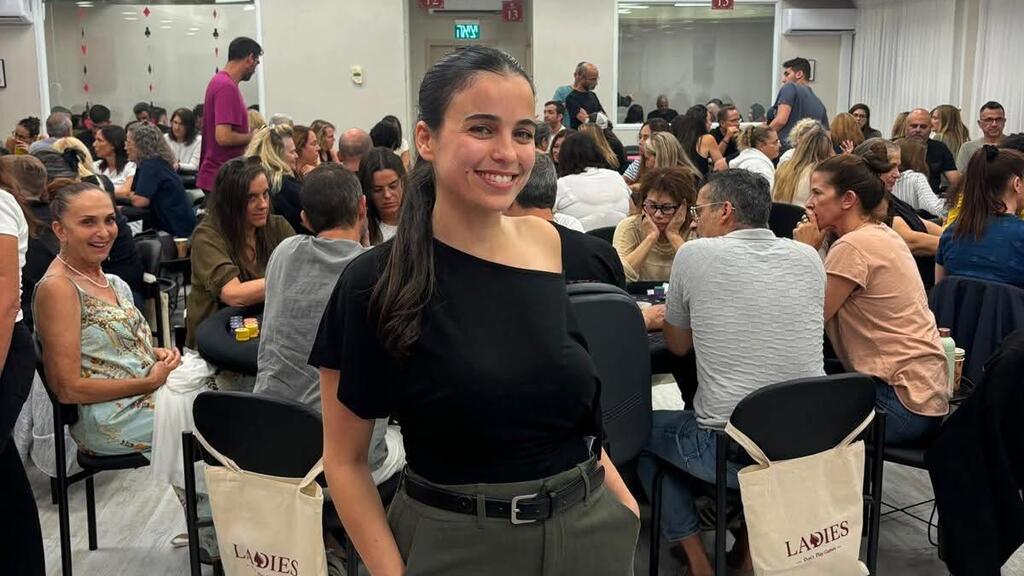
Niv Sofer
“About 1,800 women have studied with us so far, and some continue to advanced courses. The vast majority are 50 and older, and a significant number are retired,” Sofer said. One regular player, Naomi, recently celebrated her 88th birthday.
For Sofer, one of the most striking changes has been women’s place in the poker world.
“When I started, it was a very male field. When I played in mixed groups, the conversation around the table was aggressive, and I constantly got comments about my game and my appearance. Today, women around a poker table have become normal, and they also bring warmth and sensitivity to this world.”
Why poker?
“At my school, we teach both chess and poker. Chess has excellent PR and poker much less so, which is a shame. It’s a thinking game that keeps you sharp, and that’s especially important as you get older. It teaches strategic thinking, risk-taking, decision-making under uncertainty, self-control and functioning under pressure. You learn to think long term, make precise decisions and build confidence through knowledge, practice and experience.”
Alongside the game itself, Sofer said, a community forms.
“Women come to learn and stay because of the connections. Some find friends here later in life who become their best friends. Over the years, the courses have produced many home groups and deep friendships. They go through crises and good times together, travel and spend time together, and even fly abroad for tournaments.”
“Poker is much more than cards, gambling and winning. It’s a mirror of life. You need to know how to make decisions, read situations and people, take a risk when necessary and also know when to fold. It teaches negotiation, competitiveness and mathematical calculations.”
Women who have been at the school since it opened, she said, describe the meetings and competitions as a way of breaking routine and bringing color into their lives.
“I also do Pilates every week, and that’s important, but games create a different kind of connection between participants.”
‘Poker is much more than a game’
Sofer stresses that she does not teach cash games, meaning poker played directly for money.
“Playing for money is a completely different game, and under Israeli law it is prohibited. I also don’t believe in it because, in my view, poker loses its value that way. In tournament poker, you play to advance and reach the final, and sometimes you sit for 14 hours straight. It’s a long-term game and an intense mental sport.”
“The goal for the women who study with me is to understand the foundations of competition and also gain the social value.”
Sofer has also organized several poker tournaments to raise money for Beit Halochem, an organization supporting wounded Israeli veterans.
“It’s a day of complete escapism, while the cause the money is going toward is always in the back of your mind.”
Henia Robbins, 78, plays at Sofer’s club.
“Poker for me is much more than a game. I started playing years ago in a casino. I loved the game even though I wasn’t good at it and mostly played on luck. I had beginner’s luck,” she said with a laugh. “I won a little and came away with a good feeling, although I don’t have many opportunities to go to casinos abroad.”
About three years ago, Robbins heard about the school and decided to try it.
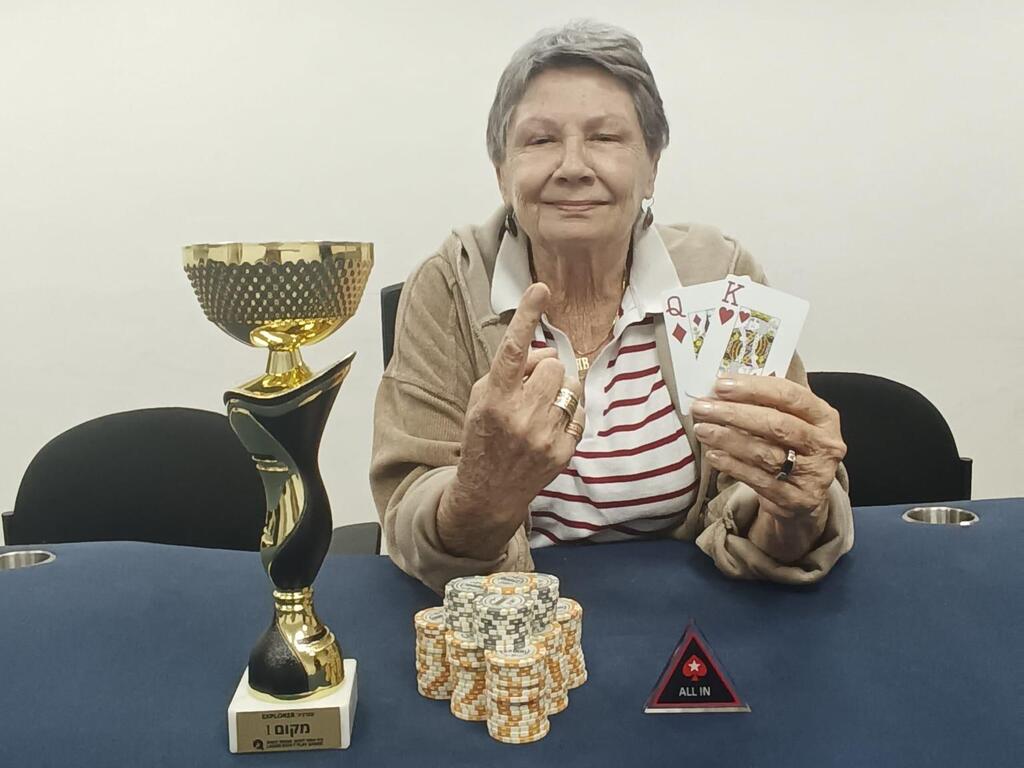
Henia Robbins
“I came and fell in love with the place and with Niv. Here, I don’t play for money. It’s an evening that challenges me constantly, and it’s also a social evening. Entering a tournament costs 350 shekels, and that’s where the expenses end.”
“Next month, I’ll start another course to improve my game. I’m trying to learn how to deal with downturns at the table and how to play when the cards aren’t good. I’m challenging myself intellectually and cognitively and trying to get as far as possible.”
‘If there’s an addiction, it’s to the thrill’
A., a member of the small women’s group, also began playing in a mixed group.
“After a dispute with the men, the group broke up. I moved to a women’s group, and that also broke up. Five years ago, on my 50th birthday, I decided to start my own women-only group.”
“I knew I wanted smart women, without young children at home, who would be consistent. I formed the group, and the rest is history. Since then, we’ve been inseparable, both as players and as friends.”
What does poker give her?
“A thrill. When I played with the men, there was something aggressive about their game. They played to win, and the amounts were significant for me. You could lose several hundred shekels in one evening, and some people kept playing and losing just because they didn’t want to stop.”
Her current group plays for only a few shekels at a time and has set a maximum loss of 50 shekels per evening.
“The evenings are simple. We meet at someone’s home, sit around the table with coffee, tea and water, and play. We come to enjoy ourselves and have fun. If there’s an addiction here, it’s to the thrill and the happiness we’ve created together. That’s why we hardly ever miss a meeting.”
Yet the women still refuse to identify themselves publicly.
“Poker still doesn’t have a good image. People immediately think about unimaginable amounts of money and people who could lose their homes. That’s not us, but right now we don’t want family and friends to know about the game.”
“These are our quality hours. Sometimes we also fly abroad together to play somewhere nobody knows us.”
The relationships now extend far beyond the poker table.
“We became best friends. We talk every day, travel and spend time together, and share the good and the bad. Poker connected us, and creating a new friendship this deep at this age isn’t something you can take for granted.”
Their partners occasionally join them, she said, but the women still keep their poker games private from colleagues and acquaintances.
“It’s not because of the money. The amounts are negligible. It’s because of the image. I hope one day that changes and we can talk about it using our names and showing our faces.”
A bridge to something more
Another card game attracting many women after retirement is bridge, a competitive four-player game played by two partnerships that combines memory, strategy, planning and teamwork.
“My romance with bridge began when I returned to Israel after 32 years in the United States,” said Anat Waldman-Leshman.
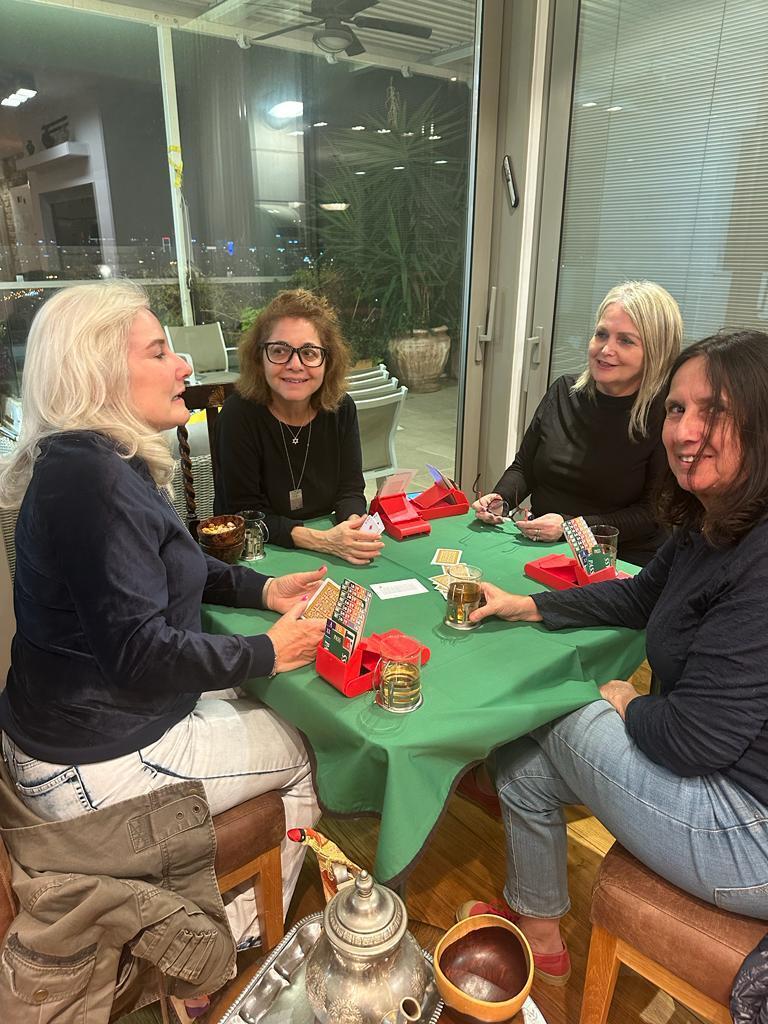
Hani Lederman, Gabi Sahar, Anat Leshman (wearing glasses) and Iris Mantel
“I remarried and saw my husband playing in a group that had existed for 50 years. I was impressed by the dedication, the thinking and the teamwork, and decided to learn. I found a club in Savyon, signed up, and for the past decade the game has been an inseparable part of my life.”
For Waldman-Leshman, the attraction lies in both memory and strategy.
“These are things that are important to preserve and develop in general, and particularly as we get older. In my case, we’re four women who have been playing together for years. It wasn’t planned by gender, it just happened that way. In the very first game, a woman sat opposite me who remains my partner to this day.”
At first they played twice a week, but the group broke apart during the COVID pandemic. Waldman-Leshman later joined a club in Kiryat Ono, continued studying and took part in lectures and games over Zoom and online until face-to-face meetings became possible again.
Bridge itself, she said, is not especially social while the cards are being played.
“In competitions you aren’t allowed to talk, and you have to concentrate. There’s no joking or small talk during the game. It has cognitive, social and competitive sides.”
After the pandemic, the four women began meeting once a week at her apartment.
“We turn the meeting into a ritual. During the game we don’t talk, in accordance with the rules, but afterward we analyze, correct and learn from one another.”
Some players, she said, are primarily interested in winning. Her motivation is different.
“I play mainly for the thinking. I love the strategy and the planning just before the first card is drawn. Sometimes you have to wait patiently until the opportunity opens up. The game also teaches the importance of teamwork.”
She continues studying and plays frequently online, although she says antisemitism has recently reached even that world.
“Online bridge games are international. We might play against someone from Finland or India, and everyone can see the names and countries of origin. Next to my name it says Israel.”
“More than once, a player has tried to kick me out of a game or written offensive comments. Not long ago, a Turkish player wrote that I was an ‘Israeli child murderer.’ It was very difficult for me to read. There were also players who defended me and asked for him to be removed from the game.”
For Waldman-Leshman, the name of the game itself has taken on added meaning.
“For me, bridge is also a metaphor. It symbolizes a bridge to the other, the possibility of finding the right path and knowing how to deal with things respectfully.”