

At 7:02 p.m. on July 11, a frantic call reached Magen David Adom’s emergency center in Jerusalem. “Hello, MDA, I’m here near the market. My friend was stabbed. Get here quickly!” a young man shouted.
Paramedics raced to a rental apartment on Shirizli Street in Jerusalem’s Nachlaot neighborhood, near the Mahane Yehuda market. Inside they found two young men: Benayahu Razi, critically wounded with a stab wound to the chest and other injuries, and his friend, Matania Hitovitz, who had made the emergency call and was himself lightly wounded. Razi was taken to Shaare Zedek Medical Center, where he was pronounced dead shortly afterward. A weekend getaway had become a murder case.
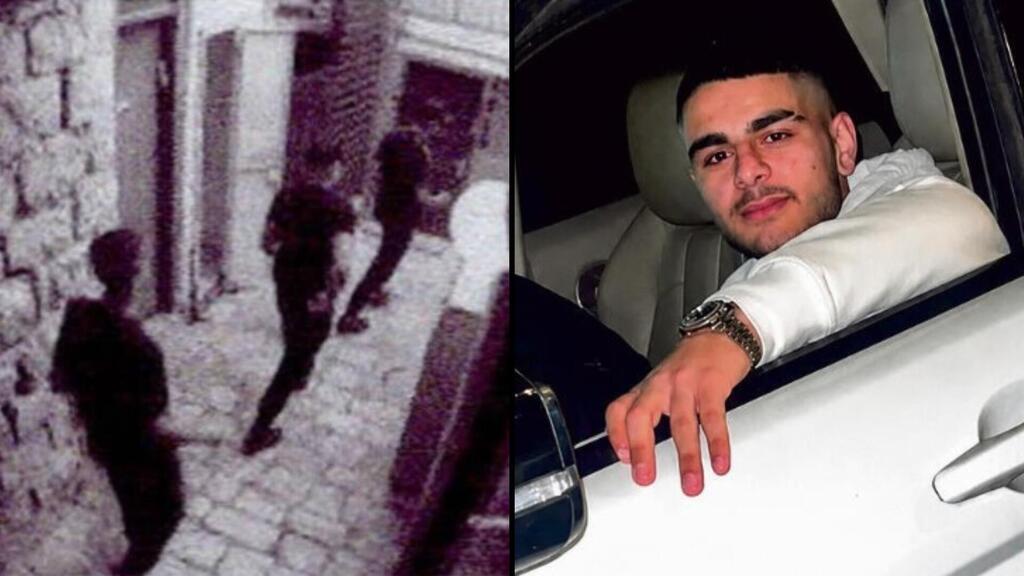
What initially looked like a fight that had spiraled out of control quickly developed into a far darker and more complicated investigation. According to the indictment, three women stood at the center of the affair: 19-year-old soldier Agam Tzarfi of Jerusalem, her 21-year-old friend Shilat Huta of Beersheba, and Linor Sasson, a Jerusalem woman recently released from prison. Newly revealed interrogation transcripts and confrontations among the suspects describe an alleged revenge mission involving armed teenagers, knives, razor blades and a meat tenderizer, followed by an unresolved question that would dominate the investigation: Who actually delivered the fatal stab wound?
The rental apartment had been rented by Tzarfi and Huta for the weekend. Razi, who had previously been in a relationship with Tzarfi, had obtained a restraining order against her months earlier, claiming she had threatened him and that men had later threatened his life. Tzarfi’s lawyers say she had also filed complaints against him alleging violence and sexual violence. Despite that history, Razi arrived at the apartment with Hitovitz after being invited by the two women. What happened next remains disputed: Tzarfi and Huta say a confrontation became violent and that they were attacked, while Hitovitz strongly denies their account.
On Saturday afternoon, the women left and were referred through a relative to Sasson, who had recently completed a 21-month prison sentence for extortion and threats. According to an appeals court ruling, Sasson and her son Rotem Hudida had operated an illegal lending business and used threats against debtors and their families to force repayment. According to the indictment in the Razi case, Tzarfi and Huta told Sasson they had been attacked at the apartment, after which four minors arrived, heard their story and joined a plan to confront Razi. Prosecutors allege the group intended to “finish him.”
The teenagers armed themselves, according to the indictment, with two knives, a collapsible metal baton, razor blades, a pointed weapon and a metal meat tenderizer. Huta then sent Hitovitz a warning telling the men to leave the apartment, while Tzarfi sent Razi a far more explicit message: “You called Shilat and Agam whores. Come see what whores do. I’ll show you how to behave with kids like you.” Razi and Hitovitz left the apartment and waited in a nearby car until Shabbat ended.
At around 6:30 p.m., Sasson drove the group back toward the apartment. Tzarfi stayed in the car with her while Huta and the teenagers got out. They spotted Razi and Hitovitz in the vehicle and all went upstairs, allegedly “to talk.” Inside, the teenagers confronted Razi over claims that he had assaulted Tzarfi. Huta opened a video call with Tzarfi, allowing her to watch from the car. At one point, one of the minors took the phone so Sasson could speak directly with Razi. He lifted his shirt and showed bite marks on his back, saying they had been caused by Tzarfi and were evidence of an intimate encounter rather than an assault. Moments later, according to prosecutors, the teenagers attacked him. Razi was stabbed in the arm and chest, Hitovitz was struck and stabbed in the hand, and the group fled.
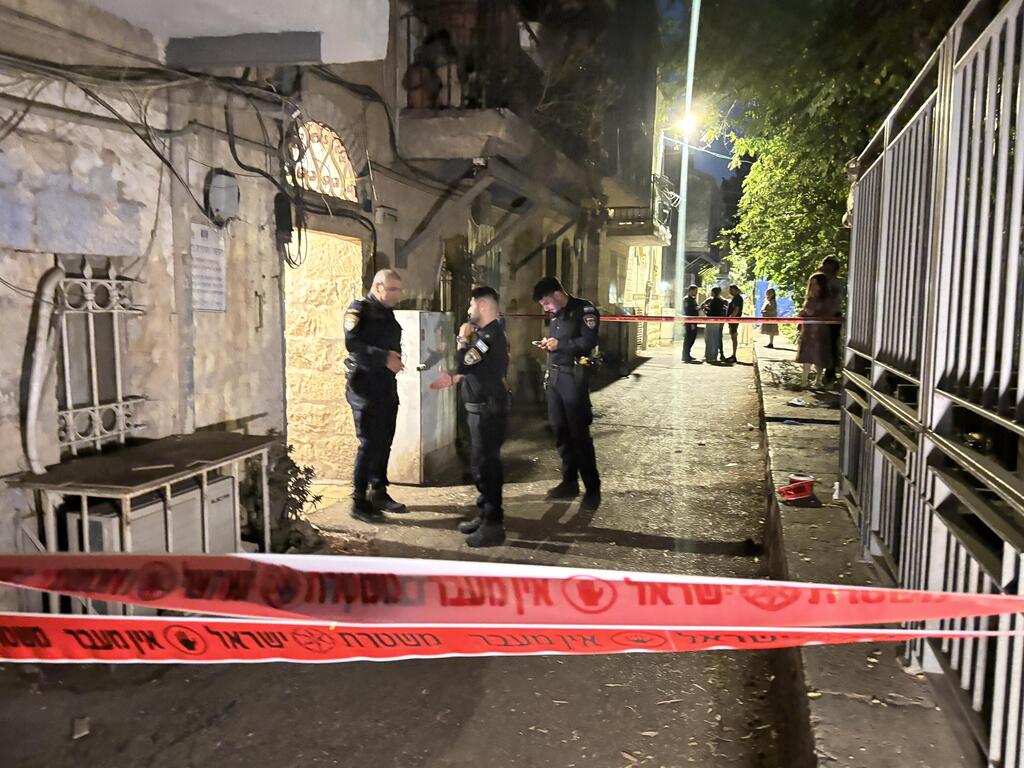
Scene of the murder
(Photo: Gil Yohanan)
Police initially treated Hitovitz as a suspect, but quickly concluded that he too had been a victim. “Matania was released the next day after it became clear that he had no connection to the act and was himself a victim who tried to save his friend,” said Chief Inspector David Temstat. Forensic teams processed the apartment, investigators reviewed surveillance footage and police used technological tools to identify those involved. “Within three hours of the incident, we had six people under arrest,” said Chief Inspector Rotem Zaken, who helped oversee the investigation. Avior Sasson, another suspect, fled and was arrested about two and a half weeks later after police took the unusual step of publicly releasing his name and photograph despite his being a minor.
Within a month, indictments were filed. Six defendants, including Tzarfi and Huta, were charged with intentional murder and aggravated intentional assault. Linor Sasson, 46, was charged with assisting after the fact and obstruction of justice. Asked who police believe actually killed Razi, Zaken said the case did not depend on identifying one person as the murderer. “There isn’t one murderer here. That’s the precedent in this case,” she said. “They are all charged. I know the role each one played in the incident.”
One of the strangest aspects of the case, according to Zaken, was how loosely connected the alleged participants were. “There is no connection between the attackers and the victim, no connection between them and the girls, and no connection between the girls and Linor Sasson,” she said. Asked why the teenagers had become involved at all, she said investigators never received a convincing answer. “I didn’t hear a single expression of sorrow or remorse from any of them.” Temstat added that what appeared to concern some of the minors most was whether they had become famous. “Do you know what interested them most? Whether they were now famous, with their names and pictures on TikTok.”
‘You didn’t come for shampoo’
A central question in the investigation was whether Tzarfi and Huta had returned to the apartment simply to retrieve belongings, as they claimed, or whether they knew a violent confrontation was coming. Police repeatedly challenged Huta’s explanation, pointing to Tzarfi’s “Come see what whores do” message, the presence of the armed teenagers and the video call from inside the apartment.
Huta insisted she had gone back only for her belongings and said she had not seen Tzarfi’s message beforehand. Investigators pressed her on why she remained in the apartment after entering and why, if she feared for her safety, she would return with a group carrying weapons simply to collect clothes and toiletries. When she said the belongings mattered because she did not work, one investigator mocked the explanation, noting that even if everything left behind was worth 100 shekels, it hardly justified returning to a place she claimed to fear. “Are your life and safety worth less than 100 shekels?” he asked. “No,” she replied.
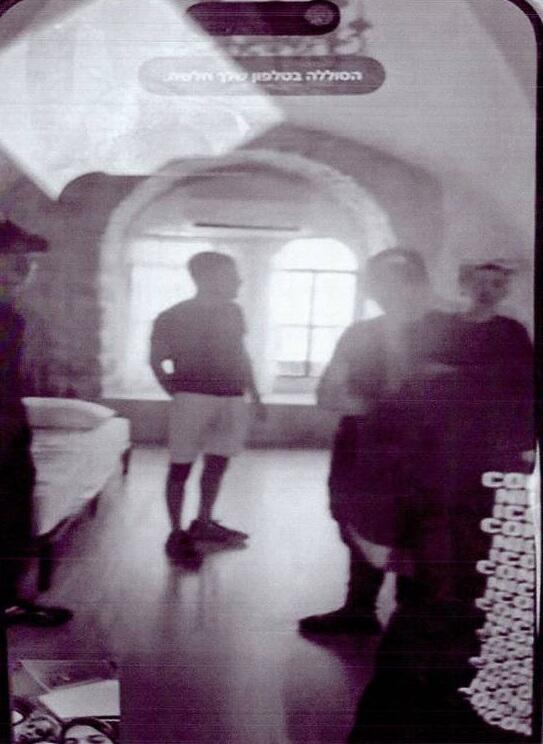
Livestream of Benayahu Razi’s murder
Tzarfi gave investigators a somewhat different account. She said Huta had gone to see whether the apartment was open, spotted Razi and Hitovitz sitting in their car, and then watched as the teenagers surrounded them and said they wanted to talk upstairs. For prosecutors, the distinction is crucial: If the women returned expecting violence rather than merely to collect their belongings, it could strengthen the murder case against them. Their lawyers dispute that interpretation.
‘I think he’s dead’
Huta told investigators that after the attack began she saw blood, panicked and ran back to Sasson’s car. The group later drove to Beit Hanina to refuel before the teenagers called Sasson and asked to be picked up. What was said after they climbed back into the car became another key part of the case.
Huta said the boys were visibly panicked. One allegedly said, “I don’t know if he’s alive,” while another said, “I think he’s dead.” According to Huta, Sasson responded: “I need to get you out of Jerusalem.” The teenagers then spoke about fleeing the city because of what they had done. When investigators asked whether she and Tzarfi therefore understood that either Razi or Hitovitz might be dead, Huta answered: “Yes, but we didn’t know which one.”
Tzarfi initially told police little had been said during the ride, but later recalled Huta returning hysterical, with blood on her phone. “She kept saying, ‘Agam, you don’t understand what happened. You don’t understand what happened,’” Tzarfi said. “I didn’t want to hear. I started shaking and crying.” She also recalled hearing someone in the car say, “I think he’s dead.”
Fear of Linor Sasson
Investigators also noticed that both women initially said relatively little about Sasson. Huta later claimed Sasson had warned them not to go to police and, if questioned, not to reveal the teenagers’ names. When told she would have to confront Sasson face to face, Huta broke down crying and told investigators: “Of course I’m afraid of Linor. I don’t know who she is or what she’s capable of.”

Shilat Huta, Linor Sasson and Agam Tzarfi
During the confrontation itself, Huta initially denied being afraid, but investigators reminded her that she had spent nearly an hour crying before Sasson entered the room. Huta then repeated her allegation that Sasson had told them not to identify the teenagers. She also claimed Sasson told one of them to change his shirt so police would not recognize him and said the boys needed to get out of Jerusalem. Tzarfi later gave a similar account, saying that after someone announced one of the victims might be dead, Sasson told a teenager to change clothes and instructed the group to leave the city. Sasson denied making the statements.
Another disputed moment involved the video call before the attack. Police confronted Sasson with the allegation that she had instructed one of the teenagers to “punish him.” Sasson denied it. Tzarfi insisted she had heard the instruction. “She told him, ‘Punish him,’” she said. Sasson reacted angrily: “Why are you lying?”
Who delivered the fatal stab?
By the final stage of the investigation, police believed they had largely reconstructed the sequence of events, but one crucial question remained unresolved: Who stabbed Razi in the chest?
That question became the focus of an intense confrontation between Tzarfi and Huta. Investigators believed Huta, who had been inside the apartment, had seen more than she was saying. Tzarfi repeatedly urged her to speak. “Tell them what happened,” she said. “They just want to know who the murderer is. You’re not guilty.”
Huta denied attacking or threatening anyone and described seeing one teenager signal to another before one of them pulled out a baton and struck Razi. She then became increasingly reluctant to continue. Investigators pressed her, while Tzarfi kept urging her to tell the truth. Huta began crying and repeatedly looked toward her friend before finally acknowledging one key detail: “I saw a spray of blood and I got scared and ran.”
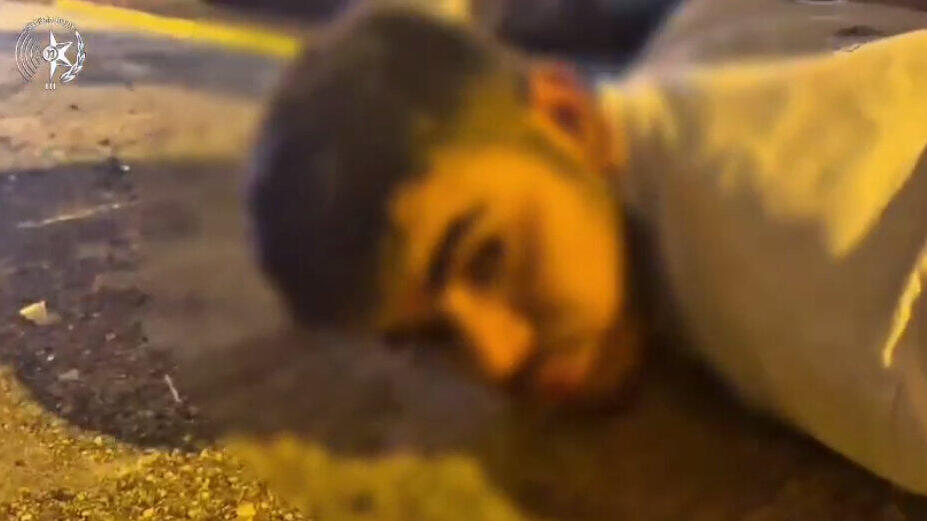
Footage of the arrest of suspect Avior Sasson
(Photo: Israel Police)
Police believed she had seen the stabbing motion itself, but Huta would not identify who had inflicted the wound. “I’m scared,” she said. Investigators ultimately failed to obtain conclusive testimony establishing which defendant delivered the fatal stab wound.
Prosecutors nevertheless charged six defendants with murder under a theory of joint responsibility. Zaken said four defendants physically attacked Razi, another entered the apartment and documented the incident, while Tzarfi remained outside in the car. All, she said, were charged in connection with the killing and the attack on Hitovitz.
Sasson was not charged with murder, but police describe her as a central figure in the events surrounding the killing. “She managed everything, drove them, brought them back, tried to disrupt the investigation, helped her son escape and threatened the girls not to talk,” Zaken said. “From our perspective, she is the central figure in this event, and she is also the person who could have prevented it.”
Defense responses
Attorneys Roy Politi and Omri Stern of the Public Defender’s Office, representing Tzarfi, said prosecutors had made “a serious mistake” by charging her with intentional murder. They said she had previously complained to police that Razi subjected her to violence and sexual violence and maintained that she returned to the apartment because she was afraid to retrieve her belongings alone. “The incident that developed in the apartment was not carried out with her participation, in her presence or under her control,” they said, adding that she did not want Razi harmed or killed and expressed deep sorrow over his death.
Attorney Amit Weizman, representing Huta, said the evidence raises serious questions both about the prosecution case and about the pressure allegedly applied during her interrogation. “Shilat is entitled to have her case decided on evidence, not headlines,” he said.
Attorney Shalom Ben Shabbat, representing Sasson, said the indictment showed his client had no prior knowledge of the alleged criminal plan and disputed allegations that she helped others escape. Attorneys Moshe Yohai and Amichai Yamin, representing one of the minors, said their client told police he had acted in self-defense.