


“In the end, Hamas caused problems—but also brought us together,” say Eliyahu Libman and Yizhar Lifshitz with a touch of humor. Their friendship runs deep—well beyond the shared fate that has bound them since October 7. Together, they hope to send a message about the need for unity and healing across the divisions in Israeli society, even after the war ends.
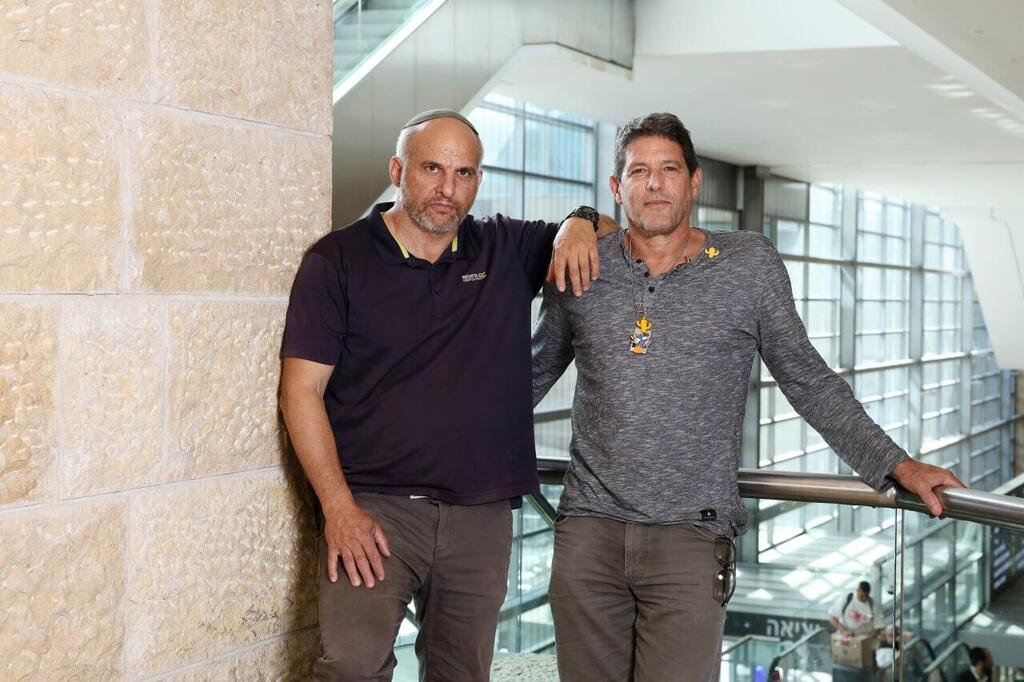
On October 7, Yocheved and Oded Lifshitz were kidnapped from Nir Oz, the kibbutz where Yizhar grew up. Dozens from the community were also abducted or murdered. Yocheved returned from captivity; Oded was murdered by Hamas, and his body was later returned to Israel as part of a deal. Eliakim Libman, the son of Eliyahu, had worked as a security guard at the Nova music festival and was initially declared a hostage. His body was later found in Israel. A few days later, the settler from Kiryat Arba and the kibbutznik from Nir Oz met for the first time.
“Just a few days after Simchat Torah, there was a meeting between all the hostage families and the Cabinet,” recalls Libman. “The atmosphere was charged and tense. When it was my turn to speak, I gave a general thank-you to the security forces—and immediately got shouted at. People accused me of being a government plant, or of having sacrificed my son. Then Yizhar, this angel, came over to me and said, ‘You have just as much right to speak as any other hostage family, and I’ll do everything to make sure you can say what you think—even if we don’t agree.’ Right then, I knew I had a friend for life. He was a light in the deep darkness we were all in.”
“Eliyahu came from Kiryat Arba, and in the hostage forum, religious families were in the minority,” says Lifshitz. “There were real differences in opinion and outlook. At first, we didn’t fully grasp that we were in the same crisis and wanted the same outcome. The massacre followed 15 years of my kibbutz living under rocket fire, COVID, endless election cycles, and intense social protests. Those years sharpened the divides—messianic types, leftists, this group and that group. But we got a lesson in perspective and realized that, in the end, we’re in the same boat, sharing the same pain.”
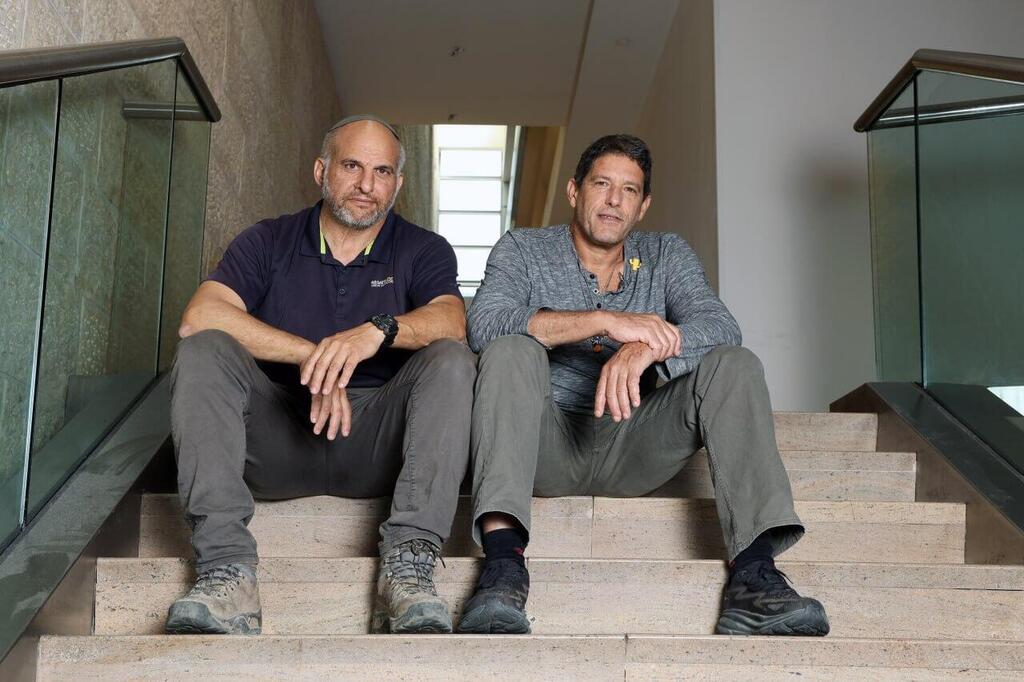
(Photo: Dana Koppel)
The bond between the Libman and Lifshitz families only deepened. “I came to Nir Oz, attended Oded’s funeral, and comforted Yocheved,” says Libman. “Yizhar came to Eliakim’s memorial, and I invited him to speak. He met people from the Hebron community. Real, meaningful connections formed. Even people who don’t share the same worldview can love, respect, and appreciate each other without blurring their differences. We attend each other’s family celebrations, know each other’s children, hike together. Even if we don’t speak daily, there’s something deeply rooted in the soul that connects us.”
Get the Ynetnews app on your smartphone: Google Play: https://bit.ly/4eJ37pE | Apple App Store: https://bit.ly/3ZL7iNv
“The history is not on our side,” says Lifshitz, reflecting on the current situation. “The First and Second Temples were destroyed. I hope we learn from those events. We need to build frameworks so that, no matter what we argue about, some lines can’t be crossed. Eliyahu doesn’t expect me to become an ideologue of Kiryat Arba, and I don’t expect him to join Hashomer Hatzair ("The Young Guardian"). Each of us must take personal responsibility for what this experience has taught us—otherwise, the State of Israel won’t survive.”
"I’ll do everything to make sure you can say what you think—even if we don’t agree"
Even when they disagree—on ending the war, for example—Eliyahu believes Hamas must be crushed without compromise to prevent future atrocities, while Yizhar believes that if war can be halted in Lebanon and Iran, it can also be stopped in Gaza—they remain clear that both care deeply about the people of Israel.
“Today we say the Second Temple was destroyed because of baseless hatred,” says Libman. “But that’s hindsight—2,000 years later. At the time, people didn’t think it was baseless. Everyone believed they were right. There’s a rooftop in Jerusalem where you can see both the Temple Mount and Mount Herzl. That view helps you understand: our enemies don’t distinguish between Yizhar and his worldview, or Eliyahu and his worldview. Everyone must speak their mind and live by their values—but never out of hatred or contempt. That’s the story of our people.”