


For years, Danielle Abraham worked to bring Israel's agricultural expertise and innovation to countries struggling with water shortages, food insecurity and harsh climate conditions. After October 7, that mission took a new direction. Instead of taking Israeli expertise abroad, she sought to bring it home and put it to work for farmers whose livelihoods had been devastated.
Just days after the Hamas attack, Abraham launched ReGrow Israel, an initiative aimed at rebuilding farms and agricultural infrastructure in communities near the Gaza border. Initially, she envisioned it as a consulting service for farmers, with a team of experts assessing their needs and developing long-term recovery plans. But the reality on the ground was far more urgent. Farmers had been left without tractors, equipment or the infrastructure needed to resume operations. Before planning for the years ahead, they needed help getting their farms running again.
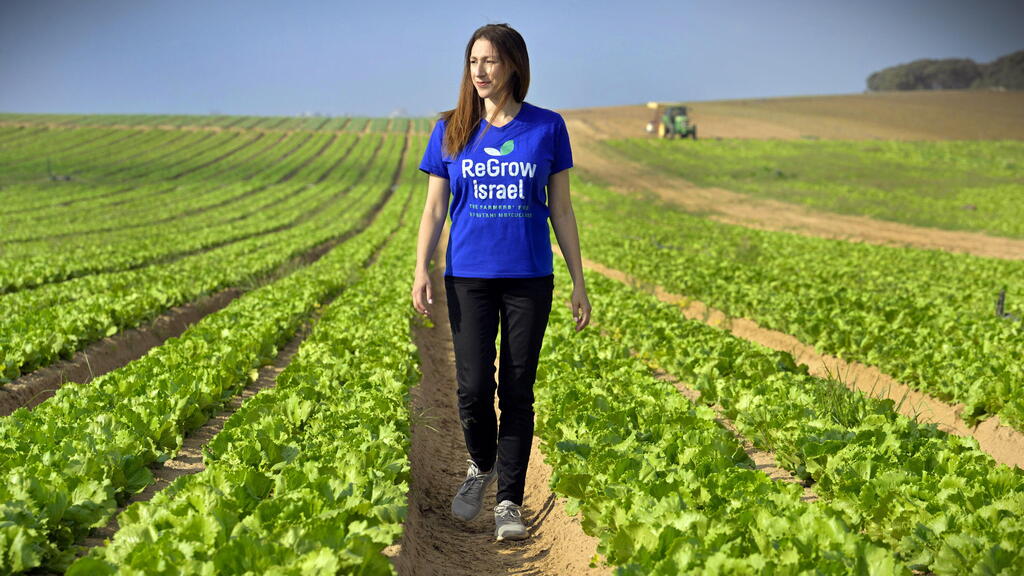
What began as an emergency response in southern Israel has since expanded to farms and communities affected by the war in the north. The initiative supports farmers by providing equipment, restoring infrastructure and bringing in professional expertise and technology, while also working to strengthen Israeli agriculture over the long term.
For this work, Abraham will receive the Nefesh B'Nefesh Sylvan Adams Bonei Zion Prize at a ceremony this coming Sunday, marking Aliyah Day. The event will be broadcast live on ynet. Now in its 12th year, the award recognizes immigrants from English-speaking countries who have made exceptional contributions to Israeli society across a range of fields. Abraham was selected in the Global Impact category.
Abraham's journey began more than 15 years ago in a lecture hall in London. An Oxford University music graduate working at Britain's Home Office, she was 23 when she attended a lecture by Israeli agronomist Yitzhak Abt. Abt, who had helped establish Israel's international agricultural assistance program through MASHAV, the Foreign Ministry's Agency for International Development Cooperation, spoke about immigrating to Israel from South Africa and his work advancing agriculture in Israel and developing countries.
When Abraham returned home from the lecture, she told her family: "When I grow up, I want to be him." The encounter changed the course of her life. Abraham left her job, sold her car and immigrated to Israel in 2010.
Israel was not entirely unfamiliar to her. She had visited during summer vacations as a child and had relatives living in the country. She grew up in a Zionist household, was active in a Zionist youth movement and had visited Israel at 16. At Oxford, she led a Jewish student society and defended Israel in public debates. Still, leaving a sought-after job in London to begin life as a new immigrant in Israel was a leap into the unknown.
'Just for a year'
When Abraham accepted a position at Israel's Foreign Ministry, she had not yet fully committed to building her life in the country. She told everyone back home that she was coming for just one year. "Only after six months did I start saying I was thinking about making aliyah," she recalled. "My family and friends said, 'We knew from the moment you got on the plane.'"
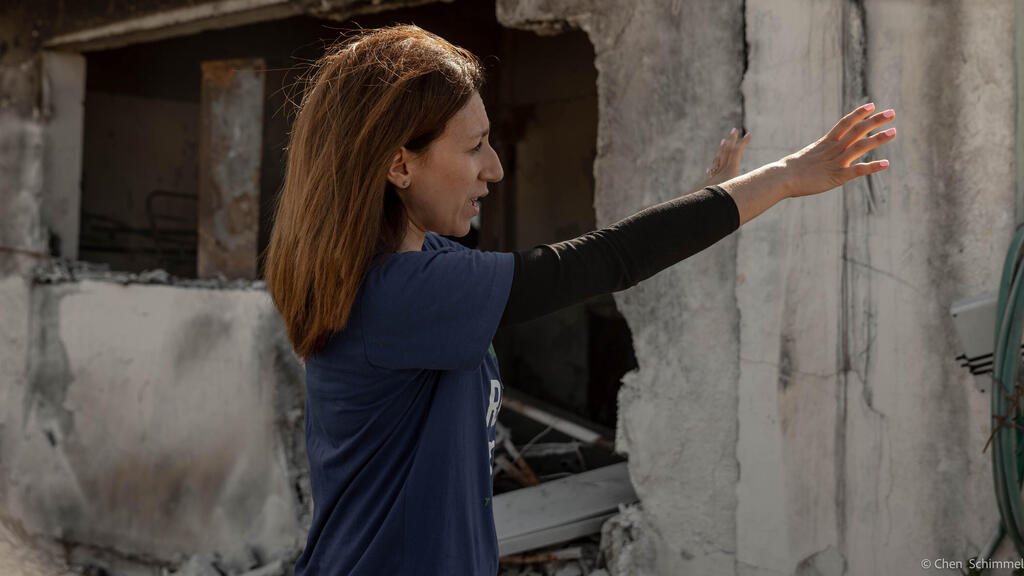
Danielle Abraham during a tour of the Gaza border communities
(Photo: Chen G Schimmel)
Her parents, she said, never told her what to do and supported whatever decision she made. But there was one moment when they realized she was not coming back. "When I bought a piano for my home, they said, 'Now that you have that, you're not coming back.'"
One of her first challenges in Israel was the language. She would write down unfamiliar words she heard and send text messages to a friend asking what they meant. On weekends, she went to the beach with vocabulary lists from her Hebrew classes and memorized them. She also taped the lists to cabinets in her office. "My vocabulary was mostly agriculture and developing countries," she recalled. "I couldn't order food in a restaurant, but I could talk about irrigation."
At the Foreign Ministry, Abraham joined MASHAV and later served as a senior policy adviser, representing Israel at the United Nations, the Organization for Economic Cooperation and Development (OECD) and the German Development Bank. In many ways, she had fulfilled the ambition sparked by Abt's lecture: using Israeli expertise to solve real-world problems around the globe.
In 2017, she began leading Volcani International Partnerships, an organization that draws on Israeli agricultural knowledge and innovation to address challenges such as food security, water scarcity and farming in difficult climate conditions. Agriculture, she explained, is one of the fields in which Israel is a world leader, combining the Zionist vision with practical benefits.
Bringing the expertise home
After October 7, Abraham decided to use the experience, experts and international connections she had accumulated to help Israeli farmers. "When the extent of the destruction in the Gaza border communities became clear, I saw that some countries facing similar situations turn to outside assistance," she said. "I told everyone, 'We have everything right here: researchers, agronomists, innovation and high-tech. We just need to bring it all together.'"
ReGrow Israel began by providing emergency assistance to farmers in communities near Gaza, including replacing agricultural equipment and repairing damaged infrastructure. The initiative later expanded to farms and communities affected by the war in northern Israel.
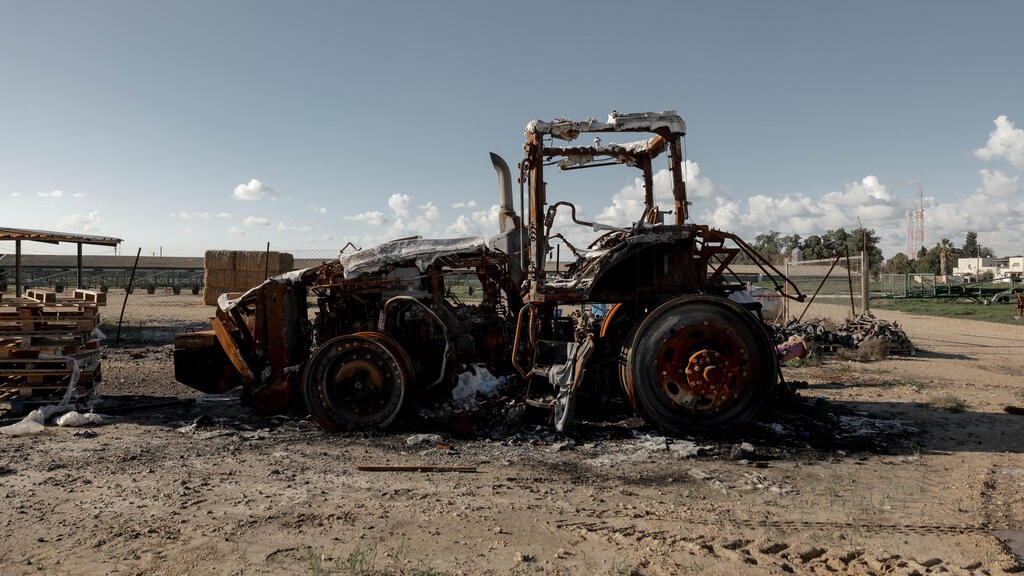
A burned-out tractor at Kibbutz Nahal Oz
(Photo: Chen G Schimmel)
Since its establishment, it has raised tens of millions of dollars to help rebuild Israeli agriculture. But Abraham said the goal was not simply to repair what was destroyed. She wanted to use the recovery process to build a stronger, more advanced and more resilient agricultural sector.
For Abraham, agriculture is more than an economic industry. It is closely tied to Israel's food security, the livelihoods of residents in outlying regions and the ability to sustain communities along the country's borders. "If agriculture isn't strong there, we won't have communities on the border," she said. Yet she believes Israel still does not sufficiently recognize agriculture as a strategic asset. "I still don't see enough effort being made to use it to strengthen Israel, both at home and abroad."
Despite everything October 7 changed in her life and work, Abraham has no doubts about her decision to immigrate. "Of course," she replied when asked whether she would choose Israel again. "You have to be a little crazy to live here, but you have to believe."
Looking back at the young woman who arrived alone in 2010, barely speaking Hebrew, Abraham sees a quality she is still trying to preserve. "I see a brave young woman with a kind of naivety that's important today. Everything was possible. I wasn't willing to take no for an answer," she said. "That's the spirit I try to hold on to, even as reality changes. We need people with big visions and hope, who make decisions that aren't crazy but are a little courageous, and who start with small things."
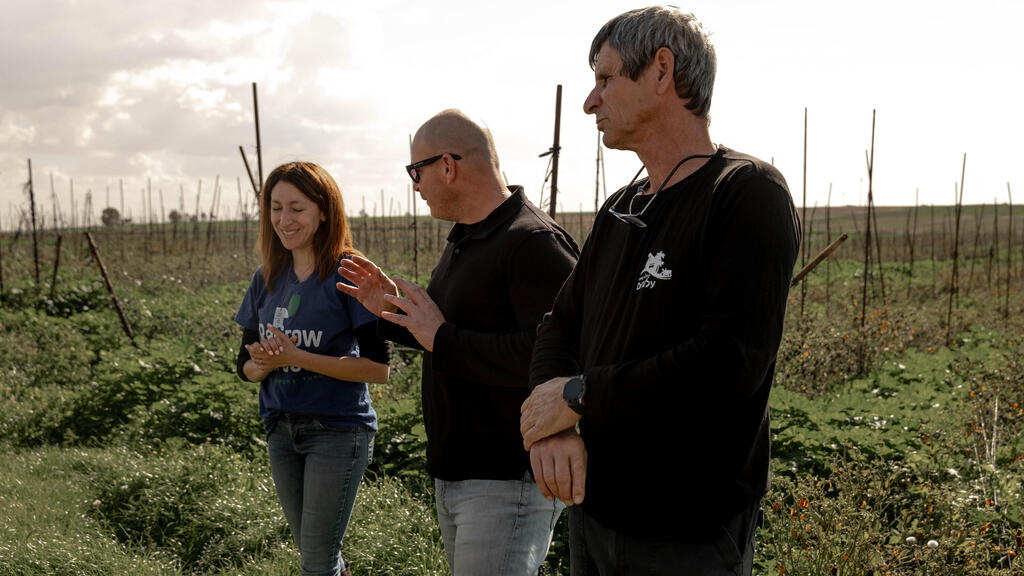
Danielle Abraham touring Kibbutz Alumim near Gaza with local farmers
(Photo: Chen G Schimmel)
Alongside Abraham, several other immigrants will receive the Nefesh B'Nefesh Sylvan Adams Bonei Zion Prize. Naomi Stuchiner, founder of Beit Issie Shapiro, will receive the award in the Community and Non-Profit category; Dr. Philip Klipstein, a senior researcher in science and technology, will be honored in the Science and Medicine category; Rabbanit Chana Henkin, founder and dean of Nishmat, the Jeanie Schottenstein Center for Advanced Torah Study for Women, will receive the Education award; and Ami Baran, president of the Israel Athletics Association and CEO of the Israel Softball Association, will be recognized in the Culture, Arts and Sports category.
Professor Marta Weinstock-Rosin, a neuropharmacologist who developed Exelon, a drug used to treat Alzheimer's disease, will receive the Lifetime Achievement Award. Barak Swarttz, a content creator and founder of GRIT for Good, will receive the Young Leadership Award, while former ambassador Ron Dermer, who served as Israel's ambassador to the United States and strategic affairs minister, will receive a special recognition award.
For Abraham, the honor provides a platform not only for her work but also for Israeli agriculture and for immigrants seeking to find their place in the country. She said she still feels like "a little girl from London who made a small effort." To her, the message behind the award is simple: "You can come here and make a contribution, whether big or small."
In partnership with Nefesh B’Nefesh