

In exactly one month, Sami, a pseudonym, will leave this place. He will pack his clothes and the few belongings he owns, clearing his bed for the next released prisoner. Goodbyes are hard for him. That is what happens when you spend your entire childhood moving between foster families. But this goodbye, he hopes to handle properly. Gradually. Without slamming the door.
The separation will be difficult, but not absolute. He will continue coming to addiction recovery groups and therapy sessions. If needed, he knows he can return beyond that as well.
“I know I have a home here with people who love me and whom I love,” he says.
For Sami, that is far from obvious. Until a few years ago, he thought his life was heading in only one direction: from prison term to prison term, from rehab to addiction and back again.
“I come entirely from a world of schemes and intrigue,” Sami says. “So you are always trying to run away from the truth, still thinking like a criminal.”
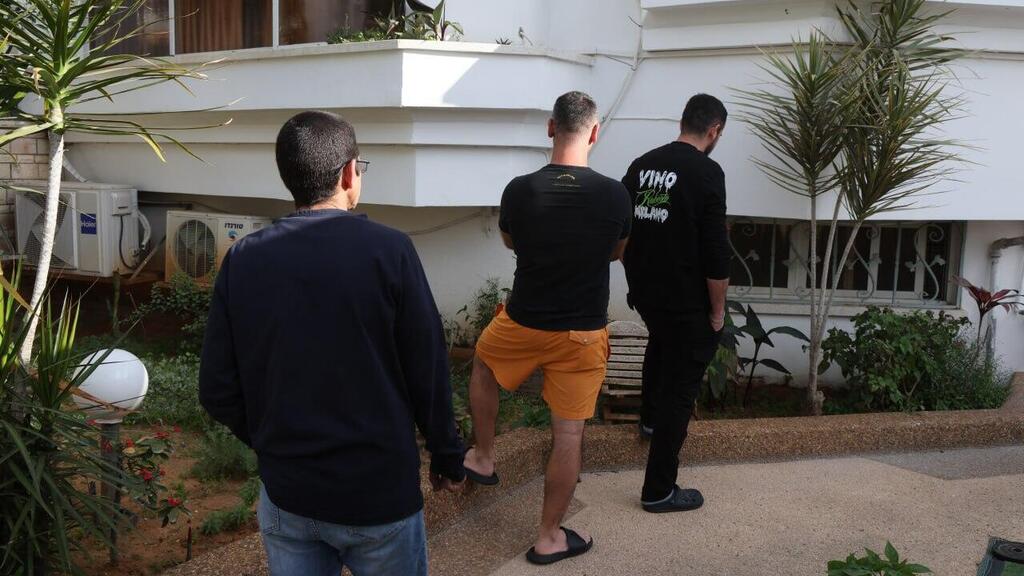
Sami has been here for two years, at “Maftehot,” or “Keys,” a one-of-a-kind residential framework for released prisoners convicted of domestic violence offenses. From the outside, it looks like just another villa in an old neighborhood in central Israel. Inside, a real drama is unfolding.
To describe what happens here, one can begin with the emotions board hanging in the living room. “How do you feel today?” the board asks, offering dozens of possible answers. Not just “joy” and “sadness,” but also resentment, shame, loneliness, embarrassment and disappointment. The ability to talk about emotions and describe them is an important part of the process the residents undergo here.
There are major differences among them: Jews and Arabs, doctors and civil servants, alongside men who did not complete 12 years of schooling. But they all share one thing: They served time in prison for serious violent offenses against their partners. Assault. Attempted murder. Murder.
Every gesture is examined
Sami arrived here after a long prison sentence, after severely assaulting his partner. She survived and filed a police complaint. He was left completely isolated. At the start of his prison term, which was not his first, he had previously served time for drug offenses; he thought that was how things would continue.
“I believed that was my way of life, and that was it. I had no dreams or aspirations.”
As his release date approached, Sami was told that the condition for early release was a period at Maftehot.
“I wanted to get out of prison, so I agreed,” he says.
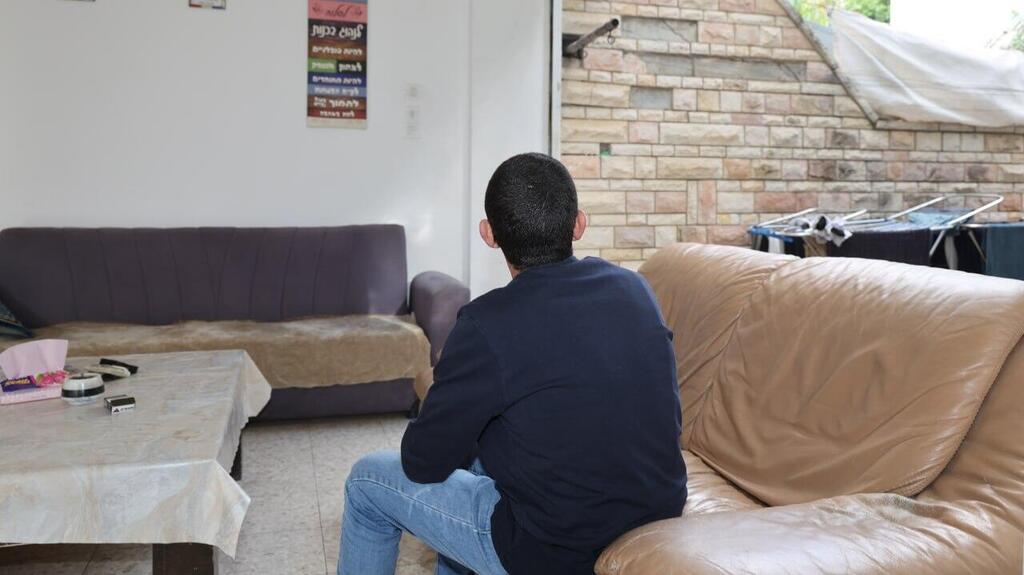
'I come entirely from a world of schemes and intrigue,' Sami says. 'So you are always trying to run away from the truth, thinking like a criminal'
(Photo: Yariv Katz)
During his first year here, he admits, he did not truly give himself over to treatment.
“I come entirely from a world of schemes, concealment, intrigue and plots,” he says. “So you are always trying to run away from the truth. You still think like a criminal. It is hard to start really talking about things and bringing them out.”
Hila Levy, the director of the center, asks that no one be under any illusions or sell too rosy a picture. Change is extremely difficult. And in any case, “change” is a slippery concept.
“As with addicts, who do not stop being addicts even when they are in recovery, the goal is not for them to stop being violent men,” Levy says.
Patterns are hard to change, and the foundations from which the violence grew are even harder to change. But what they learn here, consistently and intensively, is to identify the patterns, recognize them and stop them in time.
“Violence is like a mountain,” Levy says, using an image common in the hostel. “They reached the summit of the mountain, and that is the offense that sent them to prison. The goal here is to learn to identify the violence before the climb even begins, not when they reach the summit.”
To do that, they learn to break violence down into its smallest particles.
“We look at it under a microscope,” Levy explains. “What kind of look am I giving? Do I hang up the phone in the middle of a call with my wife because she said something that annoyed me? Am I throwing out an implied threat?”
Every gesture is examined and discussed.
The daily schedule is intense, from 6 a.m. until close to midnight. In between, the men go out to work outside the hostel. That, too, is part of the rehabilitation.
“This is a population that often defines its masculine self-worth by how much cash is in its pocket,” Levy explains. “Some patients carry thousands of shekels in their pocket just to feel like men. That money gets burned very quickly, and then the child needs money for a school trip, and there is no money left. Part of the process is learning how to manage a budget, think ahead and take responsibility.”
There is also the matter of authority: accepting instructions from the staff, which is distinctly female, and carrying out chores such as cooking and washing dishes.
“These are things that in their previous lives someone else would have done for them: their wife, their mother, their sister. Here they start learning what it means to maintain a home, prepare dinner, clear dishes,” Levy adds.
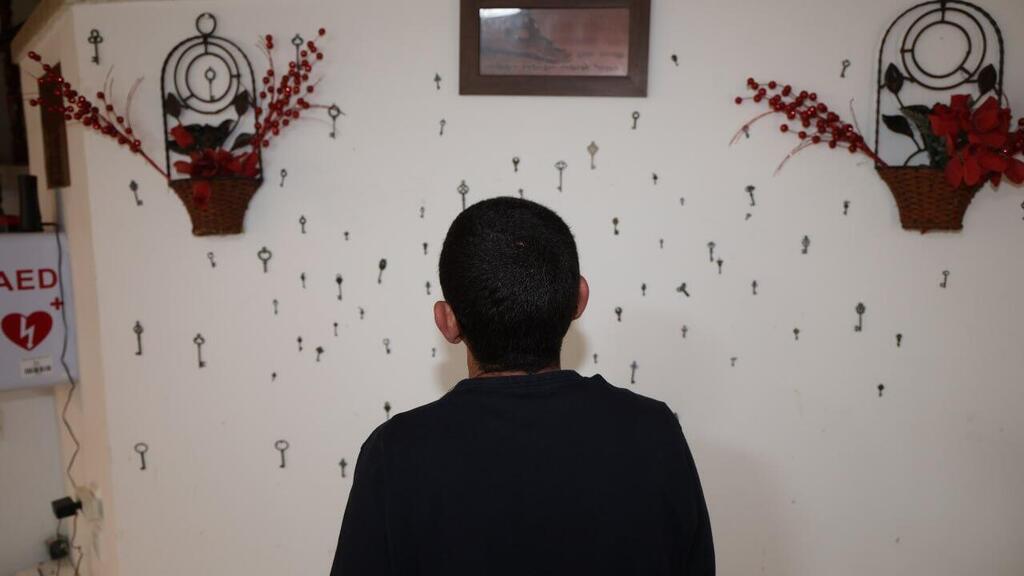
'They gave me the feeling that they understood me. That is something I had never experienced'
(Photo: Yariv Katz)
The staff, including social workers, the house mother and night counselors, hold a complex position. On the one hand, this is the place where residents are told they can, and are expected to, share everything, including the darkest and most difficult thoughts.
“I always thought that if people knew what was going on inside my head, I would sit in prison for the rest of my life,” Sami says. “In this house, they allowed me to share and gave me the feeling that they understood me. That is something I had never experienced.”
On the other hand, there is an uncompromising demand: Tell the truth, hide nothing and, above all, deal honestly and soberly with the offense.
“We get angry at the patients here. We reflect back to them that what they did was very, very problematic,” Levy says.
Sami says this process is harder than prison.
“Here, they put a mirror in your face. Suddenly, you have to understand who you are, what your patterns are. It is hard.”
A necessary stage on the path to rehabilitation is confronting the past. As part of treatment, residents are required to recount in precise detail what they did. This often comes after many years of denial.
“We had a resident here who murdered his first wife, and after his release from prison, he was here in treatment with his new partner,” Levy says. “At first, she did not even know he had committed that offense, because for years he denied it and told her he had been framed. After the work here, he decided to tell her. The processes here are very deep.”
“They learned violence at home,” Levy says. “The repair for that comes first of all to their wife, to their children.”
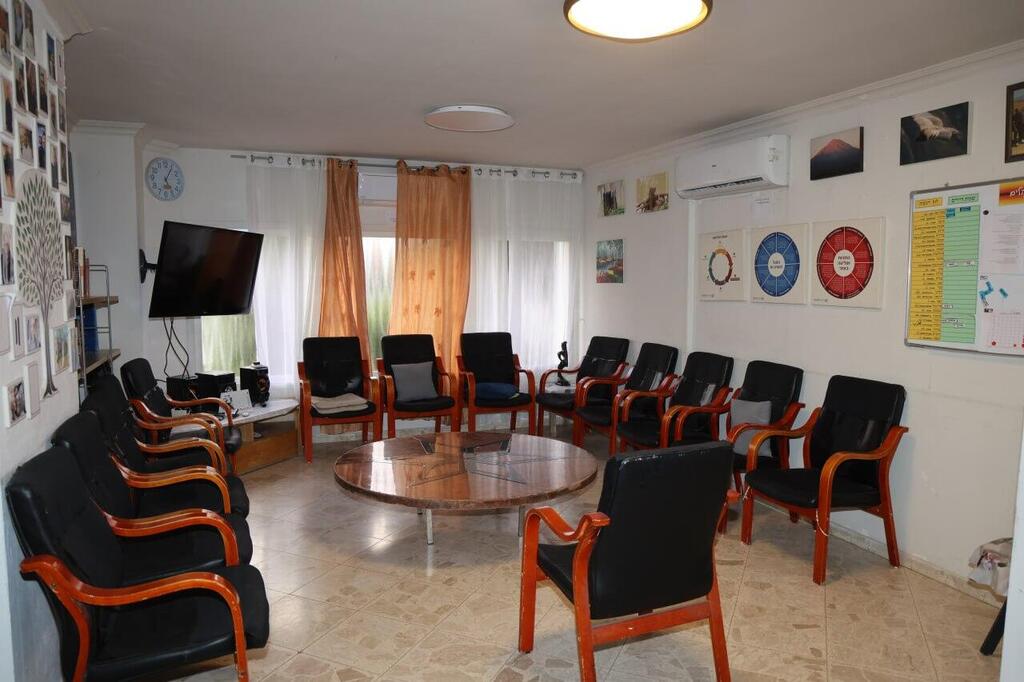
Residents are expected to share everything, down to the smallest detail, including the terrible things they did
(Photo: Yariv Katz)
‘No one really rots in prison. Eventually, everyone gets out’
Maftehot is one of nine frameworks operated by the Prisoner Rehabilitation Authority, an independent body under the Welfare Ministry responsible for rehabilitating prisoners during and after their incarceration. Prisoners who come for treatment have been released on parole before the end of their sentences, after a parole board determined they met the criteria and after they expressed a desire for rehabilitation.
Like internal change, the word “desire” is also slippery.
“We don’t care if they come only because they want early release. The main thing is that they are here, and we work with them,” Levy says.
Each year, about 6,000 prisoners are released from prison in Israel. About one-third of them choose not to appear before a parole board and prefer to serve their full sentence.
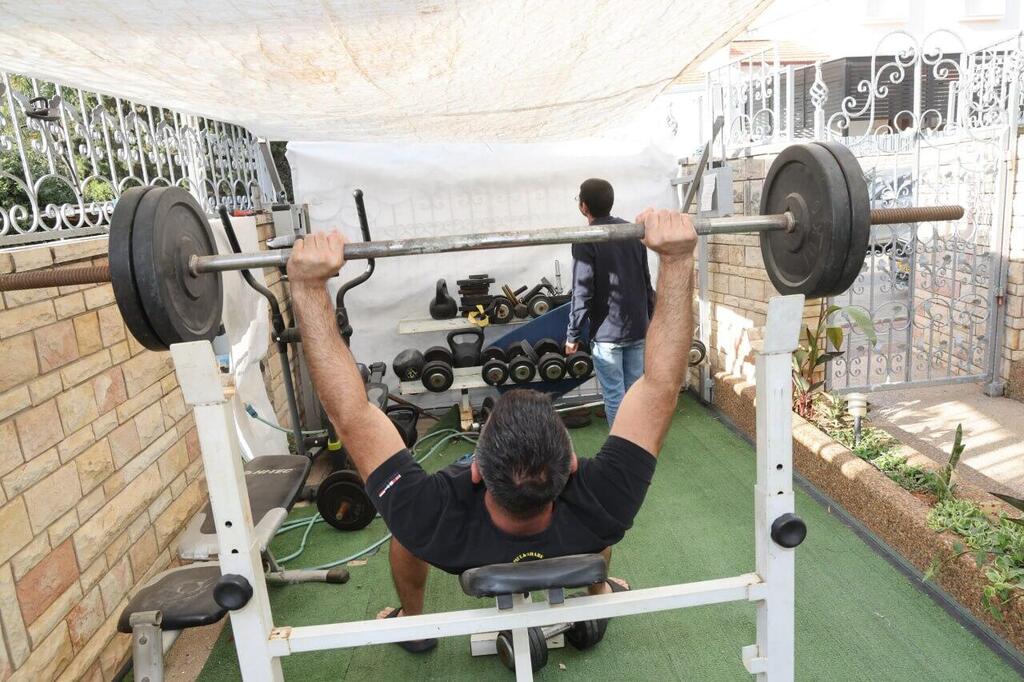
Many prisoners struggle to return to society. In professional terms, this is called 'the additional imprisonment'
(Photo: Yariv Katz)
“They are not interested in rehabilitation, and they do not want contact with us,” says Moshe Shukron, director-general of the Prisoner Rehabilitation Authority.
The remaining two-thirds will meet a representative of the authority while still in prison. Of those, about 45% will be found suitable for rehabilitation and will receive the authority’s recommendation for early release, subject to participation in one of the rehabilitation programs. The data show that those who take part in such a program have a better chance of reintegrating into society and avoiding another prison term.
“There is a certain public perception that a person was in prison, and after he gets out everything is fine because he served his punishment,” says Uri Schechter, director of residential frameworks at the Prisoner Rehabilitation Authority. “But the truth is that it is very hard to return to society afterward. Many are released with heavy debts that continued to grow during their imprisonment, and there are other fears: Who will hire me? What partner will want me?”
In professional language, this is called “the additional imprisonment,” the one not imposed by the court, but by society, which is not quick to take released prisoners back in. From there, the road back to crime and prison is short.
“As a society, we have a duty to create responses to this,” Schechter says.
But space in rehabilitation hostels is limited, and the range of programs does not suit everyone. That means there are prisoners whom the committee has found suitable for early release, but who remain behind bars until a place is found for them in a rehabilitation program. This is a deeply painful issue for the authority.
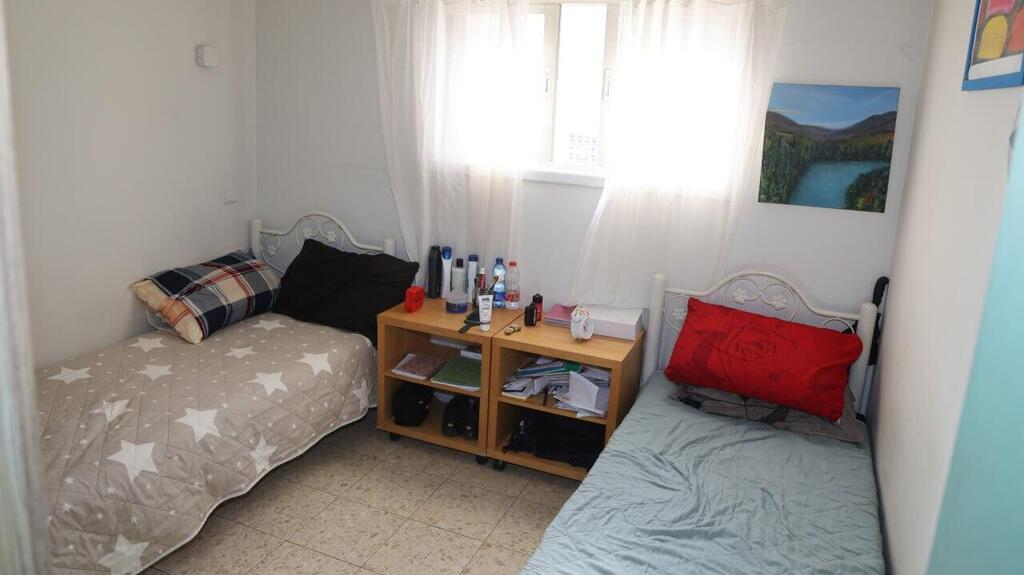
The bedrooms at the hostel
(Photo: Yariv Katz)
As the current budget was being formulated, the Prisoner Rehabilitation Authority had hoped for an additional 8 million shekels to expand the range of rehabilitation hostels and provide incentives to attract social workers, because the authority is facing severe difficulty filling treatment positions.
But in the days before the state budget was approved, in the midst of Operation Roaring Lion, the welfare budget as a whole suffered a severe blow. The authority, whose total budget stands at about 80 million shekels, was left especially damaged, with almost no budget increase compared with previous years.
Society as a whole pays the price for insufficient rehabilitation.
“It says something about priorities,” Shukron says. “The cost of keeping a prisoner in prison is almost a quarter of a million shekels a year: food, electricity, facilities, guards.”
Added to that are the collateral costs of crime, including care for victims and the money the state loses when prisoners are outside the workforce.
“With us, the cost of treating released prisoners is less than a quarter of that,” he adds.
Shukron is clear-eyed. He understands that today, prisoner rehabilitation is not at the top of Israel’s national agenda, to put it mildly.
“We are all rolling through the ongoing trauma of the war and October 7, on top of all the other troubles. I hope that in the coming years, the situation improves.”
Beyond the economic and social cost of insufficient prisoner rehabilitation, rehabilitating men in the cycle of violence is, first and foremost, a direct benefit to partners and children.
“No one really rots in prison. Eventually, everyone gets out,” Schechter says. “The question is how they get out.”
Very often, even those who have committed the worst acts enter new relationships, which without treatment, can again fall into a destructive cycle of violence. Violence that began in the homes where the violent men themselves grew up.
“There is intergenerational transmission,” Levy says. “They learned violence at home. The repair for that comes first of all to their wife, to their children.”
About 300 women were murdered in a decade
Israel’s prisons hold about 23,000 inmates: 13,000 criminal prisoners and about 10,000 security prisoners. About 6,000 prisoners are released each year, including around 4,000 monitored by the Prisoner Rehabilitation Authority.
The phenomena of domestic violence and violence against women have grown in recent years, with 2025 standing out for the worse. According to data from the Michal Sela Forum, 18 women, one man and one child were murdered in 2020; 18 women were murdered in 2021; 16 women and one child were murdered in 2022; 22 women, two children and one man were murdered in 2023; 17 women and one child were murdered in 2024; last year, 31 women and three children were murdered; and since the beginning of 2026, six women and one man have already been murdered.
According to data from the Knesset Research and Information Center, about 300 women have been murdered over the past decade. About half of the solved murders were committed by the victim’s partner, about one-third by another family member, and about one-fifth by a suspect who was not a family member. About 52% of the murdered women were Arab, about 42% were Jewish, and the rest were of other backgrounds. About 36% of the women murdered had filed a domestic violence complaint with police before the murder.
Murder is only the tip of the iceberg. A comprehensive survey conducted by the Welfare Ministry together with the Red Lines initiative to examine the scope of domestic violence in Israel found that nearly 10% of men and women had been victims of intimate partner violence, physical or nonphysical, during their lives. Women, however, are at far greater risk of severe physical violence.