


Earlier this week, a Chinese company announced that it had received an order to deploy hundreds of robots at the border crossing between China and Vietnam. The humanlike robots will patrol the crossing, oversee the movement of goods and people, and identify attempts at smuggling or infiltration. What will happen if they encounter criminals can only be guessed. From there to sending an army of robots onto the battlefield, the distance is no longer great.
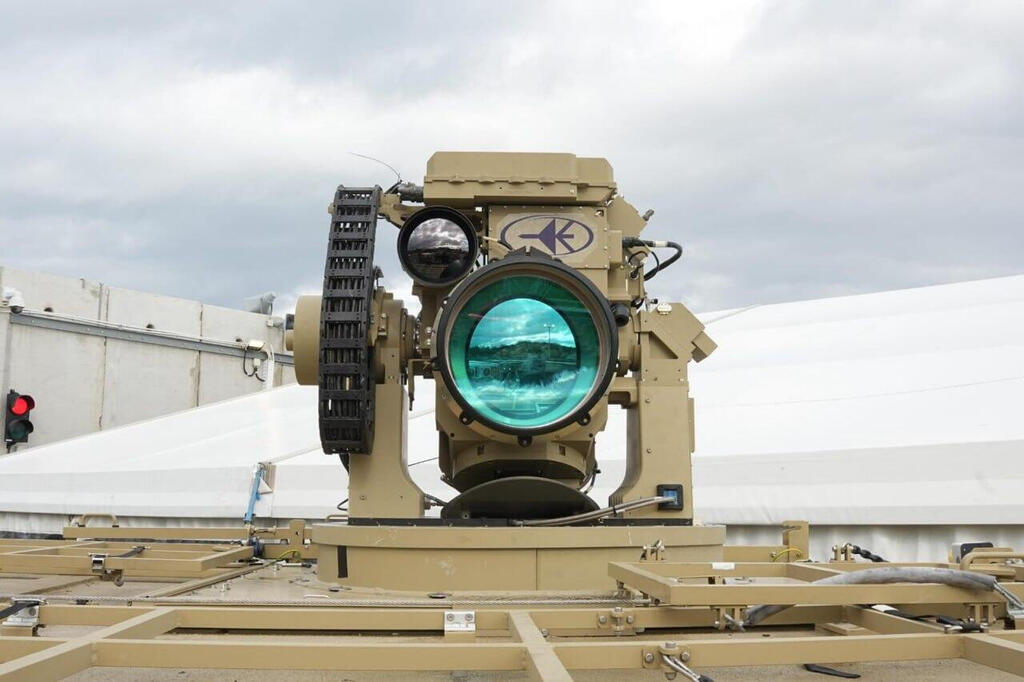
The future battlefield will be fundamentally different from the one we have known. It will feature numerous autonomous systems on land, in the air and at sea, perhaps even walking. Weapons will increasingly be based on directed energy. The Iron Beam laser defense system delivered to the Israel Defense Forces last week is only an initial taste. Artificial intelligence will be embedded everywhere, in command systems, in weapons platforms and on every soldier. Future wars will be decided by the depth of technology each side possesses.
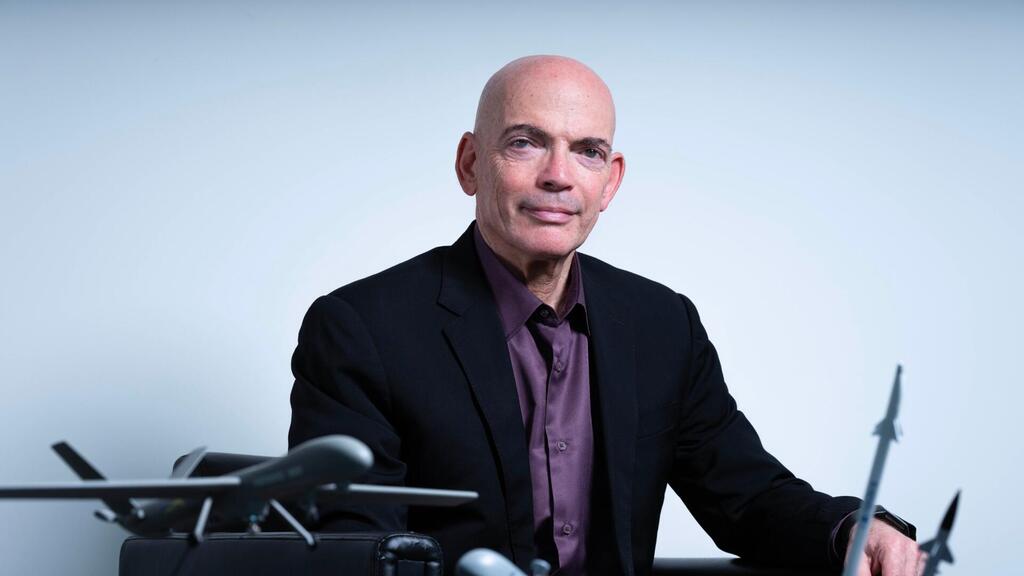
Israel has a technologically advanced military, a robust defense industry and a growing ecosystem of defense startups. Its military technologies are tested in combat, giving them a clear advantage over competitors. This is a vast system of companies, military units, scientists, engineers and officers. At its center stands one man: Dr. Daniel Gold, head of the Defense Ministry’s Directorate of Defense Research and Development, known by its Hebrew acronym, MAFAT. Israel’s technological military superiority is, in practice, entrusted to his hands.
That is a great deal of responsibility for one person. A wrong decision could lead to defeat on the battlefield. But Gold passed his defining test long ago. He pushed forcefully, and against strong opposition, for the development of the Iron Dome missile defense system. Few systems have proven themselves as decisively. Since then, he has faced numerous decision points in which his judgment led to choosing one technology and rejecting another. The Iron Beam laser system delivered to the IDF last week is another of those decisions. And, as he puts it, several more weapons that may one day surprise everyone are already in the pipeline.
Another striking fact is the cost. Developing Israel’s most advanced defense technologies far exceeds the funding provided by the state. In practice, the government covers only about half, or less, of development and testing costs. Since taking office, Gold has led a strategy of sharing development costs with external partners, ranging from defense industries and civilian venture capital funds to friendly foreign governments that finance large portions of Israel’s research and development budgets. Without this approach, Israel might have been forced to settle for far weaker technological capabilities.
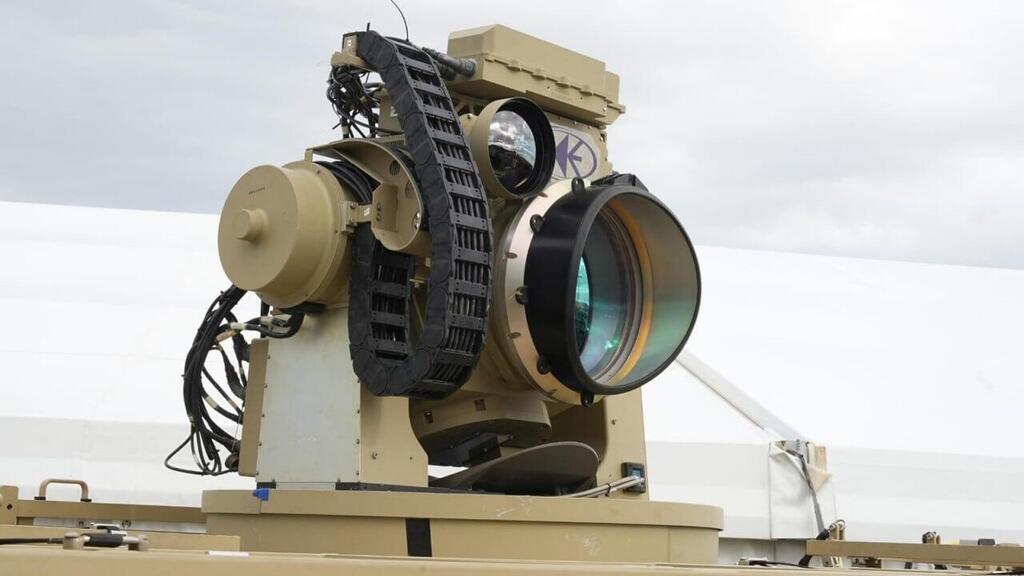
The Iron Beam
(Photo: Defense Ministry)
The Iranian threat: ‘We are preparing all the time’
Tensions with Iran escalated this week amid statements by Prime Minister Benjamin Netanyahu and widespread protests inside Iran. Reports indicated that Iran’s Revolutionary Guards conducted missile launch drills and air defense exercises. It is easy to see how overlapping interests on both sides could lead to another confrontation.
Israel won the previous round but emerged bruised. Iranian missiles caused significant damage, and Arrow 3 interceptor stockpiles are limited. Could a renewed confrontation with Iran require new capabilities, perhaps something akin to the pager operation or another secret weapon pulled from the arsenal?
Is Israel prepared for the Iranian threat? Will there be enough interceptors?
“Iran is a serious threat, and the entire country is dealing with it,” Gold said. “This is not only about defense. It involves extensive offensive capabilities and intelligence. During the 12-day war with Iran, we improved significantly, both during the fighting and beforehand. It was a combination of defense, very serious strike capabilities, intelligence and drones that loitered over Tehran and destroyed missile launchers. And that is just the tip of the iceberg.”
“We are preparing constantly. All of our defense systems are being upgraded. We are learning all the time and trying to anticipate where the enemy is headed. We are also accelerating production rates. I cannot go into numbers, but we are increasing production across all layers, not only Arrow, but also David’s Sling and Iron Dome. Some of this is produced in the United States. We recently opened an Iron Dome factory there. But the massive scaling of quantities is primarily in Israel.”
What about the drone threat? Israel has suffered painful hits, and Ukraine’s experience suggests that the real danger lies in swarms of hundreds of drones.
“We developed technologies even before the war and accelerated them significantly during the fighting, in Lebanon, in Gaza and against drones launched from Iran and elsewhere,” he said. “There is no silver bullet. You need a multidimensional response. Detection, preferably before they enter Israel. During Operation ‘With a Lion’s Might,’ more than 1,000 drones were launched, and only two penetrated Israeli airspace.” “Some were intercepted outside the country by fighter jets, some by Iron Dome, some by Barak 8 missiles from ships and some through electronic warfare. Now the laser is coming online. We delivered the first system and it is entering production. It will take time to deploy nationwide, but during the war with Hezbollah we improvised with a lab prototype and intercepted more than 40 drones.”
“Whether it is Iron Dome, lasers better suited to drone swarms, or future energy-based technologies we are working on, these are a series of solutions to a very complex problem. But compared to where we were, our capabilities are not bad.”
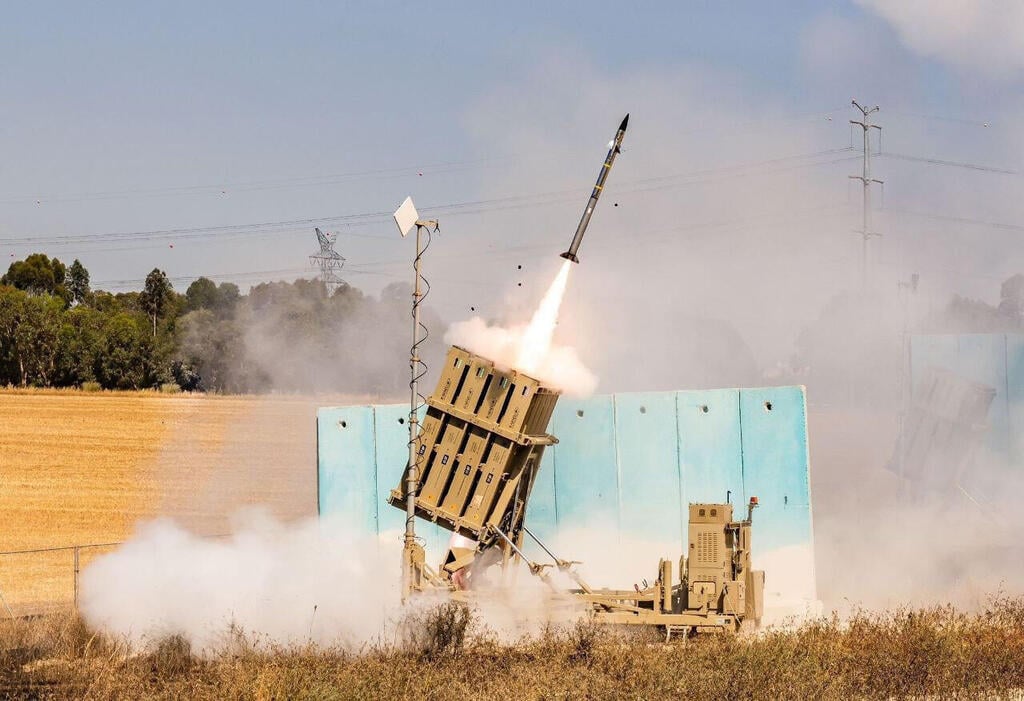
Iron Dome missile defense system
(Photo: IDF)
Gold recently described MAFAT as “a production line of future surprises, the next game-changers.” “During ‘With a Lion’s Might,’ 500 surface-to-surface missiles were launched, and 86 percent were intercepted. That is extraordinary on a global level. Yes, I want 100 percent, and we are improving constantly. Our calculations show this saved about 50 billion shekels in potential damage and countless lives. Against drones, we reached 99-point-something percent.” “We are producing at a very high global rate. My direction is to integrate robotics and AI into production lines to increase output and reduce costs. And yes, related to surprises, we are adding more capabilities, both defensive and offensive. I cannot talk about them, but I truly believe this is a production line of surprises.”
The next weapon: intercepting above the clouds
The offices of MAFAT are far from a James Bond laboratory, but the range of technologies passing before Gold’s eyes evokes a similar image. The current arsenal includes missiles of all types, autonomous drones, space-based and airborne sensors, ground, aerial and maritime robots, artificial intelligence embedded across systems, quantum computing and several highly classified technologies.
Gold believes Iron Beam will be a game-changer. “We are investing very heavily in this direction. We are already working on the next generation and the one after that. We will deliver something more powerful and more capable.”
“We also intend to take lasers into the air, mounting them on aircraft to intercept above the clouds. Smaller airborne laser platforms will be demonstrated within two years. The more serious systems require much more work.”
Asked whether Israel will also deploy ground-based lasers against surface targets, Gold said: “We are thinking about everything and working on everything. This field is called directed energy. Lasers are one type, but there are others. The world is working on them too. We are not alone.”
You have said Iron Beam is a game-changer. Will it have the same impact Iron Dome did?
“Iron Beam will be a game-changer because of the directions we are taking. We are investing very heavily in this area. We are already working on the next generation and the one after that. We will deliver something more powerful and more capable.” “We also intend to take lasers into the air, mounting them on aircraft to intercept above the clouds. Smaller airborne laser platforms will be demonstrated within two years. The more serious systems require much more work.”
Will Israel also deploy ground-based lasers against surface targets?
“We are thinking about everything and working on everything. This field is called directed energy. Lasers are one type, but there are others. The world is working on them too. We are not alone.”
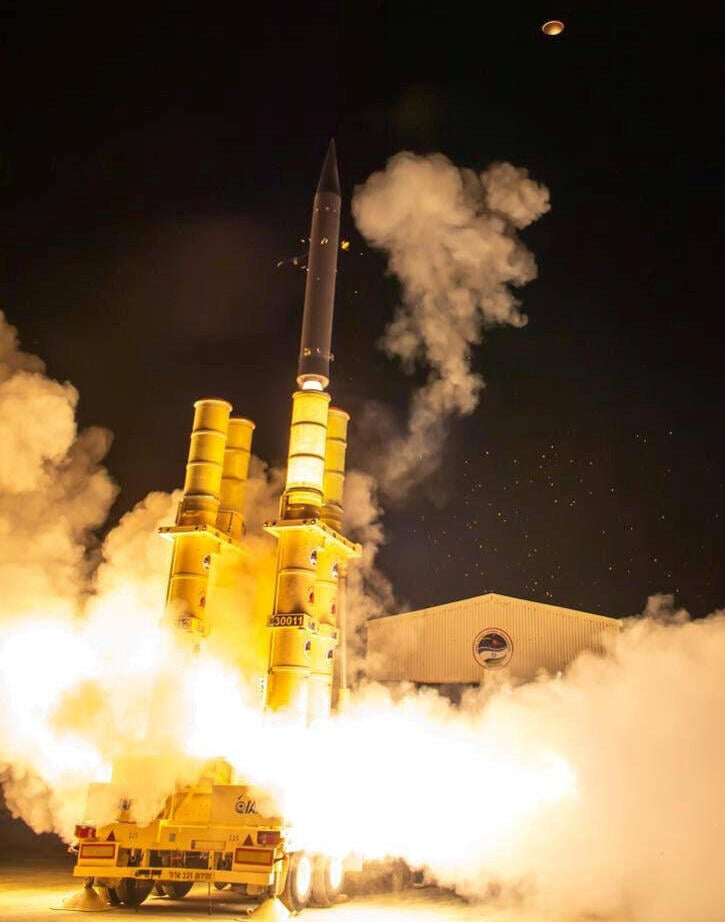
The Arrow 3 missile defense system
(Photo: Ministry of Defense)
Budget and priorities
Does Israel invest enough in defense research and development?
“No. The investment is not sufficient,” Gold said. “Everyone is dramatically increasing defense R&D investment, in Europe and elsewhere, and we are not high in comparison.”
“What I do is leverage my budget through partnerships with industry, startups, venture capital and massive international cooperation worth billions of dollars a year. But I would like much more. I want to double or triple the R&D budget to remain a consistent global leader, without constantly stretching every shekel.”
Is MAFAT involved in all of these capabilities? “We initiated everything,” Gold said.
Foreign partnerships and exports
What interest do foreign governments have in financing military technology development in Israel?
“They come to me only because I develop at the high end of technology. They are not doing me a favor. Most of the development is done in Israel. The United States is one example, and Germany, which bought Arrow 3. We protect the technology, but that is how I leverage the money.”
Does battlefield experience play a role?
“Yes. They learn a lot. They got hands-on exposure here to ballistic warfare that they would never have reached on their own.”
“There are platforms developed with the United States with shared funding. I put in 50% and they put in 50%, but I can also contribute equivalent value, such as operational capability or knowledge I invested. This is business.”
Can this model cover all of Israel’s needs?
“I would like much more. It is growing now. I want to double and triple the R&D budget to be a world leader and also consistently ahead of the enemy, without constantly stretching myself.”
Do you have time to deal with exports?
“No, but it builds my strength,” he said. “If I take a foreign partner into development because I do not have enough money, that helps me. It keeps me sharp in the global competition. I need to be the best.”
Boycotts and supply chains
Have boycotts hurt technological cooperation?
“I do not see a decline in technological cooperation because countries look out for themselves. I see an increase in the desire for cooperation, despite politics.”
“We are moving production lines to Israel, trying to be independent in the supply chain and even producing materials we did not manufacture here before. We are learning the lesson not to be dependent on anyone.”
How do you decide which weapons systems to develop?
“There are needs that come from the field, from the branches, and there are cases where technology creates needs. Like the iPhone, which did not come from a market demand but created one.”
Can you give a military example?
“There are things that came to expression in Iran. Capabilities we started developing 25 years ago. How do you eliminate tens of thousands of missiles in a night or two? How do you know where senior figures are, which building, which floor? This is not HUMINT.”
“I tell commanders: Do not tell me what missile you need or what range. Let’s dream together about how you want to fight. Today, in 3D, you can demonstrate all your dreams.”
Startups and talent
What role do startups play in MAFAT’s work?
“They helped us reach enormous success,” Gold said.
MAFAT now works with more than 300 startups. About 100 deployed technology before the war, and during the war 137 new startups sent tools to the military, including drone interception, AI, underground operations and more.
How do you attract global talent?
“We publish challenges. For example, we sent thousands of satellite images and asked who could identify a red car with a person inside. After training and testing, we award prizes.”
“For them, it is prestige. For us, it is instant access to global knowledge with a small investment.”
After 45 years in the defense establishment, do you see your next stop?
“I do not have one. My next stop is working for Israel’s technology and the country’s security. That is why I get up every morning.”
“This is a production line of technological surprises, and the state needs us to keep working for it. That is what is clear to me right now.”