


A few weeks after the coronavirus pandemic began in the spring of 2020, a podcast premiered with a question almost nobody had thought to ask: Had the CIA secretly written "Wind of Change," the enormous hit by German rock band Scorpions, as part of a psychological warfare operation intended to accelerate the collapse of the Soviet regime? Released in 1990, shortly after the fall of the Berlin Wall, the song became an unofficial anthem of the end of the Cold War. The idea that the CIA could have produced such a catchy ballad, complete with its unforgettable whistle, sounded almost too ridiculous to qualify as a conspiracy theory. Yet Wind of Change became one of 2020's most acclaimed podcasts and attracted millions of listeners.
Part of its success came from the timing, with much of the world stuck at home during the pandemic. But there was another reason: When investigative journalist Patrick Radden Keefe takes on a mystery, people pay attention. He traveled around the world, interviewed dozens of people and ultimately concluded that while the CIA might know how to bring down governments, writing irresistible pop songs was probably beyond its capabilities.
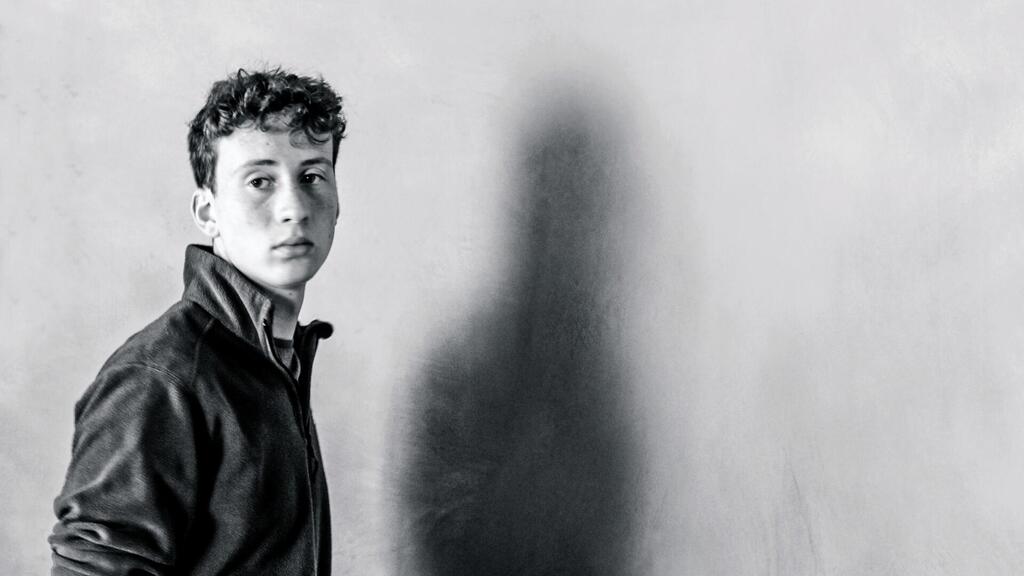
Six years later, Keefe is sitting in a small cafe in Manhattan's West Village, exhausted by the jet lag that comes with traveling around the world. In 2020, he was already a respected American journalist and author. By 2026, he has become a genuine star in a profession that has relatively few stars left. He has written for The New Yorker for more than 20 years, but over the past decade has reached audiences far beyond the magazine's traditional readership, the kind willing to spend an afternoon reading a 7,000-word article.
Keefe has carved out an almost unique literary niche: exhaustively researched investigative journalism, built entirely on real events and verified facts, that reads like a gripping thriller. His books do more than tell extraordinary true stories. They expose larger truths about power, wealth and society. In at least one case, his reporting helped change the course of events in the United States.
Keefe recalls an encounter on the New York subway some 12 to 15 years ago, when he spotted a woman pulling a copy of The New Yorker from her bag. She began flipping through it until she reached an article he had written. Standing about 10 feet away, he watched excitedly as she started reading and considered introducing himself. But just as he worked up the courage, she finished the first paragraph and turned to the next article. "I'm haunted by that woman," he says. "If I can get you into that first paragraph, I never want to let go of you."
More recently, someone told him that although he loved The New Yorker and had subscribed for years, he now fed 10,000-word articles into ChatGPT and requested 4,000-word summaries. Keefe was unimpressed. "I told him, don't read my stuff. It's not for you," he recalls. "It's not supposed to be boiled down to nuggets. Like, you read it for pleasure." For him, the experience of reading is not simply about extracting information as efficiently as possible.
Perhaps surprisingly, Keefe says he finds the writing process relatively easy, even when the finished result is a 400-page book. He never begins until he has completed his reporting and developed a detailed outline, allowing him to write quickly before revising extensively. "I like velocity when I'm writing because I feel like it goes on the page," he explains. "The faster I write it, the faster you're going to read it." He compares the process to a chef preparing every ingredient before cooking. The extensive preparation allows the final dish to come together relatively quickly.
The books that changed everything
Keefe, 50, grew up in Boston and began reading The New Yorker in high school, an unusual interest for a teenager. He initially imagined becoming a fiction writer but decided he was not particularly good at it. By his third year at Columbia University, he was already pitching ideas to the magazine. One of his professors, historian Simon Schama, was writing for The New Yorker at the time and became something of a mentor. "I thought he was the coolest," Keefe recalls. "That's what I wanted to do."
He soon discovered that even The New Yorker's generous word counts could not always accommodate the stories he wanted to tell. His first two books explored electronic surveillance networks and the criminal underworld of New York's Chinatown. Both largely went unnoticed, and nearly another decade passed before he tried again.
In 2018, Keefe published Say Nothing, an investigation into the 1972 abduction and murder of Jean McConville, a mother of 10, in Northern Ireland. From that killing, he constructed one of the most compelling accounts of the three decades of political violence known as the Troubles. The book became a bestseller in the United States, appeared on numerous lists of the best books of 2019, was ranked 19th on The New York Times' list of the 100 best books of the 21st century and was adapted into an acclaimed television series.
Its success came as a surprise. After the book received little attention following its initial British release, Keefe feared he had wasted years on a project that nobody wanted to read. "I just thought, the juice isn't worth the squeeze," he says. Then it reached American readers and transformed his career. "There's my life before Say Nothing and my life after Say Nothing," he recalls, describing the dramatic turnaround.
By the time Say Nothing became a sensation, Keefe was already deeply immersed in his next project. It began with a 2017 investigation into the role of the billionaire Sackler family in America's devastating opioid crisis. After publishing the article, he accumulated so much additional material that he turned it into Empire of Pain, a disturbing history of a family that built an enormous fortune from addictive prescription painkillers. His reporting helped focus public attention on the people behind the crisis and contributed to pressure for accountability.
The Sacklers faced multibillion-dollar settlements, their reputation was devastated, their name was removed from prominent institutions, and Purdue Pharma, the pharmaceutical company they controlled, eventually ceased operations. Empire of Pain became one of those rare examples of investigative journalism helping bring about tangible change.
Yet Keefe is reluctant to describe himself as an activist. "I'm not an activist, I'm not a lawyer. I'm a journalist," he says. "If I spent too much time thinking, like, what's the consequence of this going to be? I would drive myself crazy." What matters most to him is the permanence of the written record. Once published, the book exists independently of its author and the people it exposes. "I have this book, and it's like a physical artifact, and it's in the world and it's on the Internet, and it's never gonna go away, and it can't be erased."
His motivation, he explains, often comes from the gap between the image people construct of themselves and the reality behind it. "So often when I start out, what motivates me is that there's some slippage between the story that someone's telling about themselves and the truth. And that's what I go for."
The teenager who invented a $270 million fortune
Keefe receives story pitches constantly. His instincts have become finely tuned, and it is increasingly difficult to catch his attention. But when something does, he usually knows immediately. "I wish I could tell you," he says, describing the process. "It's more just. I feel it." That was precisely what happened when someone told him about a British teenager who had died while pretending to be the son of a Russian oligarch. "I was in," Keefe recalls. The story became London Falling, his latest book and, surprisingly, the first of his works to be translated into Hebrew, published in Israel by Penn.
At its center is Zac Brettler, a 19-year-old from a comfortable Jewish family who died after going over the balcony of a luxury apartment building overlooking the River Thames in London in 2019. His body was recovered several days after he was reported missing, and the initial police investigation left his parents struggling to understand what had happened. Matthew and Rachelle Brettler soon discovered that their son had been leading an elaborate secret life. He had presented himself as the son of a Russian billionaire and heir to a fortune supposedly worth approximately $270 million. He had also become involved with two questionable men, including businessman Akbar Shamji, who figures prominently in Keefe's investigation.

The London apartment building from which Zac Brettler fell to his death
(Photo: Mattia Balsamini)
A mysterious death, an invented fortune and a young man from a respectable family were compelling ingredients for a book. But what particularly interested Keefe was the opportunity to explore the larger world surrounding Zac's deception: the transformation of London by Russian oligarchs and international wealth. Following Russia's invasion of Ukraine, he had written a roughly 4,000-word article for The New Yorker about the city's oligarchs. By the magazine's standards, that counted as a short piece.
Keefe had lived in London 25 years earlier and watched the city change. He was interested not only in the Russians who had settled there, but also in the influence of American finance and the legacy of the British Empire. "The first big invasion is not the Russians, it's the Americans in 1987, it's the bankers," he explains. "So in a way, it's a story about London becoming more American."
For Keefe, however, the way into a complicated subject is almost always through the people involved. He regularly receives proposals about gruesome murders, serial killers and spectacular crimes, but sensational details alone are not enough to sustain his interest. He wants stories that illuminate larger questions about society and human behavior. "There have to be kind of deeper themes," he says. "It has to implicate some larger, some larger universe of issues."
He points to climate change as an example of an enormously important subject he has struggled to approach. The problem is not a lack of interest, but the difficulty of finding a compelling human narrative through which to explore such vast, interconnected systems. "I'm not writing just to write, I'm writing to read. I want people to read what I'm writing," he says.
The Brettlers' story offered exactly the kind of human drama he was looking for. Unlike many of his previous investigations, which involved people who were dead, unwilling to cooperate or threatening legal action, this time he found a family prepared to share its story. He initially met Zac's parents twice, off the record and without making any commitment. "I was bluffing a little bit because I knew I wanted to write it," he admits. The couple, meanwhile, had not read his work and needed time to decide whether they could trust him.
The family had kept Zac's death largely private. Rachelle's father, Hugo Gryn, had been a prominent British rabbi, and the Brettlers belonged to the close-knit community surrounding London's West London Synagogue. Although hundreds attended Zac's funeral, the circumstances of his death had not attracted significant press coverage. Keefe believes the family's instinct to protect its privacy also contributed to a sense of isolation.
The parents had expected the police to investigate thoroughly, but felt that they had failed to obtain satisfactory answers. Keefe describes their growing uncertainty about whether they were demanding too much from the authorities. "They felt a little bit gaslit," he says, explaining that the couple had begun questioning whether their expectations were unreasonable.
At their first meeting, Keefe did not even take out a notebook. He listened for almost two hours as the parents described what they had discovered about their son's life and death. When they eventually showed him the material they had collected, he was shocked by what he saw. His reaction, he believes, helped reassure them that their concerns deserved to be taken seriously.
Still, he was careful not to promise that he would solve the mystery. He knew that the couple might hope for an outcome similar to Say Nothing, in which he identified the person he concluded was responsible for a decades-old murder. "Don't say yes because in the back of your minds you're hoping that I'll solve it," he told them. "It's not fair to either of us."
‘I'm writing for the readers. I'm writing for the truth’
Working with grieving parents posed an obvious challenge for a journalist who insists on factual accuracy and independence. Keefe rejects the idea that objectivity requires emotional distance. "I think you can be objective but not be cold," he says. His writing often contains dramatic twists and unexpected discoveries, but he insists these are not literary devices manufactured to create suspense. They reflect the experience of investigating a story, following clues, challenging assumptions and discovering that things are not always what they initially appear to be.
He wants readers to experience the same emotional journey. When he meets parents who have lost a child, he believes compassion is essential to understanding their experience. But when the time comes to write, he must be able to examine that experience critically. He made this clear to the Brettlers from the beginning. "I'm not writing this book for you. I'm writing for the readers. I'm writing for the truth," he told them.
That meant including uncomfortable details and family secrets, even when the people involved might have preferred to keep them private. Keefe knew that a book examining deception and the stories people tell about themselves would lose its credibility if he selectively protected the family while exposing others. "If I were to tell that story, but then, like, discreetly hold back these things that I learned about Hugo, it would be a cheat," he says. "Nobody should trust that book."
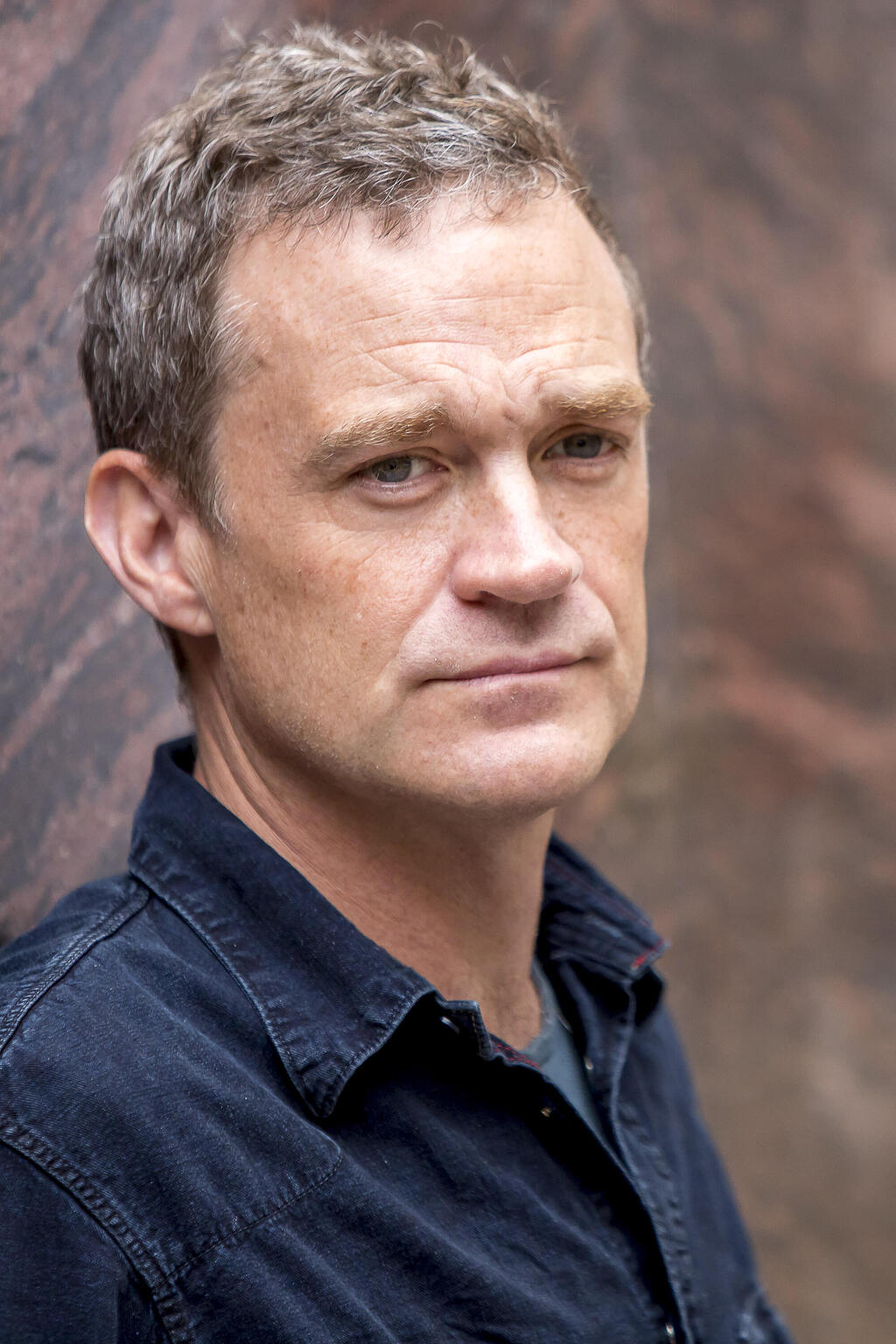
Patrick Radden Keefe
(Photo: Albert Llop/NurPhoto/Getty Images)
The investigation also forced Keefe to confront a disturbing question about his own family. He has two teenage sons, and the realization of how much Zac's parents had not known about their child's secret life unsettled him. As he spent more time with the Brettlers, he began interpreting ordinary teenage behavior at home through the lens of the tragedy he was investigating. His wife eventually intervened, telling him that it was unfair to their children.
It was not the first time his reporting had followed him home. Years earlier, he covered the trial of Dzhokhar Tsarnaev, one of the perpetrators of the 2013 Boston Marathon bombing, and his defense attorney. A family severely affected by the attack lived near the neighborhood where Keefe had grown up. The testimony about the victims, including children, was devastating. "I don't want to overstate it because there's no special courage in what I do," he says. "I hate it when journalists make themselves the story." Nevertheless, he suffered nightmares for months afterward.
As for Zac's death, Keefe believes he has reached a convincing conclusion, even if some details remain uncertain. He does not think the teenager deliberately took his own life, accidentally fell or was physically pushed from the balcony. Instead, he believes Zac jumped because he feared what would happen if he remained inside the apartment.
"I think Zac didn't jump to kill himself. I don't think he fell. I don't think he was pushed. I think he jumped because he thought if he stayed in that apartment, he was gonna die," Keefe says. This is his interpretation of the evidence, not an established judicial finding. He acknowledges that he cannot know precisely what was said in the apartment immediately before Zac's death, but says he is confident in the conclusion he reached.
The Brettlers remain supportive of the book, and Keefe continues to speak with them regularly. They attended its New York launch at the 92nd Street Y, where he was interviewed on stage by Sarah Jessica Parker. But he recognizes that having their private tragedy transformed into a bestseller has been an emotionally complicated experience. He recalls how Zac's brother Joe encountered a woman who mentioned reading London Falling with her book club. When Joe explained that the book was about his family, the woman burst into tears, and he found himself comforting her.
Keefe sees the encounter as characteristic of the family, but he also understands that their feelings about the book may change over time. He describes the material as emotionally charged and considers it his responsibility to remain in contact with them. For him, the book is a completed investigation. For the Brettlers, it is their life.
‘We're all swimming in a sewer’
Like many American journalists, Keefe is deeply alarmed by what he sees happening to the United States and its news media. He worries about efforts to weaken longstanding legal protections for journalists, including the precedent established by the Supreme Court's landmark New York Times Co. v. Sullivan ruling. He is also troubled by President Donald Trump's attacks on the press, declining literacy, diminishing public trust in news organizations and growing concentration of media ownership. He opposes the prospect of the Ellison family controlling both CNN and CBS, arguing that such consolidation would be harmful to journalism and democracy.
Keefe is equally disturbed by what he sees as the American public's growing indifference to political and institutional abuses. He questions whether the Sacklers would have faced similar accountability if his investigation had emerged in today's political environment. He cites the Trump family's business interests and incidents involving immigration enforcement agents as examples of developments that, in his view, have failed to provoke sustained public outrage.
"The amazing thing is Americans don't care," he says. He compares the muted response he sees in the United States with countries such as France, where attempts to raise the retirement age can trigger mass demonstrations. Growing up, he assumed American democratic institutions were firmly established. He is now troubled by how vulnerable they appear to be.
Yet his pessimism is not absolute. He describes a small group of mostly older people who gather every Saturday morning with handmade protest signs. On one level, the sight of the same few demonstrators week after week might seem discouraging. But Keefe finds something moving in their persistence. They are bearing witness, he says, making clear that they recognize something is wrong and refuse to accept it.
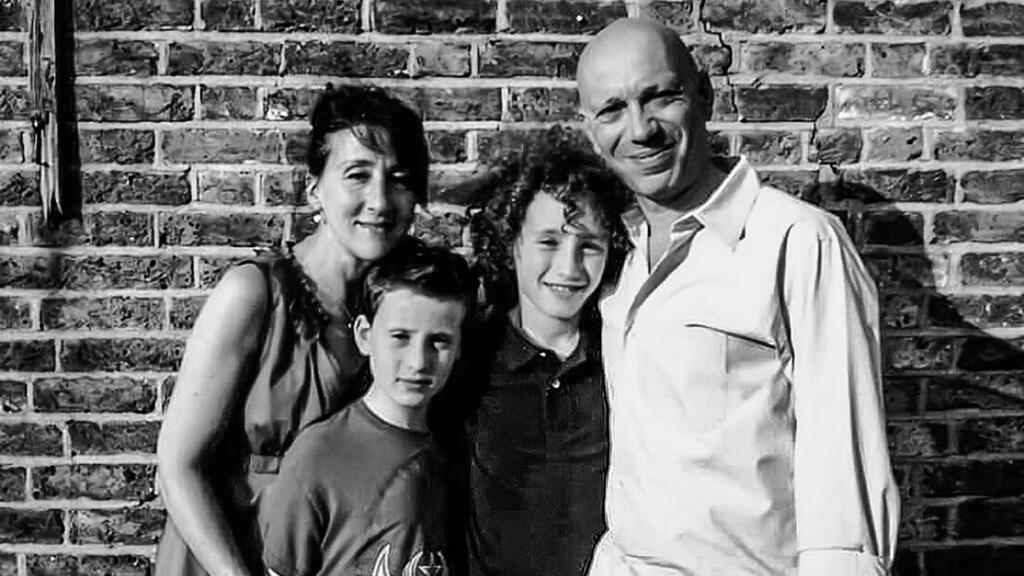
Zac and his family
(Photo: David Barrie)
Despite the political climate and the decline of traditional media, Keefe remains convinced that serious long-form journalism has an audience. The New Yorker article that eventually became London Falling was the magazine's most-read article of its year, he says, despite its length and complexity. He acknowledges that readers' attention spans have changed, and that the lengthy descriptive passages once associated with writers such as Truman Capote may be harder to sustain today. But compelling stories still attract readers, including young people in their 20s who approach him at public events.
Nor does he believe The New Yorker is inevitably headed for extinction. Normally pessimistic, he sees a potential opportunity for established news organizations in the growing distrust of digital content. People are increasingly exhausted by their phones, he argues, while artificial intelligence has made it difficult to determine whether online images, videos and even emails are genuine. "I think everybody hates their phones now," he says. "I think we all feel like we've been broken."
For Keefe, that uncertainty could ultimately benefit publications that maintain rigorous reporting and fact-checking standards. "We're all like swimming in a sewer," he says. Readers want information, but they also want to know that the person providing it can be trusted. He compares reliable journalism to buying food with a label confirming that it has been inspected and is safe to consume.
At 50, after decades spent investigating some of the world's darkest stories, Keefe has no intention of slowing down. "I never want to quit. I'll do this forever," he says. He has already identified the subject of his next book, although he is not ready to reveal what it is. He does not consider himself an optimist, but finds consolation in family, friends, music, art, food and writing. Even the poetry of World War I reminds him that "even in the bleakest moments, there's room for beauty."
What Keefe does not expect is to write the investigation that finally changes the minds of Americans who remain committed to Trump. He recognizes the fantasy shared by many journalists that one explosive revelation might suddenly make the public reconsider everything. But he no longer believes such a moment is likely. "I'm not going to be the one who breaks this spell," he says.
At least one mystery from his career has a relatively satisfying resolution. Returning to Wind of Change, Keefe explains that the CIA did not write the Scorpions' Cold War anthem. "They didn't write the song, but they were involved in the promotion of the song," he says.
As for whether his investigation prompted any calls from the CIA asking him to drop the subject, Keefe says he has heard from people who told him the agency was particularly enthusiastic about the podcast. "You know who listens to this podcast more than anybody?" he asks, smiling. "They love it. Absolutely."