

Segev Kalfon remembers every detail of his personal hell. Every blow with a rifle butt, every lash of a donkey whip, every tightening of handcuffs on hands bruised and blue from beatings. Every can of food and handful of seeds they were forced to share. Every moment, he was sure it was over, that the end had come, and all that was left was to say “Shema Yisrael.”
In his first extensive interview since being released from Hamas captivity, Kalfon gives a harrowing testimony of the terror he felt when he was captured while fleeing the Nova festival, the houses and tunnels of torture he endured, and the moment he finally left Gaza behind: “I told myself: who can stop me now?”
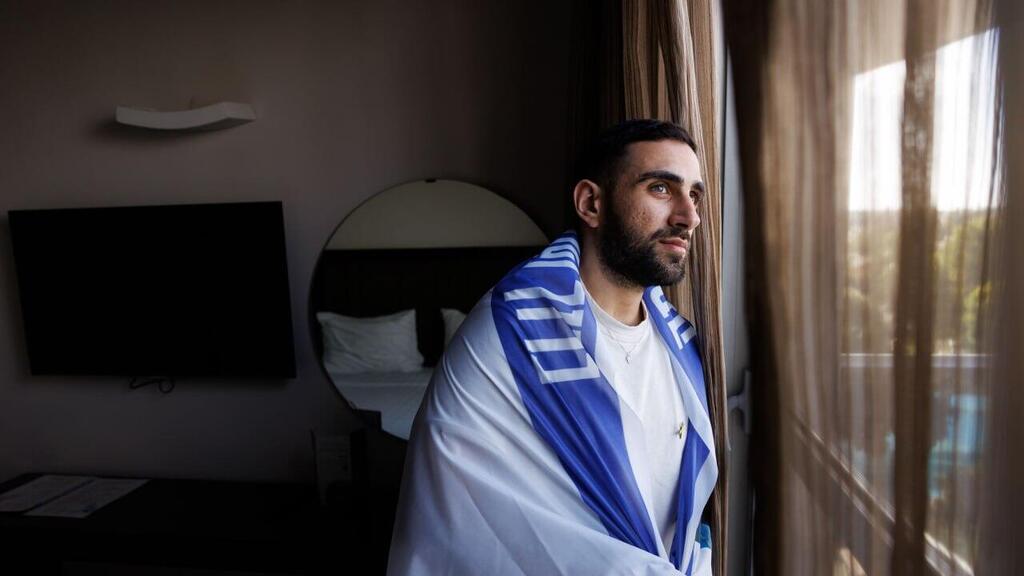
Empty and dark, in an abandoned building deep inside Gaza. Outside, the sounds of explosions and gunfire shake everything. From time to time, the shockwave sweeps fragments, stones, and sand inside. Inside are three thin mattresses, “like paper,” tossed on the floor, surrounded by eight armed terrorists. On one of the mattresses sits Segev Kalfon. It is the second apartment where he is being held, a week after the violent abduction from the Nova party.
The terrorists come and go, moving rifles, pistols, RPGs, mortars, and Kalashnikovs, storing them in the next room, which serves as an armory. Abdullah, one of the guards, plays with a grenade. He pretends to throw it in the air, almost drops it, and catches it again at the last moment. Majed, another guard, fiddles with his Kalashnikov, points it at the three “Jewish prisoners,” as the terrorists call them. Majed approaches them, presses the gun against them, and pretends to shoot. He looks at them curled up in fear, laughs, and then moves the weapon aside.
“I’m waiting for death. I don’t feel pain. The terrorist put his foot on my head, pressed it to the floor and told me, ‘Sleep, sleep.’”
On the floor beside Segev sit Yosef Chaim Ohana and Maxim Herkin, whom he met on the day of the abduction. They are forbidden to speak to one another. For three months they will be locked in this room together, but Segev will not even know what their voices sound like, where they are from, how old they are. They can only communicate with their eyes, but when he tries to signal something to Yosef with a glance, Abdullah notices. He immediately straightens up, walks toward Segev, and without a word begins to beat him. Punches, kicks, choking. It goes on for hours. He stops only when he grows tired from hitting, barely able to stand.
“To punish me for that look,” Segev recalls now, “after the beating he put a thick black mask over my face that covered my eyes, nose and mouth, and left it on me for three days. You couldn’t see anything, you couldn’t breathe.”
Abdullah, one of the men who kidnapped Segev, among those who beat him viciously at the party and in the pickup truck that carried him all the way to Gaza, will appear again later in this story.
Three months passed for Segev in that house, in fear and hunger. “Hunger you can’t get used to. It feels like your body is eating itself from the inside,” he says. “To the bombings, the fear, the danger — you get used to those. But not to hunger.” To make them feel the hunger and the suffering it brought with it, the guards would wake them early in the morning and prevent them from sleeping until late at night. Every morning Abdullah would smash an empty bottle against the wall, so they would wake up in panic from the noise.
(Photo: Ziv Koren)
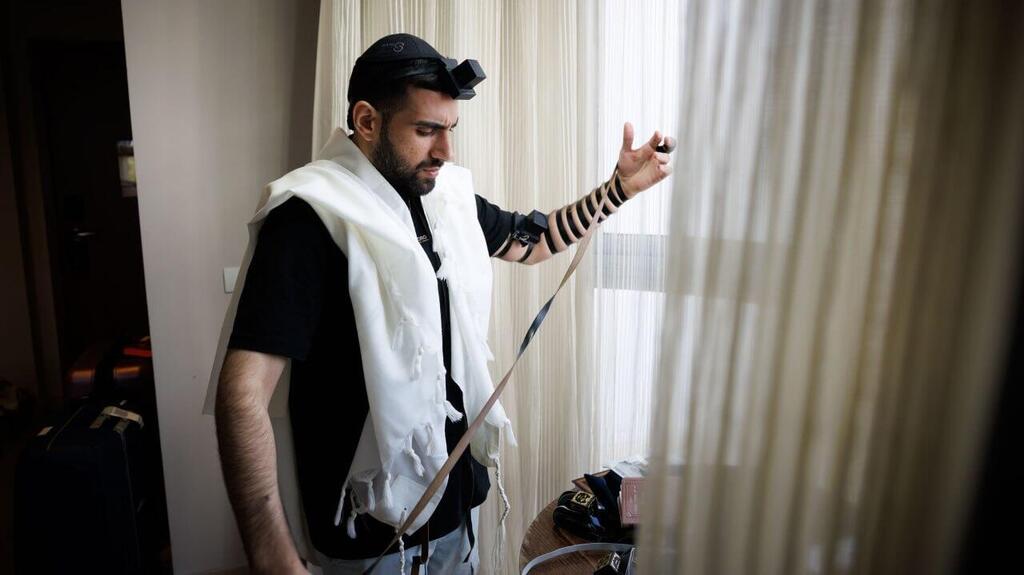
A week after being freed from the inferno of captivity and returning to Israel, Segev now sits surrounded by greenery in the temporary place he and his family reached before returning home to Dimona. Inside are parents, siblings, relatives and visitors waiting for him with excitement. Plates of food are passed around, gifts and photos, laughter and relief. The light has returned to their eyes, the color to their faces — the son is home.
Outside, away from the joyous commotion, Segev and I sit for hours, almost motionless. In his first in-depth interview since his return, he tells Yedioth Ahronoth’s “7 Days” magazine about the brutal, violent, merciless two years he endured, in words that even now, here, are hard to repeat. And when Segev speaks, he is there. Completely there. Facing dozens of armed terrorists pointing their guns at him. On a mattress, with rats beneath it. Staring at a few grains of rice crawling with worms. In a bombed-out apartment, in a dark tunnel with sewage flowing and sand crumbling down. Shackled, beaten, terrified. Hungry. His body scarred. His heart, too.
The Nova music festival
Segev bought the ticket to the Nova music festival on Friday, the night before. Friends convinced him to come. He was not feeling well, and there was no room in the car, so everyone had to change their travel arrangements, but the friends insisted and “it did not feel right to cancel.” When he set out for the party, the ticket had not even been approved yet.
“I did not really want to go out, my throat hurt, I had this heaviness, but after all the changes they made so I could join, I could not not come,” he recalls now. “We arrived around midnight, and until about three in the morning there were delays, lots of glitches, it was not working. There was a problem with the main stage, the speaker did not work, the party did not take off.”
And by 6:30 something much more troubling had already happened.
“All of a sudden I caught two rockets. I had not heard a red alert before, the music was loud. I thought I was imagining it, what rockets? Immediately more and more rockets appeared in the sky and then they already announced it on the loudspeaker. We went to our spot where we had put the tent and the mat. We thought we would stay there a bit and go back to the dance floor. A friend’s father, a former senior military officer, called my friend and told him, ‘Come home now, there is a terrorist infiltration.’ Police officers began to arrive, people around us were panicking, we were a little less. I live in the south, I am quite used to this. At that stage the police arrived and told us to get out of there quickly. There were people around me already screaming hysterically. I calmed a few girls next to us as rockets exploded over our heads.”
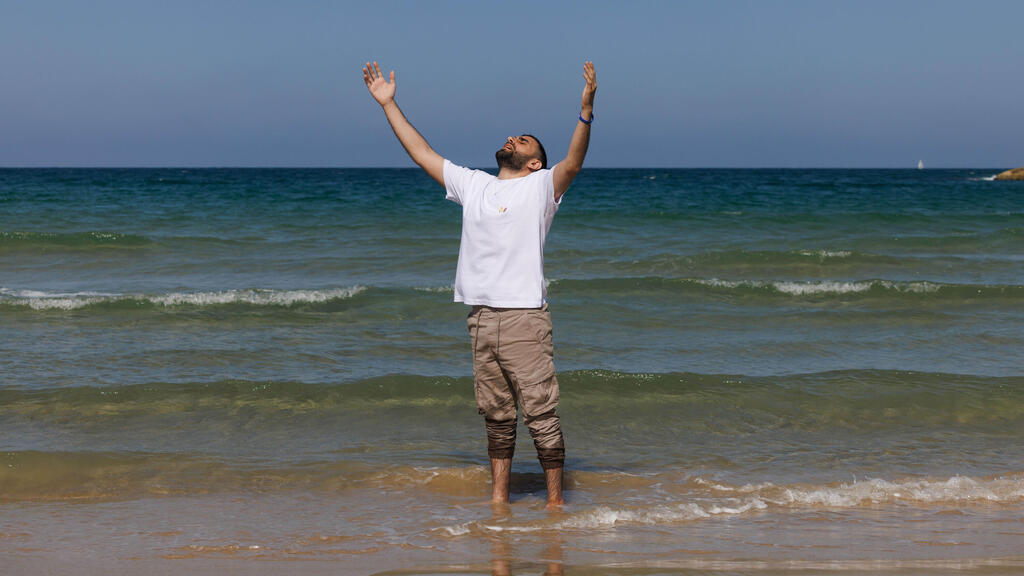
Segev Kalfon at the beach for the first time since the return from Hamas captivity
(Photo: Ziv Koren)
Segev and his friends folded the gear and got to the car to leave. “There was huge chaos, rockets exploding, people looking for their cars, shouting, getting stuck with each other. I saw that at the exit from the area there was already a long traffic jam, so I thought in the meantime I would open a folding chair outside the car, sit, watch the show in the sky until it calms down and then we would start driving. I did not manage to open it and a rocket exploded right above us, above our heads. A crazy boom. My friend Asaf (Harush) and I got in the car right away and I started the engine. I began getting a lot of calls from family, from friends. I told everyone, ‘Everything is fine, calm down, I am already in the car, in a moment on the road and coming home.’ And then we got into a bottleneck of cars, people could not get out, police began to open several escape routes. And we are in the car, even with a bit of music to relax. My two friends, Shakh Madar and Liam Bor, stopped next to me with their car. Shakh said we should put Waze to his house and they overtook me. I lost both of them. Both were murdered that morning.”
When did you start to feel you were already in danger?
“Fifty meters from the road where I am supposed to turn left, I suddenly catch a vehicle coming at crazy speed from the right, and I see a bullet hole in the windshield and apparently someone inside was injured because they tried to reach a command post tent that Magen David Adom had there. And then I started to hear gunfire, and realized it was getting closer to us. I turned left onto the road, and I see something like 800 meters ahead of cars jammed into each other, everything a mess. And I understood I had no way to drive home. Asaf told me, ‘We must leave the car.’ It sounded strange and surreal to leave the vehicle like that, but there was nothing to do and that is what we did. There was a big yellow dumpster next to us, huge, and I saw that people were literally getting inside, one on top of another, hiding in it. I told them to get out of there, they told me, ‘Do not worry, do not worry.’
“We ran and I realized that about eight people were running after me. I stop, they stop. I continue, they continue.”
They saw you as responsible.
“Yes, and I felt that I was responsible, leading them and had to save them. We kept running through the fields, the sun beating down on our heads, I hear gunfire getting closer from the north, I run south, I hear it from the south, I run north, like that in all directions. I stop and try to open maps on the phone, try to figure out where to run and realize that we are running in circles. We ran in circles for 20 minutes. And there is reception and then there is not, and meanwhile people are calling me every second and I cannot see anything on the screen. I decided not to answer anyone anymore, only to focus on escaping. I told Asaf, ‘We run until we see a road, stop the first car, and escape with it.’
(Photo: Ziv Koren)
“We are running and they start shooting at us. I hear the whistling of the bullets near my ears, near my legs. I see a tree next to me, at my height, and realize that the branch next to my head explodes from gunfire. I shouted to everyone, ‘Run, flee,’ and I fall and get up, all my legs bleeding with scratches and cuts from thorns, from the bushes. I saw a white sign. I thought that if there is such a sign in the middle of the field it probably means there is a road nearby. I told them to run to it, and the bullets keep slicing us. I identified the road and saw that across it there was a concrete structure, like an electrical cabinet. I thought we would run and cross the road and hide behind it, that it would deflect the bullets. We are running, suddenly I hear Asaf shouting, ‘Segev,’ I had never heard such a cry in my life, as if from his soul he let it out. I turned and saw him fall. I was convinced that was it, he was dead. For two years I believed that is what happened, until I came back and found out he is alive.”
Segev kept running. “While I was running, I looked to my right and saw many pickup trucks speeding toward me. My legs got tangled and I slipped behind the concrete barrier, and while I was sliding, terrorists with RPGs and Kalashnikovs were already on me, hitting me on the head. Later it turned out there were nine pickup trucks, with eight or nine terrorists on each one. I got up with both hands. A motorcycle arrived, and the man riding it threw it onto the road and shouted, I later realized he shouted: Don’t shoot, don’t shoot.’ Everyone pointed their weapons at me, and I understood that my life was over, that I had no chance.”
The abduction
The terrorists tied Segev’s hands and covered his eyes with a flannel cloth. “This is a prisoner, take him,” said the man on the motorcycle, and they pushed him into a pickup truck. “As he pushed me in from the right side, someone else opened the door from the left and pulled me hard out onto the ground. A massive gunfight began. I was lying on the asphalt and heard the bullets hitting the ground next to me, saw the sparks. And I just kept saying again and again, ‘Shema Yisrael, Shema Yisrael, Shema Yisrael.’ That was it. I was waiting to take the bullet. I understood that my life was over. I saw an Apache helicopter flying low above me, and a terrorist beside me fired an RPG at it. The blast came right into my face. They threw me back into the pickup truck and shouted, ‘To Gaza, escape to Gaza!’”
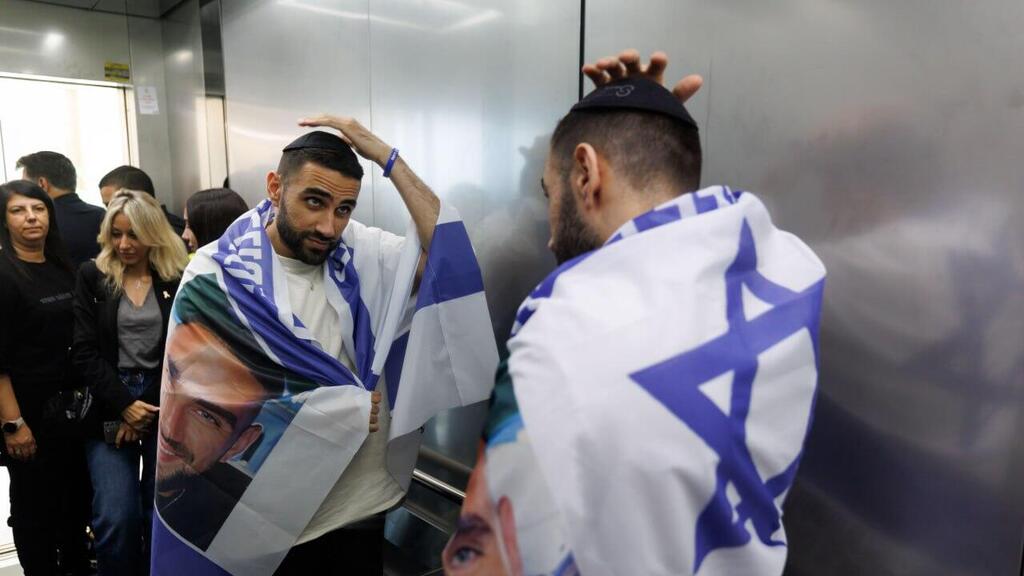
Abdullah, the abusive guard, sat to Segev’s right, pressed against him. The other one, Majed, sat to his left. “All the way they beat me, taking out all their rage and hatred on me. They hit me with the butt of the rifle, on the head, on the body, on the knees, and there was nothing I could do, I was tied up, only lowered my head down,” Segev says, straightening his legs that are scarred from those severe beatings. “At some point I did not feel the blows anymore. I did not feel anything. I just kept murmuring, ‘Shema Yisrael,’ and asked forgiveness from the Creator for going to the party on Shabbat.”
(Photo: Ziv Koren)
Upon arrival in Gaza, after a “victory parade” before everyone, amid cries of “Allahu Akbar,” shots fired by the terrorists from the pickup truck’s windows, and candy and objects thrown at it, they reached a mosque. “I heard a metal door open and they kicked me. I fell on my face, my eyes were covered so I could not see anything. I think it was a mosque because I heard the sounds, the echo. Here they are going to kill me, I told myself. If they did not kill me during the abduction, because a gunfight broke out there and they had to drive quickly into Gaza, then here my life would end.
“I heard them handling weapons, knives. I actually heard the sound. Someone put a knife to my neck and asked what my name was. I said ‘Segev,’ and he pressed the knife harder and asked again. My name sounds like the Arabic word for ceiling, so they did not understand, thought I was mocking them. A friend of the terrorist said, ‘Steve, Steve,’ and I said, ‘Segev,’ and got beaten. The next time I already said ‘Steve.’ He took out a box cutter, tore my clothes, the chain I wore. Broke my piercing with wire cutters. I was still tied up, eyes covered, on the floor. Waiting for death, not feeling pain. He put his foot on my head, pressed it to the floor and said, ‘Sleep, sleep.’”
After an hour or two the terrorists again asked Segev his name, and then he heard again, “Shu ismak?” and then someone said, “Yosef.” Again, “Shu ismak?” and then, “Maxim.” That was how he realized he was not alone. They were Yosef Chaim Ohana and Maxim Herkin. “I stayed tied up, with my head on the floor, eyes covered above the bruises from the beatings, wearing only underwear. Not understanding what was happening, what would happen. In the evening they took us out, lifted me up with the Kalashnikov into a car in the parking area. Threw me in the trunk of the pickup, covered me with a blanket so I would not be seen.”
The house of hearts
From there the three were taken to their first captivity house and immediately placed in a room whose ceiling was covered with hearts. That was how they gave it the name “the house of hearts.”
“I noticed many terrorists in the house, talking, shouting, laughing at us. Inside the room they beat us. They had a donkey whip they lashed us with. There were disgusting mattresses with a sharp smell of urine, but who cared at that point? We could not see each other, we could only hear the terrorists talking and laughing at us, saying, ‘We gave you October 7.’ They celebrated it.
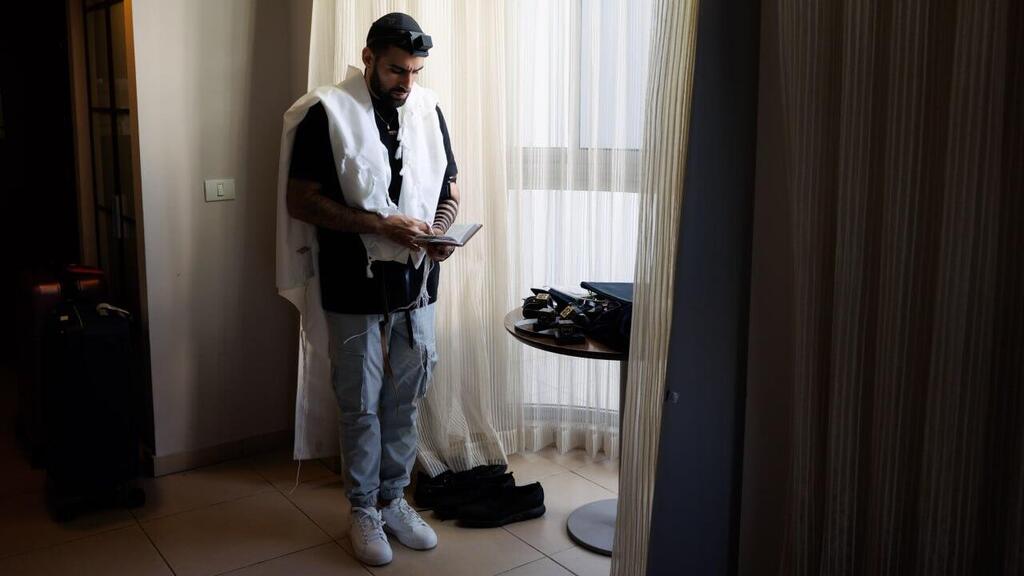
“In the house of hearts we stayed for three days, tied up all the time, eyes still covered. Our hands were tied behind our backs, the blood did not flow. They were blue, swollen like balloons, I did not feel them. They could have cut off my hands with scissors and I would not have felt it. I think only two months ago I fully regained feeling in them. I told myself, okay, I will not have hands. Let them take the hands, but at least I will stay alive.”
On his wrist even now there are marks from the handcuffs. “Every time I said it was too tight, the terrorist tightened it even more, with thick zip ties. The shoulders burned so badly, and every time I asked him to loosen it a little I got beaten, so I stayed quiet.
(Photo: Ziv Koren)
“There was a moment when I had to go to the bathroom, so the terrorist lifted me by my shirt. He dragged me by the handcuffs, and all the way he threw me down on purpose and lifted me again by the shirt, whipping me with the donkey whip. Again throwing me down, again lifting me and lashing me, throwing me and my face crashing to the floor. A one-minute walk turned into an hour of torture. After that I just held it in. I did not ask to go again.”
After two days Majed and Abdullah appeared in the room, wearing Hamas uniforms. Not long after that, a massive explosion shook everything. “I had never heard such an explosion. The whole house next to us collapsed. They smuggled us out in broad daylight when all of Gaza was outside. We split up, I went with Yosef and Abdullah, Maxim went with Majed. People looked at me, covered in blood, with bruised eyes, filthy, my face blackened like soot from the blast of the RPG that had been fired at a helicopter near Re’im.”
The house of Abu-Tarek
The next stop on the journey was the house of Abu-Tarek. “Every minute in that house was dangerous, evil, unbearable. When we arrived, they sat us on a chair in front of the bathroom. Until evening they thought about what to do with us. They told us, take into account that now you are dead, any moment, any second. Then someone who spoke Hebrew entered and told me, ‘You know there are another 250 to 300 people here in Gaza.’ I was in shock.”
And by then, you were no longer with Maxim.
“Abdullah told us that Maxim was dead. In the evening three more terrorists came in and Majed entered, which suggested that maybe Maxim was really dead. They talked among themselves and suddenly said, ‘Get up, we are moving.’ Again the terror of walking through the street and wondering what would happen if they discovered us. That is how we reached Abu-Tarek’s house. A dark, dim house, everyone with long weapons, talking, tense. I told myself, here I die. We just sat on the chair for hours, trying to understand what was happening. They told us to be quiet and not talk. And they kept bringing more and more equipment inside, again weapons, mortars, bags, batteries, radios.
“They brought two mattresses and I said, okay, we are not dying today. Because every moment you wait for your death, so I said, good, I earned another day. The next day they added Maxim to us, and that is how we found out he was alive. If by mistake we talked, someone said a word, whispered, we were beaten. They looked for reasons to hurt us for everything. We went through a lot in that house.
“One day, Air Force planes dropped leaflets saying that the army was about to enter. The terrorists debated what to do with us and decided we would stay in that house while the whole neighborhood moved to Rafah. They booby-trapped the entire house with explosives, lengthwise and crosswise. Every door that opened would have blown all of us up. Wires stretched everywhere, and only one man knew how to enter. At dawn they broke a hole in the wall of the weapons storage room with a hammer, created a kind of niche through which we passed into the corridor of a building, then went up the stairs to the second floor. It was the same building, but another family lived there. They hid me behind a refrigerator, and we stayed there nine days while the army was outside. We heard the tanks at night, and the whole place was wired with explosives. Every second I thought this was the end. It is a fear you cannot describe.
(Photo: Ziv Koren)
“In the living room the terrorists sat dressed in vests and armed, ready to fight. They peeked through a small crack in the window to see where the forces were, went out, fired RPGs, and came back into the room. A war room.”
In the following days the three were hidden upstairs, tied, wounded, with almost no food. “Once a day we got a small can of preserved food, the size of a flat tuna can. We crushed it so we could divide it equally, drew a Mercedes sign to make three parts. Each had one paper cup and one plastic spoon, which we never replaced. The cup already had mold, the spoon broke and I glued it.
“The terrorists ate well and pampered themselves in front of us, opened bags of dates and cookies. It tore our eyes. Once they had a bag of mixed nuts, and they gave each of us one almond, one black seed, one pumpkin seed and one cashew. That was it. I did not have the strength to get up even to go to the bathroom. When I stood up, I saw a black screen, my head spinning and everything spinning around me. During those days they chained our legs with locks. We could not move anyway.”
Then families started returning to our area, to that neighborhood. “We heard the family returning to the apartment, and quickly they smuggled us back down through the hole in the wall.”
After four or five days they moved the three to another house, belonging to a senior commander whose house had been bombed the day before. “We thought maybe somehow it would be better, but no. He knew they wanted to kill him and used us as human shields, he said it openly. Another 21 days we spent there, in terrible hunger. He opened a can of fava beans in the morning, and that was all the food for the whole day, for the three of us. Once, after he brought us the can, he asked, ‘So, how am I? I give you food?’ as if we should compliment him. I thought he asked if I was full, or wanted more, at that stage I did not know Arabic very well, so I said, ‘Hamsin-hamsin,’ meaning ‘so-so,’ as if I was not full. He got offended because he thought I said it about him, and went crazy. He brought a gun, pushed it into my mouth, and threatened to shoot.”
He threw us into a side room, a sewing storage room or something like that. “There were many rats. I would lift the pillow at night and see two rats. At some point they became my friends, we gave them names. I knew what times they would come. At six in the morning the rat would leave the room through all our pillows, and at two he would return. Scary things happened all the time. Once at dawn we woke up to the buzzing of a drone that landed exactly on our window. It turned on lights, flashing. We said, that’s it, they found us and are going to bomb us. Outside there was a rain of rockets, nonstop barrages. Every explosion you flinch, and the house already broken, no stairs, all sand and stones.”
After three long weeks they again moved to another building. “Throughout that period we showered, if you can call it that, once a month. There was no water at all. We got a small jug of water that you were supposed to use to ‘shower,’ wash your clothes, and flush the toilet. Only once a month we could flush. Hygiene was so poor, the conditions so bad. We suffered. There were effects on the body, the intestines, skin fungus. They of course gave us no medicine, no treatment for anything.”
The tunnel
On June 8, 2024, the day of the rescue of Noa Argamani, Shlomi Ziv and Almog Meir Jan in Operation Arnon, after very heavy bombings on their street, a shell that brought down a nearby building, and farewell words they said to each other because they thought it was the end, the three were taken down into a tunnel, the “metro,” as they called it there.
What do you remember from going down into the tunnel?
“After walking a few minutes, we reached a shaft. They pushed us into it, and first of all everyone got slapped. Beatings, that was the opening. I thought again that here we were going to die. Here they could do whatever they wanted with us. If above there were still people, civilians around, here we were alone.
“The smell was terrible. I thought I was already used to the stench, but this was on another level. And there was no oxygen, only an immense sense of suffocation. We walked there on the sand, with no light.”
Inside the tunnel he found to his surprise other hostages; Ohad Ben Ami, Bar Kupershtein and Elkana Buchbut. “I saw that people were alive here, and that calmed me a bit,” he recalls. “We joined them, and we were six people in a space of two meters by two meters. I had no room to sleep. I had to dig at the end of the tunnel to extend it, with a small hoe, to make myself space. Everything was full of sand, and sand above me, and if a bomb fell nearby or something exploded outside, everything shook and sand fell on us, on everything. I was afraid I would be buried under it.
(Photo: Ziv Koren)
“Ohad, Bar and Elkana looked so thin, it hurt me to see that. Then I realized that even here the nightmare would continue. Actually, here a new nightmare began.”
It was around the 270th day of the war when the terrorists who came every day to beat them increased the violence. “Because of Ben Gvir,” they said. With masks on their faces, six of them would beat, and one always filmed. “You get hit and scream. At some point you get hit and stay silent. We constantly had bruises. The beatings were hard, but the hunger was impossible.
“Before giving us food, they would signal with the light, turning it off for a second and on again. The light blinked and that was how we knew we needed to go get food. Sometimes we walked there, about 300 meters to the area where the terrorists slept, only for them to tell us, ‘There is no food, go back.’ Sometimes it was a few black seeds we had to divide among us. Sometimes it was a big pot that you looked at and said, wow, then opened it and found a thin layer of something, some leftover of theirs, at the bottom. Sometimes the light did not blink for a long time, and they would shout, ‘Be careful approaching. You will get beaten.’ Out of hunger, we said let them beat us, we did not care, just to get some food. In the water we were supposed to drink there were small live fish. I filtered them with a gauze pad, still there was sand, but at least without the fish. They gave us some rice full of worms, and you could not separate the rice from the worms. So you just closed your eyes and ate. What could you do? We said, protein. In the tunnels there was a plague of tiny insects, bugs. We fought for every square of toilet paper. We got one roll for six people once a month. We would put pieces of paper in our ears before sleeping because they crawled into our ears, our nostrils, everywhere.”
The terrorists also forced them to work. “We dug them a toilet pit two meters deep. We filled sandbags, and we were so weak, but we had no choice. The water they used for dishes and everything, they drained it toward us. A pool of black water, sewage, formed. To avoid stepping in it we put tiles we found to walk over it. Hygiene was so poor, and we constantly suffered from diarrhea. But we were so weak that none of us escaped fainting by the toilet pit. Dozens of days of diarrhea and fainting. We were lucky, after all, that we were together. There were many moments of breakdown, but we were together and strengthened each other. I held on to one percent of hope that one day it would end, and that was not easy because every day they drip into your mind, ‘Netanyahu does not want you, you will be Ron Arad, you are Gilad Shalit, you will be here for years.’ It gets engraved in your mind.”
Sixteen months the hell in the tunnel continued. “Between dream and nightmare, that was reality,” Segev calls the period he so wants to forget. The conversations with him last hours, and every minute holds a world of indescribable suffering.
“One day they signaled us with the light to come. I thought they would give us food, and when we arrived we saw a new guard, threatening, with a Kalashnikov in his hand. He said that the IDF had shot and killed three of their civilians at the Netzarim crossing, so they decided to kill three of us, and we needed to choose who the three to be executed would be. The other three, he said, would be shot in the legs. We could not grasp what we were hearing. We were distraught. We shouted, begged him not to do it, explained why it was not worth it for them. With the weapon pointed at us, he went wild and asked, ‘You? You, or you?’ He went from one to another and threatened to shoot. We shouted for him not to do it, and he shouted, ‘Come on, come on, choose.’
He switched our places, this side for the dead and then for the wounded. Then the other way. He played with us. To show he was serious, he spoke on the phone with a supposed doctor, preparing him for the arrival of shooting victims. I looked at Yosef and said, “What, this is how we end our lives?” Of course, we could not choose, so he said, “Fine, we’ll draw lots.” He wrote our names on scraps of paper, and every minute he shouted, “You. You.” It went on for six whole hours until he finally left us. Every time afterward when he signaled us with the light to come get food, we were afraid to go.
Were there thoughts of escape?
“Yes, I had in my head exactly how to escape. I drew it out, what I would do and how. But then the friends who were with me stopped me. I thought to myself, what is better, to go through what I am going through? The torture, the suffering, the hunger, this danger to life, and who even knows if I will stay alive in the end — or at least to have a 50 percent chance that maybe I would manage to escape and live? I was dead inside a living body. I was a walking dead man buried under the ground, alive but dead.”
And in the middle of that hell, they still tried to create some small island of sanity. “We built a room, like a nest, like in ‘Big Brother.’ We filled two sandbags to make stands, placed one tile on the wall and one on the bags, and it made a kind of bench. We took an electric cable, tore it out and connected it to the battery of an LED light. It did not really work, but it gave a faint glow. That was our nest, our safe place. Every time someone broke down, when a difficult moment came, we would go there and sit. Two people each time, talking, letting it out. That room was a lifeline. It solved many problems for us. We were so tense, the situation there was flammable. The hunger, the lack of communication, you do not know what is happening outside, you do not know if or when you will get out, constant danger to life, they abuse us, the soul cannot bear it anymore.”
And there was another way to keep in touch with reality. “The guards wanted to convert us to Islam, so they brought us a broken radio to listen to the Quran through a flash drive. Whenever they came to us, we pretended to listen to the Quran, but when they left, we managed to connect it to an electric wire that came from the tunnel, and it served us as an antenna. Every morning we listened to an Israeli radio station. Most of the time we only heard static and whispers, but luckily sometimes we managed to hear our families. Once I heard my mother, once Yosef’s father.”
Home
He is only 27 years old. The son of Galit and Kobi, the middle child between Raz and Talia. The Segev from before captivity had big dreams. Today they have made room for other things, small things in appearance, but in his eyes they are the entire world. Precious gifts he will never take for granted again, family, a good friend, a hug, a bottle of clean water.
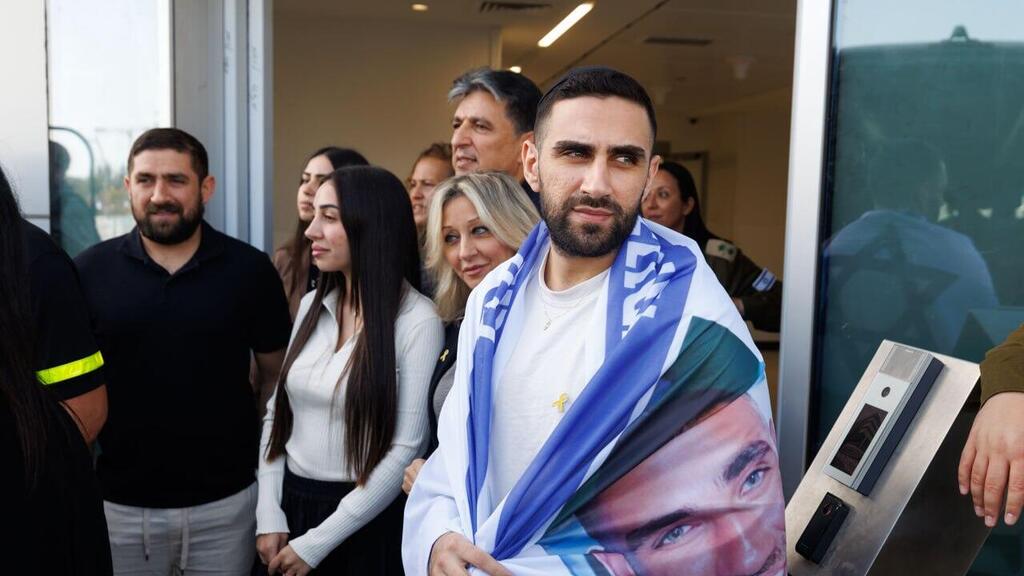
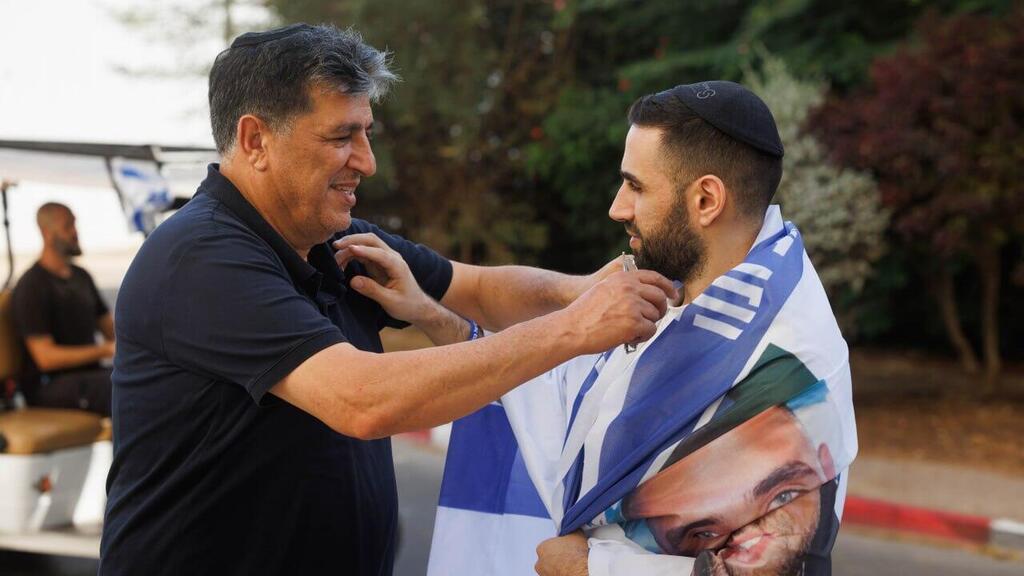
He does not know exactly when he realized he was going home. But the moment he was transferred into the Red Cross vehicle, he will never forget. “I felt a boulder lifted from my heart. I told myself, that’s it, I have beaten life. Who can stop me? I went through the worst thing a human being can go through. Gaza is behind me. I am in the hands of the Red Cross. I am on my way to my country. On my way to my family.”
And now you are home. Can you feel anything beyond the pain?
“For me, for my recovery, I promised myself to take only the good things. There is so much bad, and I could sink and drown in the evil that was there. First of all, the family. There, I regretted not being with them, for them, more. It broke my heart that maybe I did not do enough, did not visit enough. I kept asking only for one more chance to get out and fix things, to be a better person for myself and for those around me. I used to think I knew how to take care of myself, that I knew everything, and there I realized how not to take for granted that people around me want only my good. Because there they only wanted to harm me as much as possible. All the proportions change. If once you did not think twice about half a roll of toilet paper to blow your nose, today you can manage with one square, sometimes even that is too much. Family is the most important to me now. I do not want to leave them for a second, and I will not leave them.”
Healing is a big word, but what do you feel can heal you now?
“I think what will help me heal is to let go, to bring out and talk about what I went through there, and the faith that has grown stronger in me. Because I have someone to lean on. I make the most of every moment. I enjoy every moment. I live.”
First published: 18:21, 10.31.25