


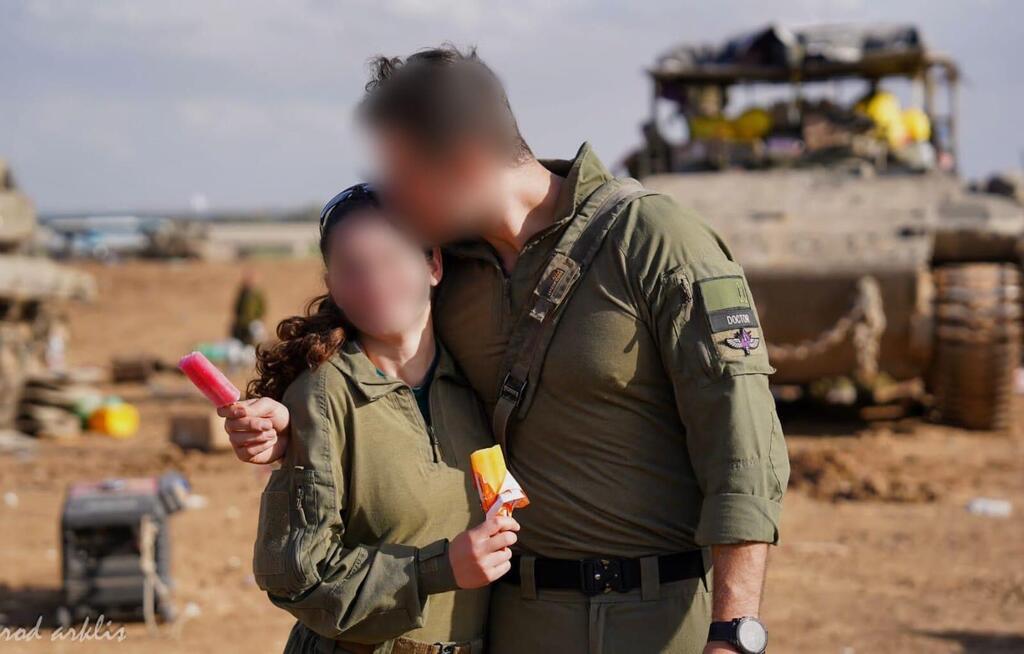
The first time Capt. Dr. T. and Capt. Dr. A. saw each other after the outbreak of the Swords of Iron war came only two months later. The long-awaited reunion took place in Khan Younis. The two stood atop a mound of garbage and embraced for a long time. It was not ideal scenery, but it was part of the professional hardships of an almost impossible relationship between a doctor and a doctor in the IDF, especially in a combat unit and all the more so during wartime.
At the time, Capt. T. was the medical officer of the Givati Reconnaissance Unit, and Capt. A. had just begun her role as medical officer of the Rotem Battalion. Amid all this, life went on.
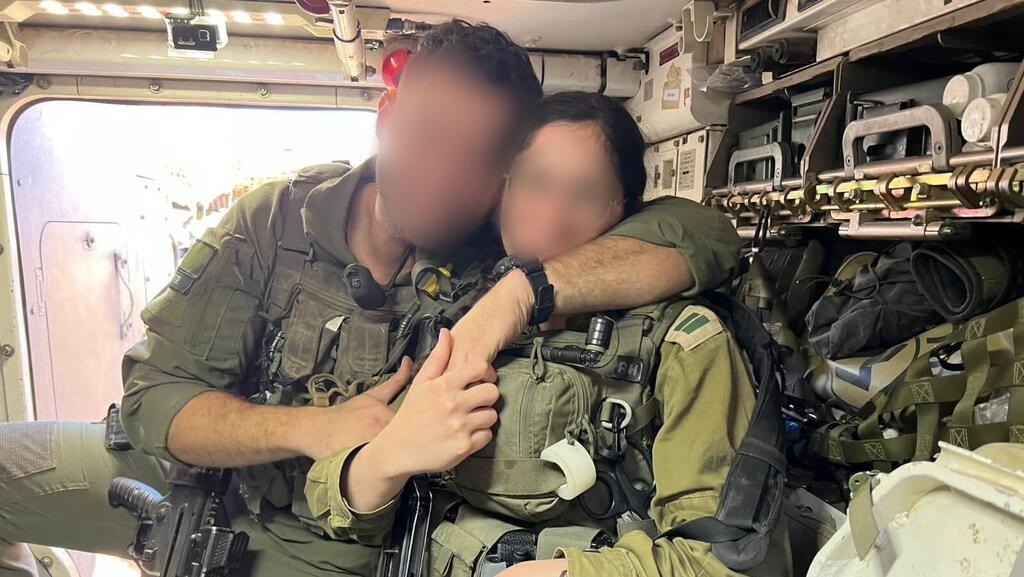
“At the beginning of the maneuver, A. was outside and I was already inside, and one of the hardest and most challenging moments was when she began maneuvering,” Capt. T. recalls. “I realized that beyond worrying about what was happening around me, I was now also under pressure about what might happen to her. Every update I received from those places made my heart sink. In this reality, you experience so many events and you do not always have time to update the other side. Sometimes it creates difficulty, how to tell each other everything we have been through when there is no reception and so much is happening around us.”
“It was a very difficult period,” Capt. A. adds. “During T.’s first incident with Givati, literally on the second night, he heard over the radio that an anti-tank missile had hit the landing zone. And months later, when he had a complex incident of his own, I knew there was active fighting at the site and that he was evacuating wounded soldiers under fire. It is not like the usual detachment you rely on as a medical officer. You know your partner is there. It is a bit insane.”
Now, two years later, when the war no longer defines every minute of the day and it is finally possible to look back with slightly less strained breathing, they make time to talk about those intense years. Like many such stories, theirs began far from the battlefield, on a classroom bench in the military academic reserve medical program, Tzameret.
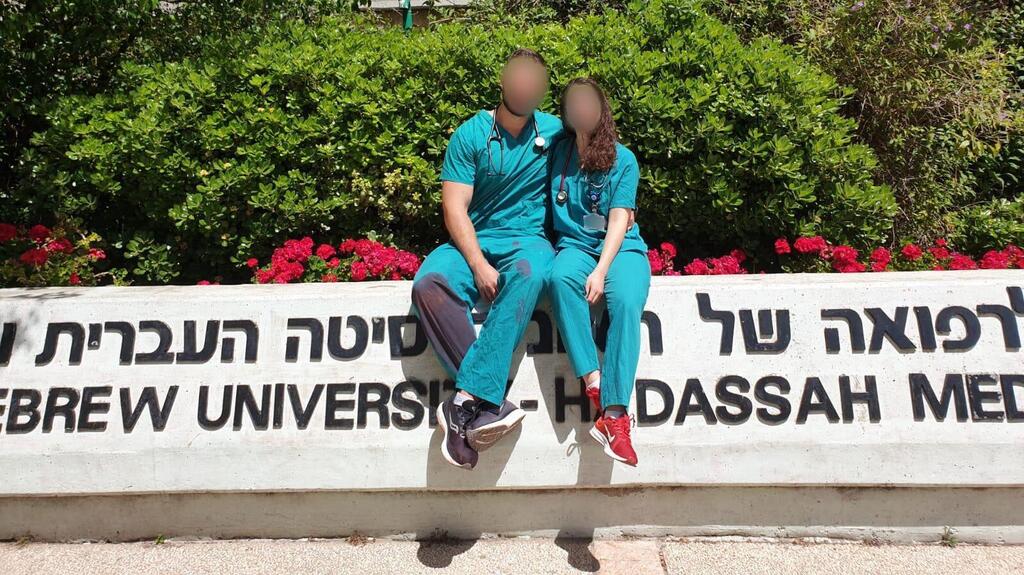
A love story that blossomed between students
(Photo: IDF)
“I started the program in 2013,” T. says. “At the end of my third year, I took a two-year break from my studies, dropped two cohorts and joined A.’s class. We continued our studies together, in the same year and already as a couple. I think our first meeting was in the dorms, at a shared friend’s apartment where he used to host group dinners.” He turns to A.: “Do you want to share your version?”
A.: “Yes. I thought he was obnoxious.”
T.: “She thought I was obnoxious and a bit strange.”
A.: “I did not think you were strange.”
T.: “She did,” he says with a smile. “But over time and effort, I won her over. It started with studying for exams together. Many hours and sleepless nights. From there, something grew that was a bit more than two friends studying together.”
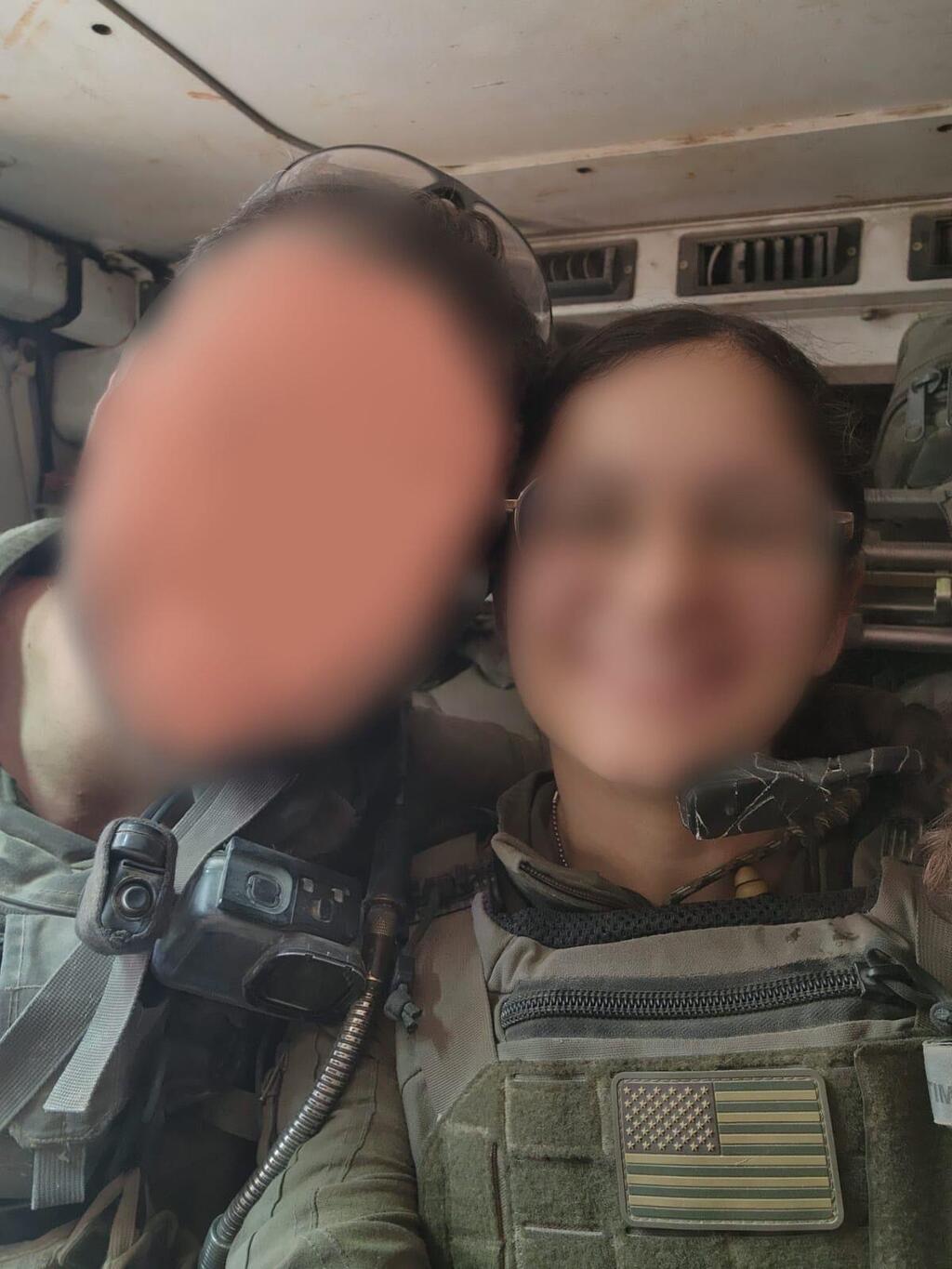
Plenty of shared ground for conversation
(Photo: IDF)
They have been together ever since. He is 30, she is 28. Both are doctors, both officers, both chose a path that leaves little room for error.
After completing the reserve program, Capt. T. was assigned to the Givati Reconnaissance Unit, even before the war changed the rules of the game. When the fighting began, he served alongside the unit, then spent a year and a half in the Egoz unit. Today, he serves as the medical officer of a special unit that prefers to remain unnamed.
Capt. A., for her part, was assigned as the battalion medical officer of the Rotem Battalion in Givati, a first and particularly demanding role. She later became the brigade’s senior medical officer. She spent nearly two years in Gaza and received a presidential citation for her exceptional service.
For Capt. T., the transition into the role of combat medic came with a sharp and rapid change. “It was not only the professional load and responsibility, but also adapting to a new reality inside a combat battalion,” he says. “The shift from university fluorescent lights to military uniforms and a battalion framework was not simple, for me personally and for the relationship.”
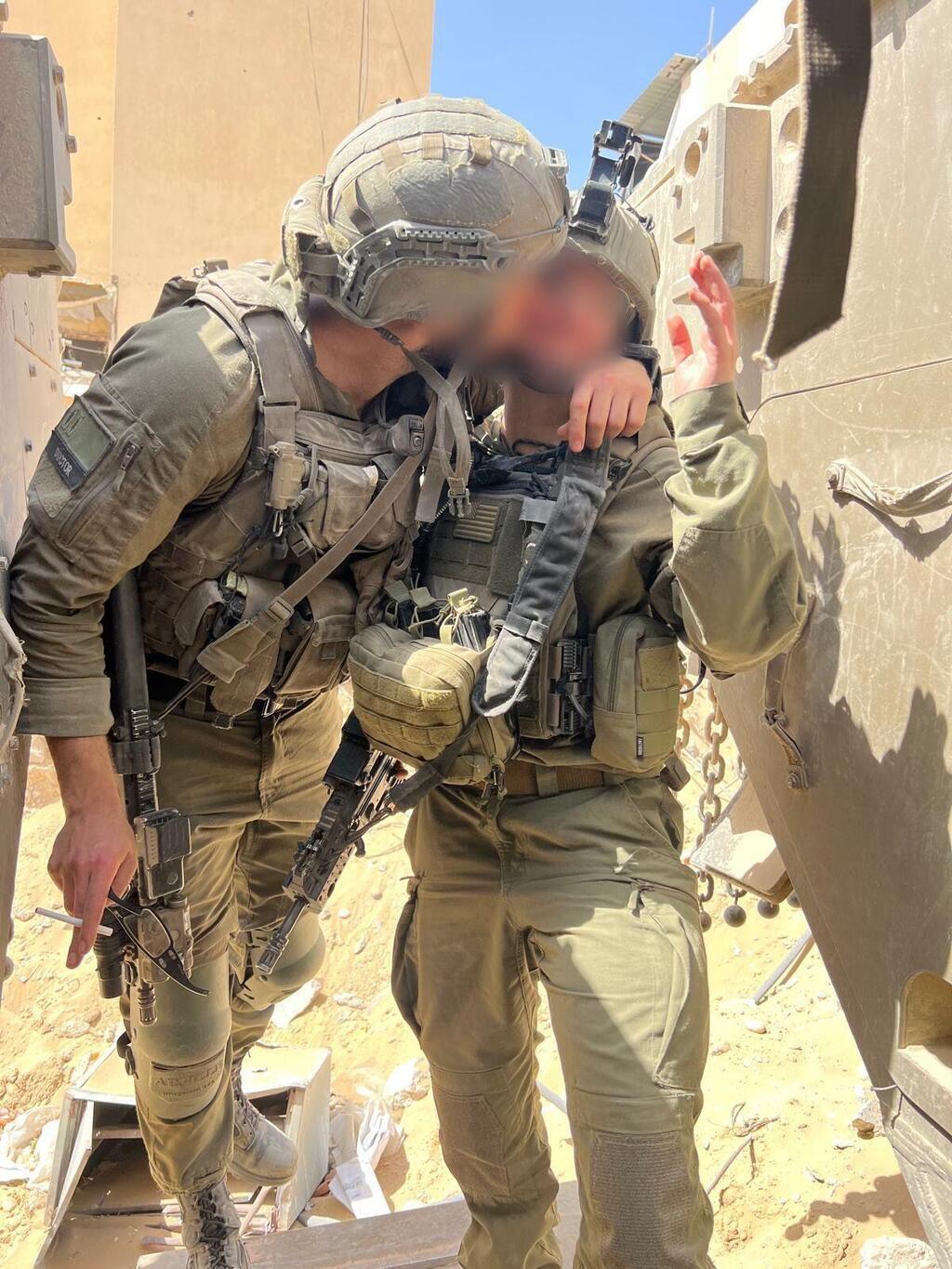
Over time, experience did its work. “You gradually realize the unique value you bring as a battalion medical officer, when you provide routine medical care and also carry a stretcher shoulder to shoulder during operations. That value has no equivalent anywhere else,” he says. “This became especially clear after October 7. When a fighter advances and sees you beside him, someone a decade older with rank, he walks with confidence. He knows, and often from firsthand experience, that if something happens, there is a doctor next to him who will do everything to reach him, treat him and fight for his life.”
(Photo: IDF)
Life-and-death decisions became tangible for T. in early October 2024 during a fierce battle by Egoz forces in southern Lebanon against Hezbollah. Forty-eight soldiers were wounded and six were killed. During a mass-casualty event that lasted hours under fire, responsibility did not end with presence on the ground. It meant constant real-time decisions.
“There were more than 10 doctors and paramedics there, many more experienced than me,” he says. “But the overall responsibility fell on me. Managing the wounded, setting priorities, deciding who is treated first and how evacuation is carried out. There is almost no room for mistakes.”
Asked if he feared for his life, he answers without hesitation. “Yes. We were moving through a mined forest, walking single file, stepping exactly where the person before me stepped. Every instinct told me to turn back, but I understood there were wounded soldiers and fighting, and I had to keep going.”
While T. recalls Lebanon, A. experienced the war day after day inside Gaza. Responsibility came not in one wave, but as a constant drip.
She describes an incident during the maneuver in Jabaliya. A soldier was critically wounded by an anti-tank missile and evacuated by helicopter. Later that day, another missile was fired at her team from an alley. They were thrown back by the blast. For hours, others believed they had been killed.
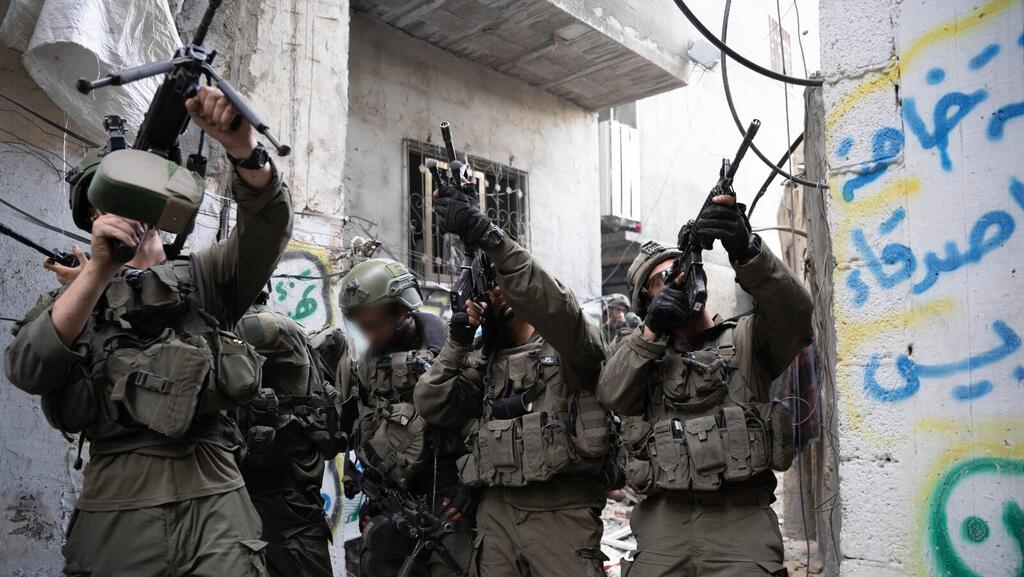
Operating in Jabaliya
(Photo: IDF)
“We each had minor injuries,” she says. “But it was a very difficult sequence of days. These are situations that confront us every time we reach underground areas and tunnels.”
Even couples living ordinary lives know that relationships require work. For T. and A., that work unfolds in an extreme reality. Yet what might seem a disadvantage also became an advantage. Their bond is built not only on emotion, but on understanding.
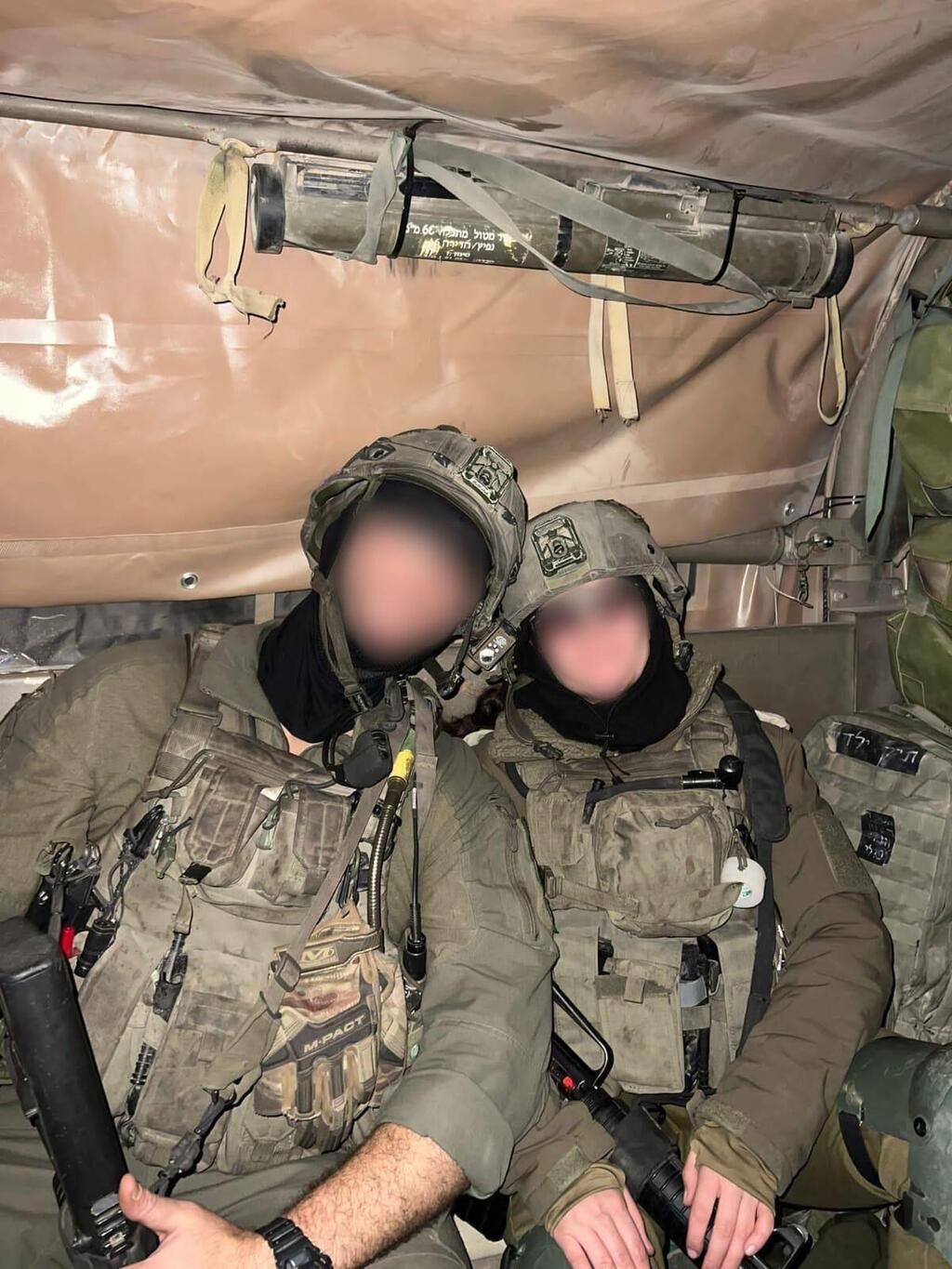
“There is no one who understands us better than we understand each other,” T. says. “Things like coming home after 28 straight days inside an armored vehicle, or eating combat rations and sharing them with your soldiers. With all the difficulty, we came out stronger.”
(Photo: IDF)
(Photo: IDF)
Somewhere along the way, they managed the nearly impossible. They got married.
“I proposed in August 2023,” T. says. “I surprised her in Thailand. She was on vacation with her family. I told her I was on an operation and unavailable. I boarded a flight and proposed.”
They married in April 2024. The planning took place while A. was in Khan Younis. “I would go up to the roof to talk to my mother,” she says. “My commanders were not comfortable with it. In the end, my battalion commander told me: ‘You will get married, and we will come.’”
Now, the pace has slowed, but neither believes the war is truly over.
“Every day that ends with a hot shower and a bed is not taken for granted,” T. says. “And for many people, that is still not reality.”
Would you do anything differently?
“No,” T. says. “We are proud of what we do. Our roles are deeply fulfilling.”
What about children?
“That is close,” he says.
“We will cross that bridge when we come to it,” she replies.