

At around 4 a.m., two young men riding an electric scooter approached a branch of Japanika, a popular Asian restaurant chain, in the central Israeli city of Givatayim. According to an indictment, the two suspects, both around 18 and wearing masks, were carrying bottles containing roughly 4.5 liters of flammable liquid. They allegedly set fire to the restaurant and fled as the flames spread. An employee was inside at the time but was not injured. The branch suffered heavy damage.
The arson was part of a wave of criminal attacks on Japanika branches that shook Israel in recent weeks. Branches in Ra’anana, Netanya and Givatayim were shot at, some attacks also involved fragmentation grenades, and the Herzliya branch was targeted twice. Grenades were thrown at branches in Afula, Rosh Pina and Bat Yam. An explosive device was thrown in Ramat Gan, and earlier this month a branch under construction in Hadera was also targeted with a grenade.

The full extent of the violence may not yet be clear, but the key question is what triggered it. In court, police Superintendent Rafael Amon presented classified material and said the attacks on Japanika branches were carried out against the backdrop of “a very large, violent dispute lasting more than a month between two of Israel’s most powerful organized crime groups, the Mosli and Jarushi organizations.”
The Mosli organization, led by brothers Yossi and Eli Mosli, is considered by police to be one of Israel’s most powerful crime groups, with operations in the greater Tel Aviv area as well as reported activity in Eastern Europe and South Africa. Police intelligence has linked the group not only to traditional organized crime such as extortion and gambling, but also to money laundering and other financial activity.
The Jarushi organization, based in the Jawarish neighborhood of Ramla, is divided into several factions. Police say brothers Ismail and Issam Jarushi sit at the top of its hierarchy.
Police have been working on the assumption that the Mosli organization was behind the Japanika attacks. Investigators believe the chain may have been targeted because its owner, businessman Barak Abramov, is considered close to figures associated with the Jarushi organization. Abramov himself is not suspected of wrongdoing or involvement in the case.
Both organizations deny that any feud exists. But when two of Israel’s most powerful organized crime groups are believed to be in conflict, the potential consequences are far-reaching.
In recent weeks, several theories have circulated over what could have triggered such a conflict: territorial disputes, defections between groups and competition over illegal sports betting.
But people familiar with the dispute point to another possible trigger. They claim the confrontation began over a joint criminal cryptocurrency venture abroad worth tens of millions of shekels. According to those claims, Eli Mosli divided the proceeds, but Ismail Jarushi believed his side had received less than it was owed.
The dispute allegedly escalated from there. Because Jarushi members are heavily entrenched in Jawarish, the sources claim, Mosli associates instead began targeting Japanika branches. Some now say the two sides have agreed to appoint an arbitrator. Whether that succeeds may become clear only if the attacks stop.
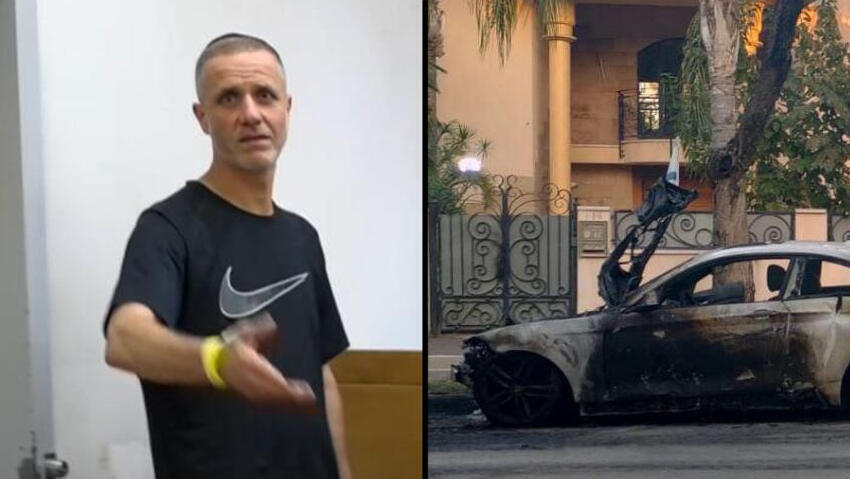
The attempted assassination of Yossi Mosli
(Photo: Nadav Abas)
The dispute, however, reflects something much larger: a cryptocurrency revolution sweeping through Israeli organized crime. For decades, criminals relied on suitcases of cash, currency exchange businesses, shell companies, fake invoices and physical smuggling routes to move and launder money.
Increasingly, investigators say, those methods are being replaced by digital wallets and cryptocurrency transfers. The currencies fueling high-level criminal activity are no longer necessarily shekels, dollars or euros, but Bitcoin, Ethereum and stablecoins such as Tether. At the upper levels of the criminal economy, police say, business is increasingly conducted on blockchain networks.
That shift is fundamentally changing both organized crime and the agencies trying to fight it. Attorney Yaron Gigi, who represents several crime families from Israel’s Arab community, said cryptocurrency’s attraction to criminals is easy to understand.
“It allows money to move quickly, 24 hours a day, from one country to another, without going through the regular banking system and without the wallet owner’s name appearing on every transaction,” he said. “From a criminal’s perspective, the attraction is obvious. There is no suitcase of cash, no border crossing with banknotes and no banker asking questions. Significant sums can move from one digital wallet to another within a short time, even across thousands of miles.”
The issue surfaced indirectly last week during a hearing on extending the detention of Yossi Mosli, who had been arrested on suspicion of involvement in the Japanika case. His attorney, Doron Noy, referred the court to intelligence material disclosed to the defense concerning “money laundering and similar matters,” which investigators suspect may be connected to the alleged cryptocurrency dispute.
Mosli was later placed under an unusually lengthy 45-day house arrest under an administrative restriction order. The order barred him from Tel Aviv, Herzliya and several other central Israeli cities and prohibited him from using the internet or messaging applications. He was also banned from leaving the country and from contacting associates.
Such administrative restrictions outside the West Bank are extremely rare. But investigators say the criminal landscape has changed, requiring new tools.
Dudi Katz, a senior Israeli police intelligence commander and former head of Lahav 433’s national cybercrime unit (Israel’s equivalent of a national serious-crime investigative unit), said the phenomenon extends far beyond the Mosli and Jarushi organizations.
“Today we have intelligence, and in some cases evidence that has already developed into criminal investigations, showing that crime organizations across all sectors are using cryptocurrency to launder money,” Katz said.
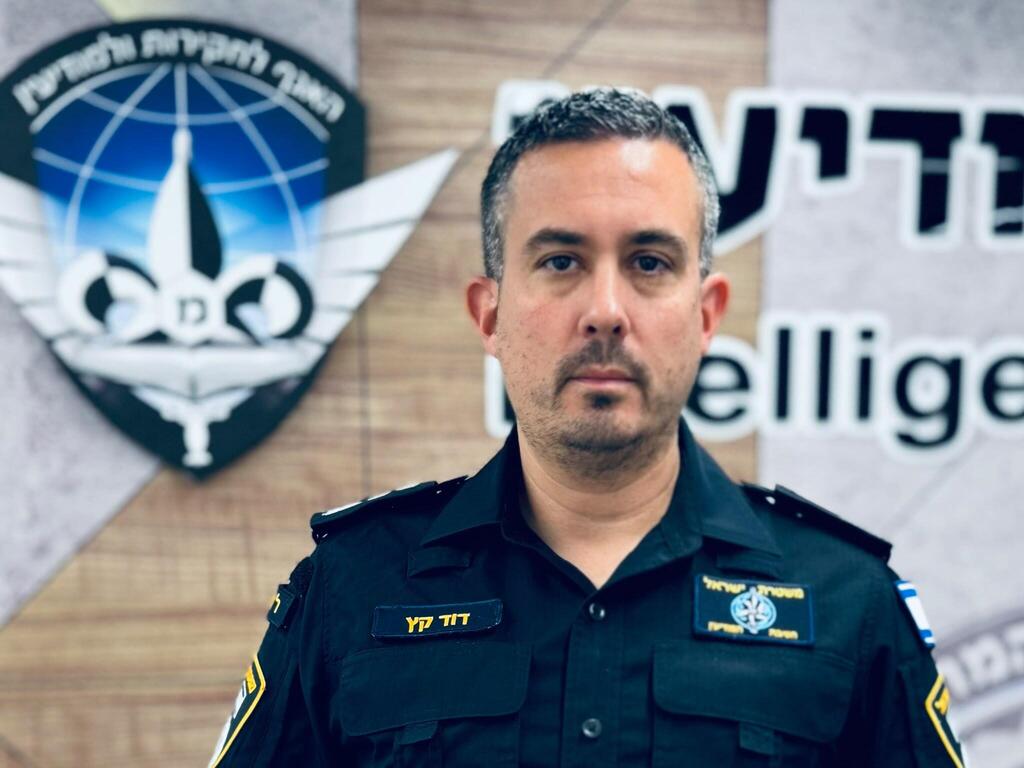
Commander Dudi Katz
(Photo: Israel Police)
What do they actually use cryptocurrency for?
“To finance their criminal activity, for buying and selling. Weapons, drugs, salaries for their soldiers and payments to killers, among other things.”
A hitman gets paid in Bitcoin?
“The large organizations don’t usually carry out murders themselves. They use subcontractors, smaller organizations affiliated with them that carry out the killings. The payments are in cryptocurrency.”
And if they are importing drugs from a cartel, for example, is that also done in crypto?
“You can’t buy from a drug cartel in cash anymore. They will only sell in cryptocurrency. It is all online, dealing with a user, usually through Telegram or Signal.”
But that must also create opportunities for criminal organizations to scam one another.
“There are plenty of scams in this field, but at the senior levels of organized crime they know how to work with each other. Besides, anyone who cheats once in the virtual world will pay for it in the real world.”
***
Bitcoin, the original cryptocurrency, was launched in January 2009, but police say Israeli organized crime groups only began seriously recognizing the potential of digital currencies around 2017. The appeal was clear: transactions could move rapidly across borders, often without the type of identifying information attached to traditional bank transfers.
But they quickly discovered that their new digital tool came with two major drawbacks. The first was volatility. Over the past year, Bitcoin’s price has swung dramatically between about $58,000 and $126,000. At the time of writing, it was trading at around $63,000.
So a crime organization holding the equivalent of one million shekels in Bitcoin could find itself with half that amount a few months later. It is difficult to run a criminal business that way.
“Exactly,” Katz said. “And that is exactly what happened to them more than once with Bitcoin. The volatility made them nervous. The real breakthrough came around 2020–2021, with the rise of stablecoins such as USDT, or Tether. Stablecoins are designed to maintain a fixed value, commonly one U.S. dollar per token. These tokens run on Ethereum, the world’s second-largest cryptocurrency network, which allows new digital tokens to be created using automated code known as a ‘smart contract.’”
Why is that useful to them?
“Because the smart contract effectively replaces some of the functions of a bank. It manages the token automatically and helps ensure that each unit is designed to remain worth one dollar. For crime organizations, that makes stablecoins especially attractive: money can move quickly and securely, without the fear that its value will suddenly collapse.”
The next obstacle was technical. Cryptocurrency is complicated, requiring both technical knowledge and a fairly sophisticated understanding of how digital assets work. For old-school criminals accustomed to settling matters with a baseball bat, brass knuckles or bundles of cash held together with rubber bands, the transition was not necessarily straightforward.
“Some criminals understand this world less, so they turn to younger people who do crypto-related work for crime organizations,” Katz said. “For the younger generation, dealing with cryptocurrency is as natural as dealing with ordinary money is for us.” So the organizations began recruiting people who did.
“There are criminals who understand less about this world, and they turn to a lot of younger people who carry out cryptocurrency work for crime organizations,” Katz said. “For the younger generation, dealing with crypto is like dealing with money for us.”
How much does a cryptocurrency specialist get paid for work like that?
“In some cases, millions. These specialists know not only how to convert digital money into regular fiat currency, but also how to build platforms on blockchain networks that generate income for those organizations. Some took crypto courses. Others taught themselves and started creating scams.”
What kinds of scams?
“Many crime organizations are involved today in forex fraud. Foreign-currency trading has increasingly moved into cryptocurrency. To build those platforms, criminals need specialists.
“Another method is creating a new cryptocurrency, manufacturing fake demand and then marketing it to people looking to invest. Eventually the demand is revealed to be artificial and the investors lose their money.”
Do criminals also use cryptocurrency to launder money?
“Until recently, a crime organization needed a broad money-laundering infrastructure: buying assets, moving money abroad and so on. Today, it can simply open a digital wallet and transfer its criminal proceeds into it.”
For readers unfamiliar with this world, how does it actually work? What exactly is a crypto wallet?
“There are three main types of wallets, and the difference between them is the level of security and control over the money. The most secure is a ‘cold wallet,’ a small physical device that looks like a USB drive and remains completely disconnected from the internet.
“When it is first activated, it generates a recovery phrase of 12 or 24 English words. That phrase is effectively the key to the wallet: if the device is lost, broken or stolen, you can enter the words into a new device and recover the funds.
“Because a cold wallet has no regular internet connection, hackers cannot remotely break into it, so it is mainly used to store very large amounts for long periods.”
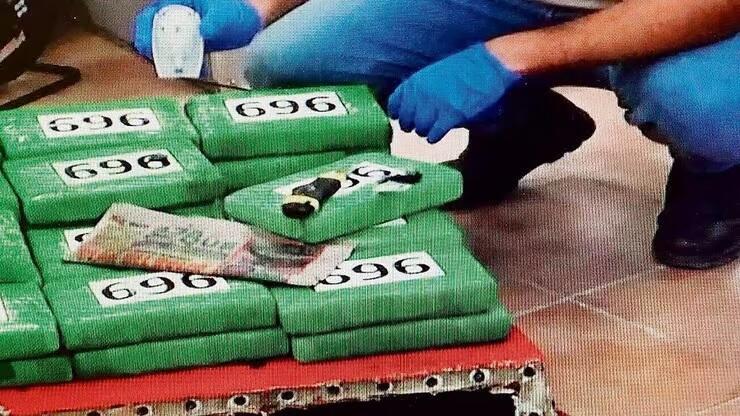
Packages of cocaine smuggled to Israel by a Colombian cartel and seized by police
(Photo: Israel Police)
Can police break into a cold wallet?
“No. That is the closest thing to complete anonymity. It is almost impossible for police to remotely access a cold wallet.”
What is the second type?
“A hot wallet. That is an app on a phone or software on a computer. The user still has sole control and receives the same 12- or 24-word recovery phrase. The difference is that the wallet remains connected to the internet, making it fast and convenient for daily transfers but more vulnerable to hacking, malware and fraud.”
And the third?
“A custodial wallet, managed by a third party, such as a large cryptocurrency exchange. It works much like a digital bank account. You log in with a username and password, and if you forget them, customer service can restore access.
“The disadvantage is that the money is not really under your sole control. If the exchange collapses, or police arrive with a court order and ask it to freeze the account, the account can be locked immediately.”
There is no precise estimate of how much cryptocurrency moves through Israel’s criminal economy. “We seize more than 100 million shekels in cryptocurrency every year,” Katz said. “But, obviously, we do not seize all of it.”
How do you seize cryptocurrency if the money is digital and the wallets are encrypted?
“There are several methods. One is when we manage to find the passwords. Sometimes, alongside investigating the crime itself, an entire investigation is carried out just to determine where the suspect keeps the password to his crypto wallet. And once you find it, you have to move quickly so nobody changes it.
“Every criminal who holds a cryptocurrency wallet will usually have someone he trusts who keeps the password in case he is arrested.”
In one case, Katz said, investigators searching the home of a senior criminal found a crypto password written on a piece of paper in a bedside drawer. “We entered the wallet with the password and started transferring the money out,” he said. “Then we noticed that at the same time, his partner was rapidly moving the money to another wallet. It became a race to see who could move it faster.”
And if the money is held on a cryptocurrency exchange instead of in a cold wallet?
“If I extract data from a suspect’s phone and find an app belonging to that exchange, I approach the company with a court order and ask it to freeze the money.
“If I receive intelligence, or technological monitoring shows that the person is communicating with a particular exchange, I can also approach it with a court order and ask for details. The problem is that 99% of those exchanges are abroad, and they do not owe me anything.”
***
Once major crime groups embraced cryptocurrency, police say many unregulated money changers and gray-market currency businesses followed.
“Today, money changers provide cryptocurrency services to serious crime organizations,” Katz said. “Some use crypto to launder money, others convert digital currencies into cash for crime organizations or hold digital wallets on their behalf.”
That is where investigators face one of their biggest challenges. Cash leaves a physical trail. Bags move from one location to another. Bank transfers and checks leave financial records. A digital wallet can move enormous sums without any physical movement at all.
In November 2024, investigators raided a money exchange business in Jerusalem and discovered a single digital wallet containing cryptocurrency worth $101 million, primarily Ethereum. Police suspected the business was being used for large-scale money laundering through undeclared cryptocurrency transfers.
The wallet was registered in the exchange owner’s name, but police suspected the actual beneficiaries were organized crime groups. Investigators struggled to prove precisely who owned the underlying funds because blockchain transactions identify wallet addresses rather than conventional account holders.
Authorities also seized property, cash, foreign currency and cryptocurrency worth more than 6 million shekels. Nearly two years later, no indictments have been filed in the case.
How do you confiscate cryptocurrency? Is it treated like property?
“We transfer the money into a police wallet and later convert it into shekels. It then goes into the forfeiture fund,” Katz said. “If a court later orders us to return confiscated crypto to a suspect, he comes to my office and I transfer the money back into his wallet. Of course, a minute later he is already splitting it between several different wallets.”
Have police ever lost the code to a suspect’s wallet?
“It happened. We were sued and damages worth millions of shekels were awarded. It was human error. An investigator opened a wallet to transfer money and recorded the password incorrectly, and suddenly we had a wallet we could no longer access.”
In September 2025, police uncovered another suspected cryptocurrency-based financial network in Kafr Qasim involving seven people. Investigators believe the operation functioned as a financial lifeline for organized crime groups in Israel’s Arab community and elsewhere, laundering an estimated 110 million shekels through crypto.
Police suspect the original funds came from protection rackets, drug trafficking, gray-market lending and gambling. The money allegedly passed through dozens of decentralized digital wallets before being transferred to foreign accounts or used to acquire overseas real estate.
Authorities also found hidden safes, hundreds of thousands of shekels in cash and stacks of dollars and euros. Three suspects were described as operators in their 30s and 40s, while four others allegedly worked as couriers and field operatives.
The case remains with prosecutors, who have yet to decide whether to file indictments. Six suspects have been released under restrictions, including travel bans. A seventh remains in custody because he is also accused in a separate security case.
That case highlights another major concern for investigators: cryptocurrency is not only making criminal financing faster but can also facilitate terrorism financing. Katz said police once raided a money exchange business in Tel Aviv after intelligence indicated that a suspect had converted a large amount of cryptocurrency into cash.
What did you discover?
“The investigation found that the money ultimately went to fund Hamas.”
***
As crime organizations recruited younger crypto experts, Israeli law enforcement concluded it needed a different type of investigator as well. “We recruit these young people, Generation Alpha,” Katz said. “The cyber unit is full of these kids, with long hair and nose rings. These are the new police officers. They are a values-driven generation, and with them we can win. They know how.”
The “kids with long hair and nose rings,” as Katz described them, are part of a new generation of investigators engaged in technical battles with the cryptocurrency specialists hired by criminal organizations.
One example emerged in May 2025, when several people in their 20s from Rehovot, Ariel and Haifa were arrested in connection with an alleged crypto-investment scam. Police say the group had spent five years posing as a cryptocurrency investment company, targeting primarily elderly Russian-speaking Israelis.
Victims were persuaded to invest in what appeared to be a promising new market. Their money was then allegedly routed through a complex chain of digital wallets designed to obscure the trail. Investigators from Lahav 433’s cyber unit and the Central District fraud unit ultimately traced the transfers to a central wallet abroad containing more than $10 million in Tether.
But when police sought a court order allowing them to freeze the funds, a new legal problem emerged. A district court ruled that Israeli authorities lacked jurisdiction to order a foreign cryptocurrency company to freeze a wallet.
Prosecutors warned that the ruling could create a “digital haven” for criminals and appealed to the Supreme Court. In a precedent-setting decision, the Supreme Court ruled that Israeli police could indeed act through foreign cryptocurrency companies to freeze suspected criminal assets. More than $10 million was frozen.
The case is now in its final and complex investigative stages ahead of a possible decision on indictments. If defendants are eventually convicted, some of the victims may be able to recover part of their losses.
Israel has several legitimate cryptocurrency companies licensed and regulated by the Capital Market Authority to convert and trade digital assets. “But criminals won’t go to them,” Katz said. “When it is an Israeli company, I have no problem obtaining a court order.”
A much harder problem arises when crime groups create their own fake cryptocurrency trading platforms and use them to lure unsuspecting investors. Police say that is what they uncovered in September 2023, when investigators raided a software company in Ramat Gan.
The company was suspected of creating fraudulent cryptocurrency trading platforms for crime groups in Israel and abroad, in a scheme allegedly worth tens of millions of euros.
According to investigators, the platforms displayed rising charts and fictitious profits to investors while their money was never actually invested. Instead, police suspect, the funds went directly to accounts controlled by criminals.
The system allegedly allowed operators to manipulate the victims’ supposed gains and losses with the click of a button, encouraging them to deposit more money. The investors saw profits on a screen. The money, police say, was never there. No indictments have yet been filed in that case.
Police are not fighting the shift alone. The Israel Tax Authority, customs authorities, VAT investigators, the Israel Money Laundering and Terror Financing Prohibition Authority and state prosecutors have all established teams focused on cryptocurrency.
Shlomi Estrogo, a senior Tax Authority investigations official who has led major financial investigations into organized crime, said the agency has developed sophisticated tools for identifying high-volume wallets and tracing transfers.
“We have a department at the Tax Authority that deals with the crypto world at the highest level,” he said. “It identifies wallets with high activity volumes, from three million shekels and upward, and tracks their activity.”
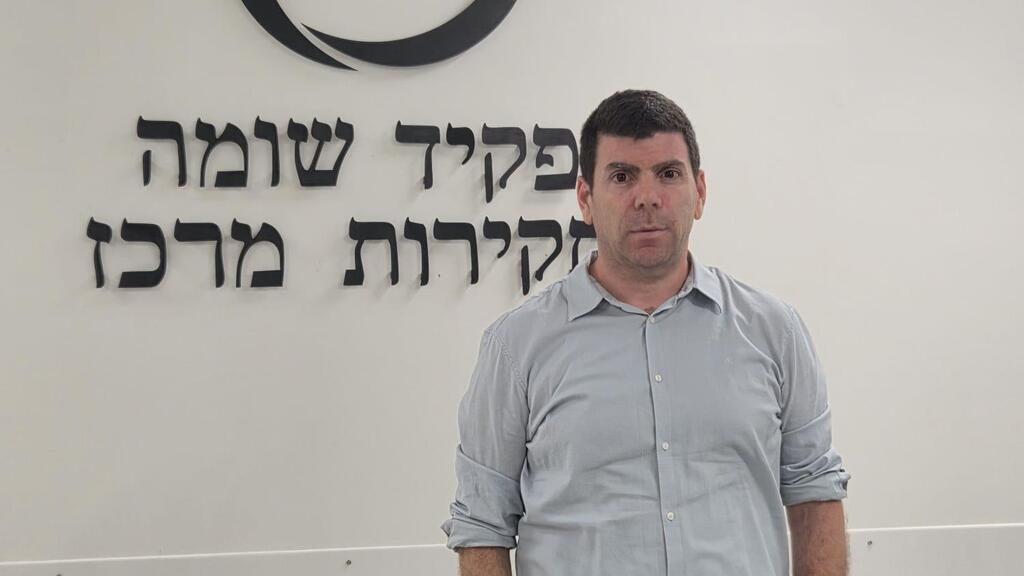
Shlomi Estrogo
How? Aren’t those wallets supposed to be anonymous?
“Because this was new for criminals too, and because they thought it was anonymous, they made mistakes and operated in places that left traces, whether on cryptocurrency exchanges or in transactions with other people’s wallets.
“Anyone trying to conceal assets through crypto needs to understand that this market is like a web. In the end, using artificial intelligence, I can identify who a wallet belongs to. A criminal can transfer the contents from one wallet to another, but he cannot erase the record from the blockchain.”
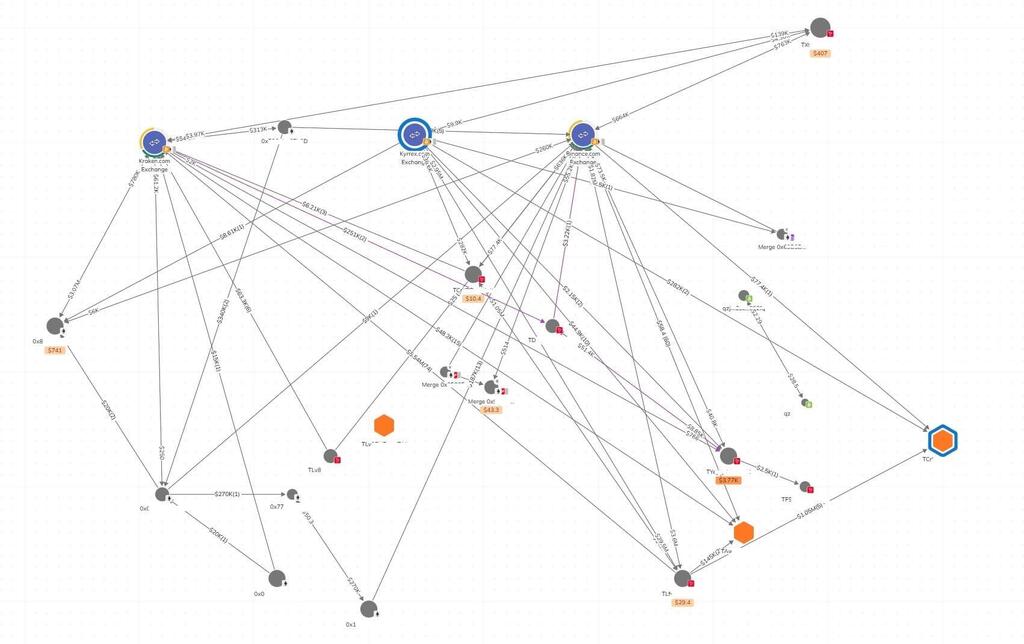
A computerized Tax Authority system tracking cryptocurrency flows
(Photo: Israel Tax Authority)
Inside one of the agency’s computer rooms, suspicious cryptocurrency wallets are monitored continuously. When a wallet contains $100,000 or more, it flashes red on investigators’ screens. Wallets known to be connected to it appear alongside it, mapping the network of transactions between them.
A similar alert appears if a wallet has previously been flagged by law enforcement agencies abroad as being linked to suspected criminal activity.
Investigators can then monitor the wallet’s activity, while major cryptocurrency exchanges are also alerted to such risk indicators. Large exchanges generally try to avoid dealing with flagged wallets and may block deposits or withdrawals.
What happens when someone’s wallet is flagged and their money is effectively stuck?
“We had one case where the owner of such a restricted wallet called a plumber and paid him in cryptocurrency,” Estrogo said. “That innocent plumber suddenly found himself summoned for questioning simply because the money he received came directly from a criminal source.”
Estrogo said the Tax Authority is currently conducting several major cryptocurrency investigations involving hundreds of millions of shekels, but declined to provide details.
“The pursuit of crime organizations no longer takes place only on the streets or through wiretaps,” he said. “It is now fought through code servers, screenshots and financial forfeiture orders. Our cooperation with the police is what creates the full intelligence picture.”
Investigators fear this may only be the beginning. “The scale of cryptocurrency use is going to grow,” Katz said. “That is simply the reality. And as long as the Israeli police are not given back the technological tools they need, we are fighting in a world of spaceships with a bow and arrow.”
Responses
Attorneys Doron Noy and Shahar Hetzroni, representing the Mosli family, said: “Yossi Mosli denies any dispute with the Jarushi family, including any dispute related to cryptocurrency. Moreover, no such suspicion was put to him during his police questioning. He was arrested in what is known as the Japanika case and released several days later after not a shred of evidence was found against him.”
Attorney Yaron Gigi, representing the Jarushi family, said: “My clients completely reject the suspicions attributed to them. Contrary to the attempt to portray a ‘conflict’ between the families, they make clear unequivocally that they have no dispute with any person or other family.
“They argue that efforts to portray them as being involved in rivalries or feuds are based on fabricated, inaccurate and unfounded police claims that, over time, take on a life of their own and are wrongly treated as fact. My clients reject attempts to label them or artificially link them to disputes in which they have no part. There is a wide gap between headlines and rumors, and facts and evidence.”