

Only a few dozen yards separate Amal Asad’s well-kept home in Isfiya from the house of his 94-year-old mother, Dunya. Here, on the slopes of Mount Carmel, the boy who would become an IDF brigadier general was born and raised. From here he left for the recruitment office to enlist in the Paratroopers, five months before the 1973 Yom Kippur War. And this was where he returned on the day his world came crashing down.
It was September 12, 1993. That morning, Asad, then still a colonel, had begun his studies at Israel’s National Security College. Ten minutes into the first lecture, a soldier entered the room, approached Maj. Gen. Yossi Ben-Hanan, then commander of the IDF colleges, and handed him a note.
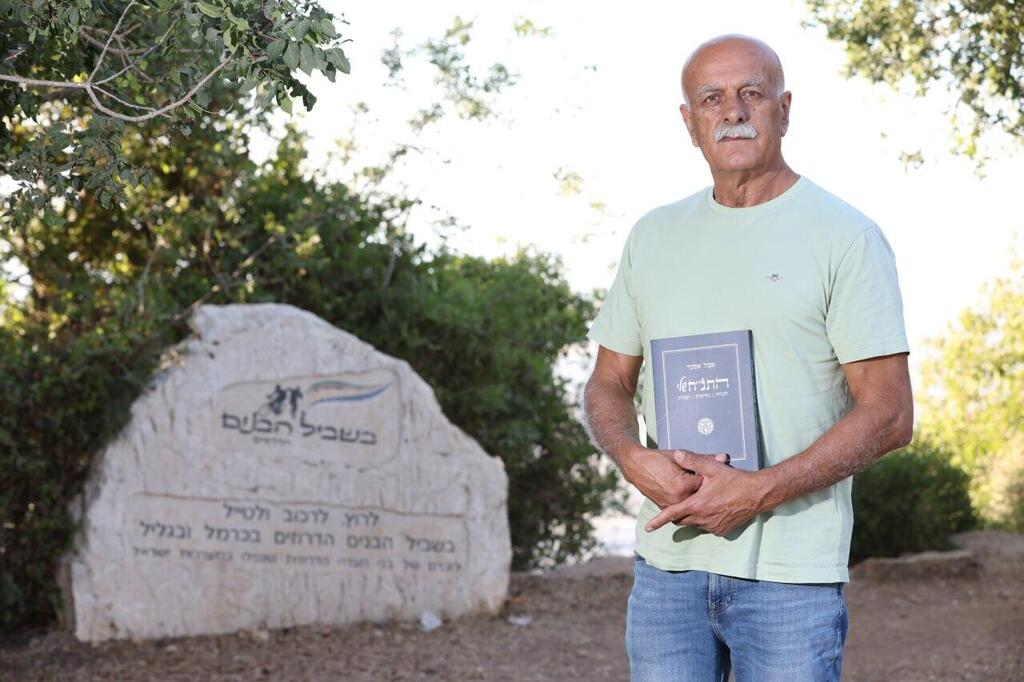
“Yossi looked at me and asked that the lecture be stopped,” Asad recalls. “He took me into his office, stood in front of me and said, ‘Amal, I’m sorry to tell you that your brother Wafa was killed in an encounter with terrorists in Gaza.’ I said, how can that be? The day before, he had come home from reserve duty to celebrate my birthday and that of his one-year-old daughter, Einav. We were born on the same date.
“I drove home with Col. Nabih Merhi, who was studying with me and was himself killed three years later in the Gaza Strip. The entire way, I kept thinking, ‘How will my mother take this?’ A year earlier, my father, Said, had been killed when his tractor overturned. Now she had lost her son too.”
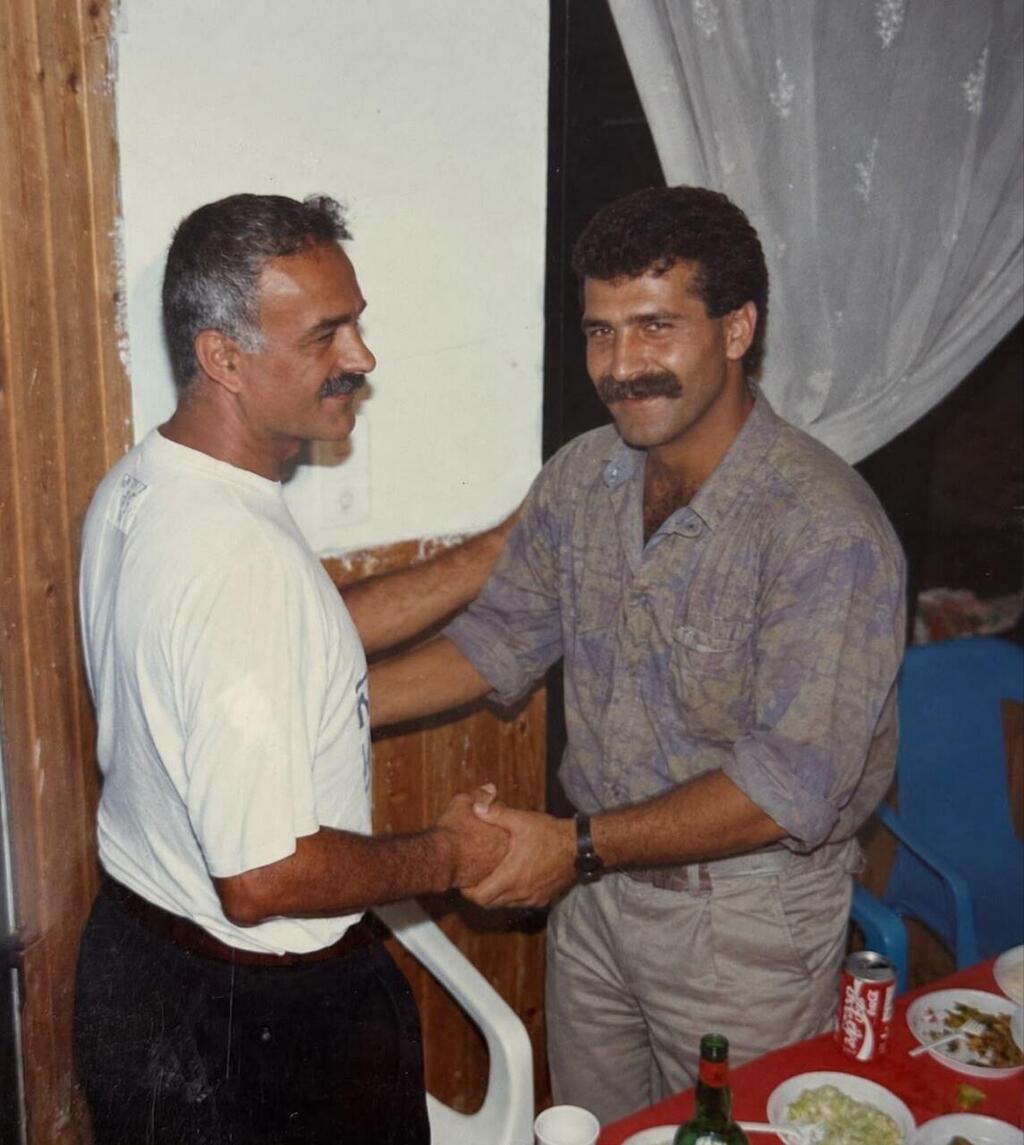
Amal (left) with his younger brother Wafa, who was killed in Gaza
(Photo: Courtesy)
By the time he reached Isfiya, his mother’s home was already packed with people. “I went inside and saw her sitting there like a noblewoman. My sisters were crying and screaming, and she was trying to calm them down. She was telling them it was God’s will, that this was our fate.”
Sgt. Wafa Asad was killed one day before the signing of the first Oslo Accord. “The patrol jeep he was in drove into an ambush in Shujaia,” his older brother says. “Two Hamas terrorists opened fire. Wafa managed to empty a magazine, but the driver was killed and the jeep crashed into the wall of a mosque. The terrorists approached my wounded brother, shot him to make sure he was dead, photographed him and circulated the pictures.”
Wafa was 27. He left behind a pregnant wife and a daughter. Two other Druze soldiers were killed in the same incident, Sgt. Muwafaq Abu-Shah and Staff Sgt. Ibrahim Shabal, both from Shefaram.
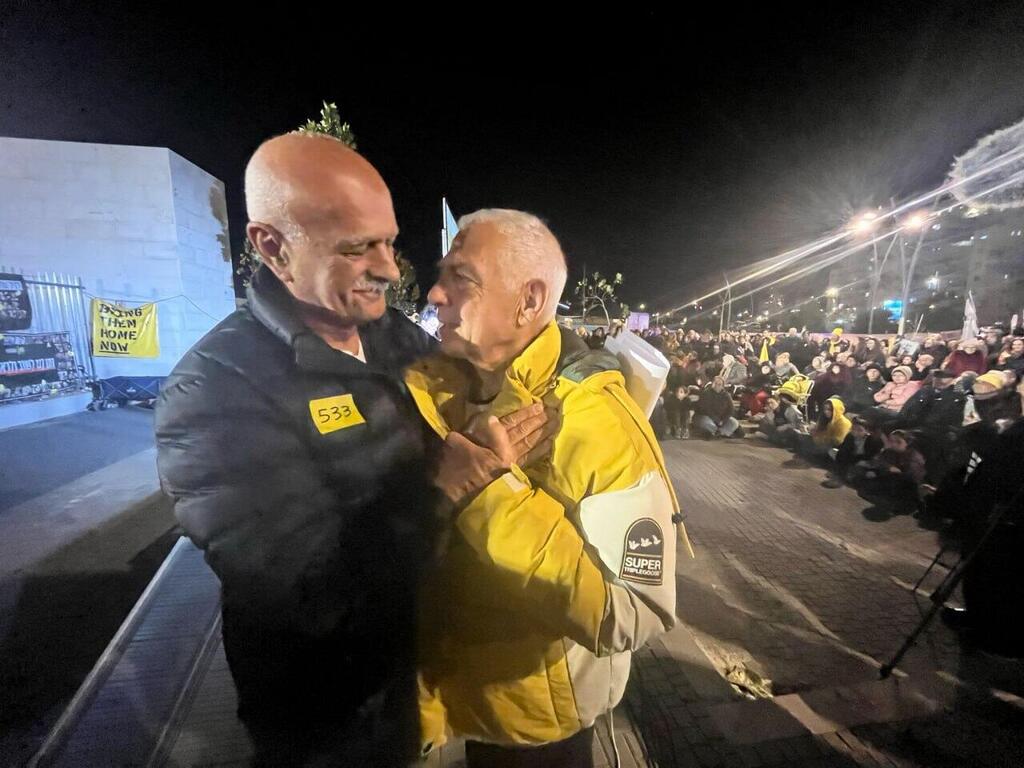
With released hostage Gadi Mozes at the alternative torch-lighting ceremony
(Photo: Gadi Kabalo)
The cell commander, Imad Akel, who was known as “the man with nine lives,” was killed several months later. The second terrorist was arrested and sentenced to life in prison.
“Before the last hostage deal, I said, ‘I am prepared for them to release my brother’s killer in exchange for freeing hostages,’” Asad says in an interview marking the publication of his new book, HaTanach Sheli: Daring, Determination, Compassion, edited and developed with Dorit Lerman. “I saw what their families were going through. In the end, he wasn’t released.”
‘The first slap I got from Jews’
For years, Asad wrestled with how best to commemorate his brother. “I didn’t want another monument. I wanted a living memorial. Wafa loved hiking, he loved running, every day he would run to Elyakim and back, and above all he loved people. I thought about building a trail around the village, but then I said: This isn’t only about my brother. It’s about all the fallen members of the community.
“That is how the ‘For the Druze Sons’ project was born, and it became my life’s work: a 220-kilometer trail beginning in Daliyat al-Karmel, passing through every Druze village and ending at Nabi Shu'ayb. Parts follow existing trails and others were newly prepared. KKL-JNF took responsibility for developing, marking and funding it.”

‘For the Druze Sons’ race
(Photo: Ronen Topelberg)
The idea emerged in 2013. Before there was even a trail, Asad and his friends decided to hold a ceremonial launch for the project with a race near the Muhraqa site on Mount Carmel. “I wrote a Facebook post. I thought a few hundred people would come. Six thousand showed up. I was stunned. Since then, it has become a tradition. Every year we hold a race that draws between 15,000 and 20,000 people.”
The 2026 “For the Druze Sons” race was held Friday near the Golani Junction, with four events: a 10-kilometer run, a three-kilometer run, a 25-kilometer bicycle ride and a three-kilometer public walk. “The trail is now nearing the end of the signage stage, and in March 2027 we will officially inaugurate it,” Asad says.
The Druze community has lost 451 members in Israel’s wars, 13 of them in the war that began after October 7. Among the senior Druze officers killed were Col. Ehsan Daksa of Daliyat al-Karmel, commander of the IDF’s 401st Brigade, who was killed by an explosive device in Jabaliya in October 2024; Lt. Col. Salman Habaka, commander of the 53rd Battalion, who fought at Be'eri on October 7 and was killed in Shujaiya in November 2023; and Lt. Col. Alim Abdallah, deputy commander of the 300th Brigade, who was killed in an encounter on the Lebanon border two days after the Hamas attack.
When Amal Asad enlisted, most young Druze men served in the IDF’s Minorities Unit or in the Border Police. He was among the first Druze soldiers to join the Paratroopers.
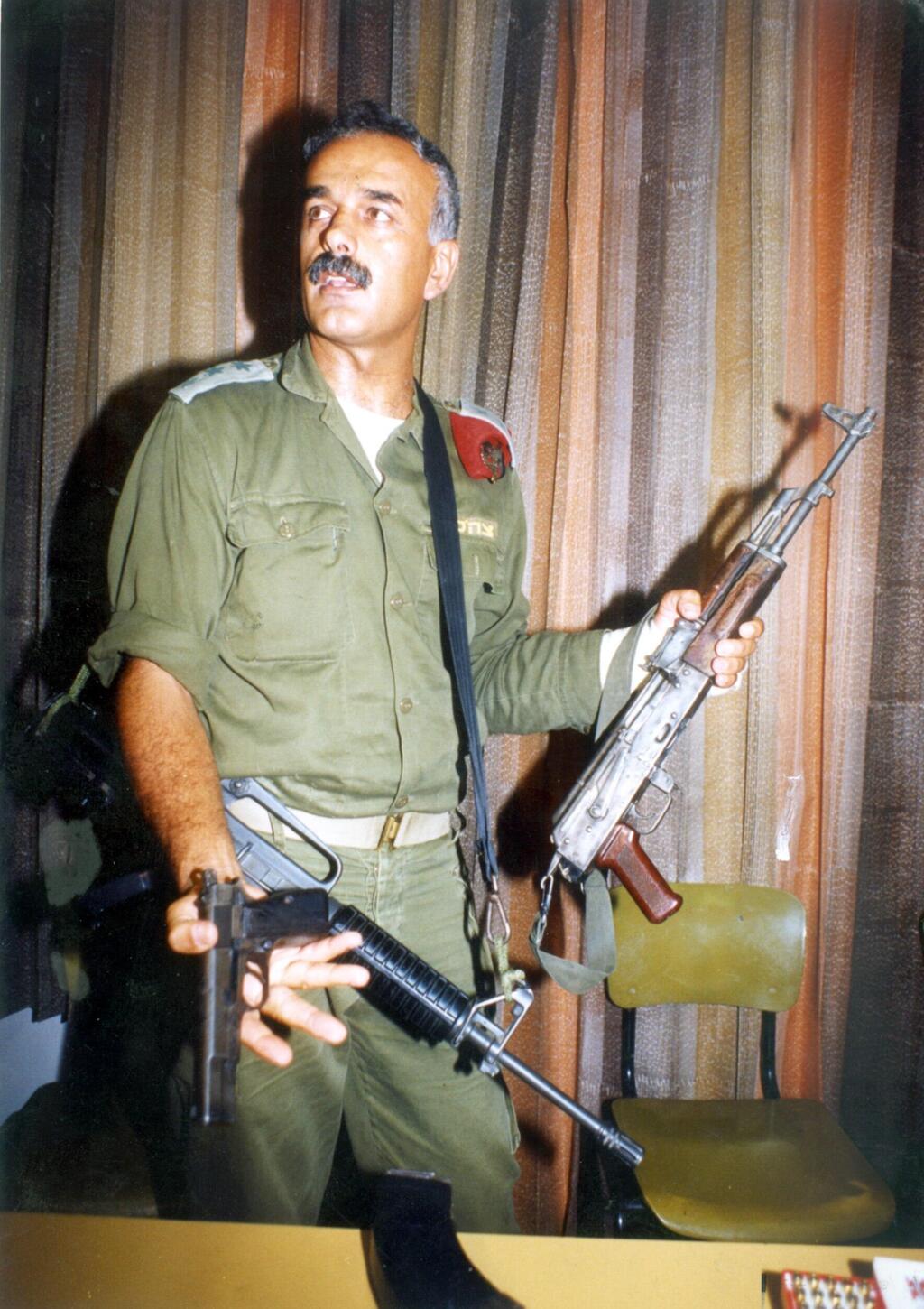
Amal Asad during his military service
(Photo: IDF)
In 1974, while taking a squad commanders’ course, his company was sent to evacuate settlers from Sebastia in the West Bank. “During the evacuation, we encountered fierce resistance and a lot of shouting from the settlers,” he writes in his book. “One of them, a young woman named Daniella Weiss, felt the need to yell at us, ‘Jews do not evacuate Jews!’ My friends laughed and told me I could evacuate her without a problem.
“It wasn’t long before she started cursing me and shouting, ‘Arab, what are you doing in the army?’ It was very difficult for me to hear. That was the first slap I got from Jews, and I took it to heart. Fortunately, from the first day I joined the Paratroopers, I felt like a member of the family, with no distinction between me and my fellow soldiers.”
Weiss later became one of the leading figures in Israel’s West Bank settlement movement. In 2019, when former Knesset member Geula Cohen died, Asad went to pay a condolence visit to her son, Tzachi Hanegbi.
“Tzachi said to me, ‘Meet Daniella Weiss,’” he recalls. “I said, ‘I know you.’ She asked, ‘Where do you know me from?’ I told her, ‘Sebastia.’ I told her about our encounter during the evacuation. She didn’t remember it.”
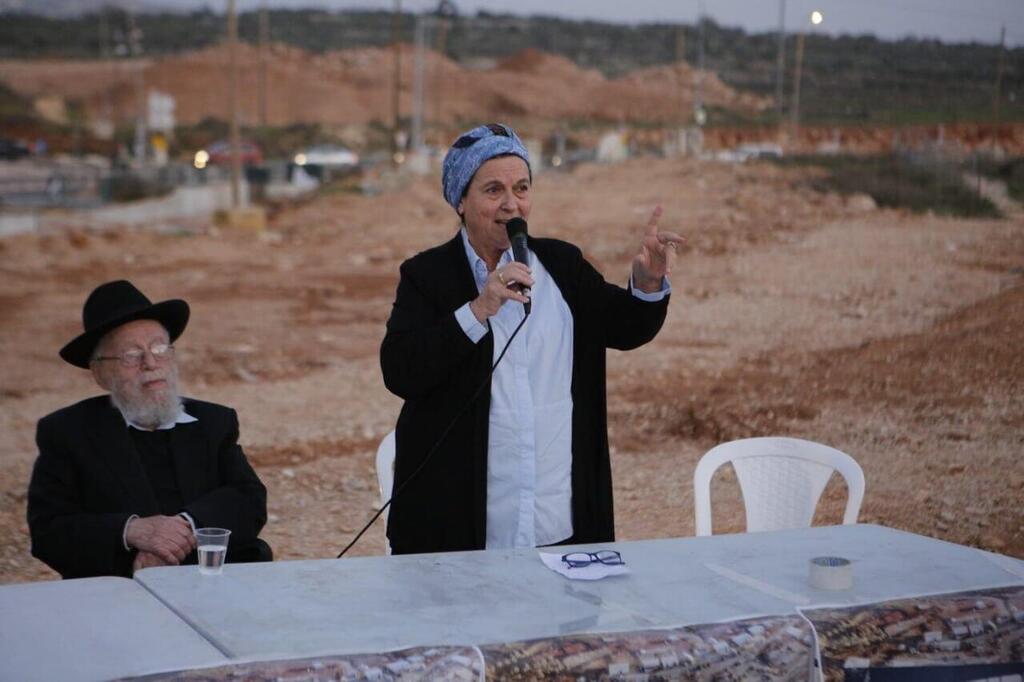
Daniella Weiss
(Photo: Ethan Schubert)
In the late 1980s, shortly after being promoted to colonel, Asad asked to attend a computer course at Mamram, the IDF’s main computing unit. When he arrived, the course commander told him he could not enter the computer room because he lacked the necessary security clearance. Every other participant, all Jewish and including some of his former subordinates, was allowed inside.
Today, that would probably not happen. Druze soldiers and officers serve throughout the IDF and intelligence community, including in positions requiring the highest levels of security clearance.
Among them are Brig. Gen. Hisham Ibrahim, the defense minister’s military secretary, whose position gives him access to some of Israel’s most sensitive security information, and Col. Ayoub Kayouf, commander of the Golani Brigade, who previously served in the elite Shaldag unit. Lt. Col. Mahmoud Kheir el-Din, who was killed during an operation in Khan Younis in 2018, served in one of Military Intelligence’s most secretive special-operations units.
But once they take off their uniforms, after leaving the military or simply while home on leave, many Druze say they feel like second-class citizens. One of the main reasons, Asad says, is the Nation-State Law passed in July 2018. The Basic Law defines Israel as the nation-state of the Jewish people and states that national self-determination in Israel is unique to the Jewish people.
“I have left 451 fallen here, including my own brother, and the government says this country belongs more to a Jew living in America than it does to Amal Asad. And I say: Mr. Netanyahu, Mr. Ben Gvir, Mr. Smotrich, who gave you ownership of this country?”
Asad was one of the leaders of the campaign against the law. “The Nation-State Law robbed me of my sense of belonging,” he says. “It is hard to explain what it means to be Druze in Israel after that law was passed.
“A Jew in the United States is first and foremost American. A Druze living in Syria has a clear identity: He is Syrian. A Druze in Lebanon is Lebanese. Most Israeli Arabs see themselves as Palestinian. And what about us, who were born here, who built the country shoulder to shoulder with the Jews, who paid with the blood of our sons and brothers?
“The Nation-State Law turned us into guests in our own home. Welcome guests, perhaps, but guests. In effect, the law says that a Jew living in Brooklyn or Miami has more rights to this land than a Druze citizen whose family has lived here in the same village for 400 years.
“I have left 451 fallen here, including my brother, while that American Jew made $451 million. The government comes along and says: This country belongs more to him than it does to Amal As'ad. And I say: Mr. Netanyahu, Mr. Ben Gvir, Mr. Smotrich, by what right are you trying to turn me into a guest in my own country? Who gave you ownership of this land?”
You have met ministers and right-wing Knesset members. What do they tell you about the law?
“Even if there are Likud lawmakers who oppose the Nation-State Law, they don’t dare speak out. Take Minister Nir Barkat, for example. He was my soldier in the Paratroopers. When he was mayor of Jerusalem, I would visit him and he would hug me in front of everyone and proudly say that I had been his commander. He has become a doormat. Three years ago, he was supposed to come to Isfiya for the Memorial Day ceremony. I wrote a post saying he wasn’t welcome here.” Barkat currently serves as economy and industry minister.
There was a proposal to carve out an exception for the Druze because of their contribution to the country.
“That’s right. Bibi told the Druze: I’ll create a bypass route for you that will distinguish you from the Arabs. I strongly opposed it. I am fighting racism and fighting for equality for every citizen, Jewish, Muslim, Christian or Druze. You want me to be above a Muslim Arab but below a Jew? This law has to disappear not because it harms the Druze, but because it harms democracy.
“I said even then: The fight against the Nation-State Law is first and foremost your fight, the Jews’. Because this is the first crack in the wall of democracy. And I was right. It started with the Druze, continued with the left, with the Kaplan protesters and with Brothers in Arms activists, who are now denounced as traitors. Who knows where it will end.”
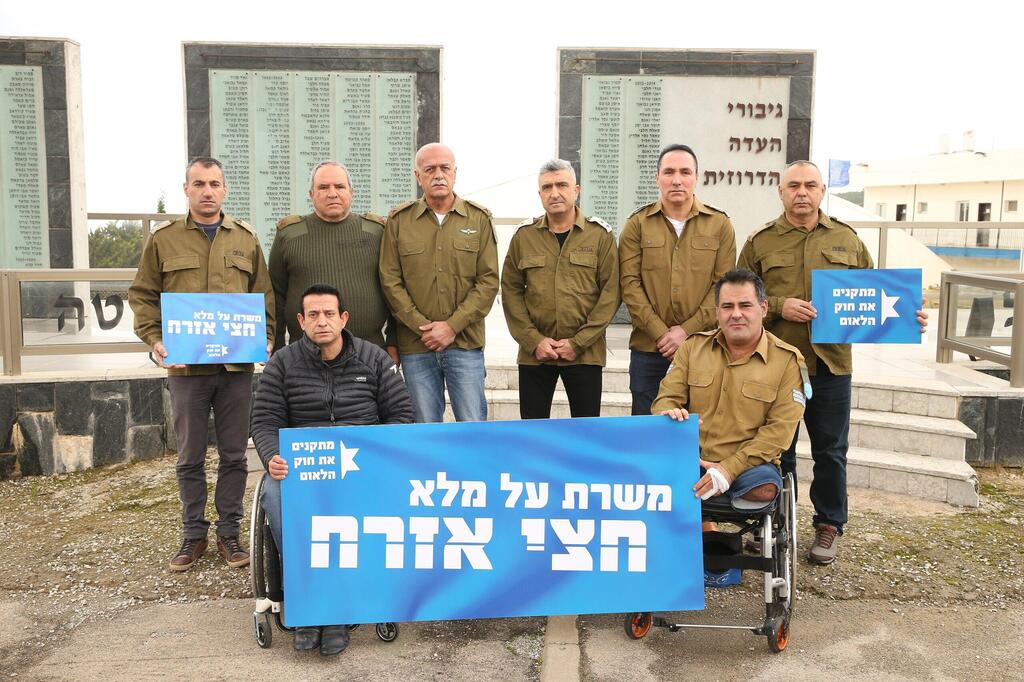
Amal with Druze soldiers and wounded veterans at a 2019 protest against the Nation-State Law
(Photo: Elad Gershgoren)
And yet, despite all the frustration and pain, a sign at the entrance to Isfiya displays the Israeli flag beside the Druze flag and says, ‘Together we will win.’
“Yes, but if you look at the bottom, you’ll see the logo of a business in the village that put up the sign as advertising. When they hung it, I said: ‘If someone can explain to me what “together” means and what “we will win” means, I’ll buy that sign.’
“Who are we together with? Ben Gvir? The ultra-Orthodox? The Arabs? And who have we defeated in three years of war other than ourselves?”
As a bereaved brother and a senior officer who fought throughout his career and was wounded three times, at the Chinese Farm in the Yom Kippur War, in a raid in southern Lebanon and in an operational accident, perhaps because of those experiences rather than despite them, Asad remains deeply committed to the idea of peace.
In his book, he recounts a meeting several years ago with Jenin Chamber of Commerce head Ammar Abu Bakr. “December 2021. I am CEO of Tirek, a tire-recycling company,” As'ad writes. “At noon, a black Mercedes pulled up at the factory gates. Abu Bakr and another businessman got out and entered my office. The meeting, which was supposed to last a few minutes, went on for more than two hours without us discussing business at all.
“Abu Bakr told me that when I was serving as commander of the IDF brigade responsible for the Jenin area, he had been one of the senior wanted men in the Black Panther organization. He was eventually captured and imprisoned, and was released under the Oslo Accords. But now a different man was sitting opposite me: a father of five, a man with responsibilities, who dreams of a safe future for his children. Years ago, I looked at him through a telescopic sight. Today I look at him through an economic sight. ... When he left the office, I felt as though I were saying goodbye to a friend.
“Peace may be far away, but it is also so close. It sits with you in your office and drives through your gate in a luxury car. It is willing to talk if you are willing to listen.”
Even now, after October 7, do you believe there is someone to talk to on the other side?
“Absolutely. I believe in peace. I believe in dialogue. I believe in human beings. And the problem isn’t only on the other side. Smotrich is doing everything he can to make the situation in the West Bank irreversible. The strengthening of Hamas and weakening of the Palestinian Authority over the years show, in my view, that the government does not want peace.
“Don’t misunderstand me. I think everyone who took part in the October 7 massacre must be eliminated. Every last one. Those people belong underground. But there are millions of other Palestinians who want to live quietly. What have we done to give them hope?
“There isn’t a child in the West Bank today who hasn’t been traumatized by settlers under the army’s protection. Someone who burns down a family’s home, someone who cuts down olive trees, is a terrorist in every sense of the word. Israelis don’t know what is happening there. They aren’t interested either. After October 7, people don’t want to hear about peace or about Palestinians. But it will come back to us.”
‘Sara said: Interesting, but no’
Amal Asad, 71, is married to Suheir. They have two sons, Ram and Amir, two daughters, Reem and Raya, and five grandchildren. He has lived all his life in the Isfiya neighborhood where he was born, apart from three periods when his military service took him to Kibbutz Yad Mordechai, Kibbutz Beit Alfa and the United States, where he attended a military college.
His son Amir, a lawyer, returned to Israel about a year ago after roughly 15 years in New York. “It bothered me very much that he had left the country, not only because I missed him but also on the national level, the Zionist level, the Israeli level. I wanted him to stay here, to build his home here, to raise his children here, to continue the tradition. I’m glad he came back.”
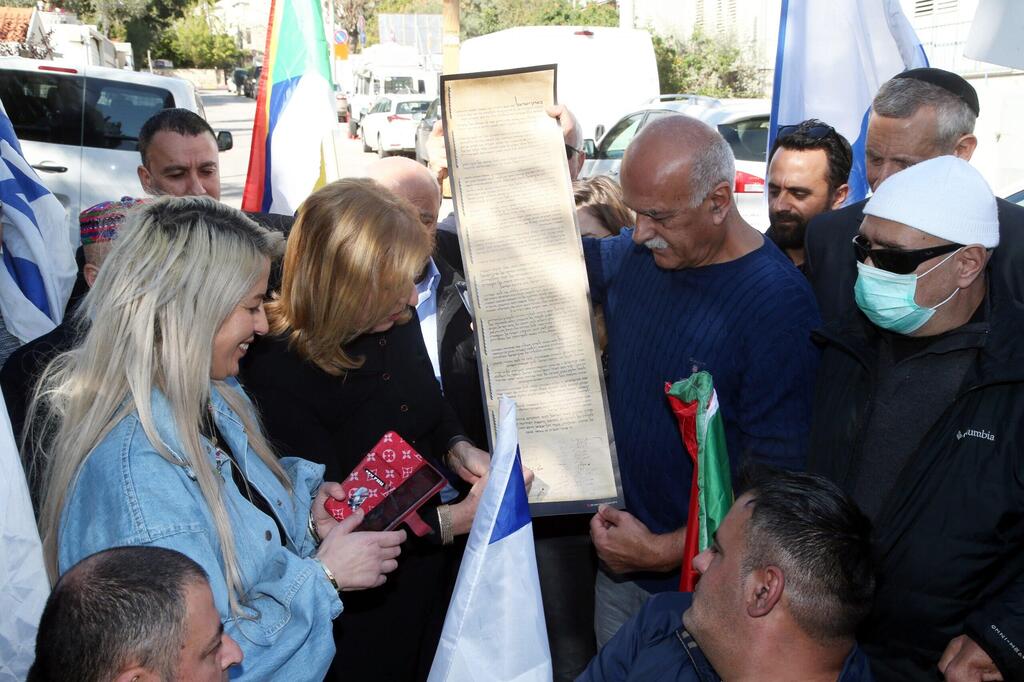
Asad at a protest against the Nation-State Law
(Photo: Yariv Katz)
Asad is a people person. Retired senior officers often boast about the famous generals and politicians they crossed paths with during their careers. In his book, Asad repeatedly returns instead to the ordinary soldiers.
“To this day, I have better relationships with my soldiers than with my commanders or colleagues in equivalent positions,” he says.
One of them is Gabi Haberfeld. When Asad was a platoon commander in the Paratroopers’ 890th Battalion, Haberfeld was one of his soldiers. “Today he lives in the United States and is a very successful businessman. I used to meet him every time I visited my son in New York. We eat, drink and spend time together. But even now, as a grandfather himself, he tells me: ‘Amal, I’m still afraid of you.’ Apparently I was a tough commander.”
After being wounded at the Chinese Farm, Asad completed squad commanders’ and officers’ courses and returned to the 890th Battalion as a platoon commander and deputy company commander. “Dudu, the company commander, was about to finish his position and demanded that the battalion commander appoint me to replace him. But I preferred to take the new February 1977 company, so Dudu stayed in the post for the time being.”
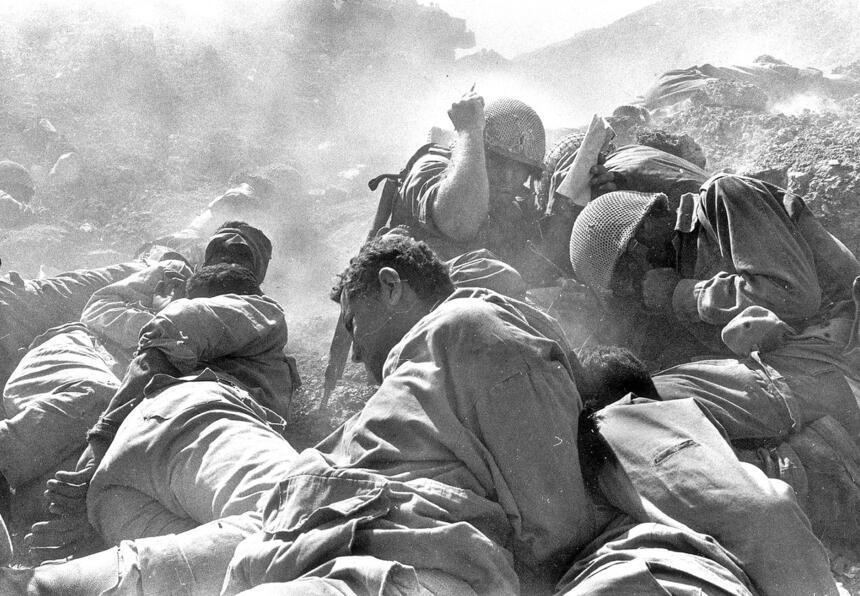
The Battle of the Chinese Farm, where Amal was wounded
(Photo: Micha Bar-Am)
A month later, on May 10, 1977, Asad’s company of new recruits was on a march near the brigade training base, then located at Sanur. “A few kilometers before the finish,” As'ad recalls, “a jeep stopped beside me. The training base commander, Yair Rafaeli, got out and said, ‘Amal, leave everything and get back to base. There’s been a disaster.’”
The scale of the disaster soon became clear. A Yas'ur helicopter carrying soldiers from the 890th Battalion had crashed during an exercise in the Jordan Valley. Forty-four soldiers and officers from the company Asad had left only a month earlier, along with 10 aircrew members, were killed in what became known in Israel as the “Disaster of the 54.”
Among the dead was Maj. David “Dudu” Kochavi, the company commander Asad had been due to replace. “My company had to provide the honor guards at the funerals,” he recalls.
Asad later served as deputy battalion commander, and when the First Lebanon War broke out, he commanded the Paratroopers Brigade’s combat engineering company. “When we reached the Chouf Mountains, we discovered that the Syrian commando battalion that had been there had withdrawn. When I tried to understand why, I was told that its battalion commander was a Syrian Druze and that when he heard the Israeli force commander was also Druze, he decided to retreat. I don’t know whether that story is true, but it’s a good excuse.”
It was there that he also encountered members of Lebanon’s Druze community for the first time, a complex and emotional meeting that he describes at length in his book.
His later posts included commander of the Nahal Brigade’s 932nd Battalion, commander of the Menashe Brigade responsible for the Jenin sector, commander of the reserve 5th Brigade and deputy commander of the IDF’s liaison unit in Lebanon during the years of fighting in the security zone.
In 1998, he was promoted to brigadier general and appointed to lead the Israeli side of the Joint Security Committee, the mechanism for security coordination and cooperation with the Palestinians created under the Oslo framework. The committee was part of the Israeli-Palestinian security coordination structure established during the Oslo era.
“We met at Netanyahu’s residence on Balfour Street. He read my proposal and said, ‘Do you mind if I consult my wife?’ I didn’t know her. Then Sara came into the room, sat opposite me, read the paper carefully and said, ‘Interesting. But no.’ Netanyahu accepted her view, and the IDF stayed in Lebanon until Ehud Barak was elected prime minister”
As'ad retired from the IDF after 26 years of service and, ahead of the 1999 election, joined the Center Party led by Yitzhak Mordechai. But after being placed too low on its candidate list to have a realistic chance of entering the Knesset, he left the party and backed Benjamin Netanyahu’s Likud. He was even appointed deputy chairman of the Likud election campaign, but that brief political venture did not last either. Since then, he says, he has stayed well away from party politics.
During his short association with Likud, Asad urged Netanyahu, who was then in his first term as prime minister, to withdraw the IDF from Lebanon.
“I told him, ‘Soldiers are being killed for nothing. We have no ability to protect the communities of northern Israel from the Sujud outpost.’ Netanyahu was worried. He said, ‘If we leave Lebanon, there will be chaos.’ I told him, ‘That won’t happen if we do it properly. I’ll prepare an organized proposal for you.’
“I wrote him a four- or five-page paper with a detailed proposal: Announce that on a specified date the IDF will withdraw from southern Lebanon to the last millimeter; leave with a show of force by two divisions, with Israeli flags on the tanks and armored personnel carriers; seal the border; then tell the whole world that the first time Hezbollah fires a missile at Israel, even if it lands in an open area, these are the targets in Lebanon that will be bombed, moving from lighter to heavier targets, including the presidential palace in Beirut.
“We met again at Netanyahu’s residence on Balfour Street. It was Friday at 2:30 p.m. He read my proposal and said, ‘Do you mind if I consult my wife?’ I didn’t know her. Then Sara came into the room, sat opposite me, read the paper carefully and said, ‘Interesting. But no.’ Netanyahu accepted her view, and the IDF remained in Lebanon until Ehud Barak was elected prime minister.”
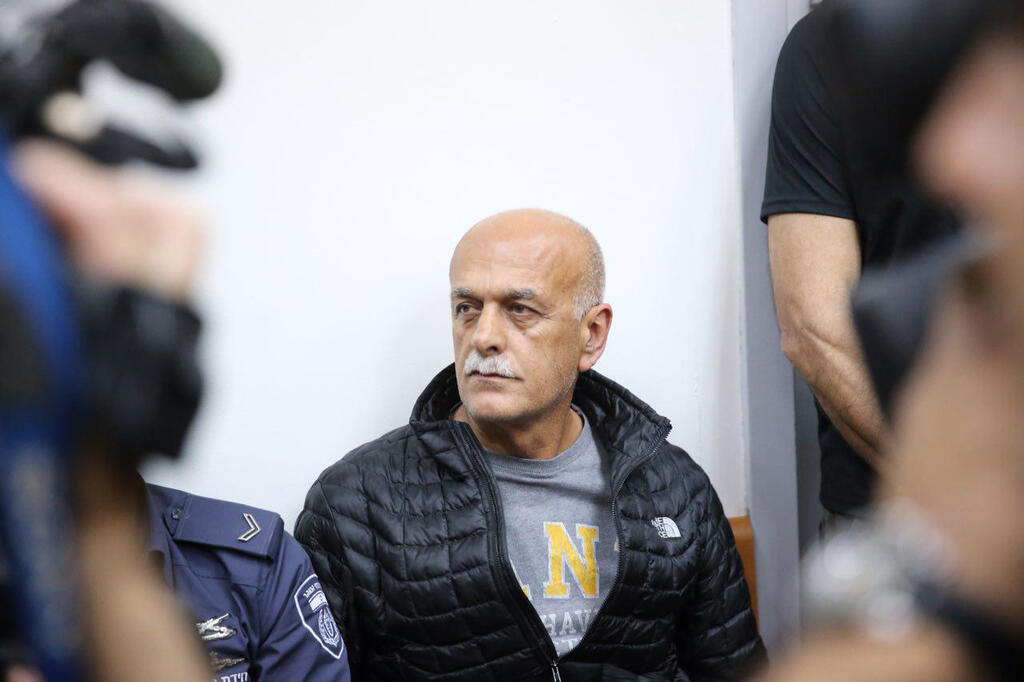
Asad in court
(Photo: Moti Kimchi)
Despite becoming one of Netanyahu’s sharpest critics in the years since, Asad says he has some sympathy for the prime minister’s criticism of Israel’s prosecution system.
On March 15, 2017, Asad was arrested on suspicion of conspiracy to commit a crime, money laundering, fraud and breach of trust. Prosecutors alleged that he had used his position as a director at Israel Aerospace Industries to obtain work for Druzenet, a company in which his brother was an investor. The investigation ended in a plea agreement under which he admitted to the relatively minor offense of failing to report required information.
“I decided I would rather be smart than right, and I left that chapter behind me,” he says. “I have no doubt that the prosecution needs to be put in order. I don’t support the reform this government is trying to advance, but I can understand Netanyahu’s criticism of the prosecution becoming intoxicated with its own power. It went to their heads.
“Of course, that doesn’t absolve him if he did commit the offenses he is accused of. I have never even accepted a single cigar as a gift. Well, I don’t smoke. But I never even took a piece of baklava.”
‘They throw a party when the state connects a house to electricity’
We drive through the streets of Isfiya in Asad’s jeep. “Look around,” he says. “See what Isfiya looks like and compare it with Yokneam. See what Beit Jann looks like and compare it with Karmiel.
“A shell that falls doesn’t distinguish between a Jewish, Druze, Circassian, Muslim or Christian soldier. But the moment you leave the army, the government, and not only this government, does distinguish between Jews and Druze. And it isn’t only the Nation-State Law.”
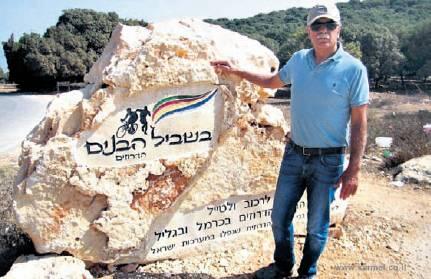
At the memorial to fallen Druze soldiers on Mount Carmel
(Photo: Courtesy)
His criticism is not directed only at the government. It also extends to the heads of Druze local councils. “You are supposed to be leaders. Any leader would dream of having a community like this to work with. And what have you, the council heads, done so discharged soldiers can build homes? So that the state builds infrastructure in Druze communities?
“You throw a party when the state connects a house to the electricity grid, as if someone has done you a favor. Go to Shoham. Go to Yitzhar. See how people live there and how we live here.”
What can the council heads do?
“For a start, they need to be united. Stop dealing with egos and constantly fighting with one another. A minister comes here and cannot sit with two council heads because they aren’t speaking to each other.
“What have we asked for? To be able to build like normal people on our own land. Every Sunday there is a government meeting where another 2,000 housing units in the West Bank are approved. And what has the Druze community received in 78 years of statehood? Nothing. Not even one new community has been established.”
“I am proud to be Israeli, I am proud to be Druze and I am proud of Arab culture, of which I am a part. But if you ask me what I am, then first and foremost, I am a human being”
Whenever Israel’s Druze are discussed, their contribution to the country’s security is invariably mentioned, and rightly so. But today’s young Druze, Asad says, no longer think only about military careers.
“Some time ago, I met the chairman of an organization working to close gaps within Druze society. I asked what he did for a living and he said, ‘I own a high-tech company. Our offices are in Kfar Saba, but we have a branch in the village of Julis.’ I went there to give a lecture: 90 engineers and software professionals, all Druze.
“A lot of our young people who enlist now go to Unit 8200, cyber or communications units, and dream of careers in high-tech. There is even a woman from Daliyat al-Karmel who works at NASA, the U.S. space agency.”
And when you travel abroad and people ask about your identity, what do you tell them? Are you Israeli first or Druze first?
“I am proud to be Israeli, I am proud to be Druze and I am proud of Arab culture, of which I am a part. But if you ask me what I am, then first and foremost, I am a human being.”
Likud responded to Asad’s account of the meeting at the prime minister’s Balfour Street residence, in which he says Netanyahu rejected his Lebanon withdrawal proposal after consulting his wife: “This is fake news and a gross lie. It is the recycling of bizarre, old lies with no plausibility or basis in reality. Anyone who claims this is how things are conducted is either stupid or malicious, or both.”