

Sixteen years ago, when doctors revealed the extent of the brain damage sustained by former Israeli rowing champion Jasmine Feingold after her boat capsized in the polluted Yarkon River, no one imagined she would one day choose to become a high school math teacher.
Today, teaching at Ironi He High School in Tel Aviv, Feingold channels the same determination that once drove her toward athletic greatness.
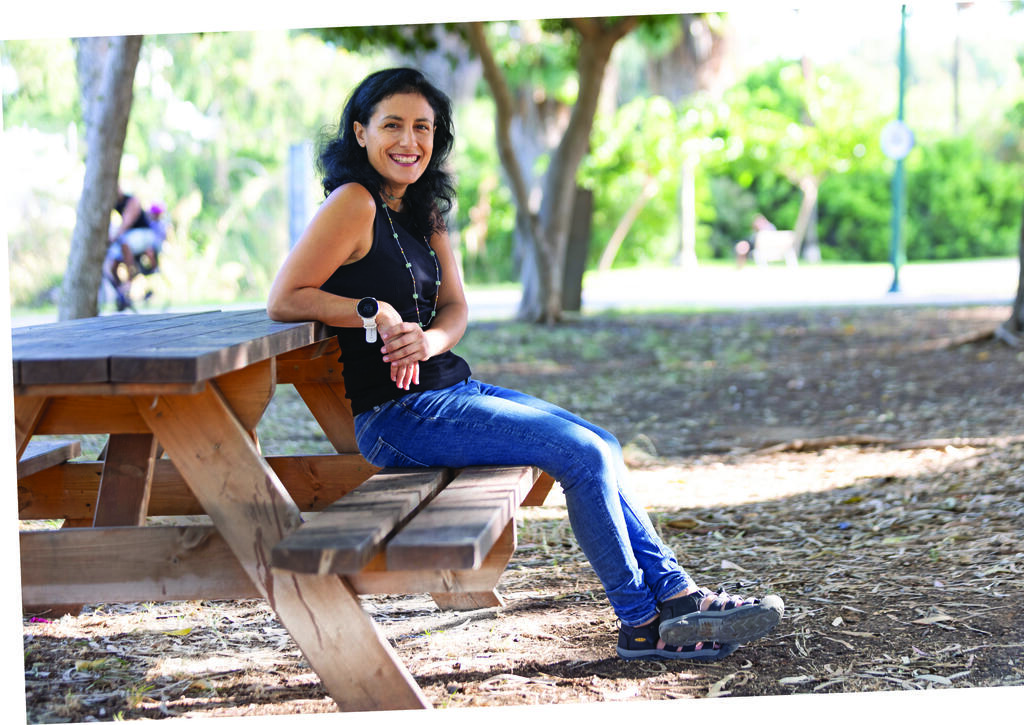
During the 2009 accident, Feingold was trapped underwater for five and a half minutes. When she regained consciousness, she did not remember who she was. To this day, she struggles with memory retrieval and information management. Yet, just as she once refused to let obstacles stop her on the way to championship titles, she refuses to let her condition interfere with her teaching.
“If the Yarkon couldn’t beat me, nothing can,” she says with a smile. “I’ve always had this drive. It’s something burning inside me. Whatever I do, I have to do it all the way. I just always want to be the best.”
Even in high school, Feingold stood out as exceptional. A gifted student, she completed her math matriculation exams by 10th grade, earned a bachelor’s degree in mathematics while still in high school, and was accepted to study aerospace engineering at London’s prestigious Imperial College.
“Because of my background and the challenges I faced during my long rehabilitation, I decided to become a teacher,” she says. “I saw firsthand the shortage of teachers in Israel’s education system. When my son started first grade this year, it hit me even harder. I wanted to help. I joined Tel Aviv Municipality’s teacher retraining program and I’m still studying for my teaching certificate.”
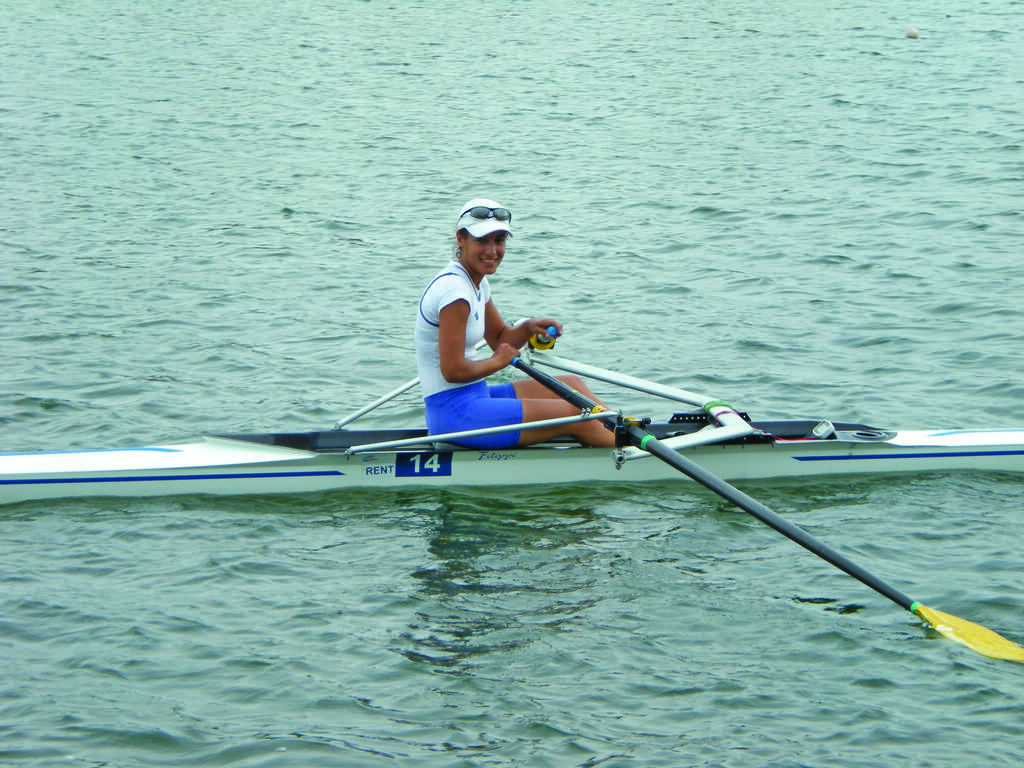
Jasmine Feingold
(Photo: Amir Feingold)
Living with memory loss
How does the brain injury affect your life today?
“It’s always present,” she says. “I carry notebooks everywhere and write everything down. Things might be in my head, but recalling them on the spot is hard. An hour from now, I might not even remember this conversation. I’ve learned to live with it, to accept the new me, and to find solutions.”
“Sometimes I think that half a minute, just half a minute out of those five minutes when people chose to film instead of saving me, would have helped me so much today. And I’m talking about years of rehabilitation.”
What kind of solutions?
“After this interview, I’ll write down what we talked about so I won’t forget. When I first entered a classroom, I was nervous, but two things helped me. First, confidence in my ability to manage myself and reach my goals, something I gained through sports. Second, after the accident, I stopped letting shame control me. I’m not afraid to ask for help or repeat a question if I forgot I already asked it.”
Before every class, she reviews what she covered in the previous lesson. “I’m terrified of not remembering students’ names,” she admits. “As a student, it meant a lot when teachers remembered mine. I keep a journal where I record everything, who owes homework, what assignments need grading, so I can transfer it all to the next lesson.”
Finding purpose in math
Why math?
“When I returned from a sabbatical year in London with my mother in eighth grade, I was behind in the Israeli curriculum,” Feingold recalls. “The math coordinator helped me design an independent study track so I could take the matriculation exam early, in 10th grade. That freed time for university courses and for rowing. Math played a big role in my rehabilitation. It helped me rebuild my thinking and return to normal life.”
Balancing both passions came naturally. “It may sound strange, but math and rowing have a lot in common,” she says. “Both require discipline, persistence, and a constant pursuit of excellence.”
The man who saved her life
Feingold, now 36, was born in Tel Aviv to physicist Dr. Elizabeth Feingold and peace activist Abie Nathan, founder of the “Voice of Peace” radio station, who never acknowledged or met his daughter.
She joined the Tel Aviv Rowing Club as a high school student and by 16 was competing in the national championships. Between 2008 and 2009, she was twice crowned Israel’s women’s single sculls champion. She later represented Israel in the European University Championships in Croatia, won gold at Lithuania’s open championship, and earned two silver medals in Norway.
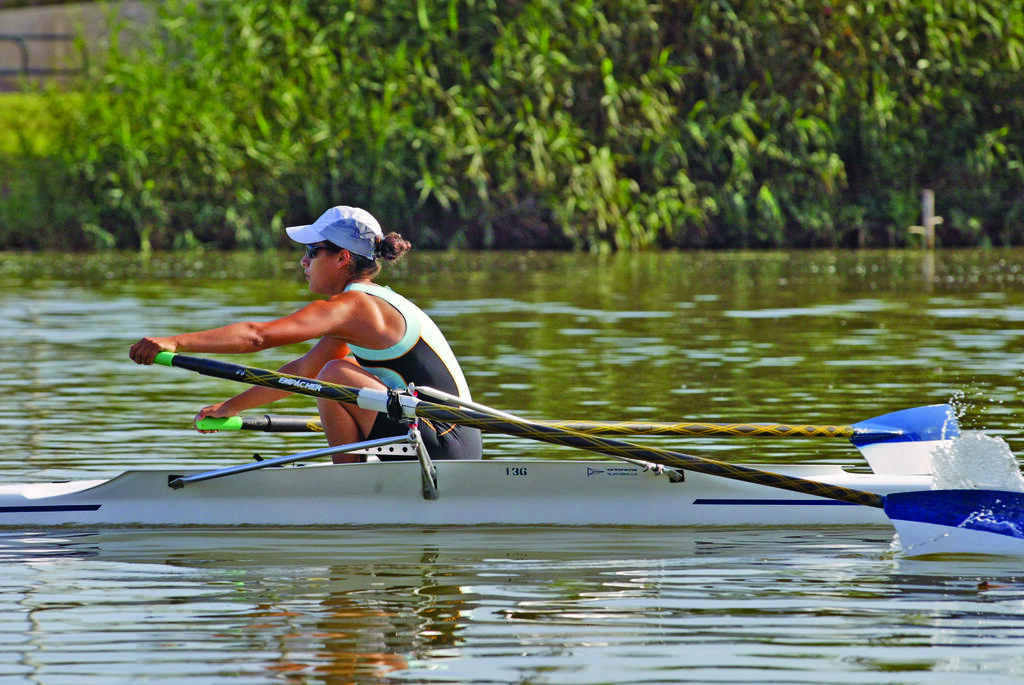
Every minute under the water means years of rehabilitation
(Photo: Amir Feingold)
Her accident occurred in May 2009 during a routine training session. After her boat flipped, she hit her head and lost consciousness. She was rescued after five and a half minutes by 62-year-old passerby Avi Toibin, who jumped into the river and performed CPR until paramedics arrived.
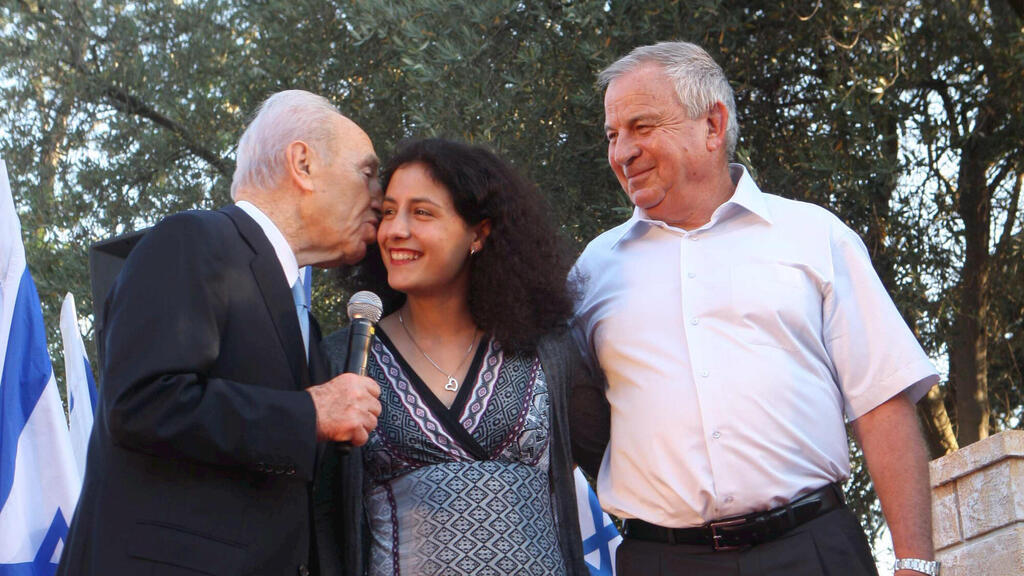
Jasmine Feingold with her rescuer Avi Toibin and President Shimon Peres, who honored him with the Volunteer Award
(Photo: Atta Awisat)
Feingold was hospitalized in critical condition at Tel Aviv’s Sourasky Medical Center, unconscious and on a vent
ilator. After a long rehabilitation at Loewenstein Hospital, she returned to competitive rowing, winning national titles again just a year later.
“I don’t know how I did it,” she says. “I just don’t quit until I reach the finish line. The toughest battles are always with yourself. I’m proud I made it.”
“My son Itamar is six, and for now rowing isn’t his thing. He’s not even interested in swimming. I’m not pushing him, he’ll get there in his own time.”
Does she know why the boat capsized?
“At first I asked a lot of questions, but no one really knew. After all these years, it doesn’t matter anymore. What matters is what happened afterward, how I came back to life.”
“If I told you I wasn’t angry, it wouldn’t be true. I’ve spent so many years trying to fix something that could have been prevented, and that’s really upsetting. Sometimes I think that half a minute, just half a minute out of those five minutes when people chose to film instead of saving me, would have helped me so much today. A few more seconds could have made such a difference. I’m talking in terms of years of rehabilitation. But I prefer to let go of the anger, to stay away from toxic emotions. It happened, and I’m still dealing with the consequences, but I was very lucky that Avi was there. He was out running along the riverbank and saw me rowing. A few minutes later he came back, saw the boat overturned, jumped into the water, and resuscitated me until the ambulance arrived. In a situation like that, when every second counts, his quick action was truly life-saving.”
Are you still in touch?
“Could you not stay in touch with someone who gave you the gift of life? Is that even possible? Of course we’re in touch. We talk from time to time, and whenever something significant happens in my life, the first call is to my mother, the second to my husband, and the third to Avi.”
It’s hard not to wonder if he might be a kind of substitute for the father you never had.
“He has a wonderful family and plenty of children. He doesn’t need another daughter, but he’s very dear to me, and I love him very much.”
Life and love after recovery
Feingold met her husband, Dr. Karthik Inbasekar, 40, an Indian-born physicist and tech professional, when he came to Tel Aviv University for postdoctoral research. They met at a charity event for sexual assault survivors.
“Our eyes met over a pile of donated designer clothes,” she recalls. “It wasn’t glamorous, but I didn’t want the day to end. Luckily, he asked for my number and actually used it.”
He had no idea who she was. “He only found out later,” she says. “He fell in love with the person, not the public figure.”
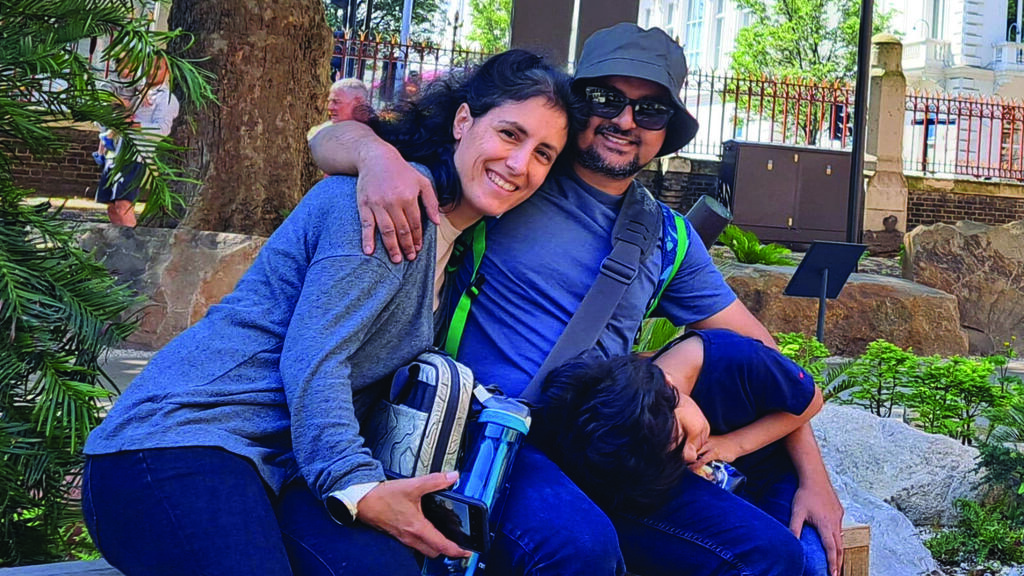
Feingold with her family
Bridging cultures was not easy. “It’s a meeting of East and West,” she says. “But mutual respect goes a long way. Sirens and rockets are terrifying for someone who never lived through war. And when we visit his family in India, I still find differences, like eating with hands. But that’s who they are, and I respect that.”
“The accident caused extensive damage that affected every part of my life, but I discovered that mathematics played a vital role in my rehabilitation and in my overall return to a normal life.”
The couple married seven years ago and now live in Tel Aviv with their six-year-old son, Itamar. They held three weddings: one in Cyprus, one traditional ceremony in India, and a celebration with friends and family at the Tel Aviv Rowing Club on the Yarkon River.
Your father, Abie Nathan, was also of Indian descent.
“First of all, he’s not my father, he’s my biological father, and there’s a difference. He chose not to be my father, so the fact that Karthik is Indian has no meaning, positive or negative. Am I angry at him? No. I don’t feel any kind of void, as if something was taken from me, because I never had a father. In my family experience, it was just my mother and me. We were simply a different kind of family from what’s considered the norm, but today there really is no such thing as a norm. There are so many types of families that it’s no longer unusual to be just a mother and daughter. Honestly, the loss was entirely his.”
You grew up as an only child. Do you think about having a sibling for Itamar?
“Not at the moment. As an only child, I never felt my life was any less because of it. Maybe one day we’ll want another child, maybe not. What’s certain is that Itamar would be thrilled to have a brother or sister.”
Has he started rowing lessons like his mother?
“For now, that’s not his thing. He’s not even particularly interested in swimming. I’m not pushing him, he’ll get there in his own time.”
A new kind of legacy
Feingold left competitive rowing after becoming pregnant. Her doctors classified the pregnancy as high-risk because of her past injury. “I couldn’t combine it with such intense training,” she says.
She did not remain in the sport as a coach because, she says, rowing in Israel is not developed enough to offer the kind of progress she wanted. “I still row for fun, but if I can’t make an impact, I move on. All my life I wanted to do something meaningful. Now I realize I can make a difference in the classroom.”
For Jasmine Feingold, teaching is just another race, one where perseverance, discipline, and heart matter most.