

“Every person can be recruited. As human beings, we are constantly recruiting or being recruited for different goals. Just as a person recruits his wife or children to achieve something, or a company recruits employees to meet targets, the same applies to us in the undercover agents’ division.”
So declares Staff Sgt. A, the officer who managed to recruit “El Chapo” — a well-connected criminal who was turned into a police informant and helped expose major drug traffickers, and in the process, arms dealers too.
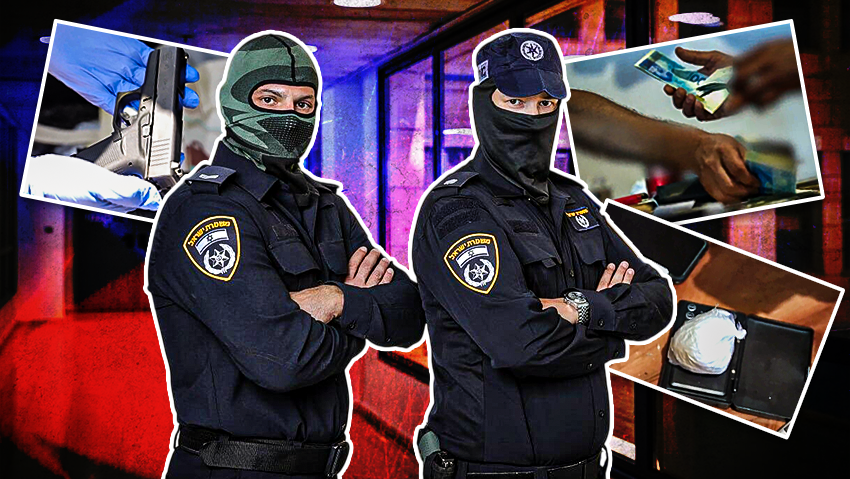
“He’s one of the best agents I’ve ever handled,” says A from the Tel Aviv District Police’s central investigative unit. “He was a criminal with deep ties to high-level underworld figures, intelligent, streetwise, and gifted with a natural ability to adapt in any situation, even in operations run at an extremely fast pace.”
The operation that exposed “El Chapo” led to 20 indictments against members of major crime organizations — many of whom had been his personal friends until their arrests. Some belonged to the Mosli crime family, others to the Jarushi clan. In court, the agent will have to face them and recount every single transaction: seven handguns he bought, five grenades, and dozens of drug deals — each involving 200 to 300 grams of cocaine or crystal meth. If convicted, the defendants face lengthy prison terms.
Police revealed “El Chapo’s” identity on June 16 this year. He sat in the offices of the central unit with his handler, A, alongside Chief Inspector K, head of the undercover agents’ division. At that very moment, hundreds of detectives and investigators were simultaneously breaking down the doors of the suspects’ homes. The shock in the criminal world, police say, was immense. “It was a game changer,” says K. “It sent a clear message to everyone — we can get inside your homes.”
But for the agent himself, it was also an emotional reckoning. The adrenaline that had sustained him through nearly eight months of work was gone. “That’s the moment he realizes his entire world is about to change,” A explains. For him, it was a relief — the operation had ended safely. For “El Chapo,” it marked a final goodbye to his former life.
The runaway gambler
The agent, now in his 50s, is divorced and a father of several children. Before the war, he lived in northern Israel. On October 7, following Hamas’s terror attack and Hezbollah’s rocket fire from Lebanon, he was evacuated from his home and relocated to a hotel in central Israel — the same region he had fled years earlier for fear that criminals he owed money to would kill him.
“He owed millions because of gambling,” explains A. “To survive, he turned to drug dealing.”
According to A, “He was once a successful businessman who made millions, socially connected even to the criminal world through acquaintances in his neighborhood, including senior crime bosses. He always walked the fine line between the legitimate and the criminal worlds. People trusted him. He knew how to connect people, and often brokered deals between criminals.”
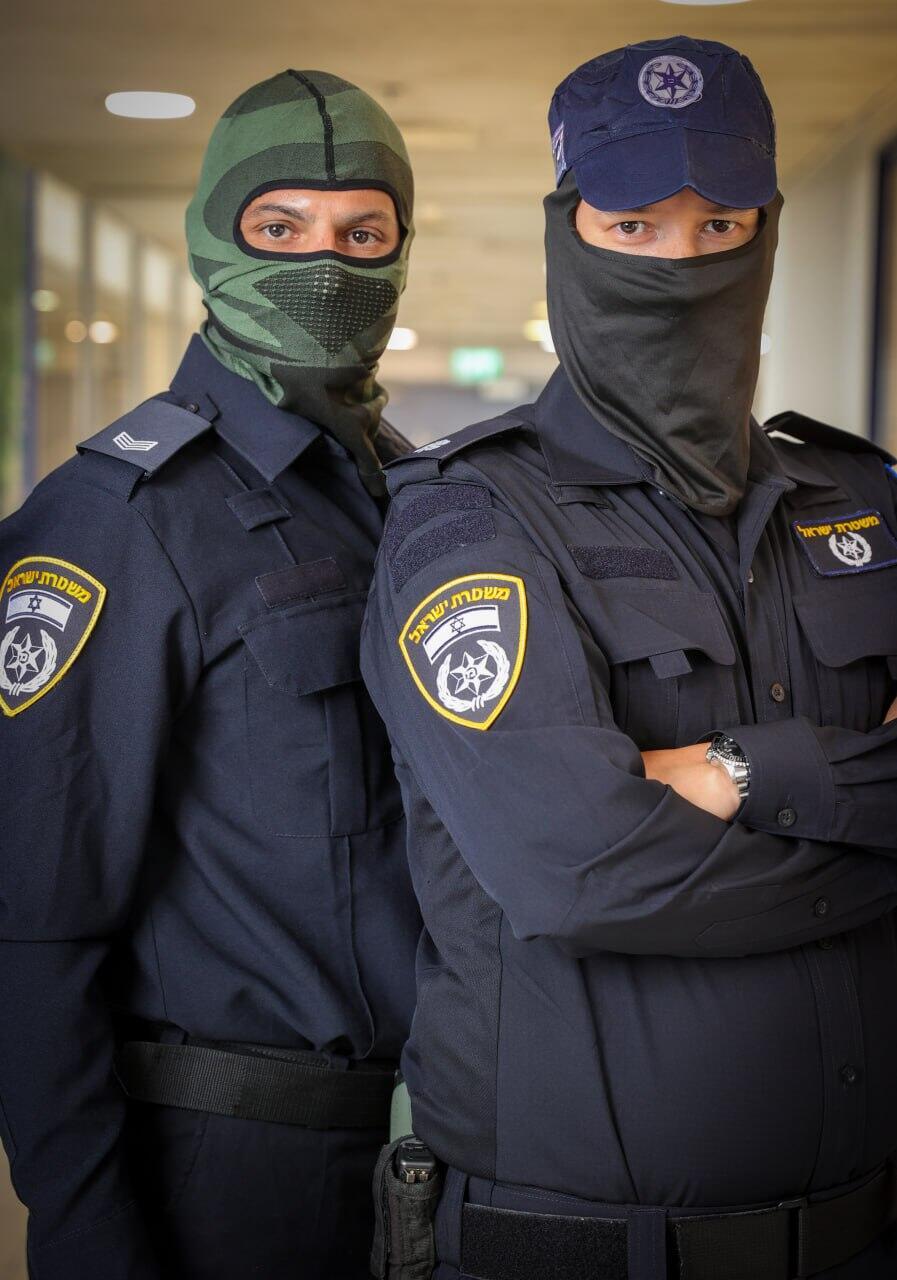
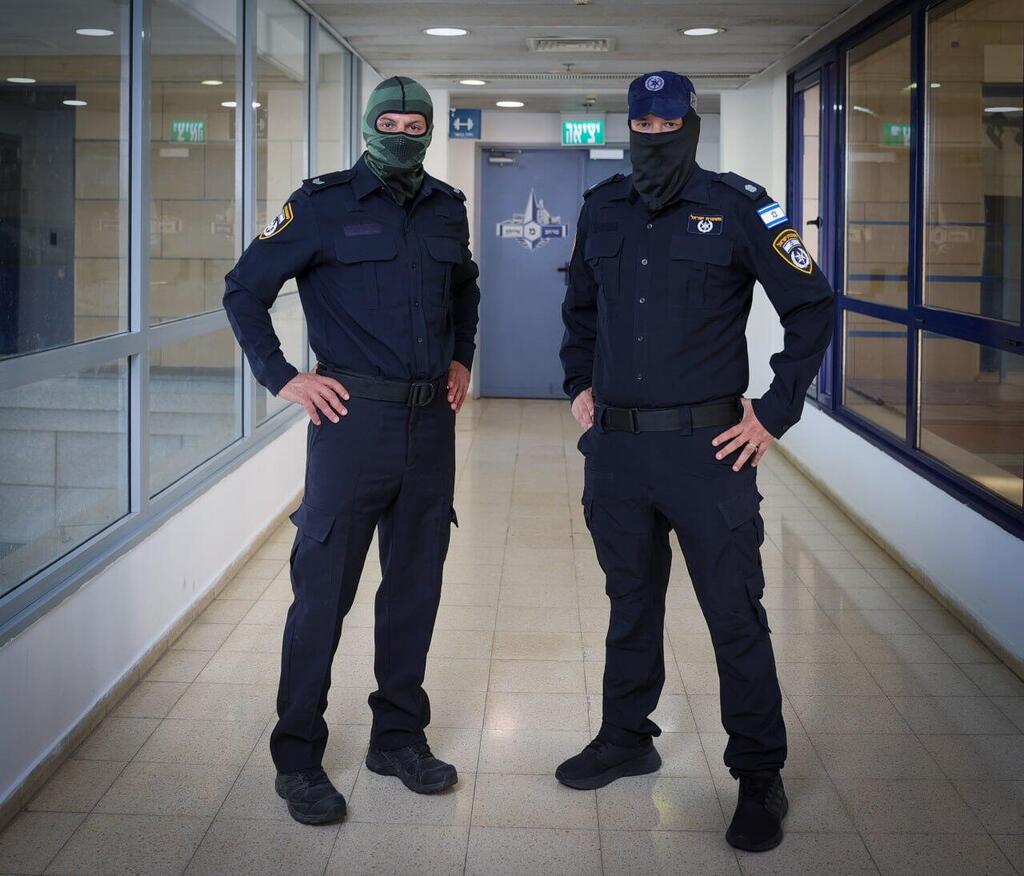
In the blue cap: Chief Inspector K, head of the undercover agents’ division in the Tel Aviv District Police. In the green cap: Staff Sgt. M, El Chapo’s handler
(Photo: Avigail Uzi)
Despite his early success, “El Chapo” got hooked on gambling — “insane sums,” says A — mainly on online sports betting. “He could drop tens of thousands of shekels on a women’s third-division soccer match in Romania,” A recalls. “That’s how, over the past decade, he lost everything — his family, his marriage, his business — and went bankrupt. He was buried in loans. The loan sharks saw a gold mine in a man like that. They gave him easy credit, and he kept taking one loan to pay another until he became a hunted animal.”
Some criminals he knew occasionally protected him, A adds. “There were those who told others, ‘Don’t open him a box’ — meaning, don’t let him gamble. In his neighborhood, he’d once been a symbol of success. He probably earned around 30 million shekels from the company he built, but it all vanished through gambling and the interest on his debts.”
“At first, he managed to juggle the loans,” A continues. “He’d open a new debt to close an old one — some with interest rates of dozens of percent. But eventually the oxygen ran out, and debt collectors started showing up at his door. Pretty soon, he was getting offers to ‘work off’ what he owed. He had good connections among criminals, so he started dealing drugs. For three or four years in central Israel, he became a serious dealer — buying crystal meth and cocaine and selling doses through WhatsApp orders. That’s how he survived.”
A notes that “El Chapo’s” saving grace was that he never used drugs himself. “He’s the type who needs to feel in control,” he says.
After a few years, when his criminal friends could no longer protect him, “El Chapo” decided to disappear. “He wanted peace,” A explains. “He wanted to escape the collectors. So he moved north, kept a low profile, found work, and started over — as a small-time dealer, but far from the chaos.”
Back to the crime scene
October 7 changed everything. As the war erupted, tens of thousands of residents from Israel’s northern border towns were evacuated to hotels in the center of the country. “El Chapo,” who had already built a quiet life up north, found himself in one of those Tel Aviv hotels — this time as an evacuee. It was a return, literally, to the scene of his old crimes.

Drugs confiscated with the help of El Chapo
(Photo: Israel Police)
“He saw opportunity,” says A. “Suddenly he’s surrounded by evacuees from the north and south — people getting steady government stipends, living in hotels with free meals. Many of them discovered Tel Aviv nightlife and the drug scene that comes with it. Some were reliving their teenage years. They were bored in the hotels and looking for excitement — and Tel Aviv provided it.”
Deputy Chief K, who heads the undercover agents’ division, adds: “A few months after the evacuees arrived in the hotels, intelligence reports started coming in about rising drug demand. We saw a huge spike in the use of nitrous oxide — ‘laughing gas’ — thousands of percent increase. A lot of that demand was coming from evacuees. And where there’s demand, the crime organizations step in to supply it. They saw easy money.”
A continues: “Whenever intelligence flags a new crime trend, our division analyzes it and looks for ways to infiltrate. We started looking among the evacuees for potential insider figures. That’s when the name ‘El Chapo’ surfaced — someone known in the Tel Aviv underworld who might now be taking advantage of the situation. We believed he was selling drugs to evacuees himself, and he was already known to our intelligence from the past.”
At that time, “El Chapo” still had old debts and anxieties haunting him. A, reviewing the intelligence, began to focus on him. He won’t share recruitment methods — “it’s a world of interests,” he says — but explains the psychology: “Sometimes, the offer comes exactly when a criminal is ready to shatter his old life and take revenge on those who wronged him. It’s part redemption, part payback — and part survival.”
According to A, “Even though it starts as a mutual-interest deal — a criminal helps the police, the police pay him — the success depends entirely on the personal bond between the agent and his handler. It becomes almost a friendship. The offer usually lands like thunder on a clear day. Sometimes the first reaction is rage, cursing, even storming out of the office. Then slowly, the wall begins to crack.”
Recruiting the informant
Staff Sgt. A remembers well a conversation from a few years back, when he called in a notorious thug — “a big, frightening man, violent to the core, a bone-breaker,” as he puts it — to his office.
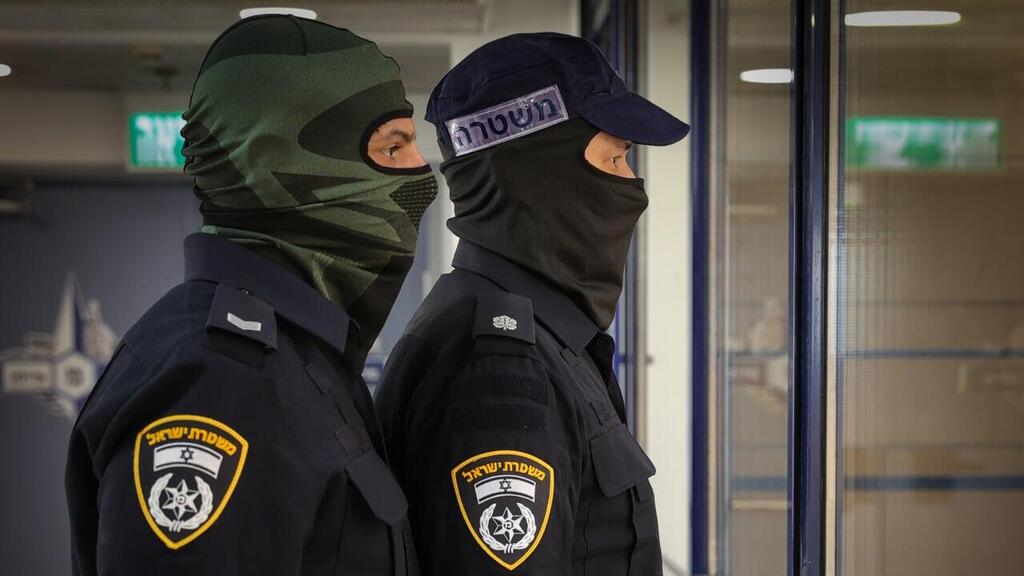
(Photo: Avigail Uzi)
“The criminal didn’t know why he was summoned,” A says quietly. “He came in thinking it was just another interrogation. He stood at the doorway, refused to sit. When I told him why I called him, he said without hesitation: ‘May you get cancer.’”
A has been in the undercover agents’ division for a decade. Before that, he worked as a field security escort, protecting agents in live operations. He knows the risks, the heartbreaks, and the delicate psychology of the job.
“That guy didn’t leave,” he continues. “He stood there, still not sitting. He even had a cup of coffee — but standing up. That’s a statement, you know — ‘I’m not staying long.’ We stepped outside, smoked a cigarette together, and parted ways. By our sixth meeting, I suggested we grab a barbecue. He said, ‘Barbecue I’ll do.’ We kept meeting for months, but in the end, for operational reasons, he wasn’t recruited.”
According to A, the courtship phase — the process of building trust with a potential recruit — can take a year or two. “During that time, a real relationship forms,” he says. “We talk for hours about everything — his wife, his kids, his fears, his regrets. Even the toughest criminal starts to peel back his armor like an onion. You start to see the person — a son, a father, a man who just wants his kids to stay out of the life he fell into. There’s mutual respect.”
He recalls vividly the first meeting with “El Chapo,” who, as a northerner, “sat across from me in the Tel Aviv office, restless, answering phone calls nonstop. I asked what was going on, and he said, ‘I’m in trouble, lots of debts.’ When he heard the offer to work as an informant, his first reaction was, ‘That’s dangerous. No way.’ We kept talking, both of us feeling each other out. It’s like a first date — you’re trying to read the other person, see what drives him.”
“I came prepared,” A continues. “But you never really know where it’ll go. If I don’t touch the trigger that motivates him, it won’t work. It’s not just a transaction. It’s about finding that one thing that makes him decide to change his life. Once that happens, the rest follows — a long series of talks and meetings until the recruit realizes, deep down, that he’s crossing a line, leaving behind his old world, and stepping into a new one.”
Building the legend
When the decision was made to bring “El Chapo” in, A and his team began crafting what they call a “cover story” — though in this case, it was practically his real life.
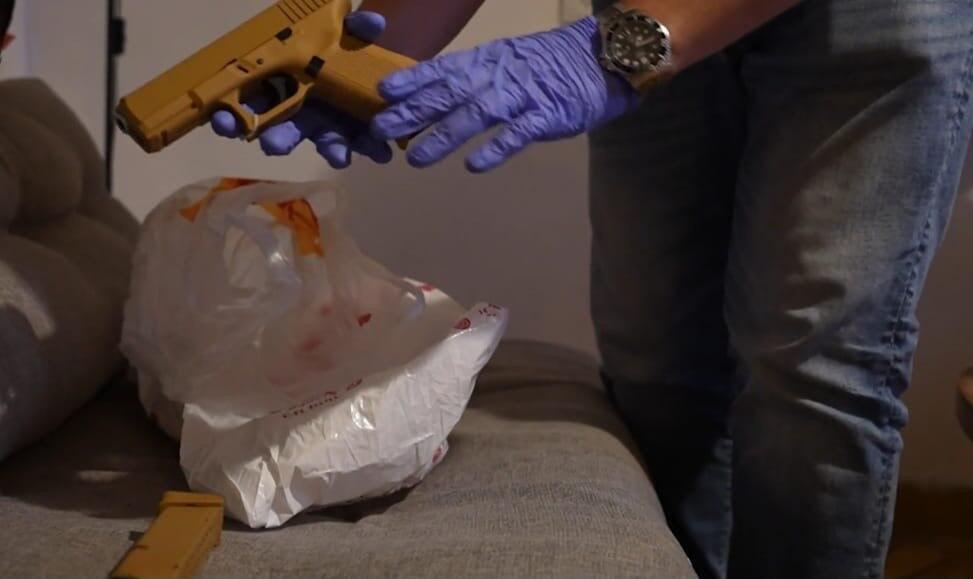
'He has a rich criminal past and knows how to handle any situation. Many people have had his back':
drugs and weapons seized with the informant’s assistance
(Photo: Israel Police)
“He brought his own story and connections into the role,” A explains. “He had a rich criminal past, years of contact with underworld figures and organized crime families across central Israel. He also had a businessman’s instincts — sharp, confident, persuasive. He could talk his way out of anything. A lot of people had protected him at various points in his life. He knew the streets inside out.”
The operation started quietly, almost a year before what police later called “the breakout” — the coordinated arrests that exposed the network. Intelligence had detected rising demand for drugs, alongside a wave of grenade attacks linked to debt collection in the gray-market loan scene.
In late 2024, “El Chapo,” then living in a Tel Aviv hotel as an evacuee, met a man he once knew — a dealer who owed him money. “El Chapo” suggested they resume business, this time with him buying drugs instead of selling them.
According to the indictment later filed in court, the dealer asked him to help expand his operations into hotel-based sales. “That’s where it started,” A says.
Every meeting was monitored in real time by A and a team of security officers, ready to intervene if things went wrong. “We’re prepared for the worst — if he’s exposed, his life could end right there,” A says. “Your pulse is sky-high. You need patience. Sometimes it looks like the situation is about to blow up, but you can’t react too soon. You have to stay calm.”
Two weeks after that first meeting, the dealer called “El Chapo” back, offering to sell him 50 to 100 grams of cocaine at 250 shekels a gram. They met in the hotel parking lot, and the agent bought 15,000 shekels’ worth of cocaine — with police money.
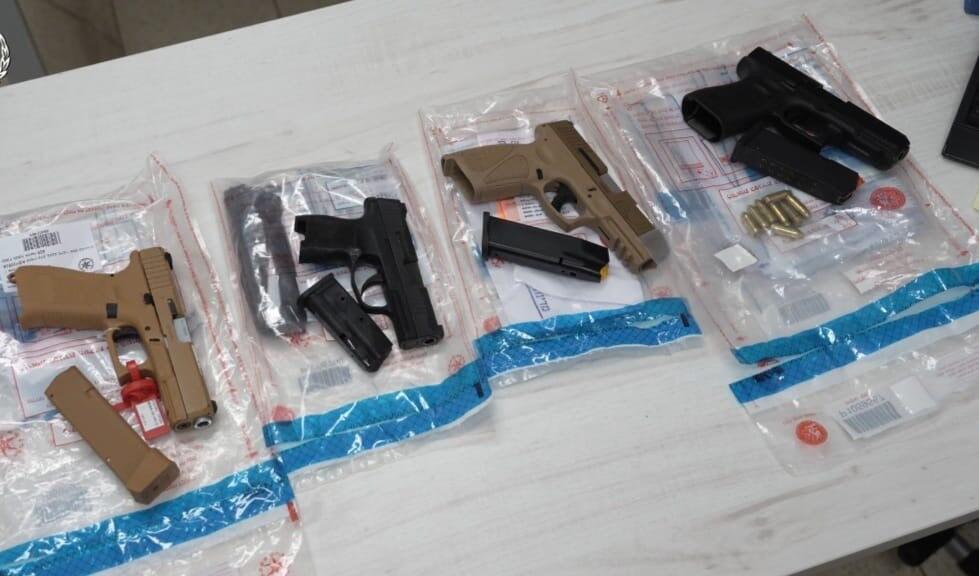
In total, the operation cost police hundreds of thousands of shekels. “El Chapo” carried out more than 30 deals — buying seven handguns, five grenades, 1.5 kilograms of cocaine, and other drugs. The transactions took place in hotel rooms, cars, cafés, and even in dealers’ homes.
(Photo: Israel Police)
“In every deal,” A says, “the tension was electric. The agent stands there, face to face with real criminals, and you never know what’s coming next. They sometimes joke, ‘You’re probably a cop,’ just to test him — and he knows exactly how to answer. He could play any role, adjust his tone, and stay cool under pressure.”
An unexpected breakthrough
As the sting operation deepened, a new opportunity arose: arms trafficking.
During one drug deal, “El Chapo” was casually offered the chance to buy guns. “He kept his composure,” A says. “At a later meeting, he asked if the dealer could get a weapon ‘for a friend.’ The guy said yes.”
“Suddenly, we were inside the weapons trade,” A recalls, still excited months later. “That was a huge bonus — catching gunrunners wasn’t part of the plan. These were handguns smuggled from Jordan into Israel, completely untraceable. And we were able to get them off the streets. Every one of those guns could’ve been the next murder weapon.”
A says the operation was one of the most ambitious he’d ever run. “We aimed high — serious targets, organized crime figures. ‘El Chapo’ sat across from me, listing all the people he knew. But knowing someone is one thing; being able to reach them is another. He could go out and actually make street buys — drugs, guns, whatever — after we prepped him and gave him cash. Building that trust and making it look natural took time. We couldn’t risk burning him or raising questions about where he suddenly got money.”
“Out there,” A adds, “he was known as a hustler, a fixer, a gambler. So when he started buying drugs in bulk, it made sense to them. He fit the part perfectly. He reconnected with his old contacts and opened doors everywhere. He became a bridge between worlds.”
A narrow escape
There was one moment during the operation when A and his team were sure El Chapo was about to be exposed — or worse.
“The agent told me he knew a weapons dealer from the south,” recalls Staff Sgt. M, another handler involved in the operation. “He thought he could buy arms from him. It wasn’t a direct connection, more through friends. I told him to make contact.”
El Chapo texted the dealer: ‘What are you doing today?’ The man replied, ‘You know, moving stuff from here to there — our usual business.’
“We were debating what he meant — drugs or guns?” says M. “‘El Chapo’ told him, ‘I need to protect myself,’ and the dealer immediately understood. ‘Talk to me, tell me what you need,’ he said.”
(Photo: Avigail Uzi)
Staff Sgt. A explains that the art of running an informant is to make the target offer the goods himself. “You can’t have the agent say, ‘I want a gun’ — that would make him a provocateur, and could compromise the evidence in court. The target has to be the one who brings up the deal in his own words.”
“The conversation continued, and the dealer said, ‘I’ve got everything.’ The agent asked him to send photos,” A says. “When we saw the pictures of guns on the agent’s phone, we panicked for a second. It looked too easy. We had to verify the images were real and not taken off the internet.”
During the chat, El Chapo told the dealer about his life as an evacuee from the north. He joked, “People are starting to go home, and I can’t get a license for a weapon. Lots of residents want guns and aren’t being approved. We need to get something on our own.”
A smiles as he explains, “We used his real story as his cover. It was the most natural thing in the world.”
A meeting was set. It began at a gas station and continued at the dealer’s house. The dealer sent a car to pick him up.
“At that point, we lost contact with the agent,” A recalls. “I was terrified. I thought it was a setup — a ‘red cap’ situation.” In Israeli police slang, a “red cap” (kippah adumah) means a death trap.
“I was living a nightmare,” he says. “We’d been running him for months, and by then we were like twins. I worried about him like a brother. I kept thinking, ‘Should I abort and pull him out now? Are they going to kill him?’”
Minutes crawled by. Half an hour of silence.
“It was hell,” A says. “He didn’t answer his phone. I had no idea what was happening inside.”
Finally, the phone rang. El Chapo was alive. “He told me they’d agreed on two pistols. I tried to sound calm, asked for photos and details. He told me the prices, and I made sure they were realistic so no one would suspect him.”
“When I picked him up afterward, he said, ‘I planned to buy one gun, but it turned into four — and he even gave me a discount.’ He hugged me when he got in the car. After everything that day, that hug meant everything.”
A new life
“Throughout an operation like this, it’s critical to maintain operational readiness,” says A. “The agent has to stay sharp. He can’t get overconfident or tired.”
After about seven months, the mission reached its peak. “He was exhausted,” A admits. “The fighting in the north had eased, and the hotel evacuations were ending. Most of the evacuees went home, and he was left alone in the hotel. The isolation got to him.”
That’s when the Tel Aviv District Police decided it was time to end the operation — and begin El Chapo’s rehabilitation.
“He was shocked when we told him it was over,” A recalls. “He realized he was closing a chapter of his life. The adrenaline that had carried him for months was gone. He had to face the fact that his old world was behind him — and start again.”
During their final meeting, A had already prepared him for this moment. “The adrenaline that drives an informant is like a drug,” he says. “Every meeting, every deal, every gun purchase gives a rush — and then, suddenly, it’s gone. That’s when he understands: his life has changed forever.”
In seven months, El Chapo helped police seize seven pistols, five grenades, and more than a kilo of cocaine — and brought down two of Israel’s most powerful crime networks.
He also gained something else: a second chance.
For A, the handler who recruited him, that was the real victory. “He’s not the same man anymore,” A says quietly. “He risked everything to make things right. And that, to me, is worth more than any headline.”