

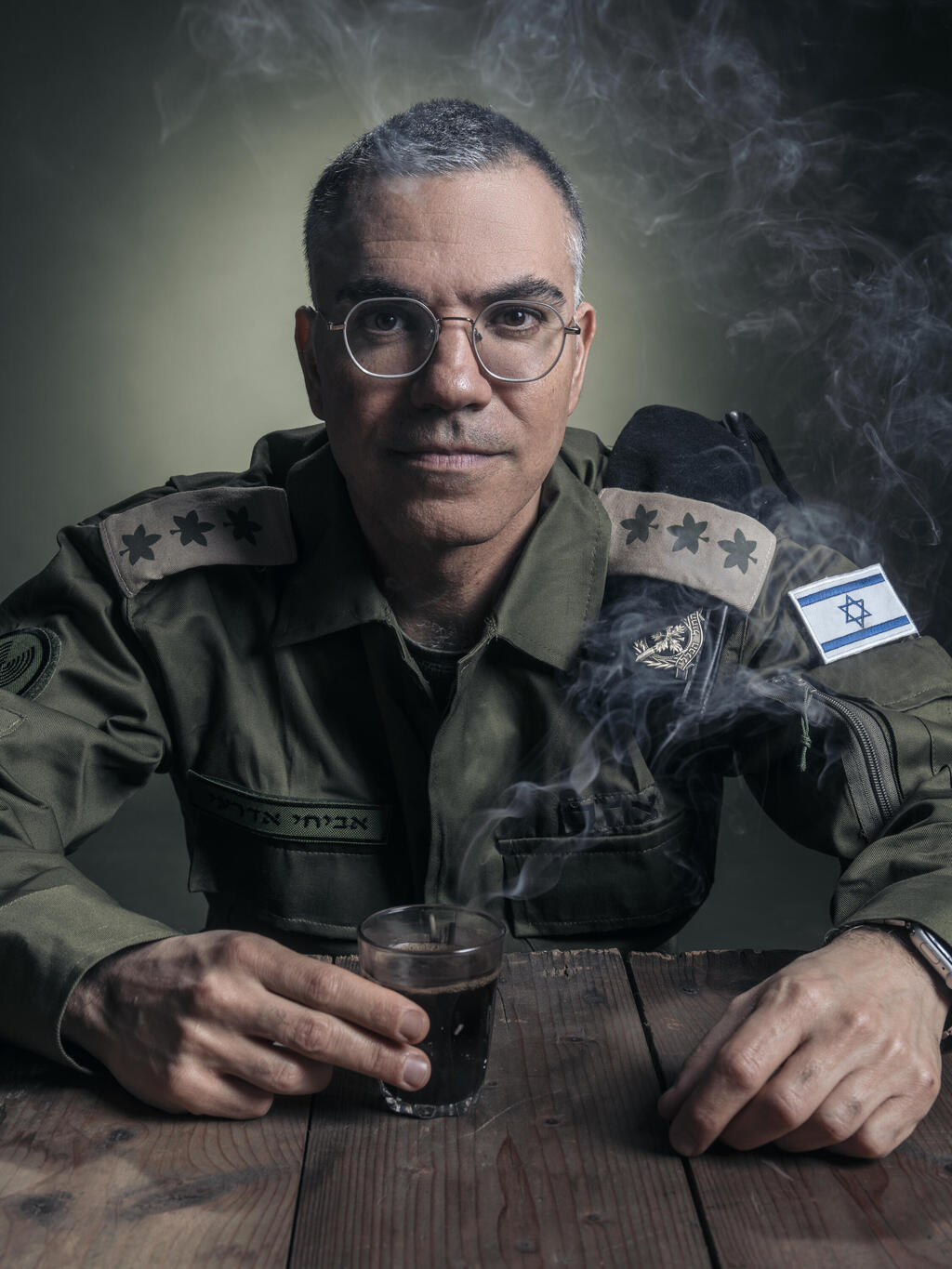
Only in Israel can you sit on a chilly morning for a wrap-up interview with the IDF’s Arabic-language spokesman Avichay Adraee, joke about the fact that nearly every reality TV format has approached him — befitting the celebrity he has become over the past two and a half years — and talk about whether he will take a post-army trip and what he might do for a second career.
Then, two days later, the United States and Israel launch an attack on Iran, the Israeli home front is again battered, and the thought of Adraee twirling a dancer in his arms seems even more surreal than usual.
When we sat together two days ago, did you already know about the attack?
“Of course I knew,” he says. “I sat with you calmly because we had already prepared everything in advance. The IDF spokesperson’s unit also has battle procedures. All the graphics, the 3-D videos, the evacuation warnings from certain areas in Persian — which a soldier in my unit produces — were already ready. Many friends from the Gulf wrote to me. We told each other, ‘Stay safe.’ A social media activist from Bahrain wrote to me: ‘If this is the last message I send, know that I love you.’”
A touch of drama. They are not used to this the way we are.
“They don’t have protected spaces. In some of the more provocative videos I make, I often go up to the roof of the IDF Spokesperson’s building after missile fire and show Tel Aviv, and say: Look, everything is intact. All the high-rise buildings are still standing. I want to show that we are strong, not ‘weaker than a spider’s web,’ the slogan coined by Hassan Nasrallah.”
Adraee, 43, the IDF’s Arabic-language spokesman for the past 20 years and now approaching retirement, is considered a communications genius. From another angle, he might be a wasted actor. He has dramatic body language and rhetoric that resonates with the Arab world. He also is not picky about the methods he uses to deliver messages. A whiteboard, a marker and cardboard signs are legitimate tools. A Hezbollah fighter writes on a piece of cardboard that they are on their way to the Galilee, and Adraee responds with a sarcastic cardboard sign of his own. Cardboard is answered with cardboard.
He also makes a point of going live online with ordinary citizens from the Arab world. It almost always ends with curses on their part and their removal from the broadcast. No platform is too small. Even the Israeli satire show “Eretz Nehederet” understood that.
“Someone sent me a message saying, ‘You have an impersonation,’ and I was shocked that it was happening,” he says. “That evening we were at a performance by Noam Horev. He went on stage and said there was a new character being impersonated that day on ‘Eretz Nehederet,’ and I was sure he meant me — and it turned out they were impersonating him on the same show. When we got home, my son was sitting in the living room crying. I asked what happened, and he said: ‘Tomorrow everyone at school will laugh at me.’ The next day he came home happy: ‘Dad, you won’t believe it — all my teachers and friends saw it.’ He was really pleased.”
They also received criticism when they showed you alongside Daniel Hagari and people claimed the Mizrahi character was portrayed as a “baboon” while the Ashkenazi one was portrayed favorably.
“I don’t think anyone made me into a baboon. I’m a colorful character, that’s fine. I think they gave me great respect. Anyone who watches my videos sees that I say ‘wah-wah’ and talk with my hands. That’s part of the deal. More than that — the only place where Avichay Adraee, who didn’t grow up in a combat unit, can appear more hawkish than the IDF spokesperson, who commanded the naval commandos, is in satire.”
But even he cannot remain calm when he tells me about the private drama unfolding in his own home. When he left for the IDF Spokesperson’s Unit on Saturday morning, at the start of the attack on Iran, his wife, Hila, received a phone call asking her to pack clothes for herself and the children and move to an alternate residence prepared for them in advance.
For years, Adraee has been considered a target for terror groups, and someone somewhere calculates the risks and has expanded the scope to include his wife and children. “There’s an incident here,” he says. “I suggested to Hila that she move to her parents’ home, but she’s afraid of dragging them into it. That if something happens, it will be on her conscience.”
But in the end, the people arrested as assisting Iran are usually individuals on the social margins. Is there really concern about an Iranian assassin?
“How do we know? Maybe it’s the cleaning lady in our building?”
*****
The impact of Adraee's job does not stop with his immediate family. It extends to neighbors who did not understand at the start of the war who the armed men walking around their parking garage were, and the building’s WhatsApp group erupted.
“Many neighbors were very frightened. They saw armed men checking under cars, and it was December 2023, when the pressure in the country was already very heavy. One neighbor wrote: ‘The police are sending a patrol.’ Another wrote: ‘Those aren’t police — someone should check.’ I felt uncomfortable, but I reassured them: ‘Those are my security guards. Everything’s fine, don’t worry.’”
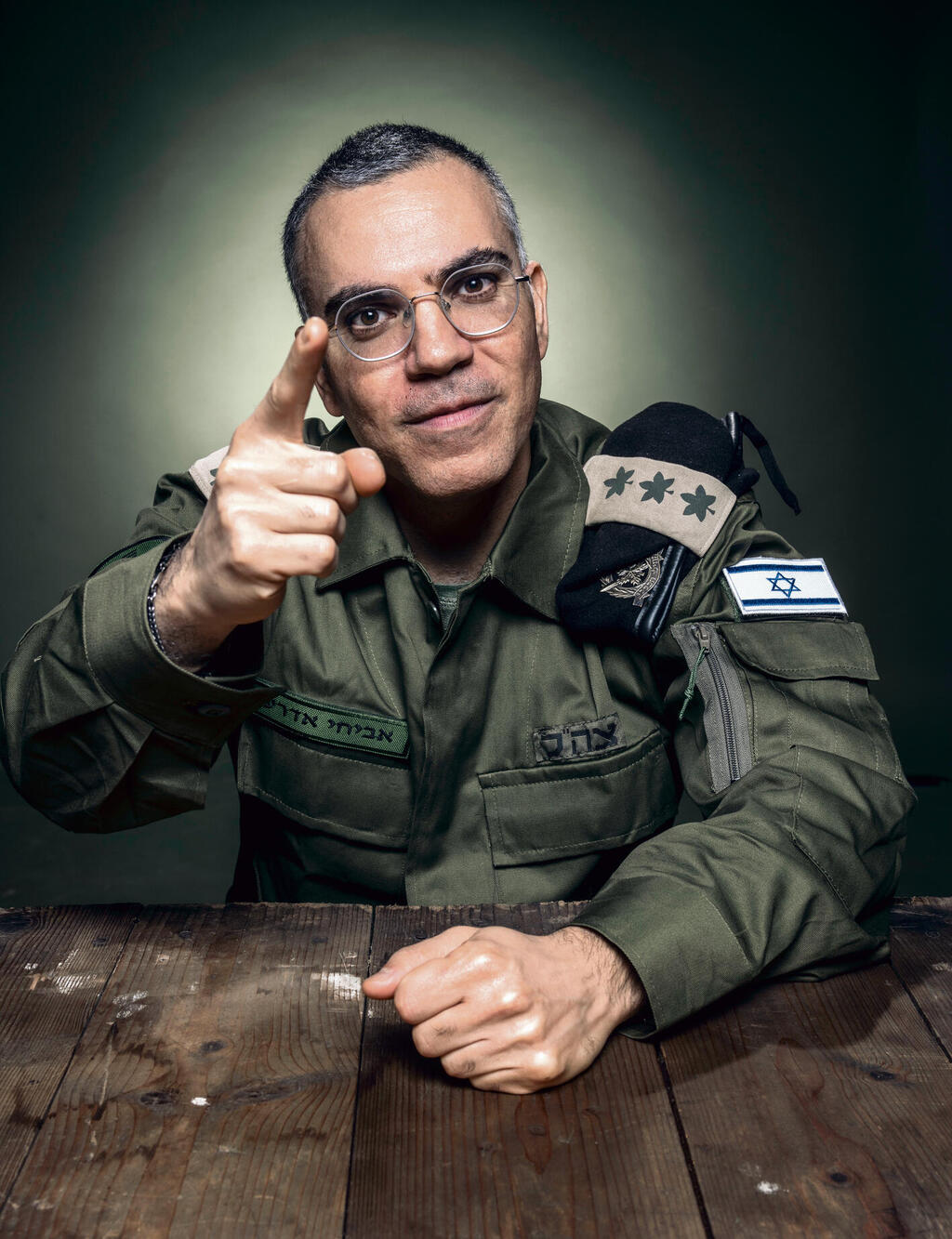
Avichay Adraee
(Photo: Ilya Melnikov)
Did the job follow you elsewhere?
“I was in Eilat with my family, and I know there are many Jordanians working there. My children know that if someone calls my name on the street, I don’t turn around, and they shouldn’t draw my attention to it. No need to say, ‘Dad, someone’s calling you.’ I take pictures with many people — if someone approaches me for a photo I won’t turn them away. But if someone calls out to me, I prefer not to turn around.”
*****
It took Avichay Adraee a long time to decide that it was time to part ways with the role that has accompanied us for two decades and pass the baton to his successor, Maj. Ella Waweya, whom he personally mentored. He is still there to advise and is not leaving immediately, but soon he will begin searching for his next destination in civilian life.
“This process was brewing for almost a year,” he says. “I told Daniel Hagari that I intended to finish my role, and he told me, ‘No, stay a bit longer. I understand you, but there are still many challenges — hold on.’ In the end the world belongs to the young. I’ve known Ella for so long — like a married couple in a way. I’ll know how to take two steps back. I don’t want to overshadow her, God forbid. I want to be number two. She’s the commander, she goes out to the media on all the issues and runs everything with a firm hand. But if they need to put out messages and ask for help, they’ll also go out through me or on my digital platforms, with millions of followers that are still under my name.”
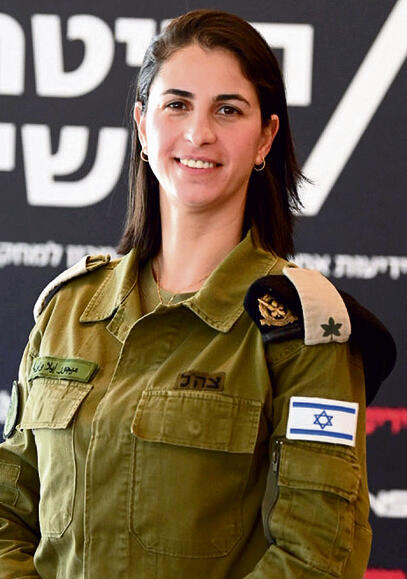
Maj. Ella Waweya
(Photo: Yair Sagi)
How did the connection between you and 'Captain Ella' begin?
“We had a very beautiful journey until her debut. At first, when she enlisted, she would take off her uniform when she went home and her family didn’t know she was in the army. She told them she was doing professional training in communications. We were very protective of her, and one day we decided she would go public.”
The nickname “Captain Ella” was coined by Adraee in a moment of improvisation when she was supposed to publish a video for the Arabic-language IDF channels.
“At first they thought about posting it under the name ‘Stories from the IDF,’” he says. “I told them, ‘Are you serious? What kind of name is that? You’re not going up with a name like that.’ I told her to choose either ‘Naqib Ella’ — naqib is captain in Arabic — or ‘Captain Ella.’ Pick one. She said she connected more with Captain Ella. I told her good luck, and since then it’s become a brand.
“I wanted her to complement me. Many times the audience receives me as angry Avichay — the one who’s furious and shouting — but that’s a character. You can see I’m not an angry person. My kids saw me angry yesterday before bedtime — that part is true.”
Aside from the children before bedtime, the Arab world has often seen Adraee angry at full intensity. In his role he has combined eloquent speeches and quotations from the Quran with online arguments with ordinary citizens across the Arab world — and also with key figures.
There was also one video in which he addressed terrorists holding Israeli hostages, and only later did he realize the message had reached its destination. “Islamic Jihad, who are the most despicable — even more cruel than Hamas — released a video meant to spark a discussion in Israel about the Jewish commandment of redeeming captives,” he says. “So I decided to respond with a video referring to Islamic law regarding the treatment of hostages. It went viral.
“After the hostages returned, one of them happened to see me at Kfar Maccabiah, where he’s undergoing rehabilitation, and said: ‘Colonel Avichay!’ and hugged me. Then they told me they had watched my videos together with their captors, and one of the terrorists said about me, ‘He speaks Arabic better than we do.’ Then you understand that even the most despicable people respect you.”
Were there other moments in the war when you understood your influence?
“I have a friend who interrogates Nukhba terrorists — the Hamas commando force that led the October 7 attacks — and he studied their theological and ideological mindset. When he finished he asked one of them: ‘Did you believe a Jew would sit across from you and speak about the Quran like this?’ And the terrorist answered: ‘You have another one — Sheikh Avichay — who also quotes the Quran accurately.’”
Did you ever make a mistake you regret?
“There were times when I didn’t check details thoroughly and it turned out the publication I issued was wrong. I can count those cases on one hand.”
For example?
“In one operation, I was misled into thinking we had eliminated the head of Palestinian Islamic Jihad’s rocket unit, and they asked me to amplify it. I didn’t check and published the report, which turned out to be incorrect. I issued an apology to my followers and to the media.”
Do you also consider your response on the day journalist Shireen Abu Akleh was shot dead a mistake?
“No. When we published the footage showing armed men in the area, that was the truth at the time. That was the picture from the ground. We didn’t say we didn’t kill her. We said we weren’t sure we killed her. We raised doubt.”
Come on. That’s an elegant dodge.
“You can’t leave the field empty. While we’re checking, the Palestinians — world champions at spreading false claims — create a narrative and we get all the criticism. If we’re wrong, we’ll admit it eventually. But we won’t accept that everything Hamas publishes is absolute truth. I can say we learned lessons from Shireen and other cases. When there was the explosion at the Al-Ahli hospital in Gaza, it took us several good hours to establish an accurate answer, and only then did we publish it and stand behind it. It was a response that was 100 percent verified.”
Yet before he became a social media personality across the Arab world, when he first arrived at the IDF Spokesperson’s Unit, Adraee took training on how to stand in front of a camera — and his hands wanted to move passionately, which his commanders did not like.
“They told me to sit on my hands,” he says. “Then I watched my appearances and realized I was speaking like an Ashkenazi. Passion changes everything. Everything changes. Many times we’re condescending toward the Arab world. I’m not. I say we should do what the Arab world does. If they speak loudly and with their hands, so will I. And if Al Jazeera broadcasts 24 hours a day in formal Arabic, then I’ll also speak in formal Arabic.”
Early in his career he listened to speeches by Saddam Hussein. “In my opinion he was an excellent rhetorician. Nasrallah too. There used to be a myth in Israel that he was the most reliable figure in the Middle East. My mother believed him — when he said ‘ba’da Haifa’ (beyond Haifa), everyone believed him.”
At the end of 2010, when the Arab Spring erupted, Adraee debated whether to open social media accounts for the IDF in Arabic. “I wondered what the chances were that an ordinary person would want to ‘like’ the IDF logo,” he says. “But I relied on my exposure on Al Jazeera, where I had appeared hundreds of times and was already known. I wanted anyone to be able to talk with me, so I created a personal brand around Avichay. I showed them that, like them, I also love Amr Diab, the Egyptian singer, and Sarit Hadad, who is very popular there.”
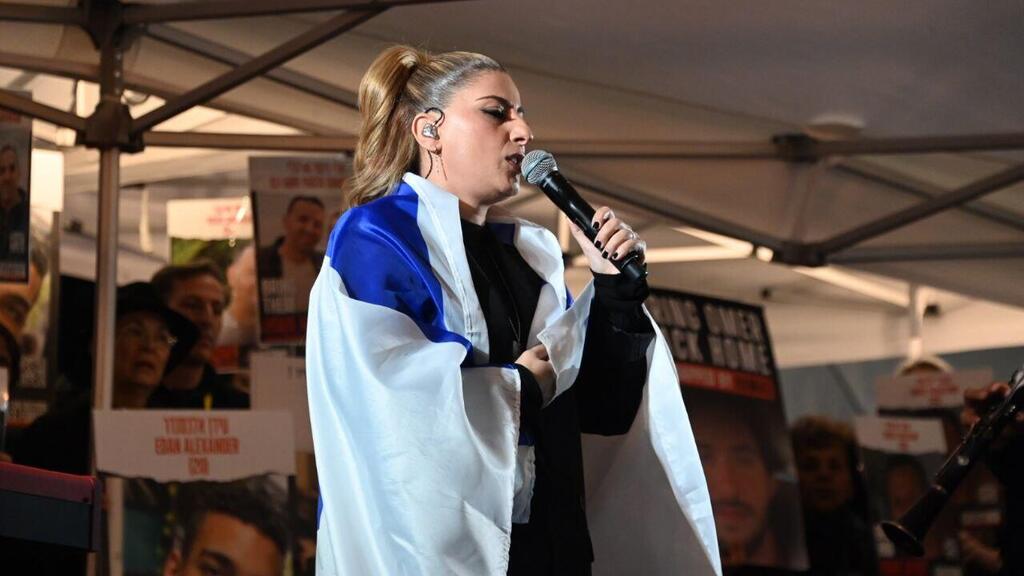
Sarit Hadad
(Photo: Yair Sagi)
Several years later, in 2018, then-IDF spokesperson Ronen Manelis summoned Adraee for a meeting.
“He asked who my target audience was, and I answered: ‘The entire Arab world.’ He said, ‘That’s the stupidest answer I’ve ever heard.’ At the time he was absolutely right. He said, ‘Why should I care if they hear you in Sudan or Yemen? I care about places the IDF actually has a reason to speak to.’ At that time, who cared about Yemen?”
And then you realized you had built a network serving the IDF across the Arab world?
“There was a funny case when a senior officer called me and asked whether we could issue a civilian warning in Yemen before we attacked an airport there. He asked how many followers I had in Yemen, and I remembered that conversation with Manelis. But I told him: ‘Don’t worry. I know how to put this on every screen in the world. There isn’t a Yemeni channel that won’t publish it.’ In fact, half an hour after we published it, the airport was empty.”
When did Manelis realize?
“When I received on Twitter a photo of a Hezbollah fighter holding a cardboard sign that said: ‘Avichay Adraee, we’re training to conquer the Galilee.’ I sent the screenshot to Manelis and wrote: ‘Forget Yemen, forget Iraq — the mother of all target audiences is listening to me.’”
*****
Morning in the Adraee household, in a city in Israel’s coastal plain — these days he prefers not to name it — begins with an unusual scene: Avichay Adraee sitting at the kitchen dining corner, reading aloud in Arabic from newspapers in the Arab world.
To the sound of their father delivering speeches, his three children wake up. They are used to it by now. But they had one request: “Dad, not on the balcony.”
Adraee, an obedient father, moved inside. Since then he has stayed in the kitchen. “They told me all the neighbors would think Arabic was spoken in the house. That only they and I should hear it. My wife tells me, ‘Why is everything loud with you, everything so intense, even when you switch back to Hebrew?’ But I love it. That’s how every morning has begun for me for 20 years. If you want to master a language, you have to speak out loud and hear yourself.”
To understand the retiring IDF Arabic-language spokesman’s romance with the language that turned him into a star across the Arab world, you have to go back to his parents’ home. He grew up in the Hadar HaCarmel neighborhood of Haifa in a traditional family, the middle child between two brothers. His father was a bank clerk and his mother a kindergarten aide.
“I would hear my mother speaking Iraqi Arabic with her mother. My grandmother on the other side immigrated from Turkey and lived in Wadi Nisnas in Haifa. The television was always on Arabic news.
So I assume it was natural for you to study Arabic in school.
“I was very good academically and excellent in Arabic at the Reali School in Haifa, but when it came time to choose a track I chose economics, management and computers. My father practically forced me to continue with Arabic. He wanted me to serve in Unit 8200 and said the entry ticket was knowing the language. I refused, we argued and didn’t speak for several days. In the end I gave in.”
If you were wondering where the didactic tools he uses — the whiteboard and marker — come from, the answer lies in childhood. “I had two dreams: to be a soccer referee and to be a teacher. At 16 I was an assistant referee in two games. After the amount of abuse I received, I hung up the whistle and the flag. The dream of being a teacher remained. I lecture a lot in schools, persuading students to study Arabic. I tell them my father made the best decision of my life.”
And that’s how you reached the Hatzav Unit in the army.
“It was a unit within Unit 8200 that was later shut down. We gathered open-source intelligence from media outlets. Years later the unit closed. After October 7 it was reopened. The plan was to stay there until one day my commander, Samo — Yaakov Samorai — told me,” Adraee says, now mimicking his commander’s Iraqi accent, “‘Avichay, what do you think about being the IDF spokesperson in Arabic?’ Eitan Arusi, who founded the Arabic section of the IDF Spokesperson’s Unit, had been discharged and they were looking for a replacement. He approached Samo, who told him: ‘Only Avichay.’”
How old were you?
“Twenty-three. Not even an officer — an NCO with the rank of sergeant first class. The unit commander told me I had no chance of getting the job. But sometimes dreams come true. I got a call from the IDF spokesperson’s office asking me to come for an interview with Miri Regev. When I walked in she said: ‘I don’t know Arabic, but they say you’re good. I believe in young people. The job is yours.’”
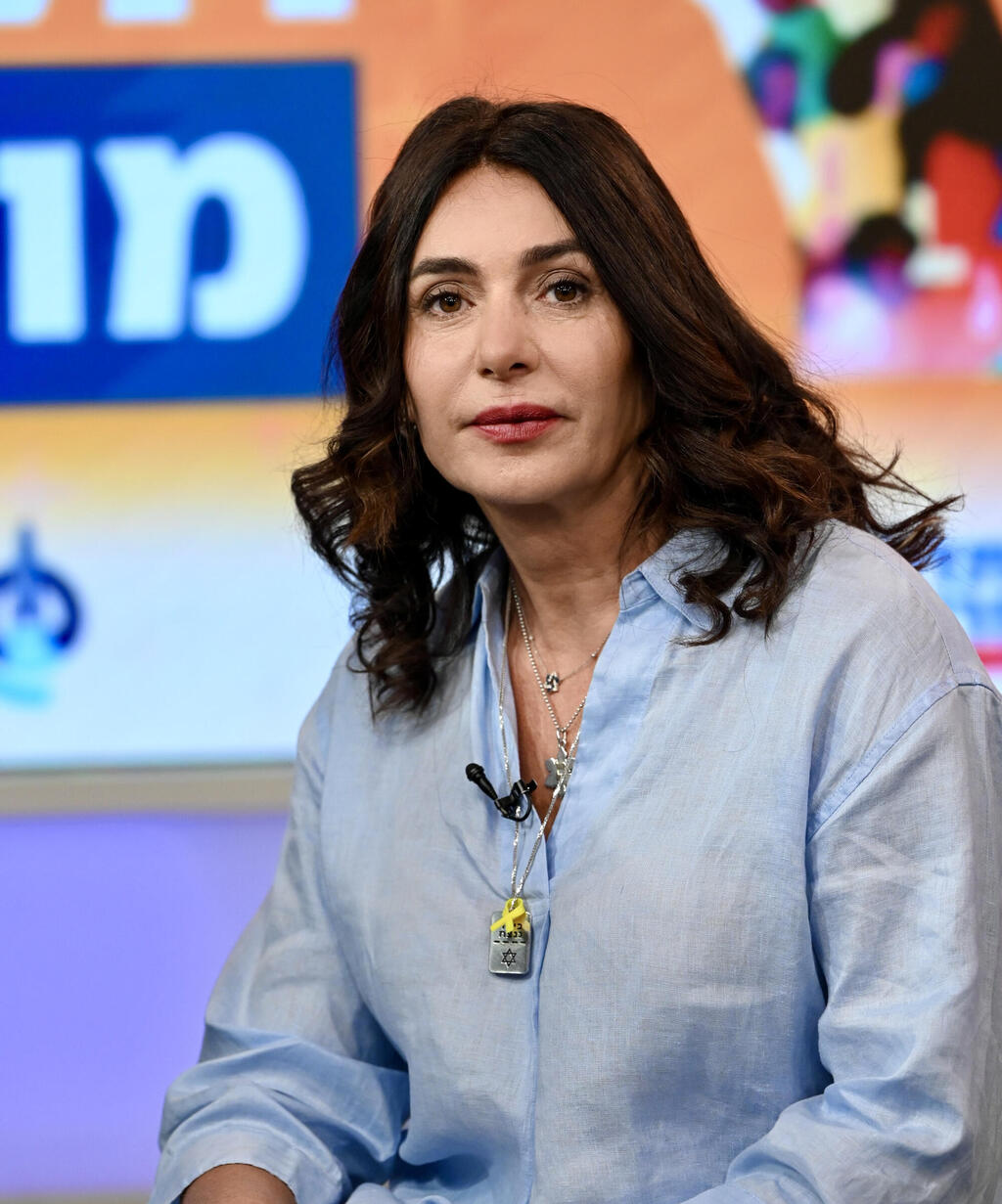
Miri Regev
(Photo: Kobi Koanks)
Adraee and his wife Hila, 39, parents of three children ages 12, 9 and 4, met in an officers’ course, though it took time before they became a couple — in rather charming circumstances.
“Hila served as a research analyst and went to officers’ course. We were on friendly terms. I returned from the course on the day Gilad Shalit was kidnapped and immediately dove into the job. That same day I did an interview on Al Jazeera. A good friend from the IDF Spokesperson’s Unit told me he was dating a nice girl and showed me her photo. I said, ‘That’s Hila who was with me in the course.’ He said, ‘No, her name is Adva.’ I insisted her name was Hila. He called Adva and it turned out they were identical twins. We went together to visit them, and Hila and I became a couple.”
You’re a military household — both career officers.
“Hila left the army, studied economics and came back as an economist. She received the rank of lieutenant colonel a month before October 7. One day when I was driving with my son, he asked me out of nowhere: ‘Do you know what happened to us when you went to the army on October 7?’”
Wow. He wanted to say that they were also dealing with the war on the home front?
“I went to the unit that day at 7:30 a.m., and I don’t know what happened at home until I returned several days later. I never asked the kids how it was for them. He told me he had been very anxious. Hila, who is responsible for civilian employees of the IDF, had to mobilize them. She left the kids with her sister and went back home to work. When she left her sister’s house, the sirens began, and he was afraid she wasn’t protected.
“In the processing we did in the unit afterward, I said that suddenly I realized the role consumes me so much that when I’m not there, many things happen that affect the kids and you have no idea.”
He pauses the interview when his son calls. The boy has invited a friend over and his father’s task is to order them food. “Nuggets or a hamburger?” he asks, before carefully reviewing all the menu options and placing the order.
“I try to be a present father, very involved in the kids’ lives — friends, exams. But of course over the past two and a half years it’s been very complicated. My physical presence is affected by the situation. Right now I can’t travel abroad, and one of the kids dreams of going to a Premier League match in London. It really bothers them. I told him: ‘Show Mom a few games and she’ll go with you.’”
The day after he leaves the army, he says, he would be happy to serve as a commentator on Arab television channels about Israel.
“Things that can create a bridge between Israel and the Arab world. Let’s just say I’m not going to become a life coach or a fitness trainer, even though I lost 23 kilograms. There was a lot of emotional eating during the war. I replaced it with healthy shakes.”
Among other things, civilian Adraee would like to give lectures, though he still does not know what his speaking fee should be.
“Someone from a large insurance company called and invited me to speak at a conference,” he says. “She told me, ‘Avichay, there’s no negotiation. Whatever you want.’ I was so embarrassed that I said, ‘I don’t know how to talk about things like that. Give me whatever you want.’ Later I told that story in an army retirement workshop and the lecturer was really angry with me. I realized it’s a subject that’s difficult for me and embarrasses me.”
And what about politics? It has been reported that Gadi Eisenkot approached you.
“Leave me alone, please. I’m wearing a uniform. I don’t think it’s appropriate to even discuss it.”
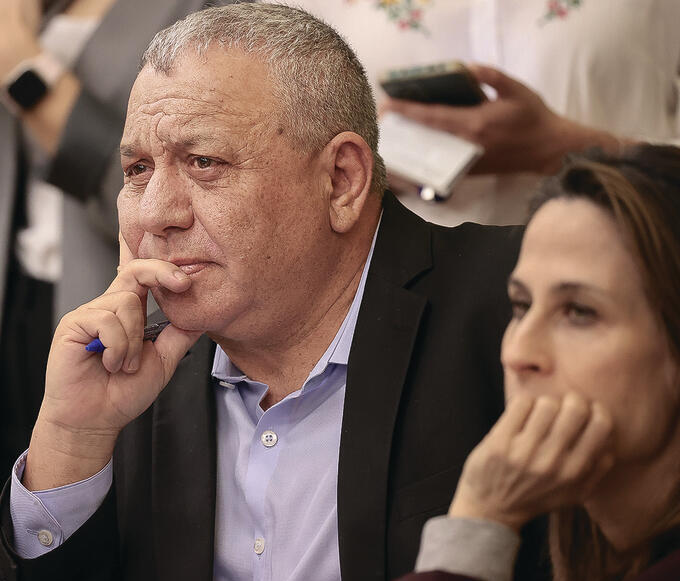
Gadi Eisenkot
(Photo: Amit Shabi)
Still, did anyone approach you?
“No one offered me anything and no one pursued me. People understand I’m still in uniform and it’s not appropriate to talk about it.”
Are there other kinds of offers besides lectures and politics?
“I’ve recently received many approaches from reality shows. Two days ago they called me from ‘Dancing With the Stars.’ I told the casting producer, ‘Listen, I’ll talk to my wife, but I’m telling you there’s no chance something like that will happen.’ They also approached me from ‘The Amazing Race VIP,’ and I tried to escape it. I said it’s not for me. I’m more of a ‘Big Brother’ type — less physical challenges, more sitting on the couch and arguing. They said, ‘No problem, you can go there too,’ but I ran away from that as well.”
First published: 12:30, 03.09.26