

In the summer of 2024, Pavel Durov, the founder of the messaging app Telegram, published a post that quickly went viral across social media platforms. In it, he revealed that he began donating sperm in 2010.
The first recipient, he wrote, was a friend who wanted to become pregnant. Later, he continued donating anonymously to “ease the shortage of high-quality donor material.” Durov estimated that he has at least 100 children in at least 12 countries.
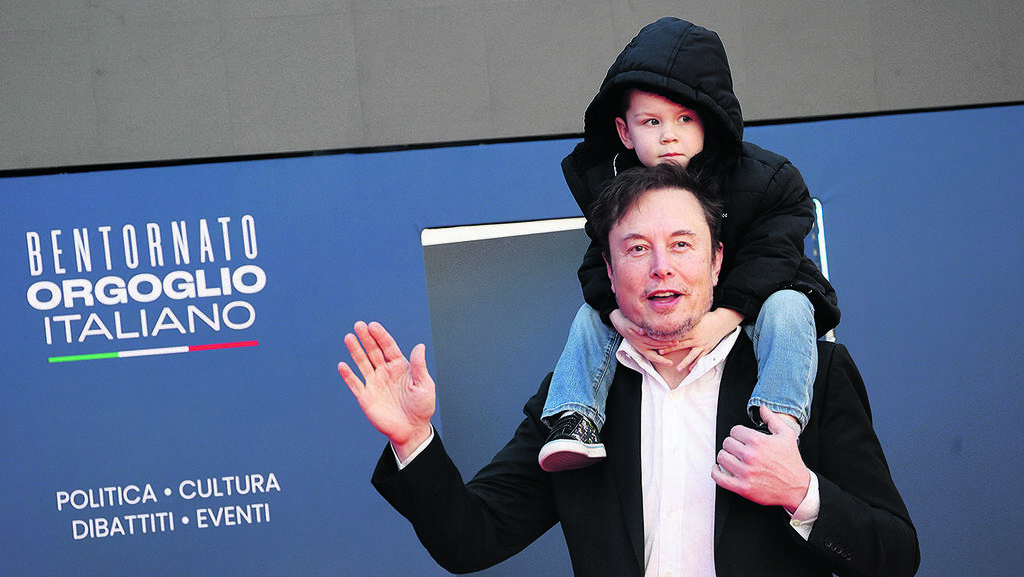
When the post reached X, Elon Musk, himself the father of at least 14 children, replied with mockery: “‘Haha, 100, rookie numbers,’ Genghis Khan,” referencing estimates that some 16 million people worldwide may be descendants of the 13th-century Mongol ruler.
“I’ll be right back,” Durov replied, posting a meme from the video game StarCraft with the quote: “Spawn more overlords!”
Although Durov says he stopped donating years ago, his frozen sperm is still available at a private fertility clinic in southern Moscow, now no longer anonymously. The clinic, AltraVita, markets itself to wealthy Russian and international clients with an unusual offer: free sperm from Pavel Durov.
The clinic describes Durov as having “high genetic compatibility” and says he will cover the cost of in vitro fertilization for women under 37 who wish to use his “high-demand” genetic material. A banner on the clinic’s website still advertises his “biological material,” complete with a photograph and Telegram’s logo.
According to The Wall Street Journal, AltraVita was founded by fertility and genetics specialist Sergei Yakovenko, who described himself as a longtime friend of Durov. The clinic promotes “selective” embryos screened for genetic diseases. Yakovenko has previously published papers on human cloning, and AltraVita participated in a Russian government-backed experiment that claimed to have successfully cloned a high-yield dairy cow.
‘They all looked great’
“The women who came to the clinic for Durov’s sperm all looked great, educated and very healthy,” a former clinic physician told the Journal, adding that candidates had to be unmarried to avoid legal complications.
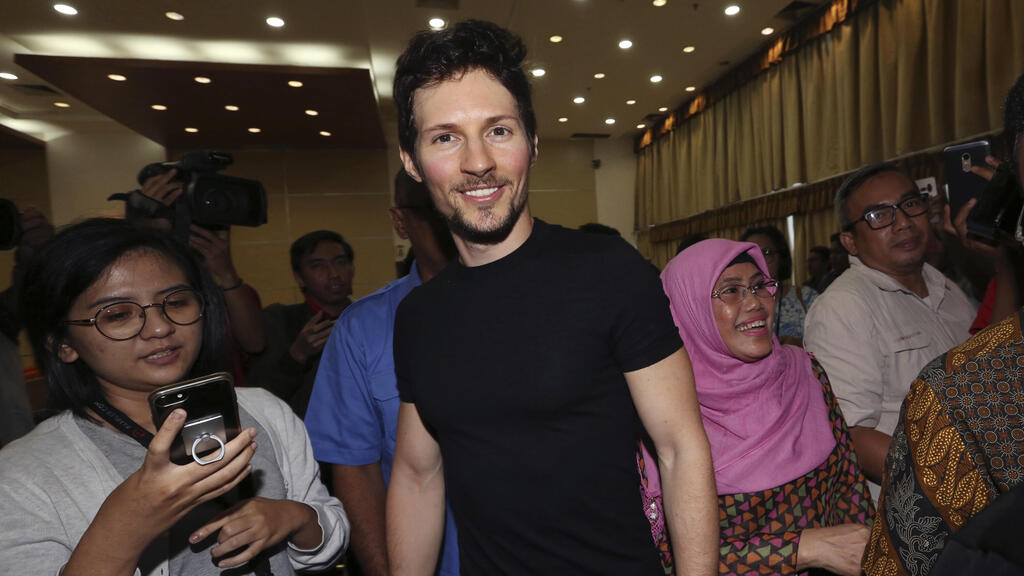
Telegram founder Pavel Durov
(Photo: Tatan Syuflana/ AP)
“They wanted a child from, well, a certain kind of man. They saw him as the right father figure.”
Durov said on Telegram that he was initially skeptical about sperm donation, but that Yakovenko convinced him it was a civic duty, citing both Durov’s genes and a global decline in sperm counts and male fertility.
“The shortage of healthy sperm has become a serious problem worldwide, and I’m proud to have done my part to help,” Durov wrote.
The physician said Durov was not involved in selecting potential mothers. “Suddenly they had the chance to have a child without paying and with sperm from such a successful, intelligent and handsome donor,” he said.
In October, Durov told a French magazine that his biological children would receive equal shares of his inheritance. Forbes estimates his net worth at $17 billion, much of it tied to Telegram, along with undisclosed Bitcoin holdings. He previously said he intended to leave his Telegram fortune to a nonprofit foundation, making it unclear how much would remain for his many offspring.
“As long as they can prove shared DNA with me, they will be entitled to a share of my estate after I die,” Durov said, adding that he plans to publish his DNA as open source so his biological children can find one another. He also said he does not want to give them money while they are still children, so they do not grow up spoiled.
Where ethics end
Durov, 41, moved Telegram to Dubai in 2017, citing political neutrality, low bureaucracy and low taxes. He is part of a small but growing group of billionaires engaged in what amounts to a life project: multiplying their offspring on a massive scale.
While developed countries face declining birthrates, the top 0.0001% appears unmoved by the trend. Using advanced reproductive technologies, they are having children at rates far above the norm, even as broader society struggles economically.
These are some of the world’s richest and most influential individuals, pushing the ethical and technological boundaries of reproduction. Some flirt openly with eugenics, conducting genetic experiments to produce children with desired traits. Others, like Musk, frame high fertility as a moral imperative to counter declining birthrates.
Durov has described his donations as a response to the shortage of healthy sperm. Critics argue that together these figures share a belief, sometimes explicit, sometimes implied, in genetic superiority and a conviction that humanity benefits from as many of their descendants as possible.
They also appear to believe they are saving Western civilization, or at least its white version. What they may not have fully considered is that billionaires outside the Western world are doing the same.
A Forbes analysis of more than 700 American billionaires found they have an average of 2.3 children, well above the US total fertility rate of about 1.6. Among billionaires who have children, the average rises to 3.1.
Musk is the most prominent example, but he is far from alone. Peter Thiel, co-founder of PayPal and Palantir, is a vocal supporter of pronatalism and a major influence behind US Vice President J.D. Vance, who has expressed similar concerns.
The goal: 100 children
Musk’s influence extends globally. Chinese billionaire Xu Bo, whose former partner claims he has 300 children, says the real number is 100. Another businessman, Wang Huiwu, who made his fortune in private education, purchased 20 eggs from American women, including models and PhD holders. At least 10 children have already been born, with a stated goal of reaching 100.
The phenomenon of “extreme surrogacy” among wealthy Chinese men came to public attention during a custody battle between Xu Bo and his former partner Tang Jing. Xu denied having 300 children, saying he had only 100, from 12 women, because he is “one-in-a-million elite” and wants 50 sons, hoping at least 10 will be “top-tier elite.”
He also said he would welcome marriages between his children and Musk’s.
Testifying by Zoom in a US court, Xu said he hoped to have 20 American children through surrogacy but was too busy to visit those already born. The Los Angeles hearing concerned four unborn children, with at least eight more in various stages of the process.
Nathan Zhang, who runs a US agency helping Chinese clients bypass China’s former one-child policy, told Britain’s Times that one wealthy Chinese man requested 200 babies.
“I refused,” Zhang said. “We don’t provide services to anyone who wants more than three children. The first question is always, who will take care of the baby? What Musk promotes is terrible.”
And what about child support?
Durov is best known for wearing black and cultivating an ascetic image. He first rose to prominence in 2006 after founding VK, a Facebook-like platform that earned him the nickname “Russia’s Mark Zuckerberg,” and launched Telegram in 2013.
Last year, he was detained in France and faced preliminary charges related to alleged illegal activity on Telegram, including drug trafficking and child pornography, as well as refusing to cooperate with police. Durov denies all allegations.
Beyond his estimated 100 donor-conceived children, Durov also has children he knows personally. Two were born when he began donating sperm, followed by three more born in Russia between 2013 and 2017. Their mother, Irina Bolgar, a Swiss-based lawyer, is currently in a bitter legal dispute with him.
Bolgar has accused Durov of cutting off financial support and filed a criminal complaint alleging he assaulted their youngest child. Durov’s spokesperson denied all allegations to The Wall Street Journal.
After Durov publicly celebrated his role in addressing the global sperm shortage, Bolgar wrote on Instagram: “In the end, what matters most to him is spreading his seed across the world.”