

On June 9, 68 CE, Emperor Nero died outside Rome after being declared a public enemy and abandoned by much of the political establishment. Or did he? Roman historians say yes. Jewish tradition has another version entirely. According to the Babylonian Talmud, Nero did not simply disappear from history. He fled a Roman campaign against Jerusalem, converted to Judaism and eventually became an ancestor of Rabbi Meir, one of the greatest rabbis of the Mishnah.
There is no historical evidence that this happened, but that almost makes the story more interesting. Nero is only the beginning of a much larger body of Jewish legends about the Roman emperors who ruled over the Jews. Some are cursed. Some are punished in grotesque ways. Some are outsmarted by rabbis. One is raised from the dead and forced to describe his punishment in the afterlife. Another becomes so close to a Jewish sage that later tradition nearly turns him into a convert. The Romans conquered Jerusalem, but Jewish legend had its own way of dealing with the men who did it.
Gallery
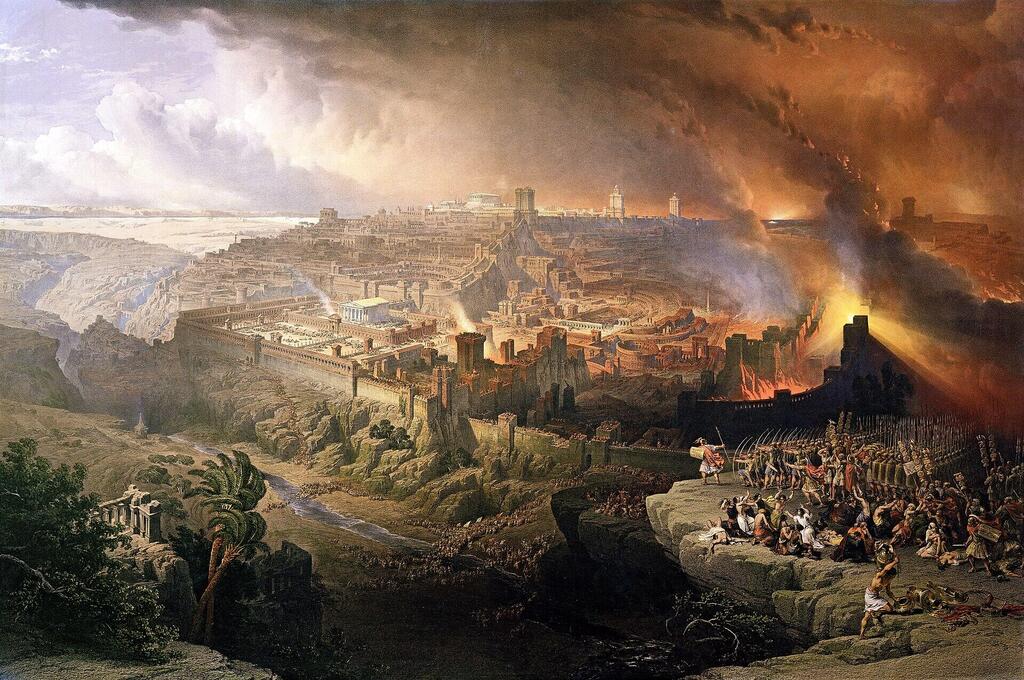
The Siege and Destruction of Jerusalem by the Romans Under the Command of Titus
(Painting: David Roberts)
Nero: the emperor who changed sides
The Nero story appears in tractate Gittin, in the Talmud’s account of the destruction of Jerusalem. Historically, the Jewish revolt began in 66 CE while Nero was emperor, and Nero appointed Vespasian to suppress it. The Talmud instead sends Nero himself toward Jerusalem. Before attacking, he decides to test the city’s fate. He fires an arrow east and it points toward Jerusalem. He fires west and gets the same result. He repeats the test in every direction. Jerusalem every time.
Then he encounters a Jewish schoolboy and asks him to recite the biblical verse he learned that day. The boy quotes Ezekiel: “And I will lay My vengeance upon Edom by the hand of My people Israel.” In rabbinic literature, Edom is closely associated with Rome, and Nero understands the implication. Jerusalem may indeed be destined for destruction, but Rome will ultimately be punished for doing it. He concludes that God intends to use Rome as the instrument of Jerusalem’s destruction and then hold the destroyer responsible.
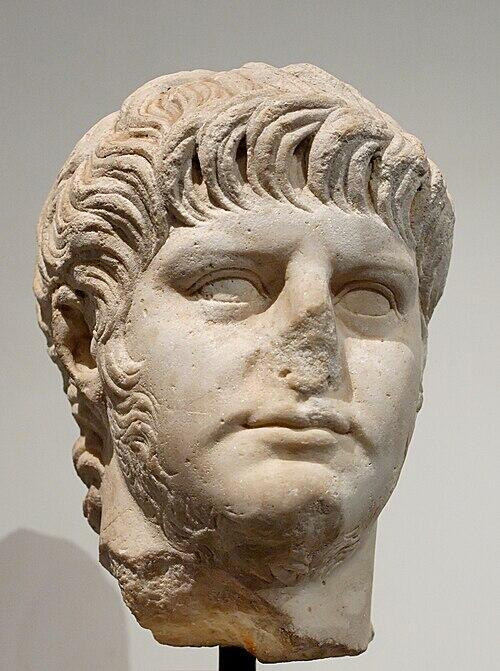
Nero
So Nero refuses. The Talmud says he fled, converted to Judaism and that Rabbi Meir later descended from him. That last detail turns the story into an extraordinary reversal. The emperor associated with the beginning of Rome’s war against the Jews becomes, in Jewish legend, the ancestor of one of the sages who helped shape Judaism after Rome destroyed the Temple. There may even be an echo here of old Roman rumors surrounding Nero’s death. Many people refused to believe he had actually died, and several impostors later appeared claiming to be him. Jewish tradition seems to answer that old question in its own way: Nero survived, but he left Rome behind.
Vespasian: the emperor with the swollen foot
After Nero disappears, Vespasian enters the story. According to the Talmud, Jerusalem is under siege and Rabban Yohanan ben Zakkai wants to escape the city and negotiate with the Romans. Because Jewish extremists will not let him leave, he pretends to be dead and is carried out through the gates in a coffin. He is brought before Vespasian and greets him as emperor, even though Vespasian is not emperor yet.
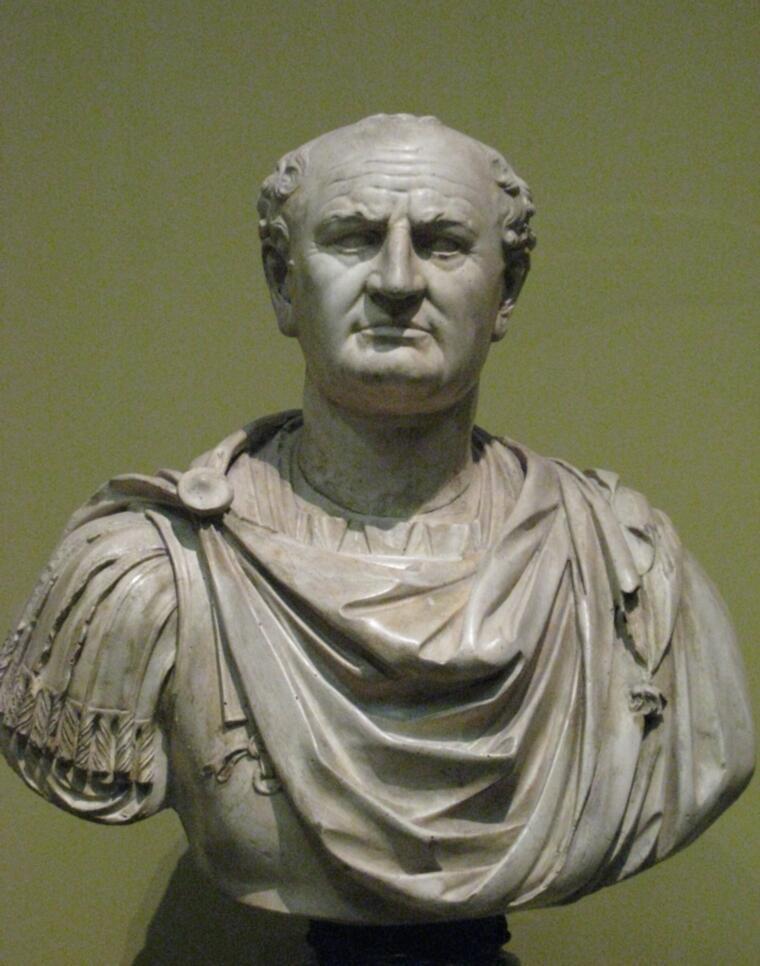
Vespasian
Yohanan insists that he must become one because, according to his reading of Scripture, Jerusalem could only fall to a king. Almost immediately a messenger arrives from Rome announcing that the emperor has died and Vespasian has been chosen to replace him. Then comes one of the Talmud’s stranger details. Vespasian has already put on one shoe when he hears the news. He becomes so delighted that his foot swells, leaving him unable to put on the second shoe or remove the first. Yohanan ben Zakkai again has the answer. He cites Proverbs and tells Vespasian to have someone he dislikes walk before him, because unpleasant emotion will counter the swelling caused by joy. The man appears, Vespasian’s mood changes and the shoe fits.
It is a typical rabbinic reversal. Vespasian has the army outside Jerusalem, but the rabbi understands his political future, Scripture and even his swollen foot better than he does. Vespasian then grants him requests, and Yohanan famously asks for Yavneh and its sages, protection for the family of Rabban Gamliel and medical help for Rabbi Tzadok. In Jewish memory, the episode becomes a story not only about destruction, but survival: Jerusalem may be lost, but Jewish learning finds another center.
Titus: the emperor a gnat could defeat
Vespasian receives a relatively complicated portrayal. His son Titus gets no such sympathy. The Talmud calls him “Titus the wicked,” while a heavenly voice goes further and calls him a “wicked one, son of a wicked one, descendant of Esau the wicked.” In the rabbinic account, Titus enters the Holy of Holies, desecrates the Temple and slashes its curtain with his sword. Blood appears, and Titus imagines that he has somehow wounded the God of Israel.
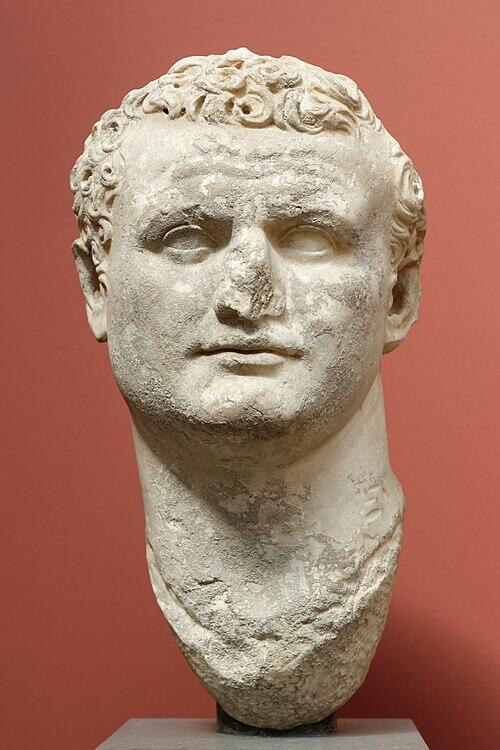
Titus
He then takes sacred vessels and sails for Rome. A storm erupts. Titus mocks God, saying that the Jewish God seems especially powerful on water, and challenges Him to fight him on dry land. God responds with a gnat. The insect enters Titus’ nose and begins gnawing at his brain, tormenting him for seven years. For a time, Titus discovers that the sound of a blacksmith’s hammer quiets the creature, so blacksmiths are brought to hammer in front of him. Eventually even that stops working. When he dies, the story says his skull is opened and the creature inside has grown enormously, with one tradition giving it a copper mouth and iron claws.
But Jewish legend is not finished with Titus. Before his death, he orders his body burned and his ashes scattered over the seven seas, apparently hoping to make it difficult for the God of Israel to resurrect and judge him. Later in Gittin, Onkelos, who is considering conversion, summons Titus from the dead through necromancy and asks who is most important in the next world. “Israel,” Titus answers. Onkelos asks if he should therefore join them, but Titus says no. Their commandments are too demanding, he tells him, and it is better to persecute them and gain power in this world.
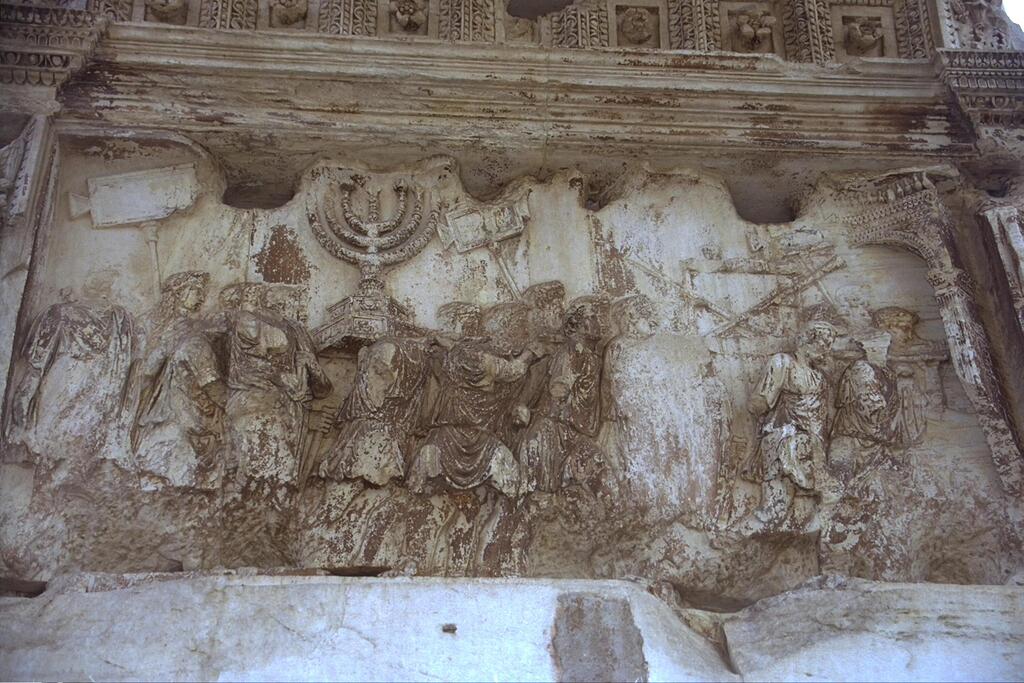
Relief depicting the Temple menorah on the Arch of Titus in Rome
(Photo: GPO)
Finally, Onkelos asks what punishment Titus receives after death. Titus explains that every day his ashes are gathered together, he is judged and burned, and then scattered once again over the seven seas. His attempt to escape judgment becomes the judgment itself. The contrast with Nero could hardly be sharper: Nero recognizes divine judgment and changes sides; Titus recognizes it and tries to outrun it.
Trajan and Hadrian: Rome as persecutor
Not every emperor receives a story of conversion or reluctant admiration. Trajan and Hadrian occupy a much darker place in Jewish memory. One rabbinic story connects Trajan with the execution of two Jews, Lulianus and Pappus. Before killing them, he mocks their faith and asks why the God who saved Hananiah, Mishael and Azariah from Nebuchadnezzar’s furnace does not rescue them as well. They answer that they are not worthy of such a miracle, but warn that God can still punish Trajan through someone else. The story then has Roman officials arrive and kill him.
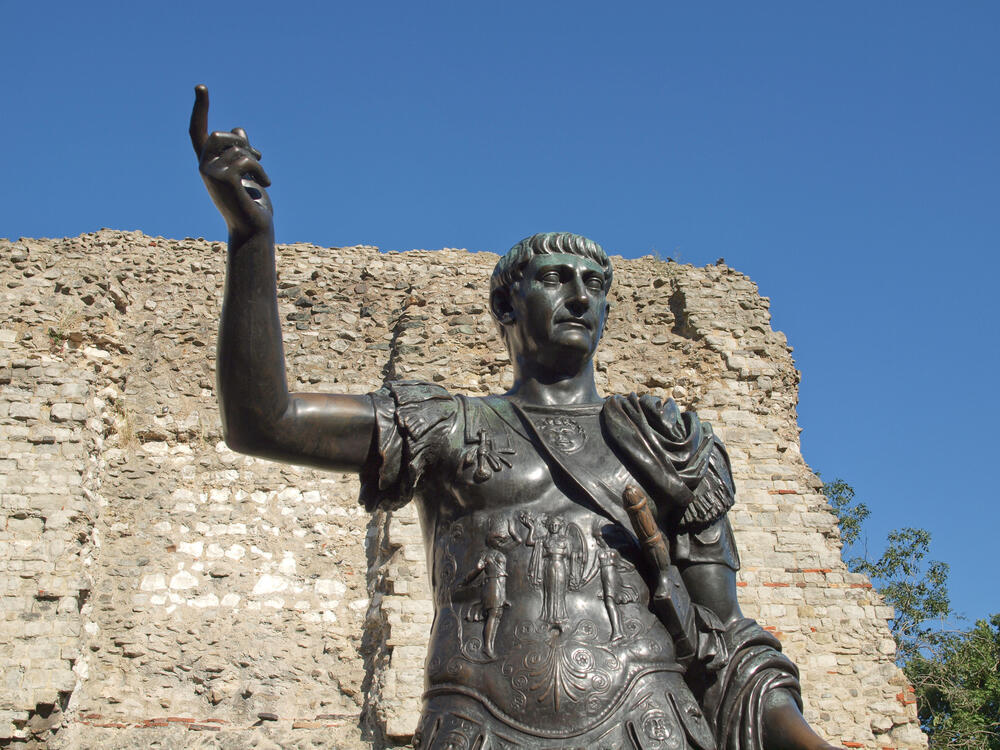
Trajan
(Photo: Shutterstock)
Lamentations Rabbah preserves an even more gruesome Trajan tradition. His wife gives birth on the Ninth of Av, while Jews are mourning, and the child later dies around Hanukkah, when Jews are lighting lamps. Informers convince her that the Jews mourned her joy and celebrated her grief, and she summons Trajan. When he arrives, he finds Jews studying a biblical verse about an enemy descending “as the eagle swoops.” Trajan declares that he is that eagle, and the legend ends in massacre.
Hadrian is remembered even more bitterly. His reign included the Bar Kokhba revolt and its brutal suppression, and rabbinic texts often attach a curse directly to his name: “may his bones be crushed.” Yet even Hadrian becomes a figure in stories where rabbis expose the limits of imperial power. In one, he challenges belief in resurrection, and Rabbi Joshua ben Hananiah identifies a tiny bone from which the body will supposedly be rebuilt. Hadrian grinds it, soaks it and strikes it on an anvil. It refuses to break.
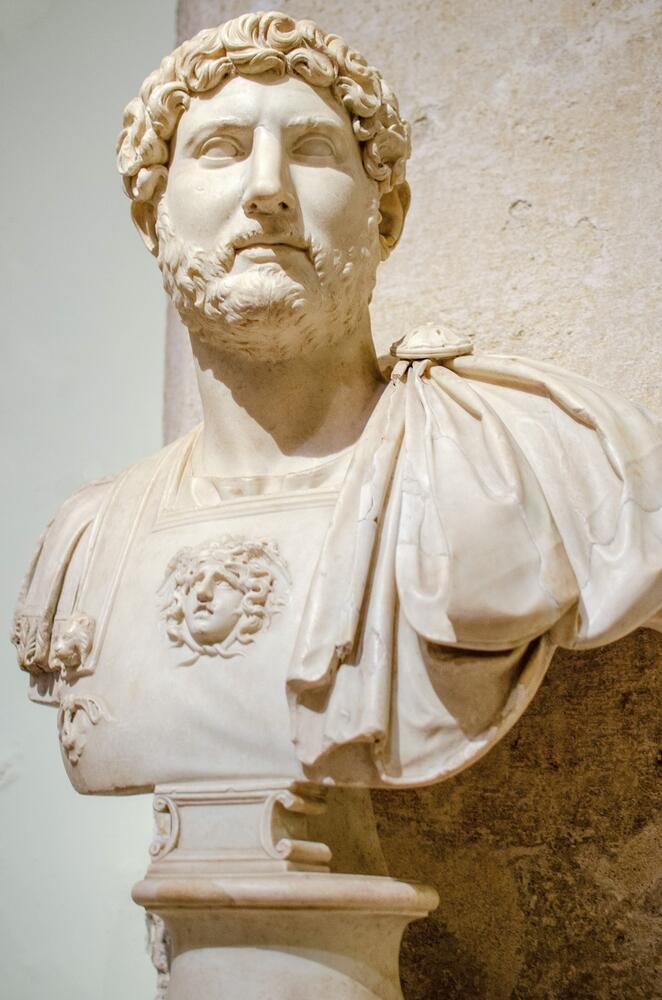
Hadrian
(Photo: renbrins/Shutterstock)
In another story, Hadrian boasts that he is greater than Moses because Moses is dead while Hadrian is alive. Rabbi Joshua asks him to prohibit anyone in the empire from lighting a fire for three days. Hadrian agrees, but that evening they see smoke rising in the distance. A sick Roman official needs hot water. Rabbi Joshua has made his point: Hadrian cannot enforce his own command for one night while still alive, while Moses prohibited Jews from lighting fire on Shabbat centuries earlier and they still obey him.
Antoninus: the emperor who wanted to serve a rabbi
Then Jewish tradition imagines almost the opposite kind of Roman ruler: Antoninus. Exactly which emperor stands behind the stories is uncertain, though he is often identified with Antoninus Pius. What matters in the legends is his extraordinary friendship with Rabbi Judah HaNasi, the great patriarch traditionally associated with compiling the Mishnah.
Later tradition takes the friendship back to infancy. During a Roman ban on circumcision, the infant Judah had allegedly been circumcised illegally. To save him from inspection, his mother exchanged babies with Antoninus’ mother and presented the uncircumcised Roman child instead. The future rabbi survives, and the future emperor develops a lifelong connection to Judaism.
As adults, their relationship becomes even stranger. The Talmud says Antoninus uses a secret underground tunnel to visit Rabbi Judah and takes extreme measures to keep the meetings hidden. He serves Rabbi Judah food and drink and, in one remarkable scene, crouches down so the rabbi can step on him when climbing into bed. Rabbi Judah protests that an emperor should not humiliate himself this way. Antoninus replies that he wishes he could be the rabbi’s mattress in the World to Come.
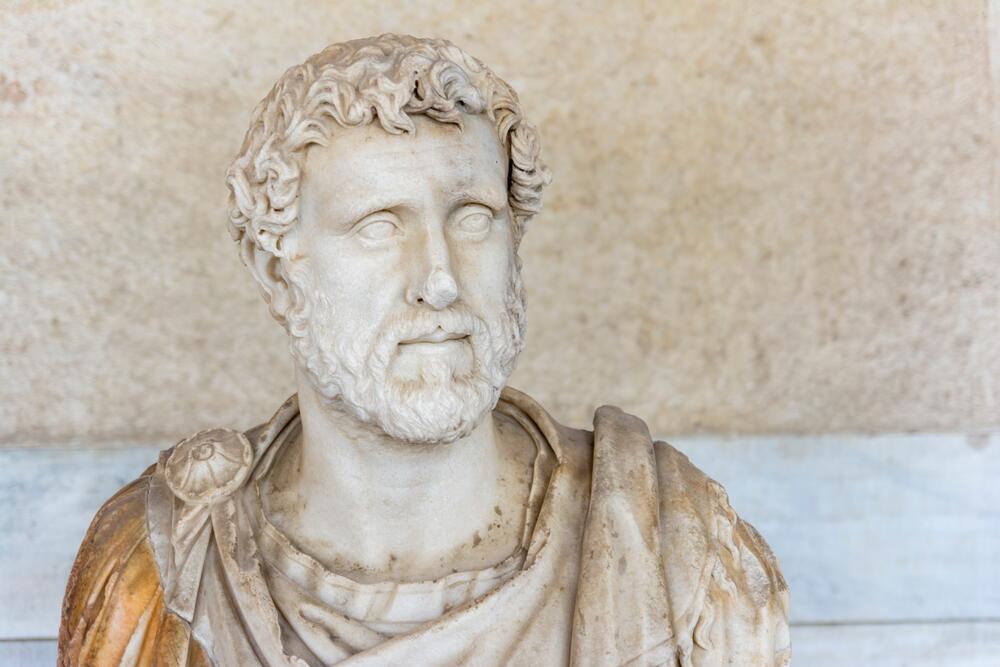
Antoninus Pius
(Photo: Photo Oz/Shutterstock)
They also communicate political advice through vegetables. When Antoninus asks what to do about troublesome Roman officials, Rabbi Judah silently uproots radishes one by one, signaling that they should be removed individually. A family scandal leads to an even stranger coded exchange involving Antoninus’ daughter Gira. The two men send vegetables back and forth whose names hint at whether she should be punished, killed or spared, with Rabbi Judah ultimately signaling mercy.
Their conversations also turn to theology. Antoninus asks how body and soul can be punished after death when each could blame the other. Rabbi Judah responds with a parable about a blind man and a lame man who cooperate to steal fruit and therefore must be judged together. In another tradition, Antoninus eats cold food at Rabbi Judah’s home on Shabbat and finds it delicious. When hot weekday food later tastes inferior, Rabbi Judah tells him it lacks one spice: Shabbat.
Some traditions ultimately bring Antoninus very close to conversion, even describing circumcision or a place among righteous converts. If Titus is the emperor Jewish legend wants to punish, Antoninus is the emperor it wants to persuade.
What Jewish legend did to Rome
Taken together, these stories do something more interesting than simply label some emperors good and others bad. Trajan and Hadrian embody persecution. Titus wins Jerusalem but cannot defeat a gnat and is later forced to acknowledge Israel from the grave. Vespasian commands the siege but needs a rabbi to explain his destiny and his swollen foot. Antoninus rules Rome but seeks Jewish wisdom, friendship and perhaps even Judaism itself.
And Nero provides the strangest version of all. He begins as the emperor supposedly sent toward Jerusalem, fires his arrows, listens to a Jewish schoolboy and realizes that having the power to destroy a city does not necessarily give him the right to do it.
So he walks away.
According to the Talmud, he becomes a Jew and eventually the ancestor of Rabbi Meir.
Rome conquered Jerusalem in history.
Jewish tradition spent centuries imagining what happened when the emperors were forced to answer to Jerusalem instead.