

“People in Israel go to shelters when the sirens sound. But Magen David Adom volunteers go out of the shelters and save others.”
For Uri Shacham, Magen David Adom [MDA] chief of staff, that contrast captures the organization’s role in wartime. When Iranian missiles and drones hit Israeli cities during the June 2025 war with Iran, MDA, Israel’s national emergency medical service and blood services organization, had to do what it had long prepared for—send medics into strike zones and keep emergency care running under fire. From its headquarters in Ramla to damaged apartment blocks in Bat Yam, the system relied on rapid dispatching, years of training, fortified infrastructure, and a volunteer force spread across the country.
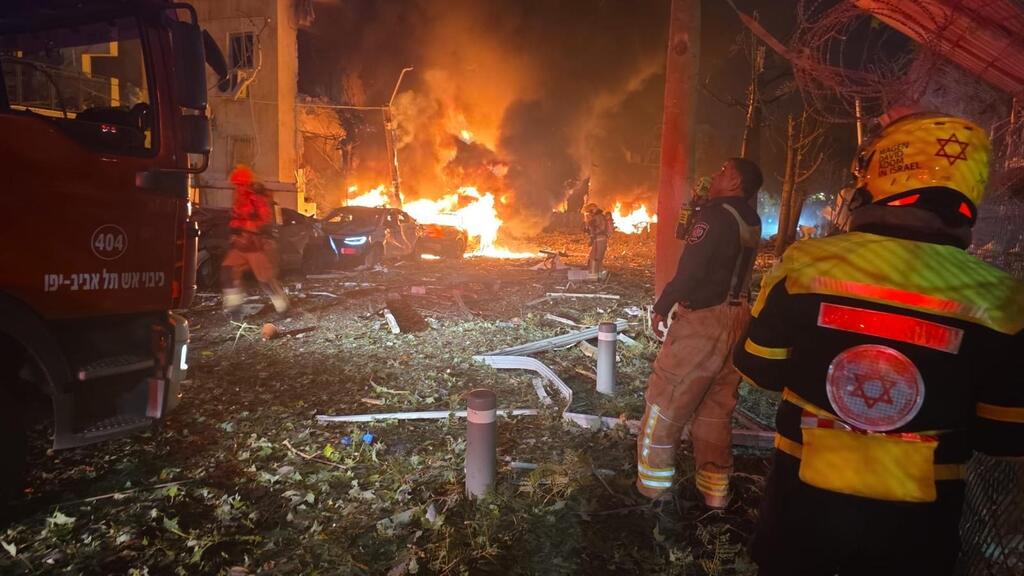
One of the clearest tests came in Bat Yam, just south of Tel Aviv, when an Iranian ballistic missile ripped into a residential neighborhood. Apartment buildings were badly damaged, windows were blown out across whole blocks, and hundreds of residents were forced from their homes.
Paramedic Ori Lazarovich was among the first responders to arrive.
“A few seconds after the sirens finished and we hear the loud boom noises, we automatically exit the safe rooms and start heading toward where we suspected the missile hit,” he told The Media Line.
At first, crews knew only the general area.
“At first, we don’t have the exact location,” Lazarovich said. “We have an area. Then, a few minutes later, people start understanding that their house is the one that was hit, and we begin receiving more precise addresses.”
By the time responders reached the neighborhood, it was clear the damage stretched far beyond the impact point.
“This is where the missile hit, but the damage spreads hundreds of yards around,” he said. “You have a giant perimeter where houses are destroyed as well.”
Injured residents stumbled out of damaged apartments while others searched for neighbors or relatives trapped inside. Paramedics began triaging victims and moving the most seriously wounded to nearby hospitals, then moved through surrounding buildings looking for casualties from shrapnel and shattered glass.
“We start triaging and treating,” Lazarovich said. “You have a huge influx of patients who can evacuate themselves first.”
“You never know where someone might be,” he said. “Maybe there’s shrapnel on one side or windows shattered somewhere else, but you can’t miss anyone. You have to treat people across the whole area.”
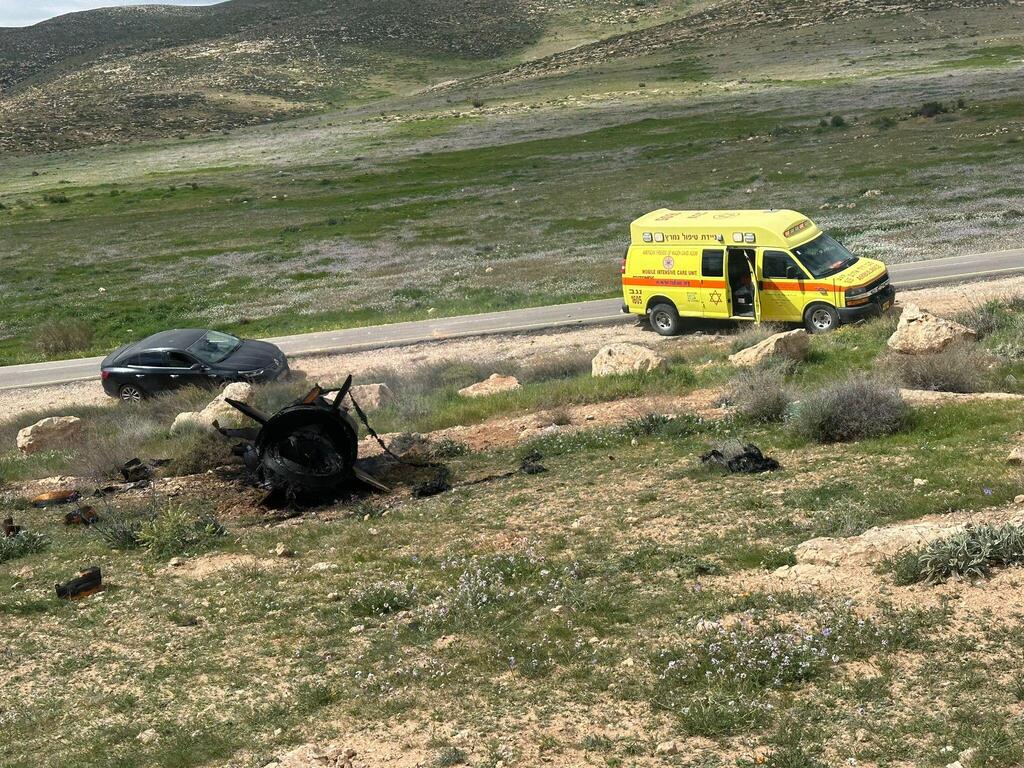
MDA teams at the scene of an Iranian missile strike
(Photo: MDA)
Even after reaching the scene, responders know another missile could arrive within minutes.
“You’re always looking up in the sky,” he said. “You want to treat and transport patients as fast as possible because you don’t want to be standing here when the next missile strikes.”
That pressure, Shacham told The Media Line, was exactly what the organization expected when it prepared for the possibility of direct war with Iran. Planners assumed crews might have to operate with limited backup even at major impact sites.
“We expected that this war would be different from the war in June 2025, in the amount of missiles, in the tonnage of explosives, how much explosives are being shot,” he said. “We took into consideration that Magen David Adom people will have to work by themselves. That means that we will not be able to send 100 ambulances to each scene. So we trained our people for the worst-case scenario. You have to work on your own.”
At the dispatch center in Ramla, teams work around the clock directing ambulances, medics, and first responders nationwide. Operators track alerts in real time, steer crews toward impact zones, and stay in close contact with hospitals as reports of injuries and collapsed buildings pour in.
That preparation includes simulation technology built to recreate the confusion of a real emergency. Inside the training center, crews work in a full-scale ambulance simulator mounted on a hydraulic platform that mimics a speeding vehicle while medics try to stabilize a patient on the way to a hospital.
Chen Vermus, director of the MDA Paramedic School, told The Media Line that the system lets trainees experience treatment from pickup to the emergency room.
“This is an advanced simulation ambulance,” Vermus explained. “It simulates the driving from the scenario to the hospital and includes the treatment during transport. The back of the ambulance looks exactly like the real ambulance, so the paramedic takes the patient inside and continues treatment while the driver transports them.”
The school certifies hundreds of paramedics each year, including civilian responders and military medics, and also uses mixed-reality technology to place students inside virtual disaster scenes crowded with victims, bystanders, and noise.
“They treat the patient on scene before they even put the patient in the ambulance,” Vermus said. “I can create a road accident in Tel Aviv, a military combat zone, or whatever scenario we need. They hear the sounds; they feel the stress, and there are people around them. We try to make the simulation as realistic as we can.”
Several floors below the headquarters sits another crucial part of the wartime response: Israel’s central blood bank. Built underground behind thick concrete walls and blast doors, it is designed to keep operating even if missiles hit nearby.
“We are actually at the entrance to the only blood center in the world that is sheltered, protected underground,” Shacham said. “It allows the continuous work of creating and processing blood even if this location is hit by missiles.”
The facility supplies hospitals across Israel and provides blood products to both civilian medical centers and the Israel Defense Forces. Once the war escalated, it shifted immediately into emergency mode. MDA then launched a nationwide blood donation campaign, collecting donations in protected locations near shelters.
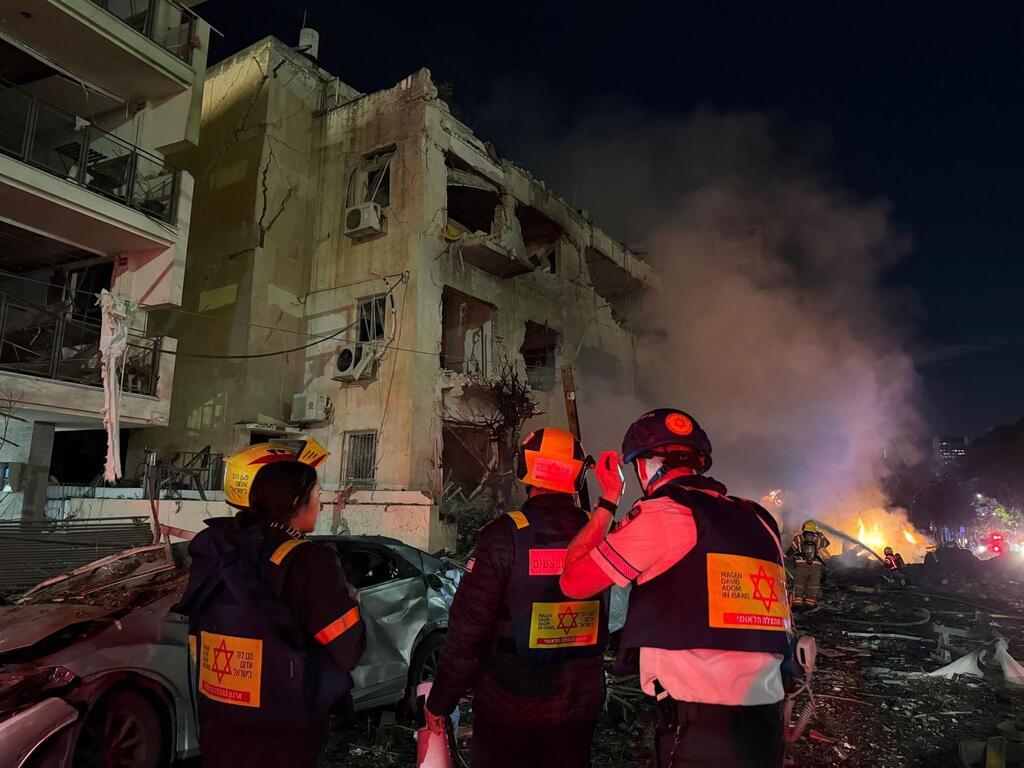
Magen David Adom responds after a Tel Aviv building is hit by an Iranian rocket
(Photo: MDA)
“As soon as we received notification that the Israeli attack had commenced, we called our laboratory teams to prepare for an increase in blood inventory,” Shacham said. “Once the war began, we needed to scale up. We needed to double, if not triple, the inventory of blood.”
“All the blood that was donated was brought here to underground storage and processed in the laboratories,” Shacham said.
Behind all of that stands a civilian volunteer force that gives MDA reach across the country.
“Magen David Adom has 39,000 men and women providing medical assistance to the people of Israel,” he said. “About 90% of them are volunteers and about 10% are paid staff.”
“Regardless of where something happens, whether it’s a city in the center of the country, a Muslim city or a Druze village in the Golan Heights, you will always find Magen David Adom personnel there assisting their own community,” Shacham said.
Shacham said that the decentralized structure proved essential during the October 7 attacks and has continued to shape emergency planning.
“October 7 demonstrated very clearly that the power of community is critical when responding first,” he said. “Since then, we have been strengthening the ability of communities to respond to themselves.”
As the security environment evolves, the organization plans to keep expanding that network.
“We will continue increasing the number of volunteers from communities all around Israel,” Shacham said.
For the thousands of medics and volunteers who respond every time a siren sounds, the mission does not change. When civilians run for cover, they move the other way.
This article is written by Felice Friedson and Gabriel Colodro and republished with permission of The Media Line.