


Late last week, when Eyal Locker climbed into the Humvee of his reserve unit on the Lebanese border, the young soldier sitting beside him had only just shed his conscript’s uniform two weeks earlier. It was his son, Tamir, the twin brother of Sgt. Ori Yitzhak Locker, who fell in heroic combat on Oct. 7.
For the first time, father and son now serve together, shoulder to shoulder. The father who lost a son and the brother who lost half of himself. Despite the searing grief and the risks of war, both chose to stand side by side in defense of Israel’s north.
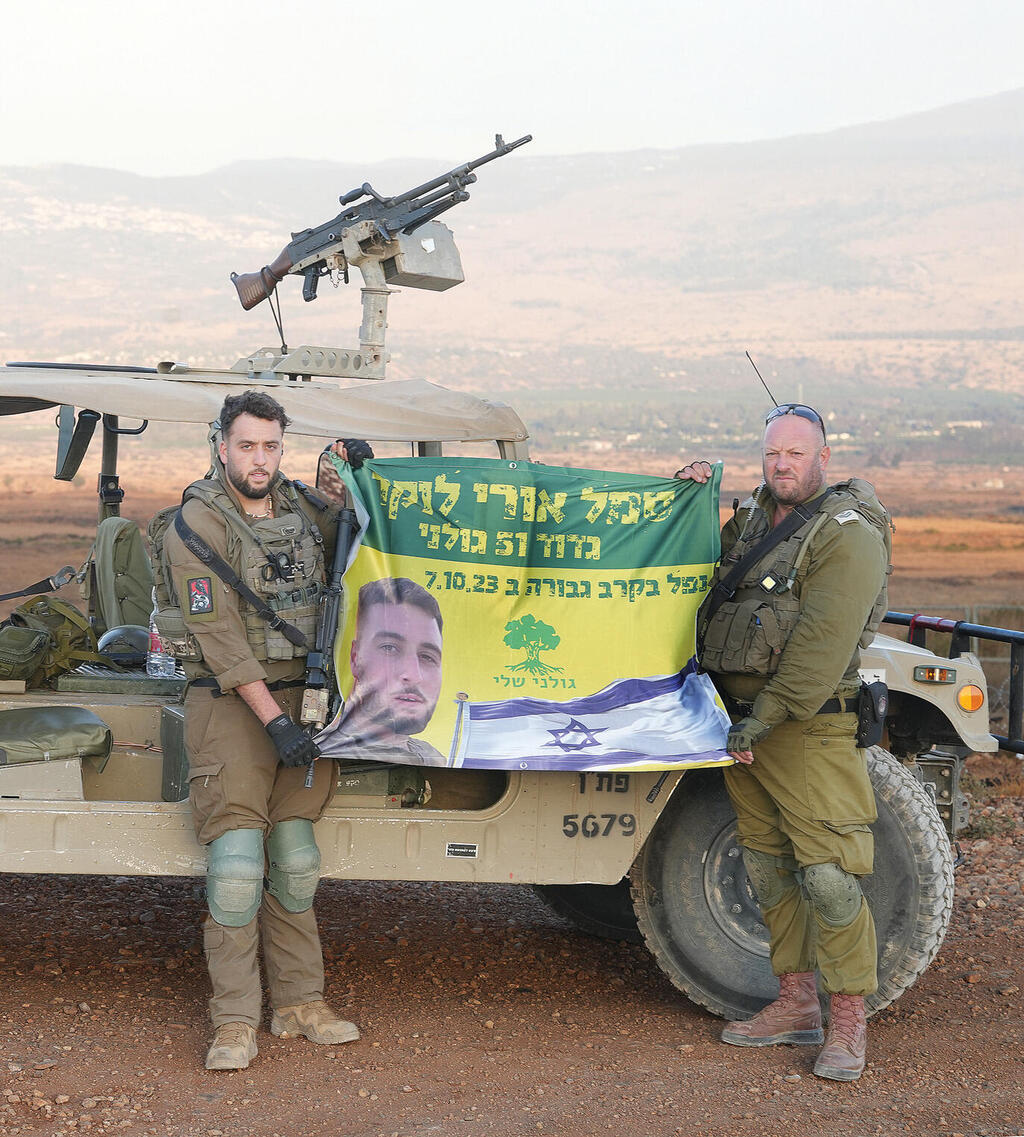
“My stomach turns, and the responsibility is enormous with Tamir here with me,” said Eyal, 53, from Pardes Hanna. “At the same time, there’s immense pride to have my son beside me, to introduce him to everyone. I raised my boys not just for one heroic day that people would remember, but to give of themselves as a way of life. And you know what? If he insists on serving, I’d rather he be close to me.”
Fighting to the last bullet
Ori’s story of courage has become a compass that draws both father and brother back again and again to their olive-green uniforms. On the morning of Oct. 7, Ori, a Golani Brigade fighter in Battalion 51, was on routine patrol near Zikim. With him in the jeep was his platoon commander, Capt. Itay Maor, and fellow soldier Sgt. Amit Tzur.
At 6:29 a.m., as Hamas launched its surprise assault, the three sped toward a breach in the border fence and engaged the first infiltrating terrorists. On their return toward base, they encountered dozens more terrorists heading for Kibbutz Zikim and Kibbutz Karmia. Severely outnumbered, they leapt from the vehicle and charged forward, knowing they were the only barrier between the swarm of militants and the communities beyond.
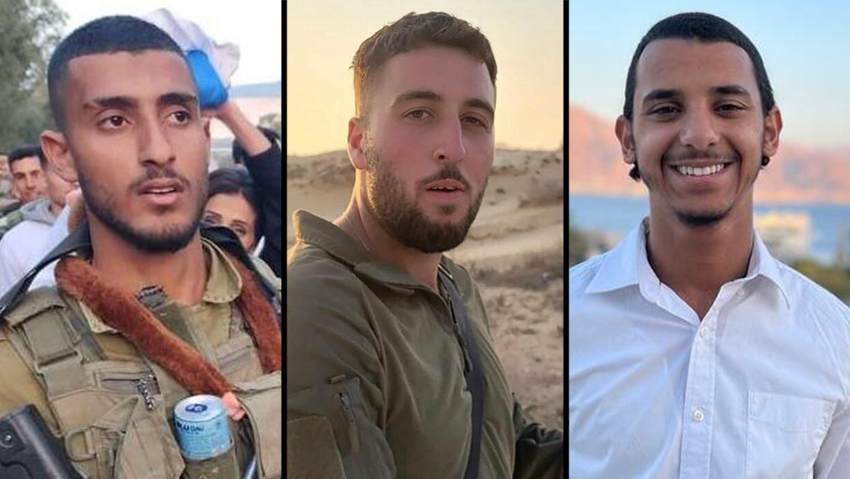
Sgt. Amit Tzur, Sgt. Ori Yitzhak Locker, and Capt. Itay Maor
When IDF forces later reached the scene, they found numerous dead terrorists alongside the bodies of Ori, Itay, and Amit. Their magazines were empty. Their vests carried no remaining ammunition. The three Golani fighters had battled until the last bullet.
“The negligence of Oct. 7 haunts me every day”
Eyal, a former career officer who has served in the reserves continuously since 1993, has already spent more than 200 days in the current war. He has rotated through Gaza’s Netzarim Corridor, the southern border region, the Golan Heights, Syria, and now Lebanon. His unit — a logistics and evacuation detachment in the 679th Brigade — is made up largely of volunteers.
“The average age here is 45,” he said. “Most of us are well past the required reserve age. Tamir came and brought a friend, and they’ll bring others, which helps rejuvenate the unit, because for some of us it’s getting hard. Thanks to them, older guys can go home. Like all reservists, we give everything we have.”
For Tamir, who served in the Paratroopers’ 890th Battalion and had his service extended by four months because of the war, joining his father’s unit felt natural. “That’s how we were raised,” he said. “Since childhood, we had a Paratroopers flag in our room, and every Saturday we hiked Israel’s trails. I know every route in the north by heart. Dad trained us in combat fitness before the army.”
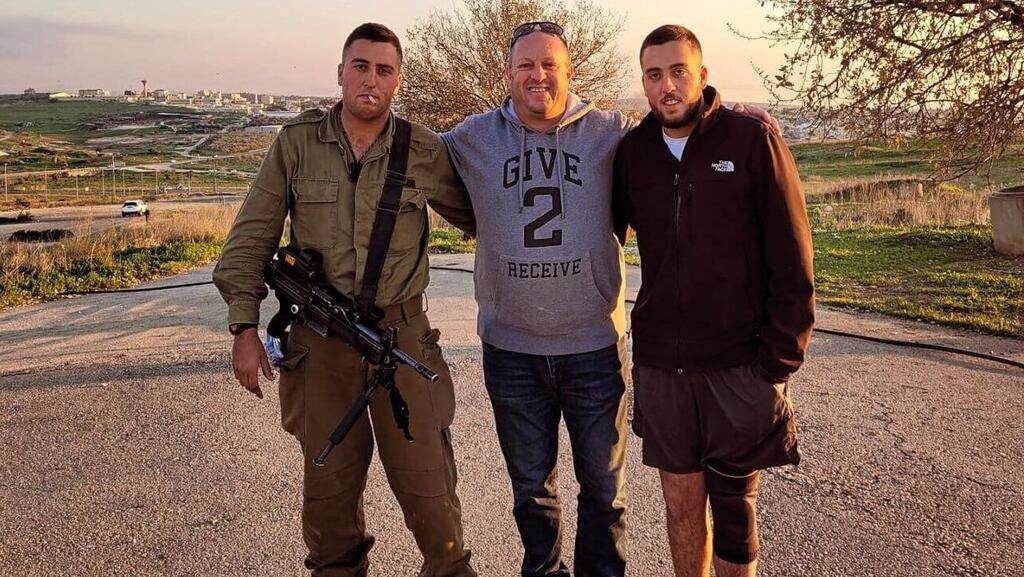
Ori, Eyal and Tamir Locker
He recalls the moment his twin was killed. “The day Ori fell, I told my father I was going back to combat service. He knew it was inevitable,” Tamir said.
Still, grief and anger are ever-present. “The negligence of Oct. 7 goes with me every day,” said Eyal. “I can’t deny my fury at the army. My wife, Orit, asks how I can put the uniform on again. I’m angry that the military wasn’t ready — not with manpower, not with equipment. Ori’s unit didn’t even have grenades, because they were afraid they’d be stolen. But I don’t channel that into breaking away. Reserves are part of who I am.
“I lost a 19-year-old son I had just seen 48 hours earlier. He told me, ‘It’s boring here, nothing’s happening.’ You can’t process that, or forgive it.”
“Grief does not exempt us from defending the state”
For Tamir, too, Ori’s death became a call to action. “Ori fell as a soldier, a fighter with a weapon in hand who charged forward. I can’t say my duty to defend the state is finished just because my brother fell. I still have two legs and two arms, and I can keep going. We don’t have another country.
“Grief does not exempt us from defending the state. I have friends who lost loved ones in the war and chose not to return to service. That’s fine, I don’t judge them. But my choice is different.”
Serving together has also been a form of healing. “Reserves, in some way, are my support group,” Eyal said. “As much as it sounds like a cliché, the best people in Israel are in the reserves. They give just a little more of themselves.
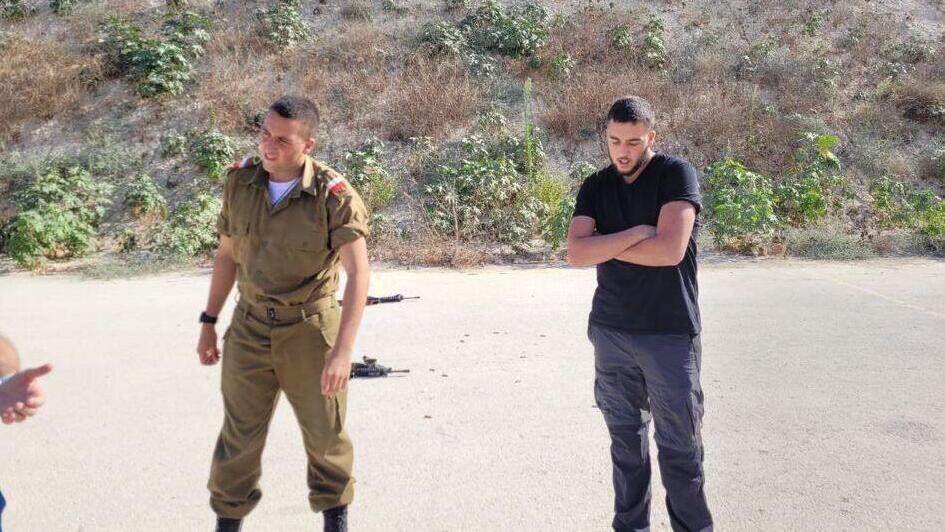
Ori and Tamir Locker
“One of the most dangerous things is to sink into grief. It consumes you. Orit and I have an agreement: each of us does what strengthens us. For me, it’s being here in uniform, with a sense of mission. We are in Israel’s war of independence. Oct. 7 was a wake-up call for us all, and I want to be on the side that contributes and acts.”
A promise kept
Just a week before he fell, Ori had picked Tamir up from base. “He told me, ‘Tamir, if I die, I want you to memorialize me,’” Tamir recalled, voice breaking. “I was angry at him for saying it, but he said he had a feeling. He asked me to promise to memorialize him and to take care of Dad and Mom.
“After he died, I felt half of me was gone. I’m like a baby learning to walk and talk again, now that I’ve lost my shadow. Fourteen of my friends have been killed in this war, on top of Ori. I live for them, too.”
Now, during Eyal’s countless reserve stints and Tamir’s very first, the two serve together in the north, carrying Ori with them in spirit.
“I know he’s mocking us from above, laughing that we keep doing reserves,” Eyal said with a sad smile. “I wish every father could be as proud of his children as I am of Tamir and Ori.”
Tamir added, “I’m sure Ori would have wanted to join Dad’s unit with me.”
Against the backdrop of Israel’s debate over equality in shouldering the burden of defense, father and son choose not to dwell on those absent from the ranks but to take pride in those who show up.
“I raised my kids to be decent human beings,” Eyal said. “If someone doesn’t want to give, let them stay home. I don’t feel like a sucker. I’m proud to give and contribute whatever I can.”