

The woman on the other end of the line sounded deeply distressed. "You're not recording me, are you? You won't tell the police, right?" she asked repeatedly. Only after being assured that the conversation was completely confidential did she begin to calm down and describe, in broken sentences, the rape she had experienced at the brothel where she worked.
She had not reported the assault to the police. "How can I file a complaint?" she asked. "If I say anything, they'll throw me out of the brothel. I have to make a living. I have a child."
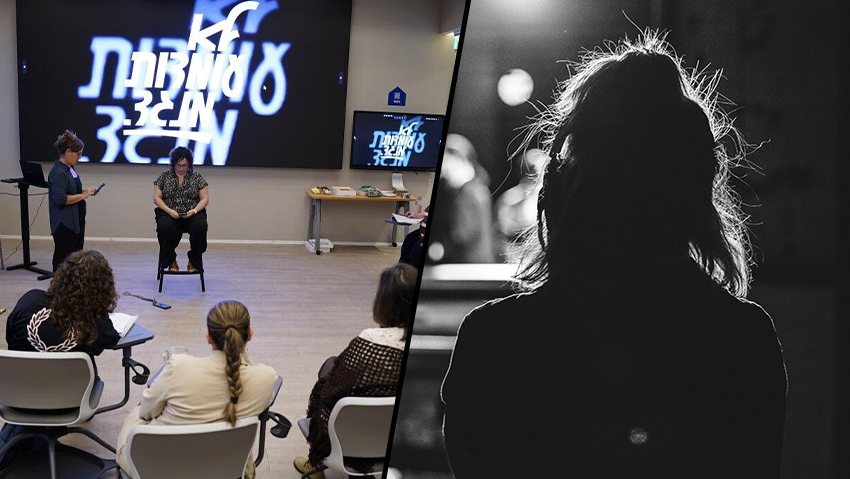
Anat Sara, the volunteer answering the call, tried to reassure her, offer support and, above all, listen. "I can hear how upset you are," she repeated. "Let's think together about what we can do."
But the anonymous caller was not easily comforted. "Nobody listens to me," she said. "I feel like I'm suffocating. I can't take it anymore." Sara persisted. "What might help you cope?" she asked. "Can you remember other difficult situations you've faced? What helped you get through them?"
By the end of the conversation, the woman sounded somewhat calmer. There was no way of knowing what her situation would be the following day, but one thing had been achieved: Someone had been there to listen. Nothing more, but nothing less.
Except this was not an actual emergency call. The exchange took place during a training exercise in a fluorescent-lit office building in central Israel. The conversation was on speakerphone, allowing everyone in the room to hear it. The distressed caller was an experienced volunteer who had personally answered hundreds of similar calls and was now playing the role of a woman seeking help.
The simulation was part of a training program for approximately 10 prospective volunteers at the Shira Line, a support hotline launched earlier this year by the Israeli nonprofit Lo Omdot Mineged, which assists women involved in prostitution.
The scenario was fictional, but the experiences it portrayed were drawn from the difficult conversations volunteers regularly encounter.
‘The most meaningful thing I've done in my life’
Every evening, the Shira Line receives calls from women involved in prostitution. Some describe abuse by a client, an argument with a pimp or a dispute with another woman at the brothel where they work. Others simply want to talk about their children or a stray cat they have been feeding.
Some callers are very young, while others are considerably older. They include Jewish and Arab women, those who have severed all ties with their families and communities, and others who lead double or even triple lives. Some work on the streets or in brothels, while others entered prostitution through online platforms. Men occasionally call as well.
Some women phone almost every night. Others reach out only when they are experiencing severe distress. For some, the call is the first time they have dared to tell anyone that they are involved in prostitution.
There is a particular intimacy to these conversations, the kind that can develop during a late-night telephone call. There are no witnesses, no demand for identifying information and no expectation that the caller explain herself. Just a woman in distress and another woman trying to help as best she can.
The women volunteering to answer these calls come from strikingly different backgrounds. There are teachers and nurses, lawyers and high-tech professionals. Some have established careers and families, and several are already grandmothers.
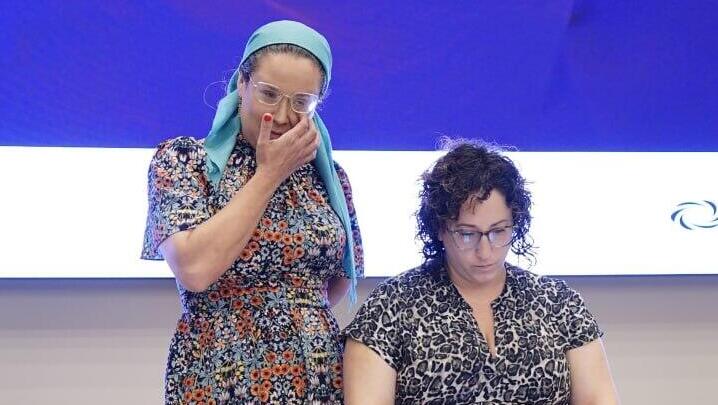
Bracha Shapira (left) with volunteer Anat Sara
(Photo: Lior Sharon)
Yet something has drawn them to a hotline serving women who are among the most isolated and marginalized members of Israeli society, often at the most difficult moments of their lives.
The commitment is considerable. Volunteers undergo several intensive evening training sessions and are required to continue receiving professional training throughout their time with the hotline.
Still, they are determined to participate. "I feel like this is the most meaningful thing I've done in my life," one volunteer explained.
The hotline is named after Shira, a woman involved in prostitution who had received assistance from the nonprofit and developed close relationships with several staff members and volunteers. She died by suicide four years ago. The organization decided to honor her memory by offering other women something she had desperately needed: Someone willing to listen.
Much of the nonprofit's work focuses on practical assistance, helping women meet urgent needs ranging from emergency dental treatment to housing and educational expenses. But the Shira Line, which began operating in early 2026, is different. Available during evening and nighttime hours, it focuses on emotional support rather than immediate material needs.
"Very often, when you're a woman involved in prostitution, you're outside society, outside your family and outside accepted social norms. You're alone," said Bracha Shapira, the hotline's professional director, who oversees volunteer training.
"We want to be available to these women during their moments of loneliness and difficulty."
Naama Goldberg, the nonprofit's CEO, said the need for this kind of support became evident through the organization's existing services. "Women would call a hotline intended to provide practical assistance, but over time we realized that many of them simply wanted to talk," she explained. "Some women call just to say 'good morning' or 'happy holiday.'"
When traditional support services are out of reach
When the organization tried to understand why these women were not turning to conventional emotional support hotlines, it discovered several obstacles. Many feared that a man might answer the phone. Others worried that the person on the other end would not understand the particular difficulties faced by women involved in prostitution.
Sometimes, the callers did not even recognize that they were experiencing emotional distress. They simply knew that they needed someone to talk to. "It could be something like deciding which client to accept or where to sleep tonight," Shapira explained.
"For most people, it's obvious that when you're going through something difficult, you can call a family member or a close friend. But when you're on the very margins of society, you don't have a friend, a mother or a sister. At the far end of prostitution, there is often an enormous amount of loneliness. And loneliness leads to helplessness."
In recent years, particularly since Israel introduced legislation prohibiting the purchase of sexual services, the Welfare Ministry has developed a range of programs specifically intended to assist people involved in prostitution.
The law, which authorizes police to enforce the ban and fine those who purchase sexual services, also included funding to expand assistance for women and men involved in prostitution.
Shapira, who previously worked in therapeutic programs for young women involved in prostitution, believes the new hotline addresses a need that formal treatment services often struggle to meet.
"Therapeutic programs frequently have difficulty helping women who are still actively involved in prostitution," she said. "They don't wake up, they cancel appointments, they use drugs. They're not in a place where they can undergo a therapeutic process."
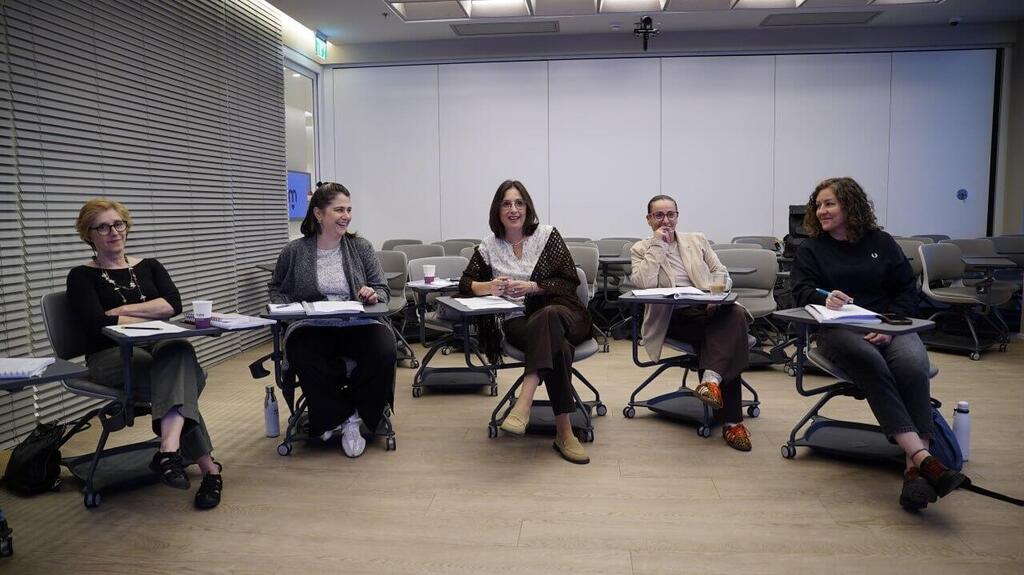
From right: Volunteers Sumud, Natalie, Galit, Lee and Tamar
(Photo: Lior Sharon)
Other women cannot seek conventional treatment because their involvement in prostitution is an absolute secret. "Their community would ostracize them," Shapira explained.
She pointed to the particularly painful situation of women from the ultra-Orthodox community, where seeking help could expose a life hidden from everyone around them. A woman dressed in the modest clothing associated with Beit Yaakov, the ultra-Orthodox girls' school system, may be unable to bring herself to enter a treatment center.
For such women, a confidential telephone conversation may be the only way to begin reaching beyond their immediate circumstances and asking for help, however tentative that first step may be.
Some of these conversations take place over WhatsApp rather than by telephone. "I'm afraid I'm failing him," one woman wrote during a simulated chat conversation at a recent training session. Although the participant was a volunteer playing a role, the exchange was modeled on countless similar conversations that had taken place with real callers.
Women contacting the hotline do not have to identify themselves, disclose their location or first register with the welfare authorities.
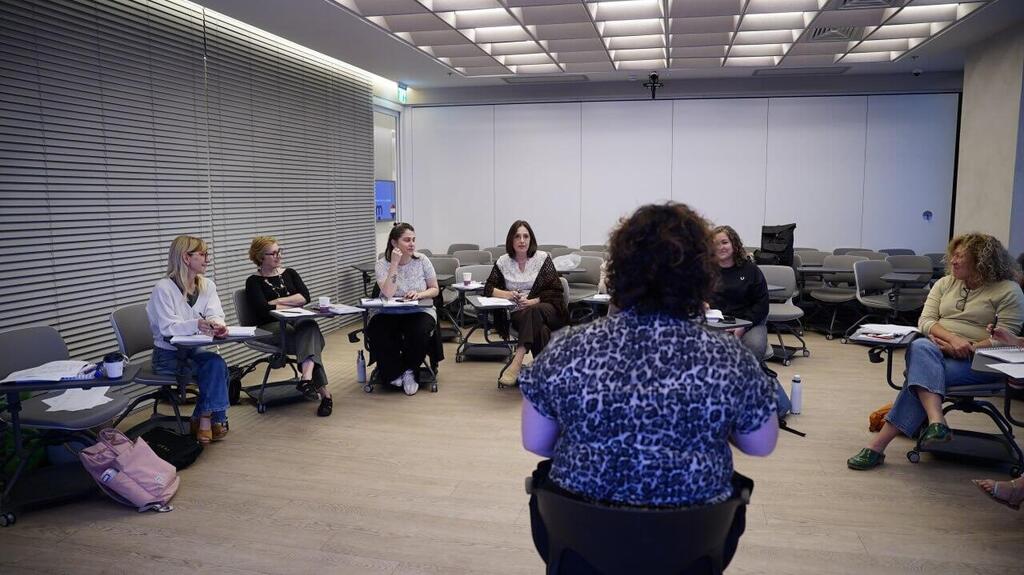
A volunteer training session at the Shira Line
(Photo: Lior Sharon)
Why hanging up in anger can be a success
In another training scenario, a caller described sitting on a bench in a public park. She had argued with her pimp, with whom she had recently been living, and did not want to return home. "I'm hungry," she told the volunteer. "Can you send me a pizza?"
Requests like these, Shapira explained to the trainees, can present a difficult dilemma. "Very often, our instinct is to say, 'How can I help you? What do you need from me?'" she said. "But we're not superheroes, and we left our capes at home. We can't help her in a practical way right now."
Even when practical assistance is possible, Shapira reminded the volunteers, it is not the hotline's primary purpose.
The focus is on emotional needs, and the greatest challenge is learning how to address them when the person on the other end is experiencing intense distress. Just as the hotline does not promise material assistance, it does not claim to provide therapy. Nor does it set out to rescue callers from prostitution.
"Many of the women who call us are still a long way from being able to stand on their own two feet," Shapira said.
"Ultimately, if we've helped her just for today, if she goes to sleep tonight without having a panic attack, if because of the conversation she changes the sheets on her bed because a client was on the ones she's using now, that's more than enough. It really is."
Shapira encourages volunteers to recognize even the smallest positive moments during a conversation and reflect them back to the caller.
Sometimes those moments involve something the woman herself has mentioned: her child, a stray cat she cares for or anything else that gives her a sense of strength. Sometimes, the positive moment is simply the decision to pick up the phone and ask for help. And sometimes, remarkably, it is the decision to hang up in anger because something the volunteer said upset her.
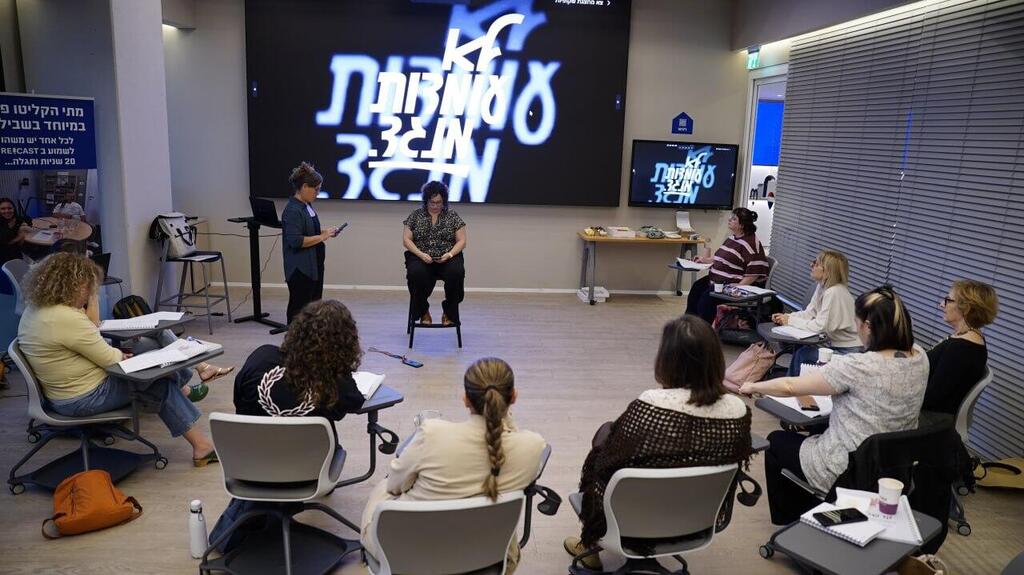
Volunteers participate in a training workshop for a hotline supporting women involved in prostitution
(Photo: Lior Sharon)
For Shapira, that can represent something important: an assertion of control. "One of the biggest difficulties women involved in prostitution face is the ability to say 'no,' to refuse, to have control over their own lives," she explained. "Their lives are controlled by other people's desires."
If a woman chooses to end the conversation on her own terms, Shapira sees that as a possible sign of progress. Perhaps, in the future, she will be able to say "no" to other things as well. "If she manages to say, 'No, this doesn't work for me,' there's enormous value in that," Shapira said.
"A woman involved in prostitution who manages to tell a volunteer, 'I can't stand you, and I'm never speaking to you again,' is, in my eyes, an extraordinarily successful support call. That's a wow moment."