


The Israeli Air Force earned enormous acclaim during the recent campaign against Iran, as well as in the campaigns that preceded it in Gaza and Lebanon. Politicians may change their positions, issue statements and make promises, but Air Force pilots carry out every mission assigned to them. Twice in recent months they were ordered back to base by President Donald Trump, but they were prepared and ready for the mission, armed and focused. No politics, no protests — when they are in the cockpit, only the mission is before their eyes.
But there is another component behind the Air Force's operational success that is perhaps less well known: its steadily improving ability to carry out missions that until recently would have been impossible. Since Oct. 7, and likely even before then, the Air Force has been enhancing its capabilities, integrating exceptional technologies and working in very close cooperation with the other branches of the Israel Defense Forces. Not only did this not happen in the past, but it was also not even possible.
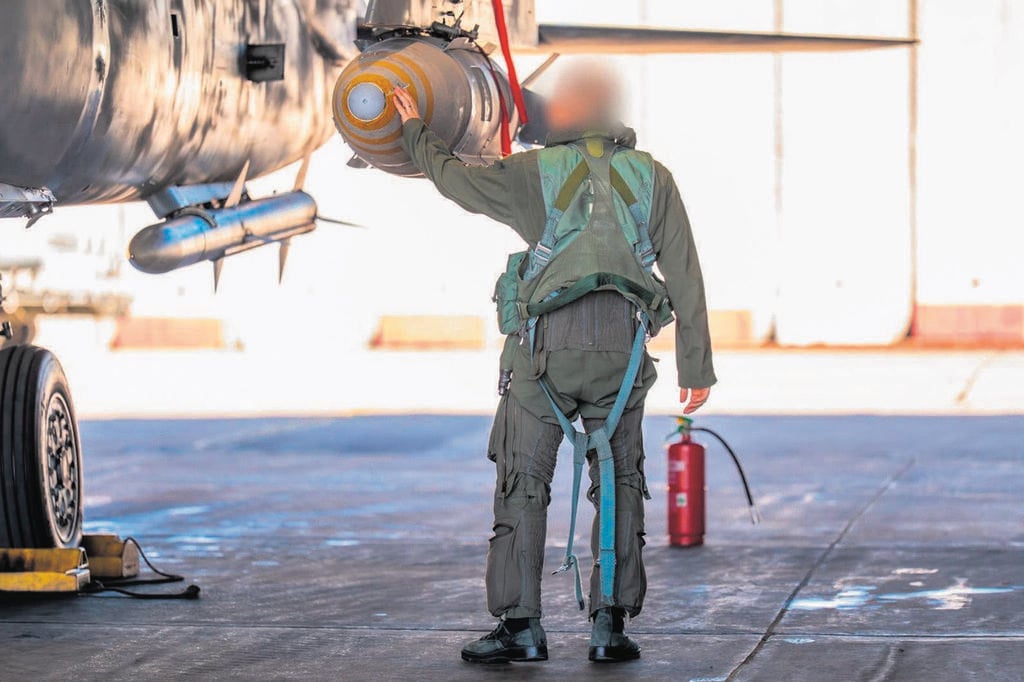
One of the factors responsible for keeping the Israeli Air Force among the world's leading air forces is its Weapons Systems Department at Air Force Headquarters. The mission is defined as "force buildup" and is led by the department head, known in headquarters corridors by the Hebrew acronym Ramah Amlah. This is where critical decisions about force development are made even during wartime, and where the Air Force's future character and capabilities for future wars are shaped — a process known as "requirements definition and procurement."
The prime minister may ultimately sign off on deals to purchase F-35 fighter jets, but the requirement originates in the Air Force's Weapons Systems Department. And if we were to reveal some of the plans being developed here for the future, many would be astonished.
Consider some of the challenges facing the Air Force at the start of the war: The battlefield was located thousands of kilometers from Israel. It was difficult to deploy aircraft and drones there and difficult to maintain real-time control over everything taking place. Iran possessed a sophisticated air defense network that posed a major threat to anything flying overhead.
Infrastructure targets and military compounds needed to be disabled, while mobile missile launchers had to be located and intelligence gathered continuously and intensively. All of this required large quantities of bombs and rockets, whose stockpiles are ultimately limited. Close, almost intimate, cooperation was required with other branches of the IDF as well as American forces while combat operations were underway. At the same time, Israel's skies had to be defended to ensure that missiles, rockets and drones could not inflict casualties.
It is no wonder that the officer responsible for Air Force weapons systems feels the weight of considerable responsibility on his shoulders.
Meet Col. M., an F-15 squadron commander, active-duty pilot and commander of control cells in the Air Force command bunker. For the past three years, he has also served as head of the Air Force's Force Buildup and Weapons Systems Department. Now, after leaving the position, he has taken time to discuss the challenging role and how all of these tasks are carried out simultaneously while the Air Force is engaged in combat.
You took over the position during an especially difficult period — Oct. 7 and the war that has continued almost without pause ever since.
"I had both the privilege and the obligation to lead the Air Force's force-building effort during the war. In practice, everything changed on Oct. 7. It became clear that the war would be long and that we needed to adapt from a short-term war to a prolonged conflict while simultaneously building the force. The 'day after the war' still has not arrived, and we do not have the luxury of simply fighting first and building the force later."
The drone challenge
Col. M. is 45, married and the father of three. He began his Air Force career as a young pilot in an F-15 squadron at Tel Nof Air Base and later served as a flight instructor at the flight school at Hatzerim Air Base. He then moved to an F-15I squadron at Hatzerim as deputy commander.
From there he pursued a bachelor's degree in computer science and a master's degree in business administration, both at the Hebrew University of Jerusalem. After completing his studies, he became deputy commander of an F-16 squadron at Ramat David Air Base.
He then took on his first headquarters assignment, planning cooperation between the Air Force and the rest of the IDF, known colloquially as "the Greens." His final position as a pilot was commanding an F-15 squadron at Tel Nof before moving to the Weapons Systems Department.
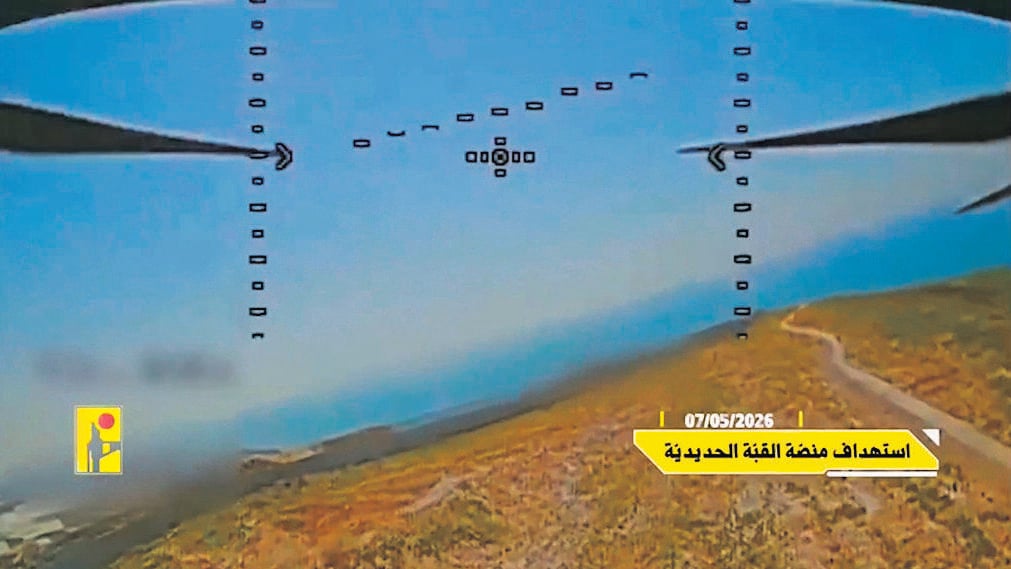
Image captured by a Hezbollah drone
Is there any particular knowledge or training that makes someone suitable for this role?
"You need a technological mindset to understand the language, and a deep understanding of what the Air Force needs, what capabilities are missing and, like anywhere else, strong management and organizational skills. You need to understand the right way to deliver solutions. So over the past three years, I flew as a fighter pilot, commanded control cells in the Air Force and, above all, built the Air Force's capabilities for the current war and future wars."
Let's discuss the issue that concerns both the IDF and the broader public most: FPV drones, commonly known as explosive drones. It appears that the IDF still has not found a complete answer to this deadly weapon.
"As a control-cell commander, I stand shifts defending Israel's skies, and every time a drone incident occurs, the entire Air Force mobilizes to intercept and shoot it down. I personally have downed quite a few such drones.
"In the context of force development, I think it is fair to say that this is a challenge for which no one in the world yet has a complete solution. In recent months, Israel, the defense establishment, the IDF and the defense industries have understood the challenge. Existing technologies already offer solutions that need to be adapted into operational weapons systems, and that is what is currently underway.
"Within the defense establishment, this is considered the most important and urgent issue. It is receiving all the resources and attention. I hope that in the near future we will see the systems and technologies that provide that protection."
Will the solution come from ground-based defenses or from the air? It seems unreasonable to send a fighter jet after a drone that costs $500.
"The responsibility for the mission lies with the Ground Forces, but we are fully involved. If we need to launch a plane or helicopter to bring down a drone, we do it. I have personally scrambled helicopters against drones. Whatever can be done will be done.
"At the moment, a fighter jet is not an effective solution against a drone, but I expect that to change once laser weapons enter service."
Why is it so difficult to lock onto and destroy a drone?
"The challenge is detecting the target using radar, optics and various sensors, then locking onto it, identifying it as hostile rather than friendly and successfully bringing it down. That is a challenge in itself.
"It is a complex mission that requires concentration and skill, and the Air Force has trained for it for years: bad weather, nighttime operations, low altitude and multiple drones arriving simultaneously."
Would you say there have been significant successes overall?
"There have been successes. Personally, I participated on April 14, 2024, during the first large-scale drone and missile attack. It was a phenomenal success.
"But there have also been failures. In a real war that has lasted two and a half years, there will naturally be setbacks from time to time. However, performance has improved significantly during the war.
"The ground-based detection network has improved dramatically. The interception systems, including Iron Dome, have adapted in extraordinary ways. We adapted our attack helicopters and improved the accuracy of target handoffs, and their interception rates increased significantly."
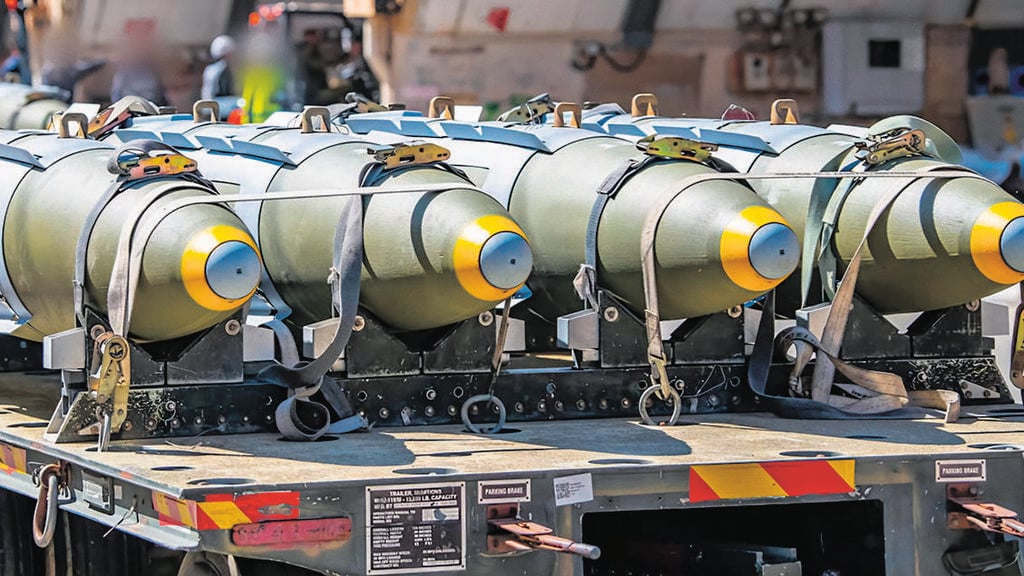
Israeli Air Force munitions
(Photo: IDF)
You mentioned laser weapons. Today we know about the ground-based laser system. You're talking about airborne lasers.
"We have taken laser technology into the aerial domain, both on helicopters and fighter jets. This is not science fiction or 'Star Trek.' Within a few years, fighter aircraft will carry lasers for both defensive and offensive missions.
"It will change the game, just as Iron Dome transformed air defense. Airborne lasers will add another dimension, and Israel is a global leader in this field."
Are you involved in developing these new capabilities, or do you simply wait for Elbit Systems to develop them?
"I personally visited Elbit dozens of times and participated in many discussions to refine the requirements, determine the desired effects and define the flight profile.
"We are full partners. This is not a repeat of the Lavi project. It is a complete partnership, including contractually. Creating a new operational technology requires all of us working together, and I personally believe it will succeed.
"Lasers on helicopters could arrive within two years, and lasers on fighter jets by the end of the decade."
The vision of autonomous weapons
In the field of laser weapons, Israel is a global leader, ahead of the United States and far ahead of Europe. The same cannot be said of drones, which are becoming increasingly significant on the battlefield.
Whether unmanned aerial vehicles, armed drones or explosive drones, Israel is not a leading player in many areas, and at times it appears that the IDF is one step behind other militaries. One example is the use of autonomous drones capable of identifying and destroying targets on their own. Israel's defense establishment and the IDF are testing numerous technologies, but they often hesitate before introducing them into operational use.
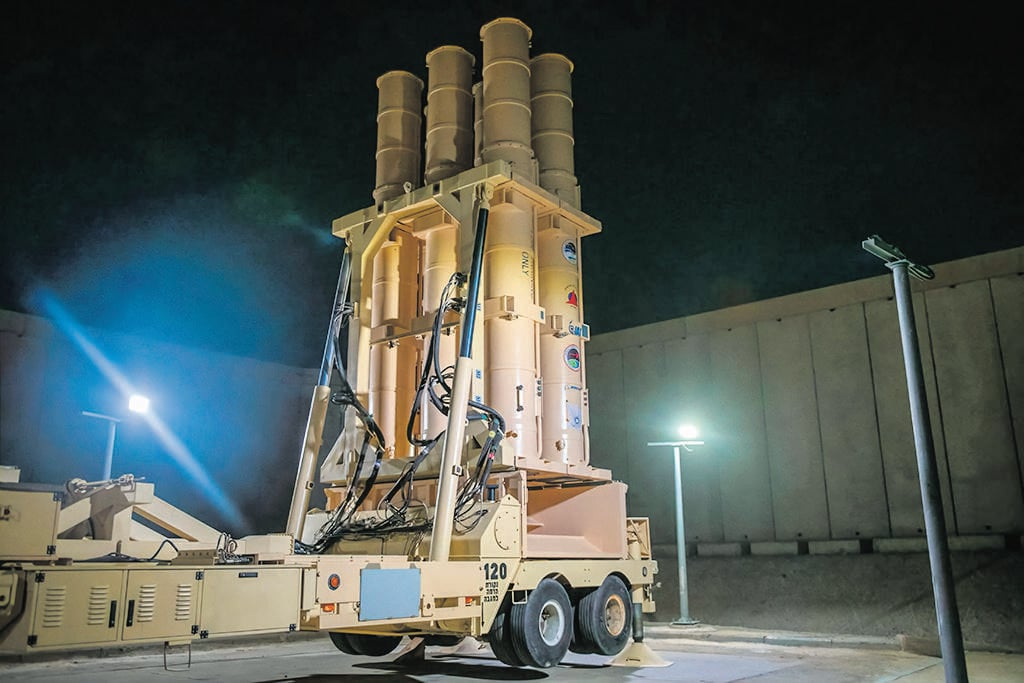
Arrow missile launcher
(Photo: IDF)
For Col. M., it is clear that the Air Force should already be operating at full strength with the most advanced tools available.
"The world is moving in that direction, and the Air Force understands it and is taking the initiative," he said.
"We need drone and robotic capabilities at any point on the globe. We need to be able to deploy them there, transport them and have them receive missions remotely and operate independently." According to him, the IDF is developing several such projects, some intended for defensive missions and others for offensive operations.
Autonomous strike missions are not simple. The goal is for artificial intelligence to identify a target, determine that it is hostile and at the same time avoid harming uninvolved civilians. Some militaries have lowered the threshold for such ethical dilemmas. The IDF continues to emphasize that a human being will remain involved in every decision to fire.
This article cannot discuss the autonomous weapons systems the IDF currently operates, but Col. M. stressed that even in such cases, a person verifies that the selected target is an enemy target that poses a threat to Israel.
The U.S. Air Force already operates interceptor drones that can be effective against attacking drones. According to reports, Israel is examining similar systems.
"We already have such drones and are acquiring more. The vision is for Israeli drones and robots to operate autonomously at every operational range. That is the work plan.
"The Air Force and the IDF will have the ability to operate autonomous drones and robotic systems anywhere. Regulatory issues will be addressed afterward. First, we need to develop the capability."
Can you say that the IDF still insists on keeping a 'human in the loop' to make the decision to fire? One criticism is that AI selects targets and may make mistakes that lead to civilian deaths.
"A human being remains involved in mission execution, target assignment and mission definition. Autonomy assists with classification, identification and attack recommendations.
"The next stage is transmitting instructions to fully autonomous systems. As I said, these are existing projects that are currently undergoing testing and operational adaptation."
Flying over Iran
The Air Force's force-building effort is not limited to drones, artificial intelligence and lasers. It also includes major improvements in doctrine and the ability to use existing systems. For example, command-and-control systems in a small country such as Israel required significant modifications to manage aircraft operating 1,500 kilometers (930 miles) away.
"These platforms were not originally designed for that purpose, but once the war began it became clear that we would need to reach Iran," Col. M. said.
"From Oct. 7 onward, we began adapting the force and the platforms — command and control, communications, fuel systems and weapons configurations. All of those changes were implemented, which is why we were able to reach Iran."
The aircraft and pilots flew continuously from Israel to Iran. I assume that was a challenge in itself.
"Absolutely. That is force development in practice. Part of the Air Force fleet consists of the most advanced aircraft in the world, while part is older.
"We carried out countless force-development processes to adapt the fleet for operations over Iran. We upgraded systems during the war so they could contend with Iran's air defense network. That is what enabled fighter jets to operate there without losses."
I understand you personally examined these capabilities up close.
"I personally flew to Iran dozens of times, and it was a fascinating mission. We trained for it for 20 years.
"I think the way the Air Force was able to employ its capabilities repeatedly, around the clock, sortie after sortie, striking the right targets and achieving air superiority — operating without Iranian fighter aircraft taking off — reflected both doctrine and skill.
"It was an incredible experience. It was like a symphony that took decades to compose and was finally performed beautifully, even emotionally."
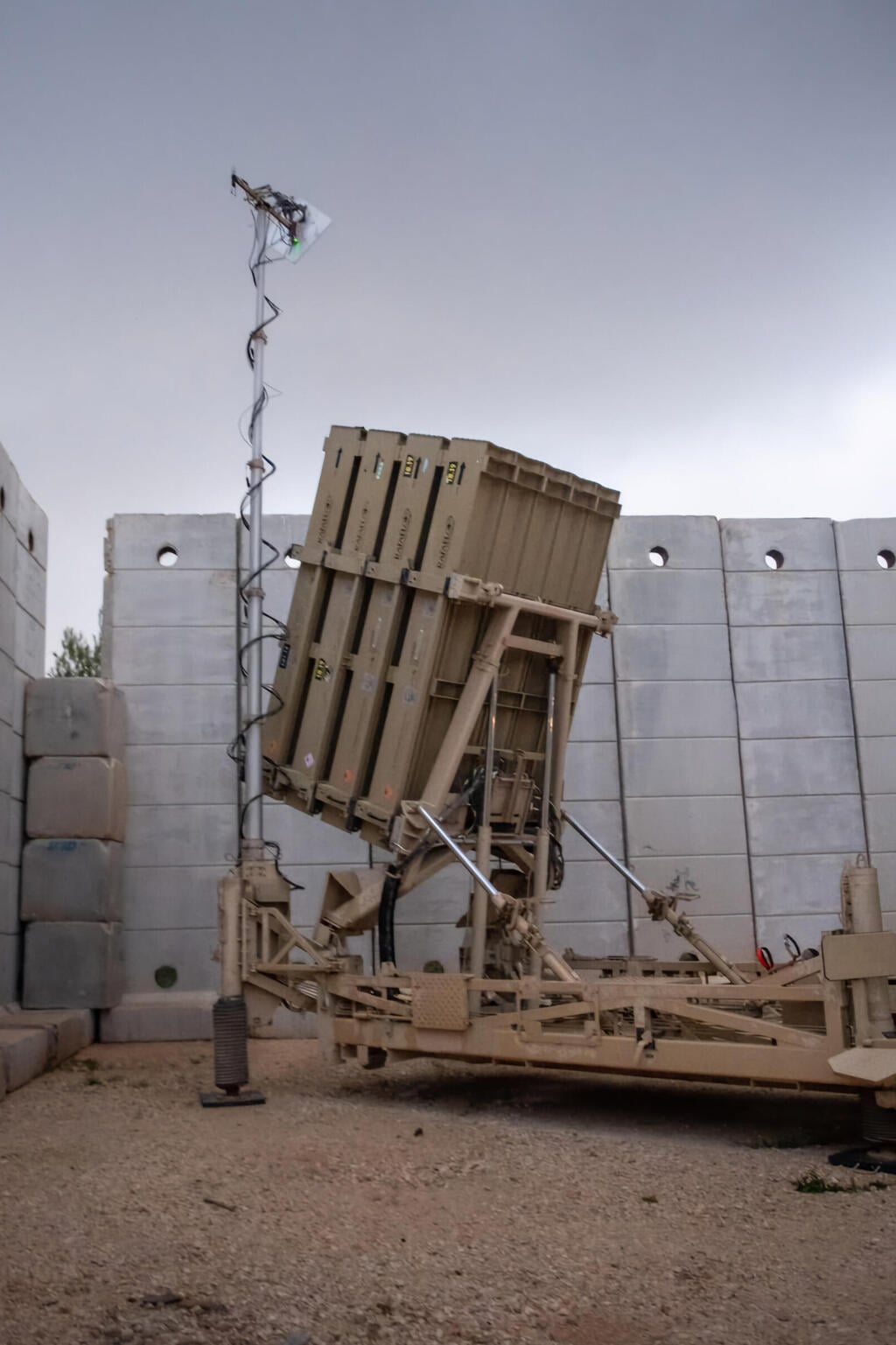
Iron Dome launcher
(Photo: IDF)
What goes through your mind when flying over Iran?
"The visual experience of flying over Iran, with its vast landscapes, is remarkable. It is an extraordinary country.
"It was truly a masterpiece of military planning — dismantling Iran's air defense system layer by layer with the precision munitions we developed.
"How we struck in the opening blow, then peeled away each layer, suppressing the air defense network and thereby achieving air superiority over Iran — I think it is one of the most fascinating military operations in history."
Does it make you think that air power alone has reached its limits and that a country cannot be defeated solely through air power?
"Of course. It is well understood that there are limits to the use of air power alone. I think that point is obvious.
"The missions the Air Force carried out were necessary, properly defined and executed extraordinarily well. Beyond that, broader international moves are required, and on that subject I am not the person to comment."
How much damage were we able to inflict? Did we send them back to the Stone Age?
"I won't assign grades. I will only say that I participated in strikes against their industries and capabilities, and those capabilities were significantly reduced.
"Of course, anything can be rebuilt, so I won't speculate about how many years the effects will last. But we struck and caused substantial damage."
Can the Israeli Air Force destroy Iran's nuclear capability?
"I believe we have the capability to do so. Those decisions belong to the political leadership — whether to order such a mission and what costs it would entail.
"But it is possible, and we are continuing to build the force. We understand how our enemy is building its capabilities, and we are developing ours accordingly, so that in the future we will have capabilities specifically tailored for missions of that kind."
First published: 18:35, 06.06.26